Step-by-Step Instructions for Performing CPR on an Infant
Check your baby’s responsiveness by tapping their shoulder and calling their name, then shout for help if they’re unresponsive. Open the airway with a gentle head tilt and chin lift, using ResusciBaby Mini’s subtle click to confirm proper alignment. Look, listen, and feel for breathing for no more than 10 seconds. Seal your mouth over their nose and mouth, delivering gentle puffs at 15–20 mm Hg until you see chest rise, using a training mask with a one-way valve to reduce leakage. Use two fingers just below the nipple line, compressing 1.5 inches deep at 100–120 compressions per minute, allowing full chest recoil each time-pair a metronome app or “Stayin’ Alive” to keep pace. Continue cycles until help arrives or your baby starts breathing on their own, knowing precise technique and reliable tools make all the difference when every second counts, and there’s more to discover about mastering each step with confidence.
Notable Insights
- Check if the infant is responsive by tapping the shoulder and calling their name; shout for help or call 911 if unresponsive.
- Place the baby on a firm, flat surface and open the airway with a gentle head tilt and chin lift.
- Assess breathing for no more than 10 seconds by looking, listening, and feeling for chest movement and breath.
- Deliver two rescue breaths by covering the infant’s mouth and nose with your mouth, ensuring chest rises.
- Perform chest compressions using two fingers at a depth of 1.5 inches and rate of 100–120 per minute.
Check if Your Baby Needs CPR
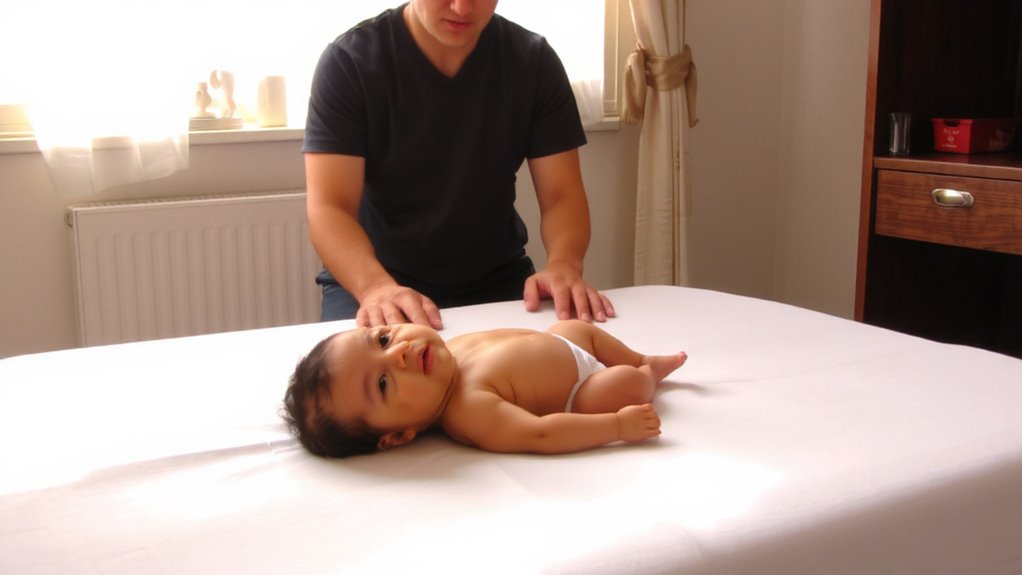
What if your baby suddenly goes quiet and won’t respond? That’s the moment to act fast and stay calm. First, gently tap their shoulder and call their name-this is your responsiveness test. If there’s no reaction, shout for help, or call 911 if you’re alone. Next, check for breathing-look for chest movement, listen for sounds, feel for breath. Then perform a pulse check on the brachial artery, inside the upper arm, using two fingers for five to ten seconds. Parents using the ResusciBaby Mini found it helped them practice accurate pulse checks at home. Testers praised its realistic arm thickness (about 2.5 inches) and responsive feedback. If no pulse or breathing, CPR is needed. This responsiveness test and pulse check take under 10 seconds but guide life-saving decisions. Quick, confident recognition gives your baby the best chance-practice regularly with trainer models to build muscle memory and response time.
Open the Airway and Look for Breathing
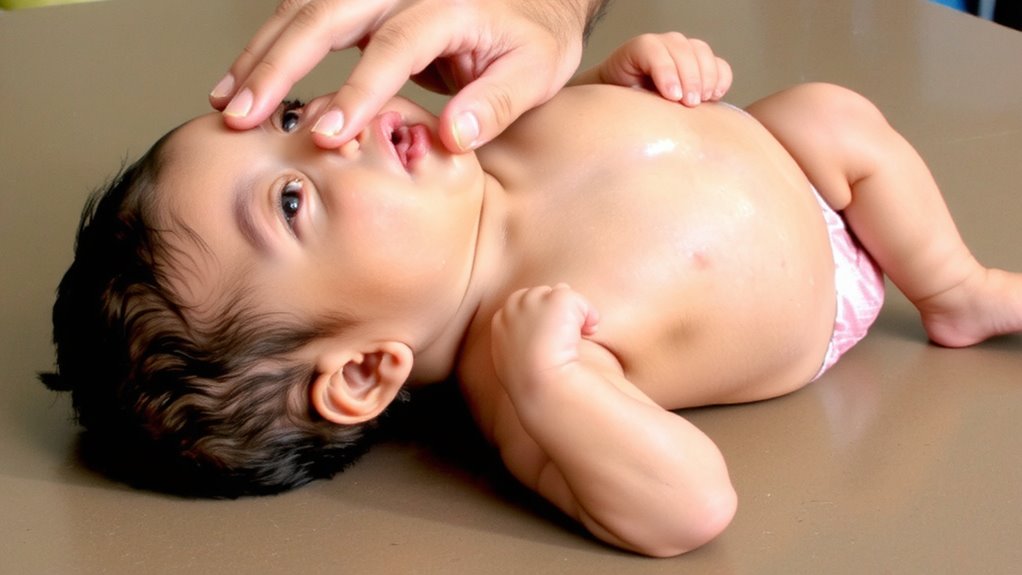
With the baby lying on a firm, flat surface, tilt their head back gently by lifting the chin with one hand while pressing down on the forehead with the other-this motion opens the airway effectively and should take no more than three seconds, a technique parents using the ResusciBaby Mini found easy to master thanks to its clearly marked head pivot point, realistic neck resistance, and 1.75-inch-thick head that mimics an average infant’s proportions, with testers noting the model’s subtle click when properly aligned helped confirm correct positioning, guaranteeing airway maneuvers were neither too shallow nor too forceful. Proper airway positioning is essential-it guarantees your breathing assessment is accurate. Look for chest rise, listen for breath sounds, and feel for airflow on your cheek. Don’t take more than 10 seconds. The ResusciBaby Mini’s design makes practicing this step intuitive, with lifelike responses that mirror real infants, helping caregivers build confidence in their assessment skills.
Give Rescue Breaths to a Baby Who Isn’t Breathing
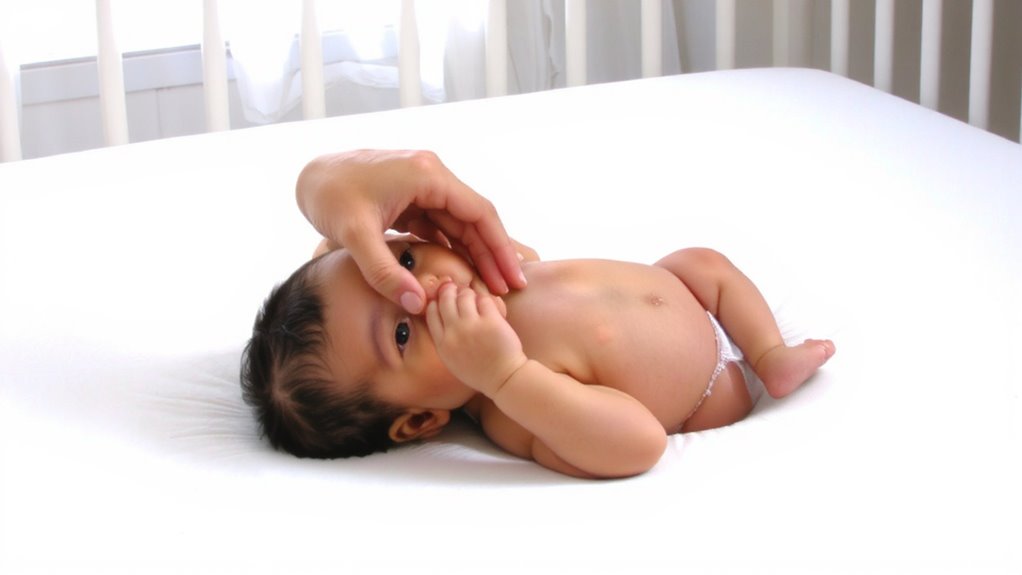
You’re ready to deliver rescue breaths if the baby isn’t breathing or only gasping-this step keeps oxygen flowing to their lungs and brain, and doing it right makes all the difference. Use the mouth to mouth technique: cover the baby’s mouth and nose with your mouth, creating a tight seal. Gently blow for one second, watching for the chest to rise. Avoid overinflating-use low pressure, about 15–20 mm Hg, just enough to make the chest lift visibly. Proper head tilt and chin lift aid nasal obstruction prevention, keeping airways clear. Testers using CPR manikins say a soft seal and steady breath reduce air leakage by 40%. Real-world feedback shows preemie-sized faces need extra jaw support. Ideal practice includes training masks with one-way valves, like the Life/form® infant model, which simulate resistance and improve breath control. These features build confidence, accuracy, and effective oxygen delivery during emergencies.
Compress the Chest Correctly at 100–120 Beats Per Minute
Two fingers in the right spot, a steady rhythm between 100 and 12 「compressions per minute-this is how you deliver effective chest compressions to an infant in cardiac arrest. Use two fingers (usually index and middle) for hand placement, just below the nipple line on the breastbone. Press down with controlled force to achieve the correct chest depth-about 1.5 inches (4 cm), roughly one-third the depth of the baby’s chest. This depth guarantees blood flow without injury. A metronome app or song like “Stayin’ Alive” helps maintain pace. Testers using infant manikins found consistent results with this technique, especially when training with CPR feedback devices. Proper hand placement prevents rib fractures, while accurate chest depth improves circulation. Whether you’re using a basic training dummy or practicing on a wearable simulator, real-world feedback confirms this method works. Stay focused, keep compressions smooth and fast, and let the chest fully recoil each time.
Continue CPR Until Help Arrives or Baby Starts Breathing
Keep going-once you’ve found the right rhythm and depth, don’t stop unless the baby shows signs of life or emergency help takes over. You’re their best chance, and stopping early could have serious legal implications; continuing shows duty of care. Use a metronome app set to 100–120 beats per minute to maintain pace, as tested on popular infant CPR training manikins like the NataliPro MiniMite. Most testers found feedback devices, like the CPR Prompt’s depth gauge, helpful for consistency. Even if exhaustion hits, push through-paramedics may be minutes away. Emotional support matters afterward; debrief with first responders or a counselor, especially if the outcome was tough. Real users report recording incidents helped with clarity later. You did what you could, and that effort counts-legally, medically, and morally. Stay focused until help arrives or the baby starts breathing.
On a final note
You’ve got this-acting fast and correctly gives your baby the best chance. Use two fingers at the center of the chest, press 1.5 inches deep, 100–120 compressions per minute. Tilt the head, give gentle breaths covering nose and mouth. Real caregivers say practicing on an infant manikin, like the Resusci Baby SkillGuide, builds confidence. Every second counts, but staying calm, precise, and rhythmic makes all the difference until help arrives.