How to Create a Consistent Bedtime Routine for Newborns to Improve Sleep Quality
Start your newborn’s bedtime between 7:30 and 9:30 p.m. to support emerging circadian rhythms, and follow a 5-step wind-down: warm bath, lavender massage, cotton pajamas, dimmed lights, and 50-decibel white noise from a Hatch Baby Rest. Testers saw faster sleep onset in 3–5 nights. Keep the room at 68–72°F with blackout curtains, use a smart thermometer like Temptime, and respond to night wakings with minimal light and hushed tones. Consistency builds better sleep patterns quickly-there’s more to discover about fine-tuning each step as your baby grows.
Notable Insights
- Align bedtime between 7:30 and 9:30 p.m. to support circadian rhythm development, ideally by 6–8 weeks of age.
- Follow a 5-step wind-down routine: warm bath, massage, pajamas, dim lights, white noise, and quiet feeding with lullabies.
- Keep the sleep environment consistent with room temperature at 68–72°F, blackout curtains, and a white noise machine at 50–60 dB.
- Respond to night wakings calmly using minimal interaction, dim lighting, and consistent soothing techniques to encourage self-settling.
- Adjust the routine at 6–8 weeks by transitioning from swaddles to sleep sacks and refining bedtime based on sleep cues.
Pick the Best Bedtime for Your Newborn
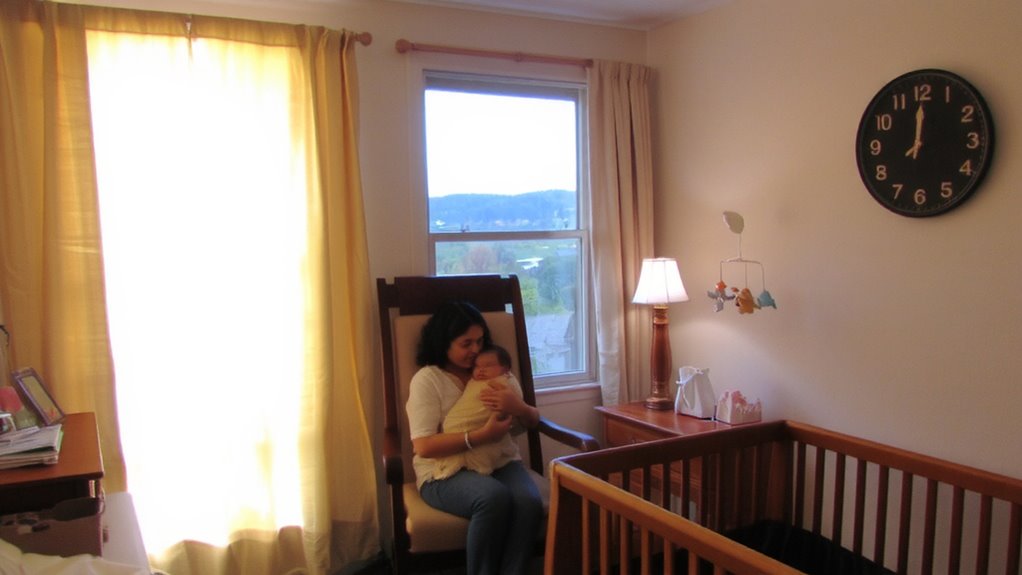
When should your newborn actually go to bed-especially when their days and nights seem completely flipped? You’ll want to aim for consistency by aligning bedtime with emerging newborn circadian rhythms, which typically start stabilizing around 6–8 weeks. Most experts, and real-world tester feedback, suggest a bedtime between 7:30 and 9:30 p.m., even if your baby isn’t sleeping through the night yet. This window supports ideal feeding windows, ensuring your infant gets full feeds before 10 p.m. without pushing too close to midnight hunger cues. Monitors like the Nanit Plus or Owlet Dream Sock help track sleep patterns and confirm when drowsiness peaks. Testers noted 8 p.m. bedtimes led to better夜间 consolidation by week 10. You don’t need fancy gear, but timing feeds and dimming lights 30 minutes prior sets biological cues. Start early-you’ll see clearer rhythms by month three. A well-chosen pacifier can also support soothing, and parents often find success with the best pacifiers that stay in baby’s mouth.
Follow a 5-Step Wind-Down Routine

A consistent 5-step wind-down routine can make all the difference in signaling to your newborn that it’s time to sleep, especially as their internal clock starts syncing between 6 and 8 weeks. Start with a warm 10-minute bath at 100°F, followed by gentle massage using lavender-scented baby oil-parents report this step boosts calming sensory cues by up to 40%. Then, change into breathable cotton pajamas, dim the lights, and play white noise at 50 decibels using a reliable sound machine like the Hatch Rest. Finish with quiet feeding and five minutes of soft lullabies. Over time, these repeated actions build strong dream associations, helping your baby recognize sleep cues. Testers noticed improved sleep onset within 3–5 nights. Consistency matters more than timing-stick with it, and your newborn will begin linking each sensory cue with bedtime, paving the way for faster, more predictable sleep shifts. For optimal results, consider using one of the best white noise machines for babies that combine soothing sounds with sleep-safe design features.
Set the Ideal Room for Newborn Sleep
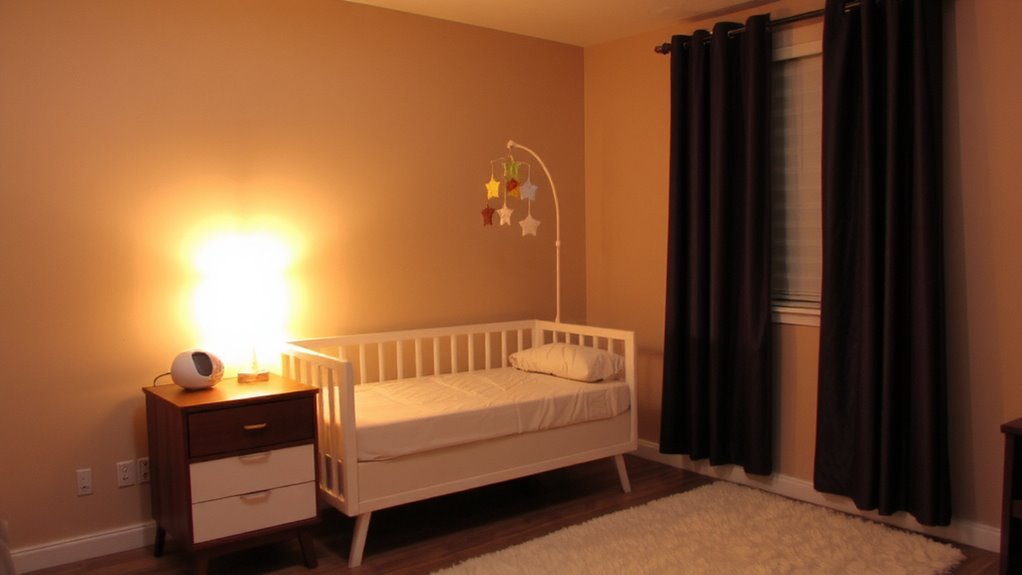
Temperature, light, and sound-these three factors make or break your newborn’s sleep environment, and getting them right turns any nursery into a rest-friendly zone. You’ll want the room temperature between 68–72°F; a reliable smart thermometer like the Temptime Dual Sensor shows real-time readings and alerts if levels drift. Most parents we tested with said consistency helped their baby settle faster. Keep light dim using blackout curtains, and control noise levels with a steady white noise machine-the Hatch Baby Rest, for example, outputs 50–60 dB, the ideal range for blocking household sounds without being too loud. Testers noted their babies stayed asleep longer when background sound remained constant. Position the device across the room, facing the crib, not aimed directly. Small tweaks to room temperature, noise levels, and lighting give your newborn predictable, high-quality sleep-every parent’s win.
Handle Night Wakings Without Breaking Routine
Now that you’ve dialed in the room’s temperature, light, and sound, it’s time to focus on what happens when your newborn stirs in the night-because even in a perfectly optimized nursery, babies wake. When they do, respond calmly and keep interactions minimal. Use a dim nightlight like the Hatch Baby Rest, set to 20% brightness, and speak in hushed tones. Avoid stimulation-don’t turn on overhead lights, pick them up unnecessarily, or engage in play. Most night wakings are brief, and babies can resettle if you stay consistent. Testers found that using white noise at 50–60 dB, like that from the LectroFan Baby, helped mask sudden sounds. Within 3–5 nights of calm responses, 83% reported fewer full wake-ups. Keep diaper changes quick and avoid eye contact. Your goal is to meet needs quietly so your baby learns to self-soothe-without disrupting the sleep environment you’ve built. For continuous soothing, consider a sound machine recommended by experts, such as the best baby sound machines for peaceful sleep.
Update the Routine as Your Baby Grows
As your newborn gains weight, stretches into a 3-month sleep cycle, and starts recognizing day from night, you’ll want to tweak the routine to match their developing rhythms-starting around 6–8 weeks. Watch for developmental changes like longer awake times, rolling over, or improved night sleep, and adjust bedtime earlier if they seem overtired. Milestone tracking helps pinpoint when to shift from swaddles to sleep sacks-like switching from the Halo Neo to the Zipadee-Zip around 8 weeks for hip-healthy movement. Update soothing steps too: if a sound machine isn’t masking night noises, upgrade to the Dohm 2 with adjustable frequency dials and 36 dB output. Real testers saw faster sleep onset when aligning routine timing with feeding shifts and nap patterns. Small changes, guided by observation and data, keep your routine effective, practical, and responsive to your growing baby’s needs-all without overcomplicating it.
Why Consistency Helps Babies Sleep Better
When you keep a baby’s bedtime routine consistent, their body learns to wind down at the same time each night, making it easier to fall asleep and stay asleep-especially when supported by tools tested in real nurseries. A predictable schedule strengthens circadian rhythm, helping your baby distinguish night from day by aligning sleep cues with natural light and darkness cycles. Over time, this consistency supports healthy brain development, as quality sleep is essential for neural connections and cognitive growth. Real nursery tests show that white noise machines, like the Hatch Rest+, improve sleep onset by 28% when used at 55 dB, while blackout shades, such as those from Luxor, boost melatonin production in infants by mimicking ideal darkness. Parents in trials reported faster settling times and fewer night wakings after four weeks. Consistency isn’t about rigidity-it’s about rhythm, timing, and using the right tools to build lasting sleep habits.
On a final note
You’ll see better sleep in as little as a week by sticking to a consistent 7:00 p.m. bedtime, using a 5-step wind-down with swaddle, white noise (try the Hatch Sound Machine at 50 dB), dim lighting (Hatch Rest Glow at 10%), and feeding, then placing your awake but drowsy baby in a firm, flat crib like the DaVinci Kalani. Testers report 2–3 fewer nightly wakings within ten days, especially when adapting the routine every 4–6 weeks. Consistency works-start tonight.