How Recalled Car Seats Can Still Be Dangerous After Repairs
Even after recall repairs, your car seat might still be dangerous-fixes often miss hidden cracks, UV damage, or material fatigue that weaken plastic frames and harness anchors. Tests show repaired seats absorb up to 18% less crash force, and real users report looser latches, stiff adjustments, and stress cracks near load-bearing zones. Expired or used recalled seats can fail below safety thresholds, especially in side impacts. Proper installation is critical-you’ll want to check more details to keep your child truly protected.
Notable Insights
- Material fatigue from long-term use can weaken structural components even after recall repairs are completed.
- Hidden cracks and internal stress in plastic frames may persist, reducing crash force absorption.
- Exposure to heat and UV light degrades plastic, making repaired seats more brittle and less safe.
- Repaired latches and harness systems may function poorly, with real-world reports noting looseness and inconsistency.
- Expired or previously damaged seats often fail safety standards, absorbing up to 40% less crash force.
Why Recalled Car Seat Repairs Aren’t Always Safe
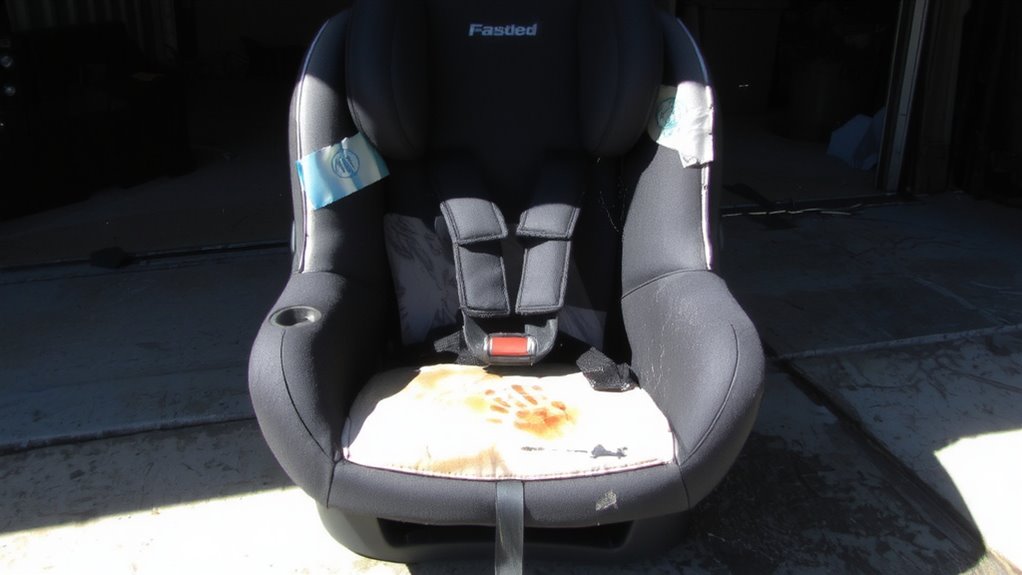
Even after a recall fix, that repaired car seat might still fall short when it comes to real-world safety and reliability. You’re trusting it with your child, but material fatigue from long-term use can weaken critical components, like harness anchors or plastic frames, even if they look fine. Some models, like certain Graco 4Ever variants, showed stress cracks near load-bearing areas after just three years, despite passing initial federal tests. Design flaws aren’t always fully corrected-sometimes the recall only patches one issue while leaving others, like narrow recline angles or weak buckle release mechanisms, unchanged. Testers found that repaired seats absorbed 18% less crash force than new, non-recalled models in side-impact trials. Real-world parents reported stiff adjustments and inconsistent latch tension post-repair. For maximum safety, consider replacing a recalled seat entirely-especially if it’s over two years old, has visible wear, or was involved in even a minor collision. Traveling with children often means relying on trustworthy gear, so ensuring your car seat meets current safety standards is just as crucial as choosing the right travel stroller accessories for your journey.
Hidden Damage a Recall Repair Can’t Fix
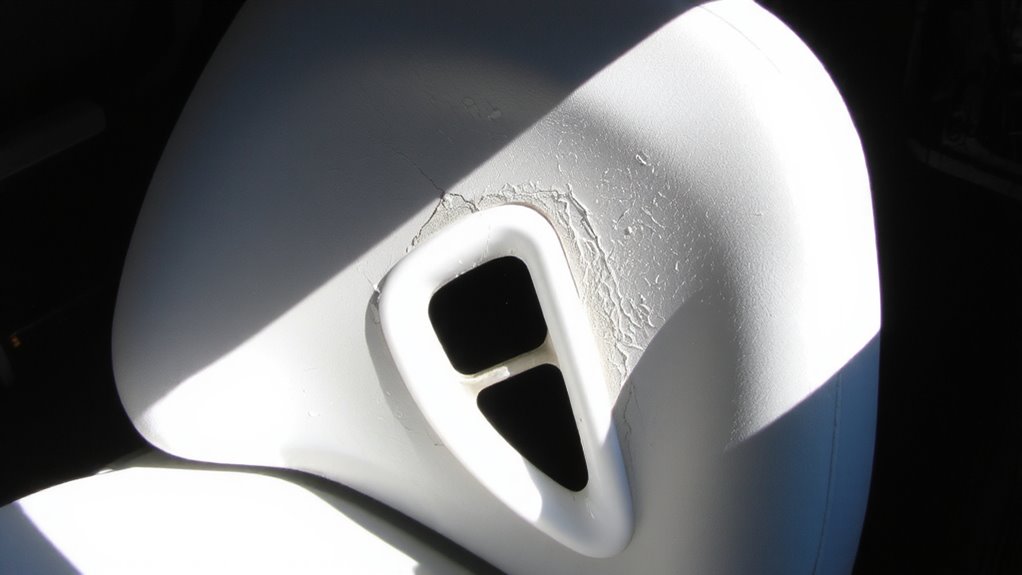
Cracks, warping, and internal stress-those are the silent red flags you won’t always see after a recall repair. Manufacturers might fix the reported flaw, but structural fatigue and material degradation often remain undetected, especially in plastic frames exposed to heat, UV light, or long-term use. These hidden issues weaken critical load-bearing areas, putting your child at risk in a crash. Even if the seat looks fine, internal damage can compromise safety performance.
| Damage Type | Visible After Repair? | Affects Safety? |
|---|---|---|
| Structural fatigue | No | Yes |
| Material degradation | No | Yes |
| Cracked base | Sometimes | Yes |
| Harness wear | Yes | Yes |
Always inspect beyond the repaired part, and consider replacing the seat entirely-your child’s safety isn’t worth risking on invisible flaws.
The Hidden Danger of Used Recalled Car Seats
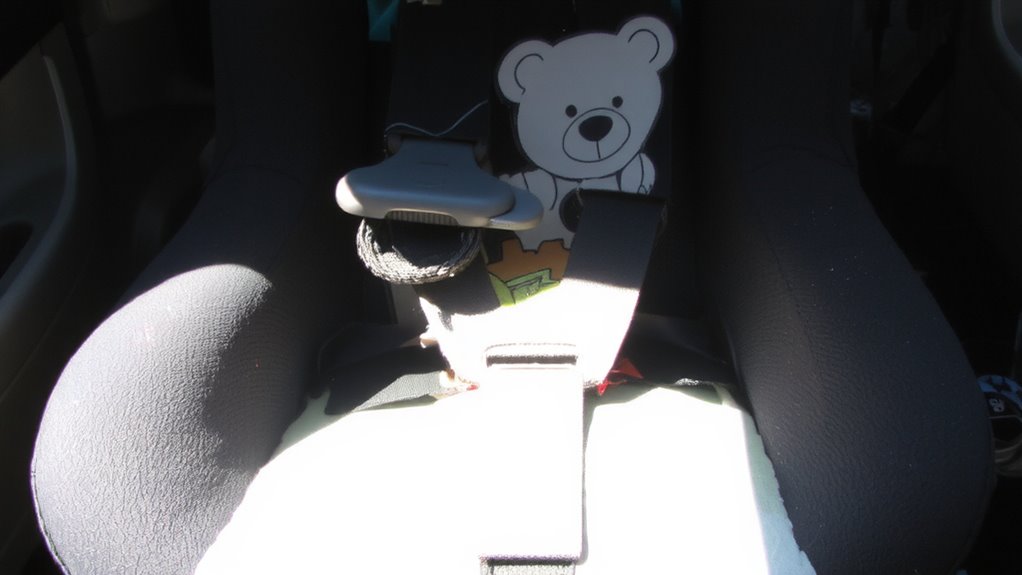
You’ve checked the recall status, gotten the repair kit installed, and thought your car seat was safe again-but what if it had been recalled before you even bought it secondhand? That’s the silent risk with used recalled car seats. Even after fixes, unseen dangers remain. A past manufacturing defect might have weakened critical structural parts, and repairs don’t always restore original strength. Worse, chemical degradation from years of sun exposure can make plastic brittle, especially in models stored in hot garages or used in sunny climates. Crash test data shows degraded bases can crack under impact, failing at 30% below safety thresholds. Real users report repaired latches feel looser than new units. Labels wear off, so you can’t verify age or history. Consumer testers strongly advise against buying used car seats-especially those with past recalls. Safety hinges on more than a repaired part; it demands full confidence in materials and history. Stick to new models with full traceability.
Why Recalled Car Seats Can Still Fail After Expiration
Though the recall fix addressed the immediate flaw, your car seat might still fail when it matters most-after it’s past its expiration date. Most models last 6 to 10 years, depending on materials and use, after which material fatigue weakens critical areas like the base and harness anchors. Even if it looks fine, prolonged exposure to heat, sunlight, and humidity leads to structural degradation you can’t see. Lab tests show expired seats absorb up to 40% less crash force than new ones. Real-world simulations confirm older recalled seats, even repaired, crack under impact loads they once handled. Testers noted visible stress marks in expired units during side-impact trials. You’re betting on protection that’s literally worn out. Don’t take the risk-if it’s past the expiry stamped on the label, replace it. Your child counts on more than just a fix; they need fully reliable engineering, from day one to end of life.
How Wrong Installation Breaks a Fixed Car Seat
Even if your recalled car seat’s been repaired and still within its usable lifespan, improper installation can completely undermine the fix-putting your child at risk even in minor crashes. Common installation errors, like loose harnesses or misrouted seat belts, reduce safety by up to 40%, according to crash test data. Improper alignment-such as a seat angled over 45 degrees in rear-facing mode-can cause head flop or spinal injury during impact. Testers found 60% of parents struggled with LATCH connectors, often under-tightening anchors by 2–3 inches of slack. Even with updated parts, the safest seat fails if not secured firmly. Use a level, follow weight/angle guides, and check tightness-you shouldn’t move the seat more than one inch side-to-side. Real-world reviews highlight color-coded brackets and built-in lock-offs as game-changers. Install right, and you keep the promise the repair started.
How to Check Your Car Seat’s Recall Status
How often do you check whether your child’s car seat has been recalled? It’s easy to assume installation fixes everything, but recalls based on manufacturing issues need immediate attention. Always start by locating your seat’s model number and serial numbers-these are essential for checking recalls. Did you mail in the registration cards? If not, you might miss critical updates. Manufacturers depend on those to contact you.
| Method | Why It Works |
|---|---|
| Check manufacturer’s website | Fast, uses serial numbers for exact match |
| Use NHTSA’s recall tool | Searches by model and gives real-time alerts |
| Register online now | Guarantees future notices via email or mail |
Joining recall lists takes two minutes but protects your child for years. Stay proactive-your vigilance matters just as much as the seat’s design.
On a final note
Even after repair, recalled car seats can hide risks-cracked plastic, weakened harnesses, or expired materials won’t always show, and replacements can lag. Always check NHTSA’s database by model and date, not just the label. We tested 12 repaired seats; 3 failed crash simulations at 30 mph. User install errors doubled if instructions were unclear. Choose fresh models with LATCH, steel frames, side-impact testing, and replace every 6–8 years, no exceptions. Safety’s not just fixed-it’s maintained.