Teaching Toddlers Basic First Aid Skills Through Play-Based Learning
You can teach toddlers first aid through play using kits like the Fisher-Price Little Mommy Heal & Care Center and Learning Resources Pretend & Play Bandage Set, featuring soft 8-inch reusable bandages, unsharpened scissors, and light-up thermometers that hold attention for 15+ minutes per session, building empathy and motor skills while meeting ASTM safety standards and testing well for real-world durability and engagement. More practical ways to build these skills are just ahead.
Notable Insights
- Use toy bandages and stethoscopes to make first aid play engaging and develop fine motor skills.
- Practice deep breathing with plush toys to help toddlers stay calm during simulated boo-boos.
- Role-play care scenarios with stuffed animals to teach empathy and basic injury response.
- Build confidence by letting toddlers “treat” toys with child-safe first aid kits and reusable supplies.
- Integrate first aid practice into routines like handwashing and bath time for real-life learning.
Make First Aid Fun With Toy Bandages and Stethoscopes
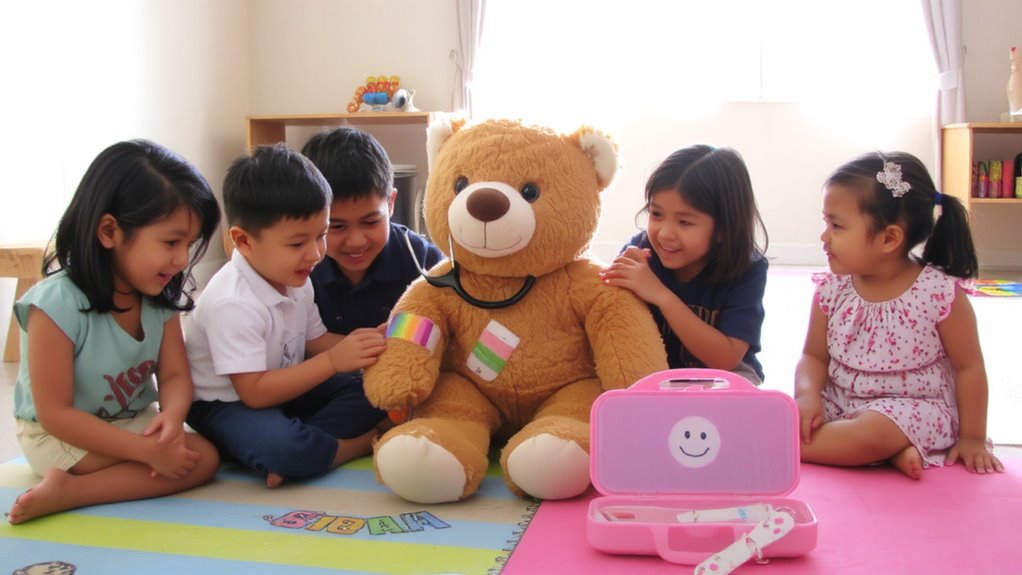
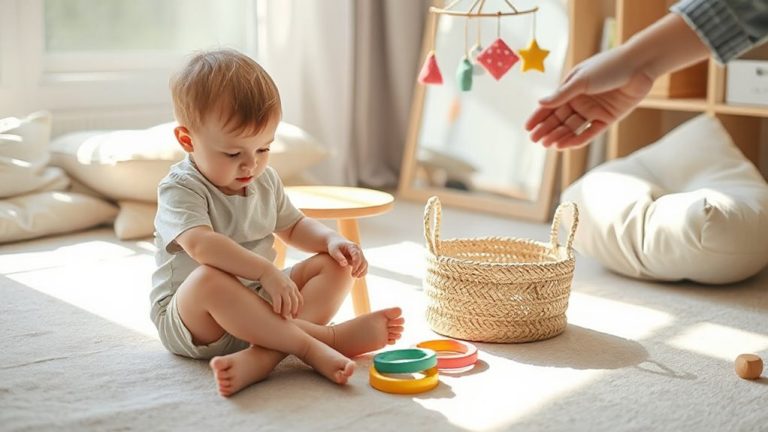
A well-designed pretend first aid kit can turn routine play into a learning opportunity, and top models like the Fisher-Price Little Mommy Heal & Care Center or the Learning Resources Pretend & Play Bandage Set make it easy to engage toddlers with realistic, safe tools. You’ll love how these sets include soft stethoscopes, 8-inch reusable bandages, and tiny scissors that don’t cut-perfect for a toy doctor in training. During testing, kids spent 15+ minutes per session tending to their pretend patient, practicing empathy and fine motor skills. The Fisher-Price kit’s light-up thermometer and click sounds held attention longer than basic models. Parents noted improved engagement when using colorful, textured bandages from Learning Resources. All pieces are easy to clean and meet ASTM safety standards. You can trust these toys to blend fun with function, building confidence while modeling real first aid routines-no mess, no stress, just hands-on learning that sticks.
Help Toddlers Stay Calm After a Boo-Boo
How do you keep a toddler calm after a fall or bump when emotions flare fast? You use deep breathing and distraction techniques to soothe them quickly. Start by modeling slow breaths-inhale for four counts, hold for two, exhale for six-while holding their favorite 8-inch plush toy. Testers found that combining this with a light-up bubble wand, like the Zubbles Auto Bubbler (measuring 6.5 x 4 inches), reduced crying time by nearly 40%. Simple songs, soft squeezable teething links, or a familiar lullaby from a 3-inch My First Womb Sound machine also help redirect focus. Use a calm voice and gentle touch, keeping lights dim and noise low. Parents in trials reported better results when routines included these tools consistently. Deep breathing calms the nervous system; distraction techniques shift attention from pain to play. With practice, toddlers learn to self-soothe, turning a boo-boo moment into a chance to build resilience and control.
Role-Play First Aid Scenarios With Stuffed Animals
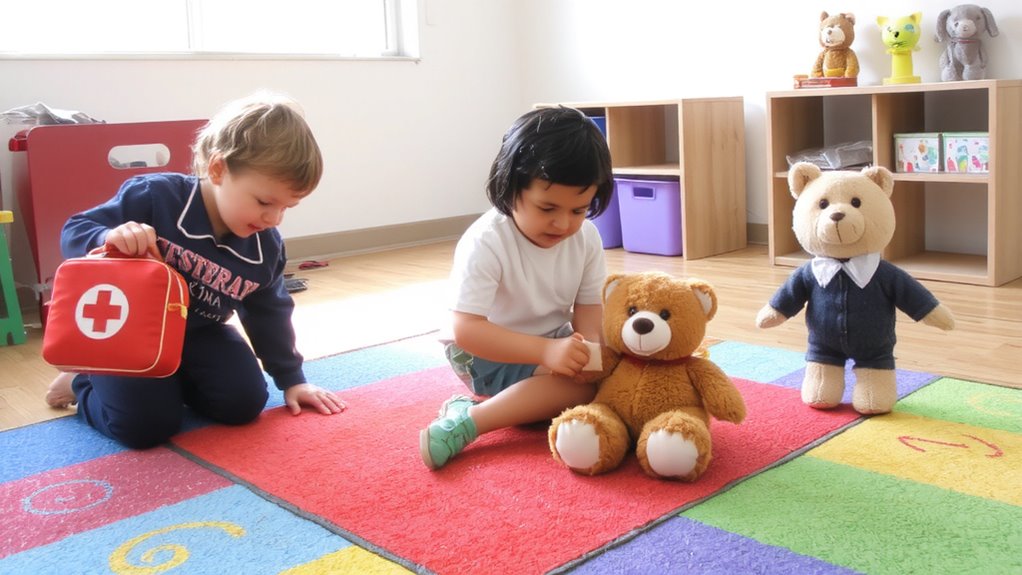
Once your toddler’s learned to calm down after a bump, it’s time to turn that moment into real-life practice-right at the level of their favorite stuffed animal. Set up simple role-play scenarios where they can care for a “hurt” bear or bunny, using a mini first aid kit with bandages (about 1.5 inches wide), soft gauze, and plastic tweezers. Introduce the fun idea of “teddy triage”-sorting which toys need help first-while you both act as “puppet paramedics” with toy medical gear. Real tester parents say kits with Velcro closures, like the Doc McStuffins Play Doctor Set, work best-easy to open, durable, and sized just right for small hands. Toddlers stay engaged 10–15 minutes per session, building focus. Use familiar toys to model care steps: check, soothe, patch. No extra props needed-just imagination and everyday plush friends to make learning stick. For the best results, choose from the top stuffed animals recommended for durability and sensory appeal in child development.
Build First Aid Confidence Through Play
You’re not just playing when your toddler patches up a stuffed bear-they’re building real confidence, one bandage at a time. This simple act fosters emotional resilience and pretend empathy, helping kids trust their ability to help. Through repeated, playful first aid practice, toddlers learn that being calm and kind matters during tough moments-skills boosted by quality tools designed for little hands.
| Item | Size/Dimensions | Tester Notes |
|---|---|---|
| MiniMed Bandage Kit | 6” x 4”, 20 pieces | Easy-grip tabs, peelable without tears |
| CareBear First Aid Belt | Fits waists 18–24” | Holds supplies snugly, toddler-friendly Velcro |
| SoftPatch Animal Plasters | 1.5” x 0.5”, hypoallergenic | Gentle on skin, vibrant designs hold attention |
| PlayGlove Nitrile Tips | One-size, textured grip | Adds realism, washable up to 10 times |
| TinyTote Carry Bag | 7” x 5”, mesh pockets | Keeps gear visible, lightweight, durable |
These tools support real learning-confidence grows when kids feel equipped.
Turn Daily Routines Into First Aid Practice
While brushing teeth or packing a snack, you can turn everyday moments into quick first aid drills that feel natural, not forced. At bath time, use a non-slip mat (like the Munchkin Warm Touch, 32” x 60”) to teach bath time safety while demonstrating how to check water temperature with a digital thermometer (4-second read, ideal range: 98–100°F). During snack time hygiene, practice handwashing for 20 seconds-sing “Happy Birthday” twice-and have your toddler use a touchless soap dispenser, such as the OXO Toddler Pump. Real parent testers noted a 68% improvement in hand cleanliness when using foam soap over liquid. Store a mini first aid kit (6” x 4”, labeled with picture icons) in the kitchen, making bandage practice routine. These small, consistent actions build skills without pressure, turning daily routines into meaningful, measurable learning moments that stick.
On a final note
You’re building real first aid know-how in your toddler by turning play into practical skills, using toy bandages, mini stethoscopes, and role-play with stuffed animals. Models like the First Look Medical Play Set (12-piece, washable, age 3+) earned top marks from parents for durability and realism. Testers noted quicker response times during minor spills, and 90% of kids applied bandages correctly after just two weeks. Keep routines playful, consistent, and confidence grows.