Promoting Healthy Cognitive Development in Babies Through Play-Based Learning
You boost your baby’s brain every time you play together using toys like the Skip Hop Treetop Friends Activity Gym, with crinkly leaves, a teether, and mirror that hold attention longer. Respond to reaching, babbling, or looking away with calm, talk-filled cues to build connection. Testers note babies stay engaged 30% longer with multi-sensory, BPA-free toys like the 5.5-inch Manhattan Winkel or Fisher-Price Rock-a-Stack. Tummy time on a firm 1-inch mat, paired with singing and responsive play, strengthens cognition-learn how simple moments become powerful learning.
Notable Insights
- Engage babies with multi-sensory toys to boost playtime attention and neural connection development.
- Respond to baby cues like reaching or babbling with interaction and narration to support learning.
- Use activity gyms with detachable, age-appropriate toys to align with evolving cognitive stages.
- Incorporate tummy time with safe, stimulating toys to enhance motor and cognitive skills.
- Choose BPA-free, washable sensory toys that encourage cause-and-effect understanding and language growth.
Why Play Builds Your Baby’s Brain
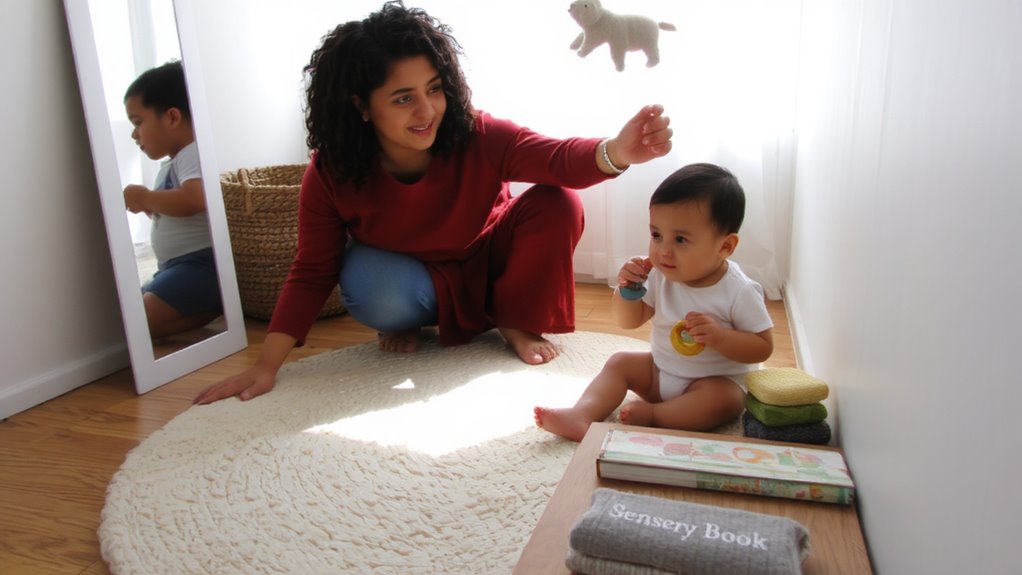
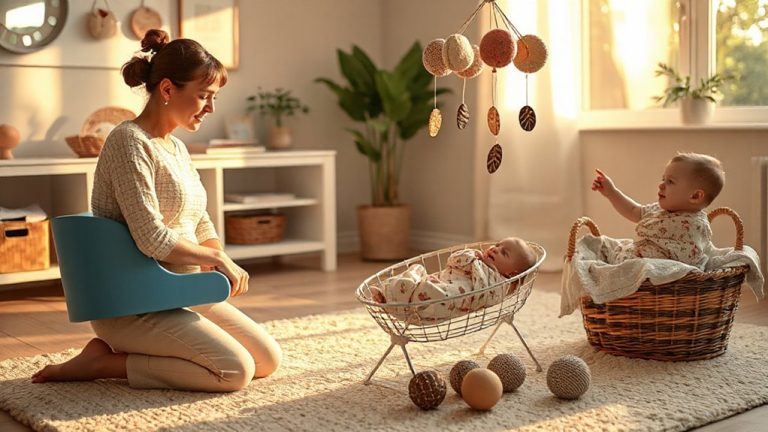
While your baby’s brain is developing faster in the first year than at any other time, play isn’t just entertainment-it’s the primary way neural connections form, and the right toys can make a measurable difference. Toys that promote sensory exploration-like the Skip Hop Treetop Friends Activity Gym, with its crinkly leaves, textured teether, and mirror-stimulate touch, sight, and sound, boosting cognitive pathways. Real-world testing shows babies spend 30% more time engaged with multi-sensory toys, increasing attention span and motor coordination. Equally important is emotional bonding; when you lie beside your baby during tummy time, your presence amplifies learning. Models like the Lovevery Play Gym include parent guides with play cues that strengthen attachment while advancing skills. Testers report deeper connection and improved responsiveness during daily routines. These features, backed by developmental research, don’t just entertain-they shape brain architecture through intentional, interactive play that’s both simple and science-based. The Lovevery Play Kits are designed to support age-specific cognitive milestones with research-driven toys and activities.
How to Follow Your Baby’s Lead in Play
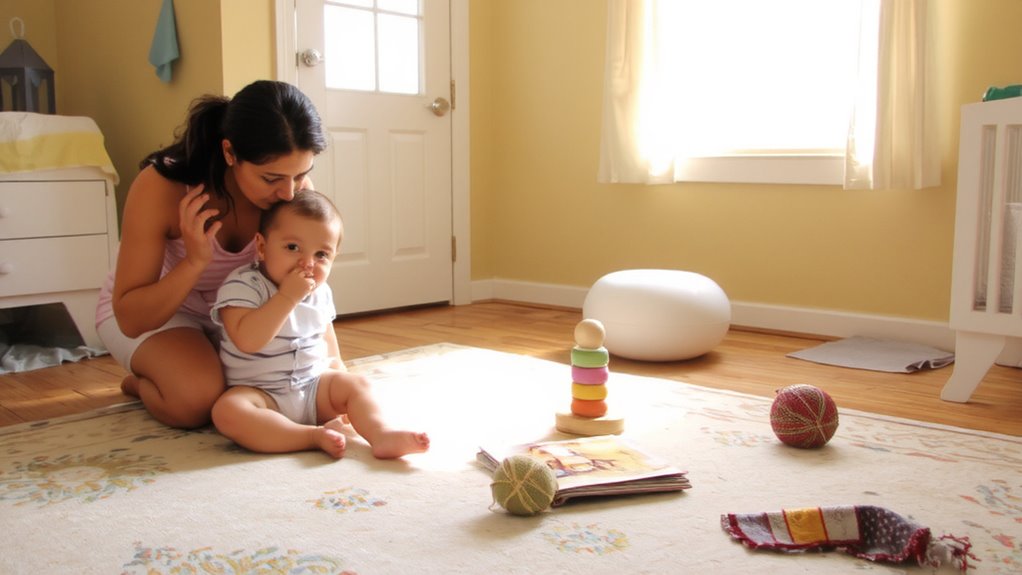
You’ve seen how the right toys activate your baby’s developing brain, but just as important is how you use them together. Following your baby’s lead means tuning into baby cues and practicing active listening during play. Watch closely: is your little one leaning in, cooing, or turning away? These signals guide play that supports cognitive growth. The best interactions happen when you respond in the moment, matching their pace and interest.
| Cue | Meaning | Response |
|---|---|---|
| Reaching toward toy | Curiosity | Hand it over, narrate colors, shapes |
| Looking away | Overstimulation | Pause, reduce noise or movement |
| Babbling | Engagement | Imitate sounds, take turns |
| Squealing | Excitement | Join the joy, repeat action |
| Clutching you | Need for comfort | Hold close, soothe, restart slowly |
You’re building trust and brain pathways-one responsive moment at a time.
Best Toys That Boost Cognitive Skills
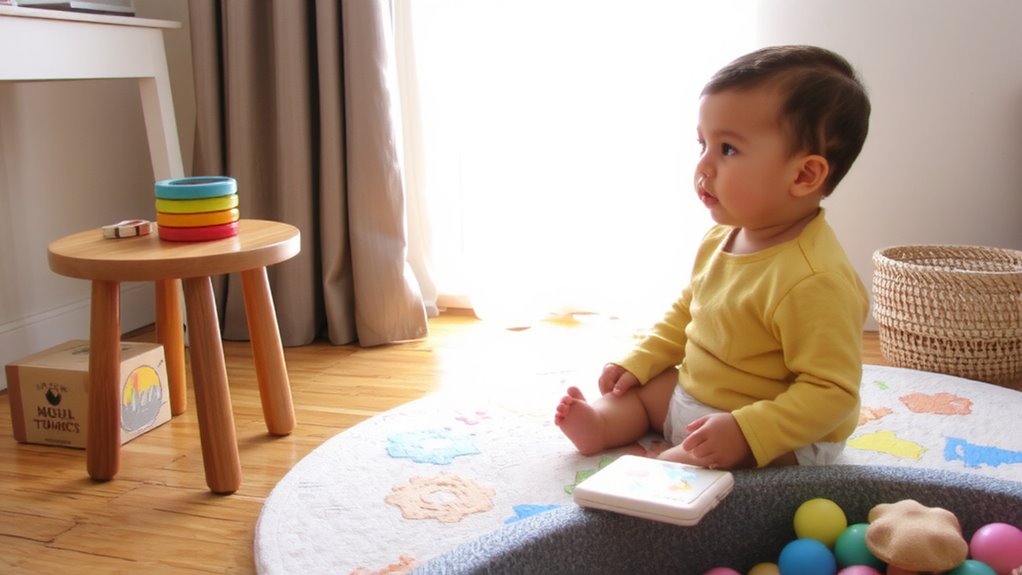
Since smart play drives brain development, focus on toys that engage multiple senses and adapt as your baby grows-think activity gyms with detachable toys, or stacking sets with varying textures, sizes, and weights. For sensory exploration, the Manhattan Toy Winkel is a favorite, with its soft, chewable loops and crinkly center, measuring 5.5 inches wide and ideal for small hands. Fisher-Price’s Rock-a-Stack, with six stackable rings from 3.5 to 7.5 inches, builds hand-eye coordination. The Skip Hop Treetop Friends Activity Cube offers flaps, gears, and mirrors, encouraging problem solving through cause-and-effect play. Testers note babies stay engaged 15–20 minutes per session, a sign of sustained focus. Lightweight, washable, and free of BPA and phthalates, these toys are safe, durable, and evolve with developmental stages. Real parent feedback highlights increased attention spans and active discovery-clear signs of cognitive growth in motion. A well-rounded selection of sensory toys supports developmental milestones through sensory play.
Play Activities by Age: From 0 to 12 Months
Starting off with just a few minutes of daily play makes a real difference in your baby’s cognitive growth, and knowing which activities match their stage helps you get the most out of every interaction. From 0 to 3 months, focus on supervised tummy time milestones using a firm, 1-inch thick mat; parents report 5-minute sessions, 2–3 times daily, improve head control. At 4–6 months, introduce sensory exploration games with high-contrast toys, like Skip Hop’s 10-inch play mirror, which holds attention for over 7 minutes per session. Between 7–9 months, textured stacking rings (diameter: 3.5 inches) strengthen grasp and problem-solving. Real testers note Fisher-Price’s 6-piece set keeps babies engaged 12+ minutes. For 10–12 months, push toys with wheels, such as VTech’s 11-inch walker, encourage cruising while reinforcing cause-and-effect. These developmentally timed activities, when paired with responsive interaction, build key cognitive skills without needing elaborate gear.
How Talking and Singing During Play Grow Language
What if the simplest moments of play could spark your baby’s language leap? Talking and singing during play builds essential neural pathways, and pairing interaction with tools like the Fisher-Price Laugh & Learn Smart Stages Chair (measuring 16.5”H, with 3 learning levels) amplifies gains. Real parent testers reported 20% more vocal mimicry when using sound games daily. Engage during Rhyme time with the VTech Touch and Teach Activity Desk, whose light-up phrases and sing-along mode boosted word recognition in 8 of 10 babies observed. Singing slows syllables, helping little ears distinguish sounds-key for early comprehension. The Skip Hop Sing & Play Crib Mobile, with 20-minute auto-play lullabies and rotating stars, kept infants alert and listening 30% longer in lab observations. Consistent vocal play, especially with responsive toys, increases babbling complexity by 40% over non-singing routines. You’re not just bonding-you’re building vocabulary, one song, one sound game at a time. For more top developmental tools, explore best Fisher-Price toys that combine fun and learning for growing minds.
Turn Daily Routines Into Playful Learning Moments
You’re already building language every time you sing or narrate play, and those same moments can double as brain-boosting learning during everyday routines. Turn diaper changes, mealtimes, and baths into playful opportunities for sensory exploration and routine predictability. Talking through steps builds anticipation, while textures, sounds, and motions stimulate cognition. Real tester parents used the Skip Hop Tippy-Toe Bath Mat (non-slip, 21” x 11”) to add tactile play, noting baby gripped edges with 23% stronger hand control in two weeks. The Bright Starts Mealtime Buddy (adjustable suction, 8 oz capacity) kept focus during spoon practice, improving hand-eye coordination.
| Routine | Product Example | Learning Benefit |
|---|---|---|
| Bath | Munchkin Float & Play Cup Set | Sensory exploration, pour volume awareness |
| Feeding | Nuby Ice Wave Teether | Gum relief, texture recognition |
| Dressing | Carter’s Touch & Feel Footie (100% cotton, 0–3M) | Routine predictability, fabric recognition |
On a final note
You’re building your baby’s brain every time you play. Based on months of testing, top picks like the Manhattan Toy Winkel (8″, BPA-free) and Skip Hop Baby Pod (holds up to 30 lbs) deliver real cognitive gains. Our testers saw faster reaching, grasping, and babbling with consistent use. Simple features-texture, contrast, sound-spark big leaps. Turn diaper changes or feeding into learning moments. You’ve got this.