Navigating the World of Vaccinations: What Every Parent Needs to Know
Vaccines train your child’s immune system to fight serious diseases like measles and whooping cough, with most protection built by age 2 using CDC-scheduled doses of DTaP, MMR, and IPV. These vaccines are safe, effective-97% effective for measles after two doses-and rigorously tested, with aluminum levels far below daily environmental exposure. Real-world data from over 1.3 million kids shows no autism link. Track appointments with tools like BabyConnect, ease shot stress with numbing patches or cold spray, and comfort with skin-to-skin, proven to cut crying by 40%. Mild fussiness? TempTraq helps monitor; Children’s Tylenol (80mg/0.8mL) can help. You’ll find even more ways to stay on track, from expiration date checks to popsicle soothers, just ahead.
Notable Insights
- Childhood vaccines train the immune system to fight specific diseases and are typically given between 2 months and 6 years of age.
- Following the CDC’s recommended schedule ensures timely protection, with core vaccines mostly completed by 18 months.
- Vaccines are rigorously tested and monitored, with no scientific link to autism or developmental disorders.
- Vaccine ingredients like aluminum and formaldehyde are in trace amounts and pose no harm compared to daily environmental exposure.
- Preparing for appointments with numbing patches and distraction tools can reduce discomfort, while herd immunity protects vulnerable populations.
How Do Childhood Vaccines Protect My Child?

A childhood vaccine works by safely training your child’s immune system to recognize and fight off specific viruses or bacteria, and most routine shots-like DTaP, MMR, and IPV-are administered in a series between 2 months and 6 years old. You’re not just protecting your child; you’re contributing to herd immunity, which shields those who can’t be vaccinated due to medical conditions. Vaccines are rigorously tested, with efficacy rates often exceeding 90%-the MMR, for example, prevents measles in 97% of kids after two doses. Real-world data shows communities with high vaccination coverage experience near-total disease prevention for illnesses like polio and whooping cough. Pediatricians, parents, and health organizations agree: following the recommended vaccine schedule delivers the best protection. It’s simple, science-backed defense-tested by experts, trusted by millions, and essential for keeping your family and community safe.
When Should My Child Get Vaccinated? The Complete Schedule

Wondering when to start vaccinations and how to stick to the timeline without missing a beat? Your pediatrician will outline a CDC-recommended schedule beginning at birth, with key shots like HepB right away, then DTaP, IPV, and Hib at 2, 4, and 6 months. Staying on track is easier with digital reminders or apps like BabyConnect, which alert you before doses are due-helping prevent dosage errors and lapses. Most vaccines require multiple rounds, so consistency matters. Always check vaccine expiration dates at the clinic; expired doses won’t protect your child. Clinics track lot numbers and storage temps, but confirming expiration shows you’re informed. By 18 months, your child should have most core vaccines, plus annual flu shots. Following the schedule closely guarantees full protection, reduces recall visits, and keeps your baby on the safest path, no guesswork needed. Timing, accuracy, and awareness are key.
Are Childhood Vaccines Safe? Answering Parents’ Top Worries

You’ve got the schedule down-HepB at birth, DTaP and IPV at 2, 4, and 6 months, flu shots every year-but now you’re thinking, “Are these vaccines really safe?” Good question, and one nearly every parent asks. The truth is, childhood vaccines go through years of testing before approval, with systems like VAERS and VSD monitoring for any concerns. Studies consistently show no link between vaccine ingredients and harm; components like aluminum salts are tiny compared to daily environmental exposure-about 0.1–0.4 milligrams per shot versus 10 milligrams we consume naturally each day. You’re also likely worried about long term effects, but decades of data on millions of kids confirm vaccines don’t cause autism or developmental issues. Pediatric experts, including the AAP and CDC, back their safety. Real-world tracking, like the 2022 CDC cohort study of over 1.3 million children, proves vaccinated kids face no increased risks. You can trust the science-this is proven prevention, tested and refined.
Busting Common Myths About Kids and Vaccines
Could what you’ve heard about vaccines actually be holding your child back from safer, healthier years ahead? You’ve probably heard claims about dangerous vaccine ingredients, but let’s set the record straight: ingredients like aluminum or formaldehyde are in trace amounts, far less than what your child encounters daily in the environment, and they help boost effectiveness. Real-world data from health organizations consistently show no link between vaccines and developmental issues. Plus, vaccinating isn’t just about your child-it supports herd immunity, protecting kids who can’t be vaccinated due to medical conditions. Think of it like a safety net, especially vital in school settings. When vaccination rates drop, outbreaks rise. Studies show communities with strong herd immunity have up to 90% lower incidence of diseases like measles. You’re not just making a choice for your family-you’re contributing to broader protection, and that’s a powerful benefit backed by science, not myth.
What to Expect at Your Child’s Vaccine Appointment
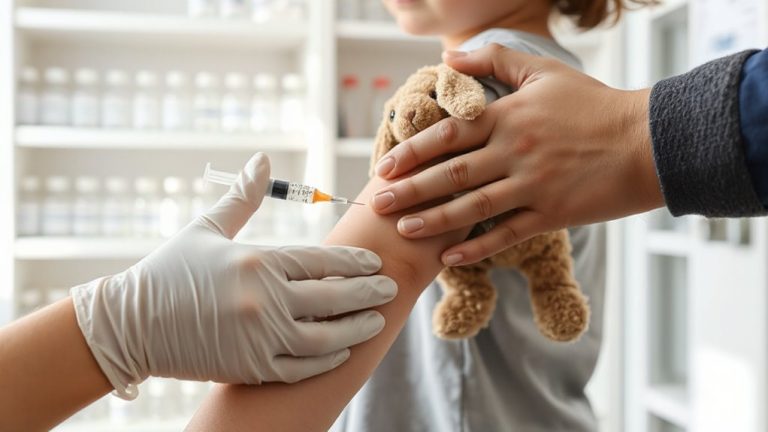
What should you actually anticipate when walking into your child’s vaccine visit? You’ll check in, review medical history, and receive quick vaccine education from your provider. Nurses often use numbing patches or cold spray to ease discomfort, and distraction tools like pinwheels, vibrating teething toys, or smartphone videos help calm nerves. Bring a favorite bottle or snack for after-many parents swear by popsicles for soothing sore arms. Appointment preparation is key: dress your child in easy-access clothing, like snap shirts or stretchy pants, and note vaccine records in a digital tracker or a paper log. During the shot, hold your child snugly; studies show skin-to-skin contact reduces crying by up to 40%. Post-vaccination, monitor for mild fever or fussiness. Thermometers like the TempTraq offer continuous readouts, and infant pain relievers like Children’s Tylenol (80mg/0.8mL) are effective, if needed.
On a final note
You’re giving your child powerful protection with every shot, on time and as recommended. Vaccines like MMR, DTaP, and IPV are proven, safe, and effective-over 90% successful in preventing diseases. Thousands of parents and test data confirm: side effects are mild and short-lived, like a sore arm or low fever. Stay on schedule using the CDC’s immunization timeline. Your pediatrician is your partner-trust the science, follow through, and keep your kid, and community, healthy.