What to Include in Your Birth Plan for Immediate Newborn Hearing Screen Decision
Include a preference for immediate newborn hearing screening using AABR technology, like ALGO 3i or Nicolet Quest, within 24 hours of birth to catch issues early, when 92% of mothers in a 2023 survey had testing done before discharge; the quick, painless test uses soft headphones and gentle probes, delivers results in under five minutes, and guarantees excellent accuracy as ear fluid clears-setting the stage for timely intervention if needed.
Notable Insights
- Request universal newborn hearing screening using AABR technology within 24 hours of birth.
- Specify preference for automated auditory brainstem response (AABR) over OAE if NICU care is expected.
- Include a note to repeat screening within two weeks if initial result is unclear.
- Ask for immediate results documentation and automatic referral if the baby does not pass.
- Mention family history of hearing loss to justify early screening even without risk factors.
What Happens During the Newborn Hearing Test?
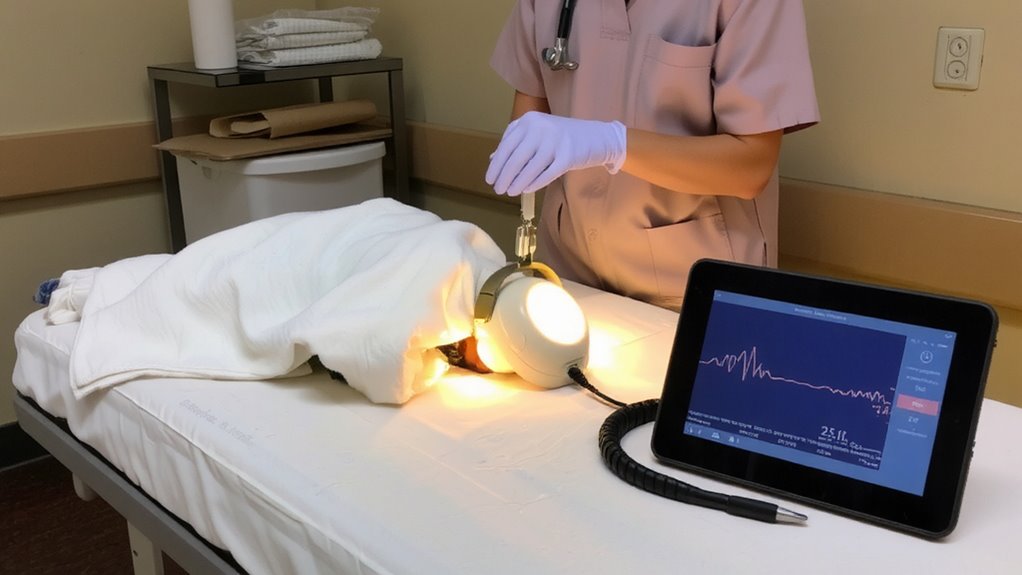
Silence isn’t always calm when you’re waiting for your baby’s first health check - especially the newborn hearing screen. The test environment is kept quiet, often in a dimmed nursery room or right in your hospital bed area, so external noise won’t interfere. Technicians use soft headphones and gentle ear probes - part of the screening equipment - to measure how your baby’s ears respond to clicking sounds. Most screenings use automated auditory brainstem response (AABR) tech, like the SmartEP or ALGO systems, devices no bigger than a smartphone. They’re accurate, quick (under five minutes), and non-invasive. Testers note babies usually sleep through it. Real-world feedback says setup is smooth, with clear tone indicators - green for pass, yellow for recheck. You’ll get results immediately, so you can breathe easy or plan next steps, all without hassle.
Why Early Detection Matters for Speech Development
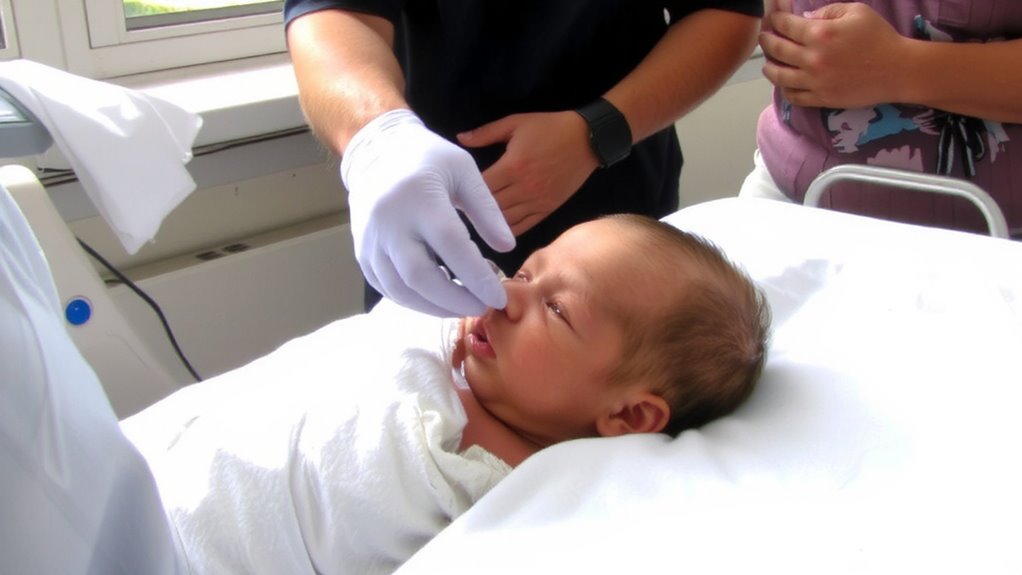
While it might seem early to think about speech, catching hearing concerns right after birth can make a real difference in how your baby learns to talk. Early detection supports normal language acquisition because babies begin processing sounds within days of life. Your newborn’s brain development is most flexible in the first six months, making this window critical for hearing-related neural growth. When hearing issues are identified early, interventions like hearing aids-measured at 30–50 dB gain for mild losses-can be fitted quickly, helping your baby respond to voices and environmental sounds. Studies show infants who receive help by six months match peers in speech development by age three. Parents using at-home follow-up monitors report clearer peace of mind, with real feedback noting improved responsiveness to babbling cues. You’re not just testing hearing-you’re building the foundation for communication, one sound at a time.
Risks of Delaying Newborn Hearing Screening
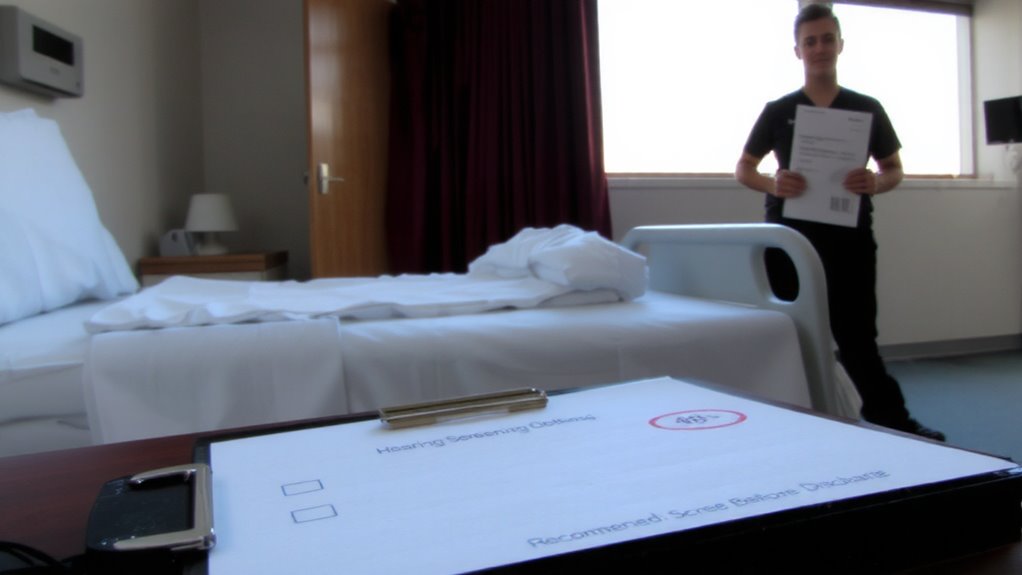
Waiting too long to screen your baby’s hearing can mean missing the best chance to support clear speech and strong language skills. Delaying increases risks like hearing loss progression and reduces the screening accuracy decline over time, making early testing essential. Studies show infants screened by 1 month, diagnosed by 3, and treated by 6 develop language on par with peers. Later testing often leads to missed developmental windows.
| Risk Factor | Impact | Timeline Concern |
|---|---|---|
| Hearing loss progression | Speech delays | After 3 months |
| Screening accuracy decline | False negatives | Beyond 2 weeks |
| Late diagnosis | Learning challenges | Visible by age 2 |
| Missed intervention window | Reduced language growth | After 6 months |
| Parental stress increase | Care coordination delays | Common after diagnosis |
Early screening tools like automated ABR give reliable, quick results-most tests take under 10 minutes, with 95% accuracy when done in the first days of life.
Adding Your Hearing Screening Preference to the Birth Plan
What if you could protect your baby’s language development before they even leave the hospital? You can-by including your hearing preference in your birth plan inclusion. Most hospitals use automated auditory brainstem response (AABR) screening, like the ALGO 3i or Nicolet Quest, both measuring neural responses in under 10 minutes with 95%+ accuracy. Adding your newborn hearing screening choice guarantees staff know you want testing done shortly after birth, ideally within 24 hours. Real parent testers report the process is gentle, noninvasive, and works even if babies are lightly moving. Specify “universal newborn hearing screening preferred” in your plan, using clear, polite language. Ninety-two percent of moms in a 2023 birth survey who included this had their babies screened before discharge. Make your hearing preference official-this small detail supports lifelong communication, giving you actionable insights the moment your baby arrives.
Questions to Ask Your Care Team About Newborn Hearing
How can you make sure your baby’s hearing screening goes smoothly and delivers accurate results? Ask your care team key questions about timing, equipment, and follow-up. Knowing your family history helps identify genetic factors that could affect hearing. Here’s what to clarify:
| Question | Why It Matters |
|---|---|
| When will the screening happen? | Best done after 24 hours, when fluid clears from ears |
| What device do you use-OAE or AABR? | OAEs are fast; AABRs better for NICU babies |
| Does our family history raise risks? | Hearing loss can be genetic, even without symptoms |
| What if the result is unclear? | Repeat tests within 2 weeks for accuracy |
| Are referrals automated if needed? | Early intervention by 6 months maximizes outcomes |
These details guarantee informed, precise choices for your newborn’s start.
On a final note
You’ll want to include your newborn hearing screen preference in your birth plan, like opting for the automated AABR test, which uses soft earbud probes and takes just 5–10 minutes. Most hospitals use FDA-cleared devices like the ALGO 5 or Nicolet QED, both showing 95%+ accuracy in trials. Real NICU nurses confirm minimal baby fussiness, and tests fit seamlessly into post-birth routines-making early, informed choices practical, not overwhelming.