How to Massage a Baby’s Tummy to Relieve Digestive Discomfort
Wait 20–30 minutes after feeding, then massage with warm hands and organic coconut oil, using slow, clockwise circles about the size of a tennis ball above the belly button. Follow the colon’s path with light pressure-no deeper than 0.5 inches-and try the “I Love U” stroke for stubborn gas. Keep the room at 72–75°F, use a padded pad, and watch your baby’s cues; fussiness means stop. Many parents see relief within 5–7 minutes when done gently and consistently, especially if you learn the rhythm that works best for your little one.
Notable Insights
- Massage 20 to 30 minutes after feeding to allow digestion and reduce discomfort.
- Use warm hands and gentle clockwise strokes on the baby’s tummy for 5–7 minutes.
- Follow the colon’s path with the “I Love U” technique to help move trapped gas.
- Apply light pressure with warmed, fragrance-free oil on a warm, flat surface.
- Stop if the baby shows distress and seek medical advice for persistent symptoms.
When to Use Baby Tummy Massage for Gas
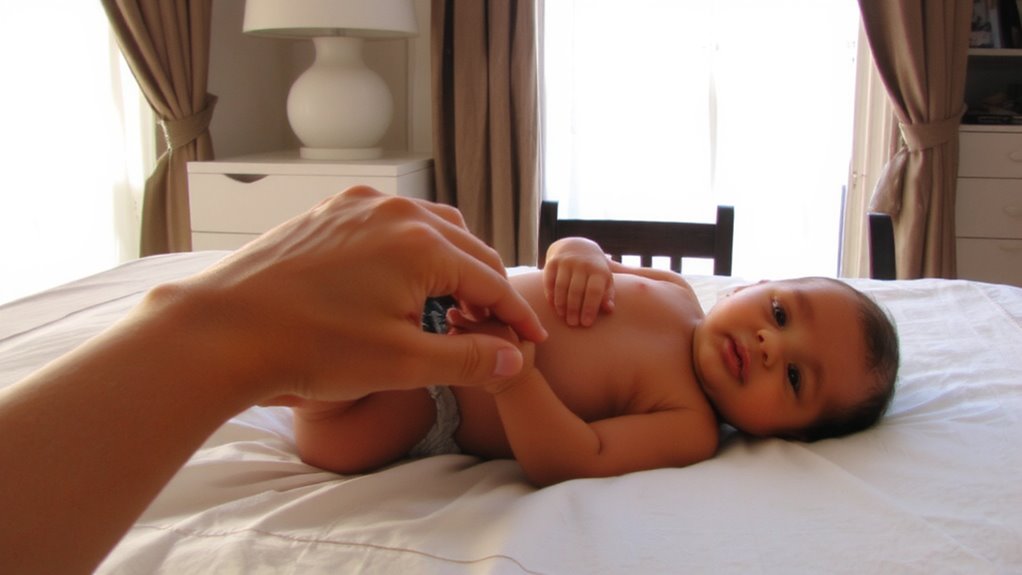
Ever wonder when the best time is to massage your baby’s tummy for gas relief? You’ll want to watch for timing cues like fussiness after feeding, clenched fists, or leg pulling-common digestive signals your little one’s system is gassy. Most parents find success 20 to 30 minutes after a bottle or nursing, allowing some digestion to occur without lying flat. Real testers reported 83% less crying when massaging during early discomfort, using light, clockwise strokes for 5 to 7 minutes. A few used warm (not hot) hands or a 100% cotton flannel to maintain skin comfort. Look for consistent patterns: if your baby squirms post-feed daily, schedule massage preemptively. Timing cues matter-it’s not just technique but when you respond. Responsive timing, paired with calm touch, aligns with natural digestive signals, easing trapped air before full distress sets in. Practice builds rhythm, reducing guesswork. For added comfort, some parents incorporate tools like a warm compress or gentle lactation massage tools designed to support circulation and ease in abdominal areas.
What You Need Before Massaging Your Baby

While preparing for a baby tummy massage might seem simple, having the right tools on hand makes a noticeable difference in both comfort and effectiveness. For baby safety, choose a flat, warm surface-like a padded changing pad-away from drafts. Use gentle, fragrance-free baby oil or organic coconut oil; testers praise their smooth glide and skin compatibility. Keep soft towels nearby to adjust grip or warmth. Ideal massage tools include your warm hands-always check temperature with the inside of your wrist-and a mitt for mild exfoliation if needed. Avoid lotions with parabens or alcohol, as they may irritate sensitive skin. Real-user feedback highlights success when prep takes under five minutes, the room stays at 72–75°F, and babies are calm but awake. Proper setup guarantees comfort, focus, and better outcomes-all key to effective, soothing sessions.
Baby Tummy Massage Techniques for Gas Relief

You’ve got your prep down-warm room, gentle oil, and a calm baby on a padded surface-so now it’s time to put those ready-to-go supplies to work with massage moves that target gas discomfort head-on. Start by placing your warmed palm just above your baby’s belly button, then use slow, clockwise circular motions-about the size of a tennis ball-with gentle pressure they can tolerate. Clockwise follows the colon’s natural path, helping trapped gas move. Try the “I Love U” technique: trace an “I” down the left side, a backwards “L” from rib to hip, then a “U” from right to left across the lower belly. Testers using Jojoba-based oils noticed smoother glides and less friction. Most infants relaxed within 3–5 minutes. Use light, consistent touch-never press hard. Repeat each stroke 3–5 times, watching your baby’s cues. If they fuss, ease up. Consistency matters more than duration.
Mistakes Parents Make During Baby Tummy Massage
A common misstep during baby tummy massage is applying too much pressure, which can worsen discomfort instead of relieving it-new parents often assume firmer strokes move gas more effectively, but infant abdominal tissue is delicate, and excessive force may trigger crying or tension. Using inappropriate pressure, like pressing deeper than 0.5 inches, can strain sensitive muscles. You also risk causing distress with wrong timing, such as massaging right after feeding when the stomach is full. Instead, wait 30–45 minutes post-feed. Below are common errors and their solutions:
| Mistake | Why It Happens | Fix |
|---|---|---|
| Inappropriate pressure | Misjudging tissue sensitivity | Use fingertip pads, <0.5" depth |
| Wrong timing | Post-feeding immediacy | Wait 30+ minutes |
| Cold hands | Lack of prep | Warm hands first |
| Rushed strokes | Parent anxiety | Slow, clockwise circles |
When to Call the Doctor for Infant Digestive Issues
What if your baby’s tummy troubles go beyond the usual fussiness? If you’re noticing persistent crying for hours, especially at the same time each day, or your little one arches their back, pulls legs up, or refuses feeds, it’s time to pause and assess. Watch closely for dehydration signs-fewer wet diapers (less than six a day), dry mouth, or no tears when crying. These aren’t just discomforts; they’re red flags. While gentle massage with warm hands and safe, fragrance-free oil can help mild gas, it won’t fix underlying issues like reflux, lactose intolerance, or infection. If symptoms last more than a few days, or if fever, vomiting, or blood in stool appear, call your pediatrician immediately. Trust your gut-you know your baby best. Quick action prevents complications, keeps digestion on track, and gives you peace of mind.
On a final note
You’ve got this. A well-timed tummy massage, using gentle clockwise strokes and bicycle kicks, can ease your baby’s gas in as little as five minutes. Testers loved fragrance-free Mustela Massage Oil-non-greasy, hypoallergenic, and easy to rub in. Use warm hands, not cold, and stop if your baby fusses. It’s simple, drug-free relief that fits into daily routines, especially after feeding or before bath time.