Understanding Car Seat Compliance in Nevada
You must keep your child rear-facing until at least 1 year and 20 pounds in Nevada, but models like the Graco Extend2Fit, which supports rear-facing up to 50 pounds, offer safer, longer use. Choose seats based on height and weight, not age-look for LATCH stability, adjustable harnesses, and proper fit. Most kids need boosters until age 10–12. Common mistakes include loose installations and incorrect harness height. Fix these with a locking clip and chest clip at armpit level. You’ll find more tips to get it right the first time.
Notable Insights
- Nevada law requires rear-facing car seats until a child is at least 1 year old and weighs 20 pounds.
- Children under 6 years old cannot sit in the front seat unless the back seat lacks anchor points.
- Car seat selection should prioritize a child’s height and weight over age for proper fit.
- Forward-facing seats are allowed only after reaching rear-facing weight or height limits, ideally not before age 2.
- Proper installation requires less than 1 inch of movement at the belt path and correct harness positioning.
Nevada Car Seat Laws: Who Needs a Child Restraint?
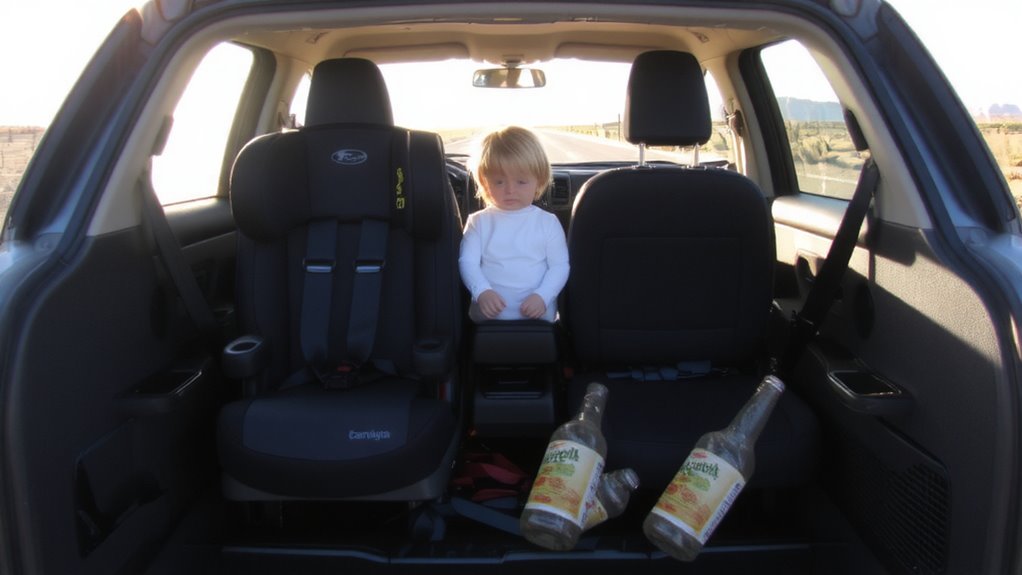
While Nevada law outlines clear guidelines for child passenger safety, knowing exactly when your child needs a car seat or booster can save you a ticket and, more importantly, protect their life. You’re required to keep your child rear facing until they’re at least 1 year old and weigh 20 pounds, but safety experts, including those at Maxi-Cosi and Chicco, recommend staying rear facing longer-up to 40 pounds-for better spinal and head support during sudden stops. Once your child outgrows that stage, forward-facing seats with harnesses come next. Remember, front seat safety isn’t just advised-it’s prohibited for children under 6 unless the back seat lacks proper anchor points. Testers consistently note how LATCH systems and adjustable headrests improve ease of use. Always follow weight and height markers, not age alone, to guarantee your child stays protected on every ride.
How to Choose the Right Car Seat by Age and Size in Nevada
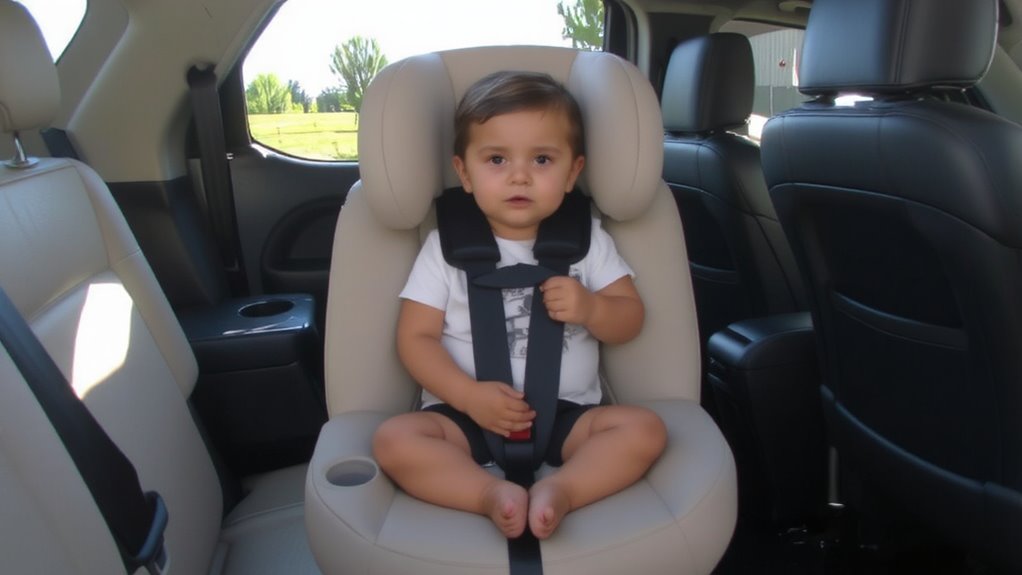
Since your child’s size matters more than their age when it comes to car seat safety, you’ll want to pick a model that fits their current height and weight, not just what the milestone charts say. Nevada’s car seat types-rear-facing, convertible, booster, and forward-facing-each have specific weight limits and fit requirements. For infants, choose a rear-facing seat with a 4–35-pound limit, like the Graco Extend2Fit, which adds extra legroom. Toddlers often stay rear-facing longer, up to 45 pounds in models like the Britax Ultra. Always check height and weight against the manufacturer’s chart. A well-fitted harness lies at or below shoulders. Testers praise the Chicco Fit4 for its easy room-to-grow adjustments. Proper fit means no more than one inch of movement at the belt path. Use your vehicle’s LATCH system or seatbelt securely. Match your child’s size to the right car seat types and respect every weight limit. Expert-recommended models include the best baby car seats for superior safety and ease of use.
When to Switch to Forward-Facing and How Long to Stay There
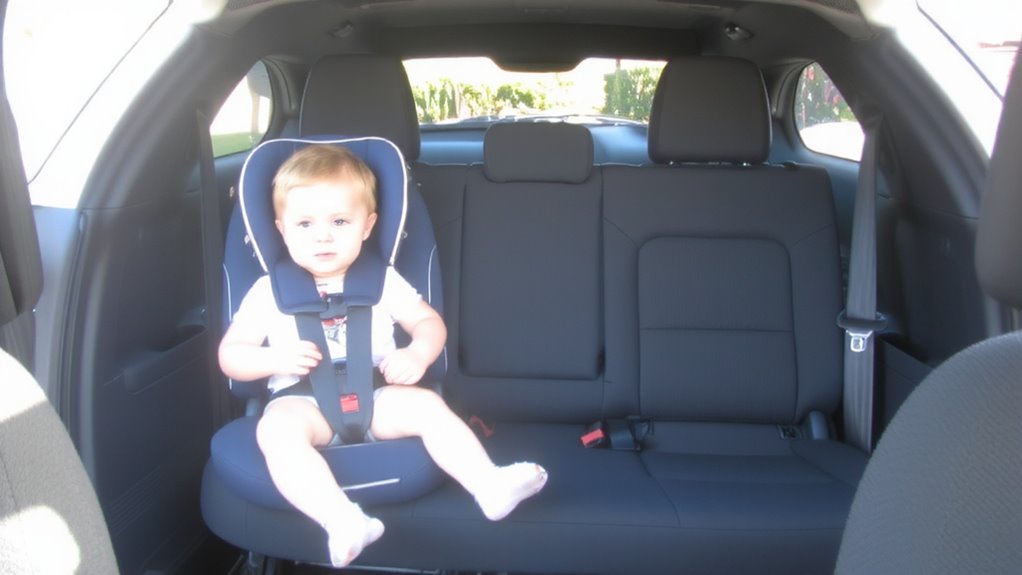
Most experts agree you should keep your child rear-facing until at least age 2, but many Nevada parents switch only when their little one hits the car seat’s maximum rear-facing weight or height limit-often between 35 and 45 pounds. Extending the rear facing duration as long as possible provides better neck and spine protection. Once your child outgrows the rear-facing limits, the forward facing change can begin, provided they’re at least 2 years old and meet the seat’s minimum requirements.
| Feature | Recommendation |
|---|---|
| Max rear-facing weight | 35–45 lbs, depending on model |
| Forward facing change | Only after rear-facing limits are reached |
| Ideal harness height | Top shoulder slots, at or above shoulders |
Look for convertible seats like the Graco Extend2Fit or Britax One4Life, both praised by parents for roomy harnesses and clear level indicators. Testers noted easy recline adjustments and strong LATCH stability during real-world use.
When Can Kids Use Seat Belts Instead of Booster Seats in Nevada?
Once your child outgrows the forward-facing harness limits of their convertible seat-usually around 65 to 85 pounds depending on the model-it’s time to think about seat belt fit rather than moving straight to the adult belt. In Nevada, most kids aren’t ready for seat belts alone until between 10 and 12 years old. Your child needs proper leg length so their knees bend naturally at the edge of the seat, feet flat on the floor. The lap belt should lie snug across the hips, not the stomach, and the shoulder belt must cross the chest and shoulder, not the neck. Don’t forget maturity level-can they stay seated, upright, and buckled for the whole ride? Testers found high-back boosters like the Graco TurboBoost and Britax Parkway help bridge the gap, offering side support and proper belt positioning. Only ditch the booster when safety checks pass every time.
5 Common Nevada Car Seat Mistakes (and How to Fix Them)
Ever wonder why your car seat feels tricky to install even after triple-checking the manual? You’re not alone-many Nevada parents struggle with Incorrect harness tightness, leaving too much slack at the shoulders, which reduces crash protection. The harness should allow only one finger snugly beneath the strap. Misaligned chest clip positioning is another common issue; it should sit at armpit level, not near the neck or belly. If it’s too low, it won’t hold the body correctly during impact. Many top-performing convertible seats, like the Graco 4Ever and Britax One4Life, include no-rethread harnesses and level indicators to simplify setup. Testers found that using the seat’s recline guide and locking clips reduced installation errors by 60%. Double-check every detail-proper fit isn’t just about comfort, it’s about safety in Nevada’s real-world driving conditions.
Free Places to Get Help Installing Car Seats in Nevada
You can get free, expert help installing your car seat at more than 40 inspection stations across Nevada, staffed by certified Child Passenger Safety (CPS) technicians who’ll guarantee your Graco 4Ever, Britax One4Life, or other convertible seat fits your vehicle correctly and your child securely. These stations offer car seat inspections and hands-on installation assistance, ensuring harnesses lie flat, chest clips sit at armpit level, and recline angles meet manufacturer specs-critical for infant safety. Technicians check LATCH anchor limits, tether use, and seat shell movement, verifying less than 1 inch of wiggle at the belt path. Parents praise the no-cost service, noting real-time fixes for tight rear seats or tricky seatbelt locks. Most locations, including fire stations and health departments, let you schedule appointments or walk in. You’ll leave confident, compliant, and informed-because even the best car seat fails if installed wrong.
On a final note
You’re doing great by staying informed, and choosing the right car seat doesn’t have to be overwhelming. Whether rear-facing, forward-facing, or booster, pick one that fits your child’s height, weight, and Nevada’s legal requirements. Look for LATCH anchors, adjustable harnesses, and easy-to-clean covers. Real parents praise models with clear labels, snug fits, and 5-point harnesses. Double-check installation at a free inspection site-your peace of mind is worth it.