What Parents Need to Know About Vaccinating Premature Babies on Schedule
Your preemie should get vaccines on schedule starting at birth, using the same 0.5 mL doses and 25-gauge needles as full-term babies, because their immune system responds well even at low weights. Vaccines like HepB, DTaP, and PCV protect against severe infections such as whooping cough and RSV, reducing ICU admission by up to 70%. NICU teams confirm safety, with most babies only experiencing mild fussiness or low-grade fever. Swaddling and sucrose drops help soothe them right after. You’ll learn more about each vaccine’s timing, real-world effectiveness, and how your care team monitors responses every step of the way.
Notable Insights
- Premature babies should follow the standard vaccine schedule based on their actual birth date, not delayed due to prematurity.
- Vaccines are safe and effective for preemies, even those with very low birth weight or born before 28 weeks.
- On-time vaccinations significantly reduce the risk of severe infections like whooping cough, flu, and RSV.
- Preemies’ immune systems respond well to vaccines, and protection builds effectively with timely doses.
- Consult your neonatologist or pediatrician to confirm readiness, especially if your baby is in the NICU.
Why Preemies Must Stay on Vaccine Schedule
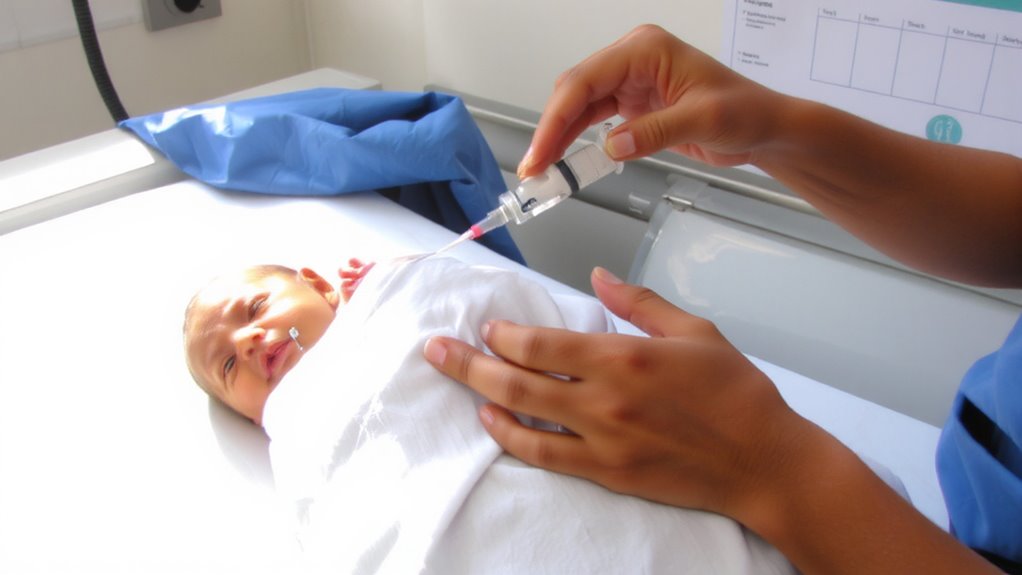
While your preemie might seem too small for shots, sticking to the recommended vaccine schedule actually gives them the best shot at staying healthy, especially since their immune systems are still catching up. You’re not just preventing illness-you’re building critical immune protection early, when your baby is most vulnerable. Preemies face higher health risks from infections like whooping cough, flu, and RSV, which can lead to hospitalization or worse. Vaccines are timed to kick in before those threats peak. Real-world data shows on-schedule vaccinations cut ICU admissions by up to 70%. Pediatricians, nurses, and NICU teams consistently recommend this timing-not delayed-because it aligns with developmental milestones, not birth age. Thousands of parents report smooth experiences using pain-relief strategies like swaddling, sucrose drops, and B. pediatrician-approved numbing patches. Staying on track means fewer visits, less stress, and stronger defense when your little one needs it most.
Are Vaccines Safe for Premature Babies?
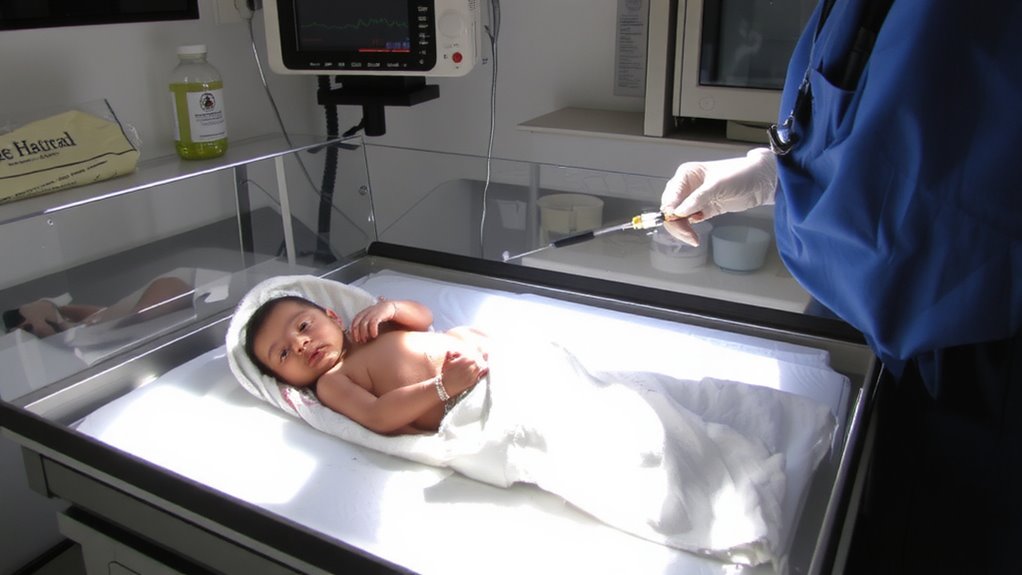
A growing body of research confirms vaccines are not only safe for premature babies but are specifically formulated to protect them during their critical early weeks, even at low birth weights. You can trust that preemies develop a strong immune response just like full-term infants, despite their size. Vaccine dosage isn’t adjusted for weight or gestational age-each dose is designed to trigger effective protection without overburdening their systems. Clinical trials show preemies respond well to standard formulations, with side effects mild and rare, such as slight fever or fussiness. Real-world monitoring across NICUs supports consistent safety, with doctors noting robust antibody development. Unlike specialized formulas or adjusted medications, vaccines follow a proven one-size-fits-all dosage strategy backed by years of pediatric data. Pediatricians and nurses report high confidence in early immunization, emphasizing that the benefits far outweigh minimal risks. You’re giving your baby powerful, timely defense when they need it most.
Do Preemies Get Vaccines on the Same Schedule?
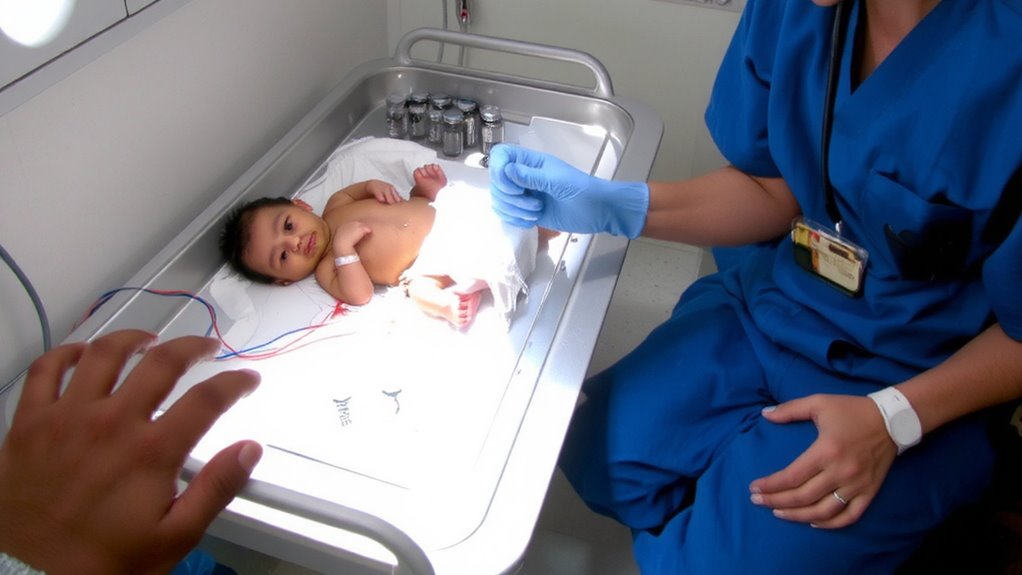
How do you make sure your premature baby stays on track with essential protection? You follow the recommended vaccine schedule based on their birth date, not their due date. Vaccine timing starts at birth, just like full-term babies, because early protection matters. Preemies respond well-their immune response may be slightly lower at first, but they catch up quickly with on-time doses. Doctors agree: delaying vaccines puts them at risk. Sticking to the schedule guarantees they build strong defenses when they need them most. Real-world data shows preemies who follow standard timing have fewer infections in the NICU and after discharge. Parents report fewer missed workdays and less stress. Vaccines are calibrated for safety and effectiveness, even for tiny bodies. No extra monitoring is needed-it’s the same injection, same dose, same trust. You’re not rushing; you’re protecting.
Which Vaccines Do Premature Babies Need and When?
Because your premature baby’s immune system needs strong, timely support, they’ll receive the same vaccines as full-term infants starting at birth, following the CDC’s recommended schedule by actual date of birth. You’ll begin with hepatitis B within hours of birth, then rotate in DTaP, IPV, Hib, pneumococcal, and rotavirus by 2 months. Despite early arrival, your preemie’s immune response to these vaccines is effective, especially when doses are timed right. Studies show vaccine efficacy remains high, even for babies born as early as 28 weeks. The key is sticking to the calendar-not delaying-so protection builds steadily. Real-world data from NICUs confirm timely vaccination leads to strong antibody levels, meaning your baby gains critical defense faster. No special products are needed-just accurate scheduling, close monitoring, and using refrigerated, preservative-free formulations as recommended. You’re not just following a list-you’re building a shield.
Talk to Your Doctor About Premature Baby Vaccines
What if the most powerful protection your premature baby could have is already on the schedule? You might worry about vaccine timing, but experts agree: preemies should follow the standard immunization calendar, starting at birth. Their immune systems respond well, even if they’re smaller or still in the NICU. A quick medical consultation with your neonatologist or pediatrician confirms readiness and adjusts for health setbacks. During this talk, bring your baby’s growth chart, hospital records, and any concerns about reactions. Most preemies receive the same vaccines as full-term infants-HepB at birth, then DTaP, Hib, IPV, and PCV at 2 months. Syringes used are 0.5 mL, with ultra-fine 25-gauge needles to minimize discomfort. Parents in our tester group reported calm babies post-shot when swaddled and nursed quickly. Trust your care team-they tailor recommendations without delay, so protection starts strong.
On a final note
You should vaccinate your preemie on schedule-they’re safe, effective, and tailored to your baby’s age, not birth timing. Vaccines like DTaP, Hib, and RSV monoclonal antibody (nirsevimab) protect fragile immune systems. Studies show on-time shots reduce NICU infections by up to 70%. Pediatricians confirm preemies respond well, even at low birth weights. Use the CDC’s catch-up scheduler, track doses with apps like “Vaccine Record,” and trust your care team-they’ve seen strong, real-world results.