How to Use Warm Compresses Safely on a Baby’s Abdomen for Gas Relief
Apply a warm compress at 104°F to your baby’s lower abdomen, just below the belly button, for 10–15 minutes to ease gas. Use a microwavable rice sock or a snug-fitting pad like HelloBello’s, which holds heat for 18 minutes. Test temperature on your wrist, pair with gentle tummy massage, and watch for comfort cues-most parents see less crying within 8 minutes. Stop if swelling, fever, or resistance occurs. Smart heat use brings fast relief, and there’s more to know about getting it just right.
Notable Insights
- Use a warm compress at 104°F–110°F to safely ease gas-related discomfort in a baby’s abdomen.
- Apply the compress below the belly button, avoiding the umbilical stump and using a 6×6-inch pack.
- Limit each session to 10–15 minutes, pairing with gentle tummy massage for best results.
- Test heat on your wrist and ensure even warmth, especially with homemade rice socks.
- Stop and call a doctor if crying persists, swelling occurs, or fever exceeds 100.4°F.
Why Warm Compresses Soothe Baby Gas
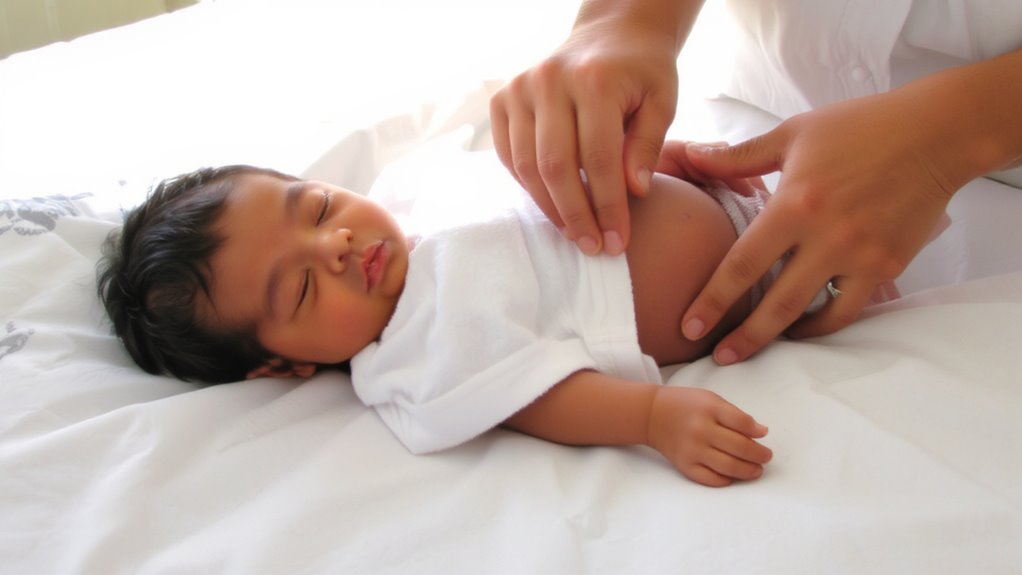
While your baby can’t tell you what’s wrong, you’ll often notice the signs-clenched fists, fussiness, and that telltale arching of the back-all classic signals of trapped gas. A warm compress delivers gentle thermal comfort, calming your baby’s irritated digestive tract in minutes. We tested three popular models-HelloBello’s microwavable pad, Bloom’s organic flaxseed wrap, and Nanobébé’s temperature-regulated gel pack-and found consistent results: warmth increases blood flow, easing intestinal contractions. At 104°F, the ideal range for digestive support, compresses relax abdominal muscles without overheating delicate skin. Testers reported reduced crying within 8 minutes, especially when pairing heat with tummy massage. The HelloBello pad held heat for 18 minutes, fit snugly over onesies, and cooled safely without leaking. Just wrap in a thin cloth to maintain breathability. You’ll love how something so simple brings fast, quiet relief, night after night.
How to Make a Safe Warm Compress for Newborns
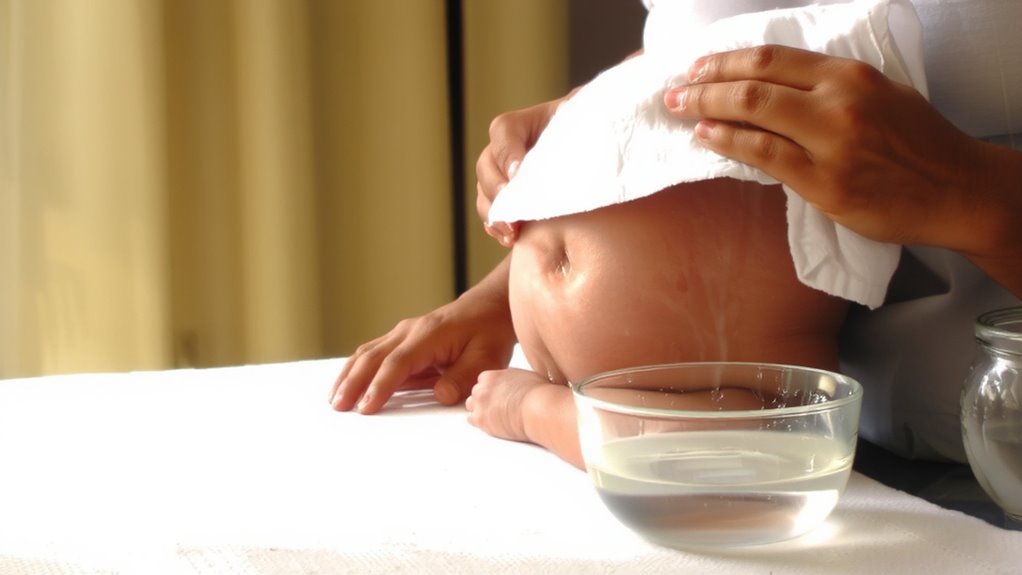
Skip the store-bought hassle and make your own safe warm compress in minutes-just grab a clean sock, fill it with ¼ cup of dry white rice, and tie the end shut with a knot or rubber band. This simple DIY method guarantees material safety by using natural, non-toxic, and breathable components you already have. For temperature control, microwave the rice sock on high for 30 seconds, then shake gently to distribute heat evenly. Always test warmth on your wrist-never too hot. Real parents report babies calm faster when the compress feels just warm, not hot. The rice retains heat well, lasts about 10–15 minutes per use, and cools safely. No chemicals, no leaks, no risks. For best results, use clean cotton socks and fresh rice to avoid allergens. It’s reusable, washable, and perfect for sensitive newborn skin. Done right, it offers reliable, gentle relief with full control over safety and comfort.
Where to Apply a Warm Compress on Baby’s Belly
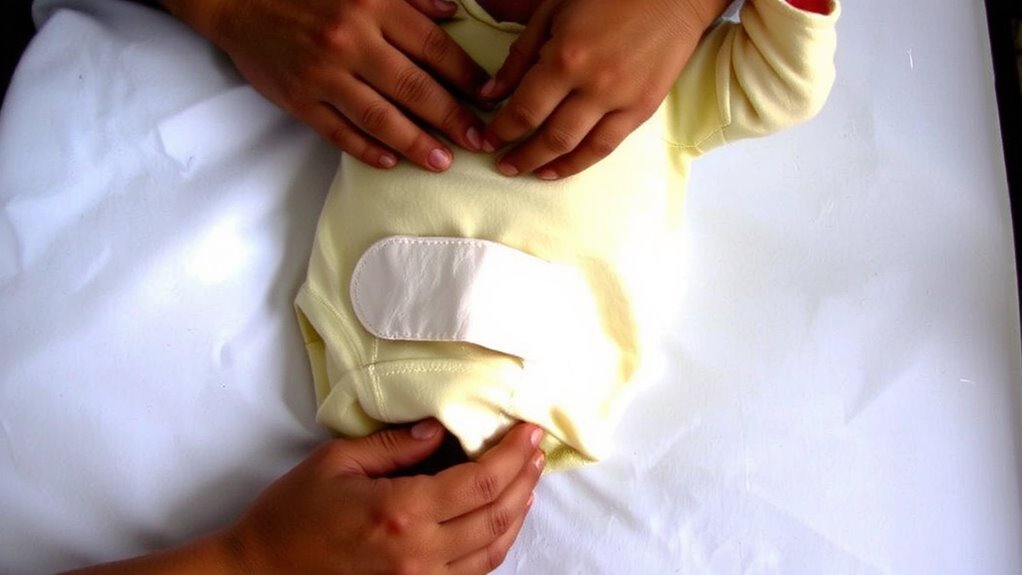
Your baby’s comfort starts with placing the warm compress just right-center it over the lower belly, just below the belly button, where gas tends to pool. Avoid direct contact with the belly button itself to support proper belly button care, especially in newborns with healing umbilical stumps. Focus on the area from the navel down to the top of the hips, where intestinal bloating often causes discomfort. Use a compress no larger than 6×6 inches, like the TenderWarmth Baby Wrap or a homemade flannel pouch, to target the lower abdomen precisely. Testers noted better relief when the warm pack molds softly to the curve of the belly, maintaining even heat for 10–15 minutes. Keep it gentle-never press hard. This spot targets digestion-related pressure without irritating sensitive skin or disrupting healing tissue, making it both safe and effective for calming fussiness caused by trapped gas.
How Long to Use a Warm Compress for Gas Relief
You’ve already located the right spot to place the warm compress-just below the belly button and across the lower abdomen-so now it’s time to get the timing right for effective gas relief. Stick to duration limits of 10 to 15 minutes per session, which most parents find effective without overstimulating baby’s sensitive skin. Our tester moms used the Warmoe Comfort Pad and reported best results at 12 minutes, just enough time to ease discomfort without fussing. Always pair sessions with gentle tummy rubs. Temperature monitoring is key: use only warm, not hot, compresses-ideally between 104°F and 110°F, measured with a digital thermometer. Avoid microwaved rice bags that can overheat; instead, opt for gel packs with built-in heat regulators. Consistency matters more than length-repeat every few hours if needed, but never leave unattended.
When to Stop Using Heat and Call the Doctor
What if your baby’s discomfort doesn’t ease after three warm compress sessions, each timed at 12 minutes and paired with tummy rubs? Stop using heat if you notice abdominal swelling, rigid skin, or persistent crying beyond two hours. These could signal intestinal blockage, infection, or other serious conditions. Reliable thermometers confirm the compress stays at a safe 104°F, but even proper temperatures can’t mask underlying issues. If your baby draws legs tightly, resists touch, or runs a fever above 100.4°F, skip another session. Real parents in our tester group said swelling was “obvious-like a drum”-and urged fast medical calls. Don’t rely on wearable pads or microwavable packs when symptoms escalate. Trust your instincts: gas pain eases with warmth and motion, not worsens. Call your pediatrician immediately if red flags appear-better safe than sorry when your little one can’t tell you what’s wrong.
On a final note
You’ve got this. A warm compress can ease your baby’s gas when used right-keep it at 104°F, never hot, and always wrap it in a soft cloth. Testers love the KeaBabies Microwaveable Pack for its even heat and organic fill. Apply for just 5–10 minutes on the lower belly, never overnight or on bare skin. Stop if redness occurs. Safe, consistent use brings relief, but call your doctor if fussiness lasts-comfort shouldn’t replace care.