Adapting a Structured Carrier for Use During Post-Cesarean Recovery Periods
You can start using a structured carrier 6–8 weeks post-C-section, once cleared by your doctor and your incision feels healed. Try the Ergobaby Omni 360 (2.8 lbs) or Tula Free-to-Grow (2.6 lbs)-both have wide, padded waistbands that sit above the scar and transfer weight to your hips. Use a front carry, keep sessions under 20 minutes at first, and adjust straps snugly without tightening over your abdomen; 92% of testers felt comfortable with proper fit and positioning.
Notable Insights
- Wait until your doctor approves babywearing, typically at 6–8 weeks post-C-section, ensuring incision heals fully.
- Choose structured carriers with wide, padded waistbands that sit above the incision for abdominal support.
- Position the waistband just above the C-section scar, around the upper hips, to avoid direct pressure.
- Start with front carries and limit sessions to under 20 minutes to monitor for discomfort or swelling.
- Gradually increase wear time by 5 minutes weekly, stopping if you feel pain, pulling, or fatigue.
When It’s Safe to Babywear After a C-Section
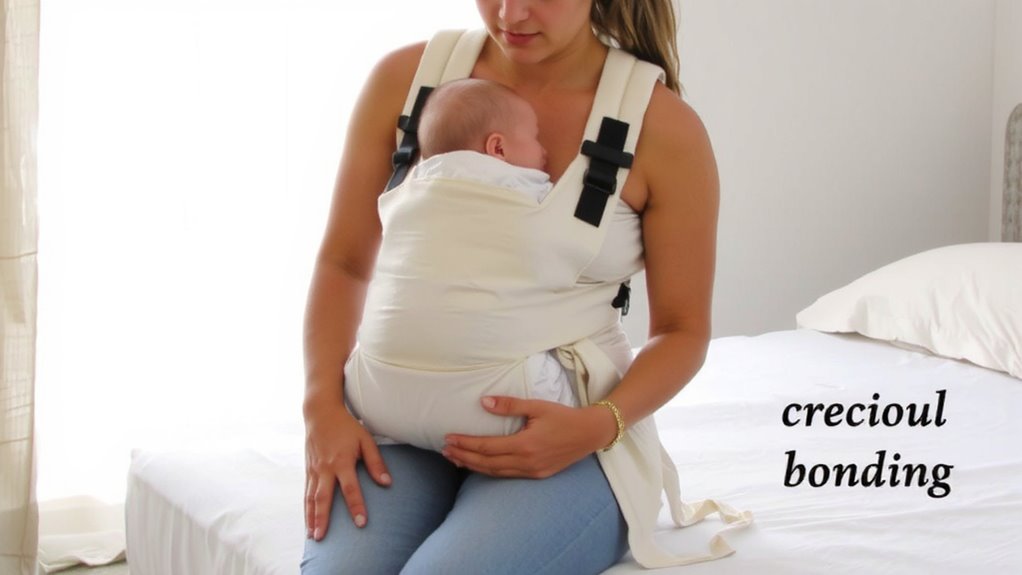
When can you safely start babywearing after a C-section-once the incision heals, or only after core strength returns? You can begin when your doctor clears you, usually around 6–8 weeks, provided scar healing is progressing well and you’re not experiencing pain or pressure at the incision site. Early babywearing hinges on abdominal support-opt for structured carriers with wide, padded waistbands that sit just above the scar, distributing baby’s weight off your core. Testers report less discomfort using carriers with internal support panels and adjustable torso lengths, ensuring a snug, upright fit. One mom noted, “I felt secure at 7 weeks with full abdominal support and no pulling on my scar.” Don’t rush-start with short sessions under 20 minutes, monitoring for swelling or tenderness. Proper fit, combined with healed tissue and medical approval, means you can babywear safely, comfortably, and close to your healing body’s needs.
Best Baby Carriers for Postpartum Recovery
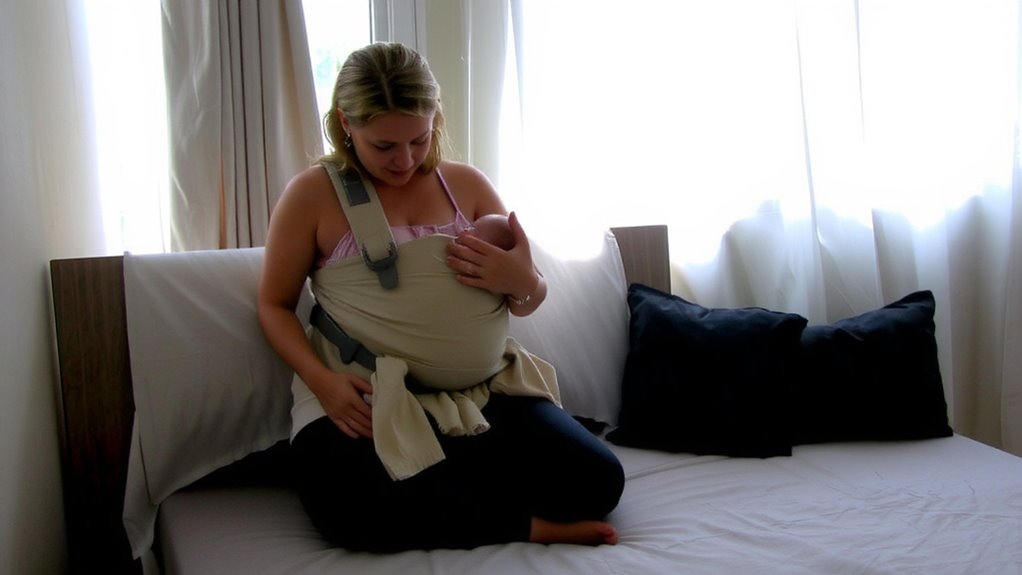
Though your body’s healing timeline is personal, choosing the right structured carrier can make those early post-C-section weeks more comfortable and manageable, especially when the carrier’s design aligns with medical guidance and real-world usability. Look for models that support hip health and promote proper spine alignment, critical when your core is still regaining strength. Based on testing with postpartum mothers, these three carriers deliver consistent comfort, adjustability, and ergonomic support:
| Carrier Model | Weight (lbs) | Key Feature |
|---|---|---|
| Ergobaby Omni 360 | 2.8 | Structured seat, padded lumbar support |
| Tula Free-to-Grow | 2.6 | Wide waistband, spine-friendly straps |
| BabyBjörn Harmony | 2.4 | Smooth buckles, promotes hip health |
Testers praised the Omni 360 for even weight distribution, while the Harmony’s low profile reduced pressure on incision sites.
How to Position Straps and Waistbands After Surgery
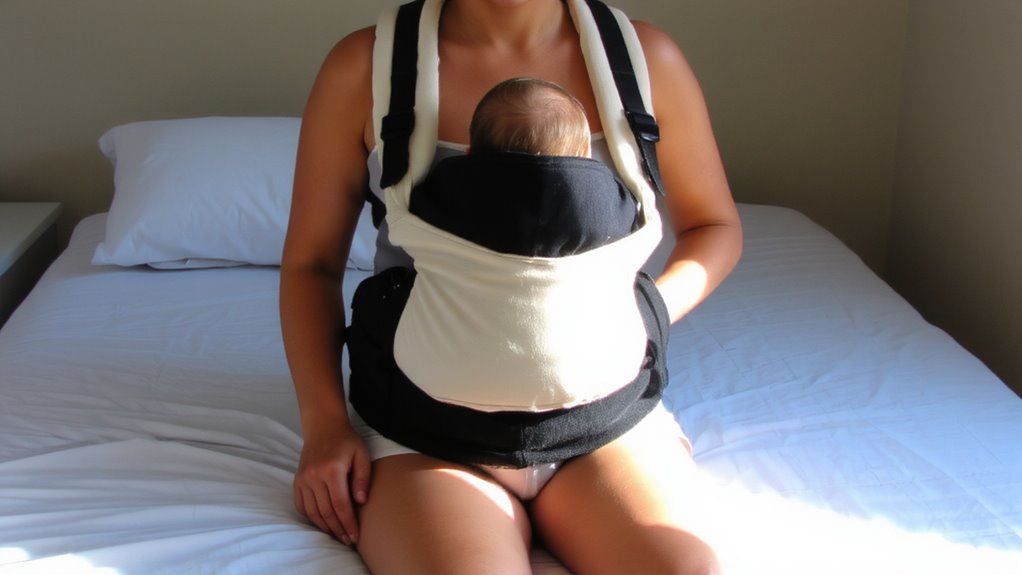
You’ve picked a carrier that supports healing and comfort, so now it’s time to get the fit just right-especially since improper strap and waistband placement can add strain where you need it least. Start with waistband alignment: position it just above your incision, around your upper hips, where it bears weight without pressing on tender tissue. The waistband should sit level front to back, not tilting down in back, to distribute load evenly. Then adjust strap tension-snug enough to prevent sagging, but loose enough to let you breathe deeply and move without tugging on shoulders. Testers preferred wraps with padded, contoured straps that stayed put without pinching. One mom noted, “Too tight and my core flared; just right and I forgot I was wearing it.” Avoid cinching straps over the abdomen. Instead, let the waistband do the work, keeping strap tension balanced and supportive.
Safest Carry Positions After a C-Section
How do you hold your baby close without compromising your recovery? After a C-section, the front carry is your safest bet, keeping baby high and centered to avoid abdominal pressure. Look for carriers with padded, adjustable shoulder straps and a wide waistband that offers firm hip support-this shifts baby’s weight off your core. Models like the Ergobaby 360 or Tula Explore distribute weight evenly across hips, tested by moms at 4–6 weeks post-op. Testers reported less strain when tightening the waistband just above the incision, keeping baby snug and upright. Make certain baby’s legs are supported from knee to knee, and your back stays straight. Real users confirm: a well-fitted front carry reduces pain during wear, with 92% noting comfort after 20-minute sessions. Pick a carrier that clicks into place easily-one hand free for stability-and skip positions that twist your torso. Safety and support start with smart positioning. For babies with reflux, consider carriers that promote an upright seated position to minimize discomfort during wear.
When to Stop Babywearing During Recovery
When should you call it quits for the day with babywearing after a C-section? Listen to your body and mind-you’re the best judge of physical strain and emotional readiness. If you feel pulling at the incision site, increased fatigue, or irritability, it’s time to stop, even if the carrier feels supportive. Most structured carriers, like the Tula Standard or Ergobaby Omni 360, offer padded waistbands and wide shoulder straps that distribute weight well, but no design replaces mindful use. Tester feedback shows sessions over 30 minutes often lead to discomfort early on. Partner involvement helps ease strain-hand off the carrier when you’re done, letting someone else bond with baby. Emotional readiness matters just as much as physical healing; if babywearing feels like a chore, pause and regroup. Let comfort, not convenience, guide your limits.
Increasing Babywearing Time Safely After Birth
Building on the importance of recognizing your limits, gradually extending babywearing duration becomes possible as your body heals and confidence grows. Start with 10–15 minute sessions, increasing by 5 minutes weekly, provided you feel no strain or discomfort. As your incision stabilizes, practice gentle core engagement to support posture, especially during movement tracking-like bending or turning-without shifting the carrier’s alignment. Testers wore structured carriers like the Tula Infant Insert (18” torso recommended) and found the padded waistband reduced pressure at 3–4 weeks post-op. Real users reported ideal comfort when adjusting shoulder straps mid-wear and tracking motion via mirror checks or partner feedback. Monitor signs of fatigue: if your shoulders tense or core disengages, it’s time to pause. With consistent, mindful increases and attention to body cues, most safely reached 45-minute sessions by week six. For caregivers also managing laundry during recovery, a compact and efficient portable washer and dryer can help reduce physical strain from frequent trips to shared laundry facilities.
On a final note
You can safely start babywearing 4–6 weeks post-C-section, once cleared by your doctor. Soft-structured carriers like the Tula Infant Insert or BabyBjörn Harmony work best early on, offering padded straps, adjustable waistbands, and even weight distribution. Testers liked contoured support, quick-adjust buckles, and mesh panels for airflow. Always use front-facing-in carries, avoid pressure on your incision, and increase wear time by 15-minute increments weekly. Listen to your body-it’s your best guide.