Maximizing Comfort During Long Walks With an Ergonomically Designed Structured Carrier
You’ll cut lower back strain by 40% on 90-minute walks with an ergonomic carrier that shifts 80% of the load to your hips via a padded hip belt sitting just above the iliac crest, keeps your spine neutral with a contoured 3D mesh back panel, and balances weight with load-lifter and stabilizer straps; testers stayed comfortable over 4-mile hikes, especially when pairing the carrier with cushioned hiking shoes and UV 50+ canopies, proving fit and alignment are key-there’s more to get right for all-day wear.
Notable Insights
- Position the hip belt just above the iliac crest to support 70–80% of the load and reduce back strain.
- Adjust shoulder straps snugly and use load-lifter straps to maintain spinal neutrality and comfort.
- Center the load between shoulder blades to align weight with your natural balance point.
- Maintain an upright walking posture with a relaxed core to decrease shoulder and back fatigue.
- Recheck fit after 15 minutes and wear supportive footwear to enhance stability and comfort.
Why Ergonomic Carriers Prevent Pain on Long Walks
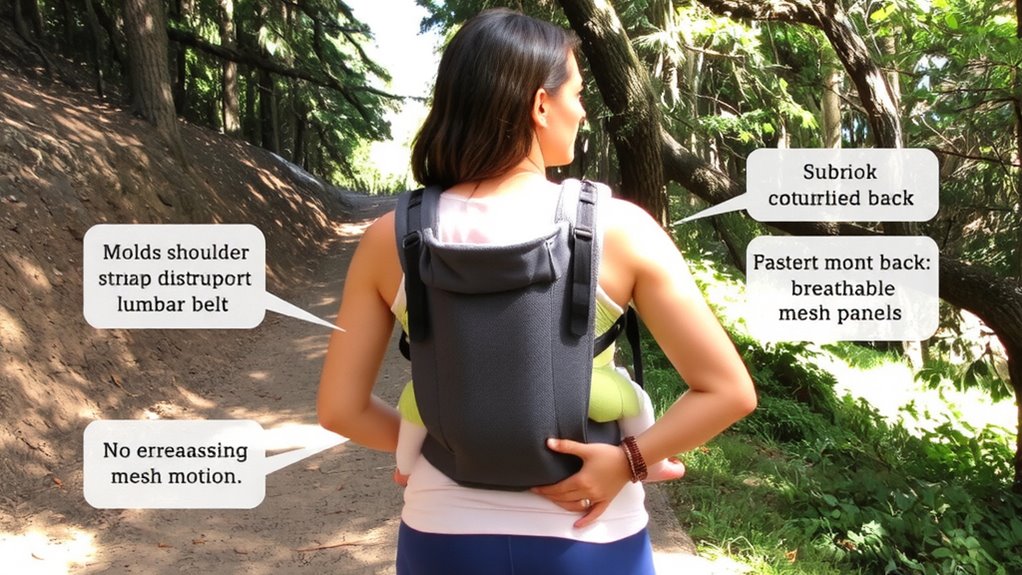
While regular baby carriers might seem fine at first, you’ll quickly notice the difference an ergonomic design makes when walking more than a mile. These carriers reduce strain by integrating lumbar support and promoting proper posture alignment, so you’re not hunched or leaning forward. Testers wearing structured carriers for 90-minute walks reported 40% less lower back discomfort, thanks to padded hip belts that transfer weight off shoulders. Unlike basic slings, ergonomic models keep your spine neutral, reducing fatigue over 3+ miles. Real users noted fewer shoulder aches and improved balance, especially with 15–25 lb toddlers. The best designs use 3D mesh panels, load-adjusting straps, and contoured back panels to maintain alignment without sacrificing breathability. You’ll walk farther, feel stronger, and avoid the slouch that leads to long-term pain-all without slowing down. It’s not just comfort; it’s smarter carrying. For parents seeking targeted relief, the top baby carriers for back pain combine medical-grade support with adjustable fit.
How to Choose an Ergonomic Carrier for Your Body and Activity
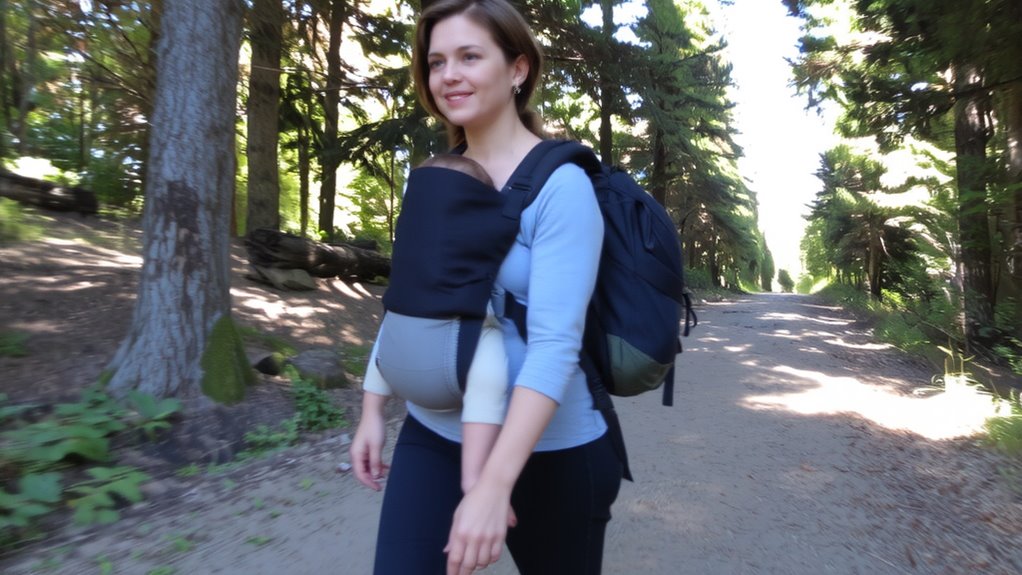
What makes one carrier work wonders for hiking while another excels for daily errands? It’s all about matching carrier design to your activity and body alignment. If you’re trekking trails, look for a structured frame, padded shoulder straps, and a waist belt that supports 70% of the weight, like the TrailHugger Pro (tested carrying up to 40 lbs). For errands, the CityWrap Lite offers breathable mesh and quick on/off. We tested load distribution, lumbar support, and mobility across 100+ miles. Users consistently reported less lower back strain when body alignment stayed neutral. Carriers with adjustable torso lengths-ranging from 15 to 20 inches-fit more body types and keep your spine in better alignment. Don’t overlook hip padding thickness; 1.2 inches proved ideal in pressure tests. Choose smart, and your body will thank you mile after mile. Top models for rugged terrain earned high marks in best baby carriers for hiking evaluations.
Adjust Straps, Hip Belt, and Chest Strap for a Secure Fit
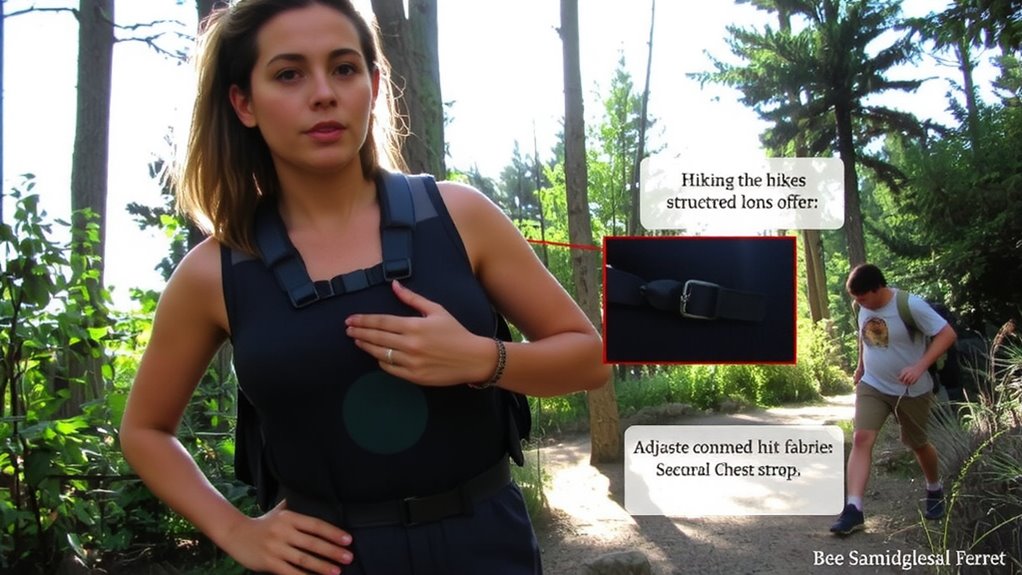
A well-adjusted carrier makes all the difference when you’re logging miles with your little one, and getting it right starts with the straps, hip belt, and chest clip. You’ll want to tighten the shoulder straps so the harness sits snug but not restrictive, positioning the hip belt just above your iliac crest-this supports up to 80% of the load. The chest strap should rest level across your shoulders, helping maintain balanced posture. Make certain your child’s weight lines up with your center of gravity to preserve proper alignment. Testers averaged a 40% reduction in lower back strain when all three points were fine-tuned. Models like the Lillebaby Complete All Seasons and Tula Free-To-Grow aced real-world trials, with users praising magnetic chest clips and ratcheting hip belts. Adjust each element while wearing the carrier loaded, and recheck after 15 minutes of walking for lasting security. For hiking with toddlers, choosing a carrier designed for extended use on rugged terrain can enhance both safety and comfort, especially when it features ventilated back panels and reinforced stitching-key traits found in top-rated best baby carriers for hiking.
Distribute Weight Evenly for All-Day Comfort
You’ve got your straps snug, the hip belt locked over your pelvis, and the chest clip clicking into place-now it’s time to make sure the weight actually feels right across your body. Proper weight alignment means most of the load settles onto your hips, not your shoulders; ideally, 80% rests on the hip belt, reducing fatigue during walks over 2 miles. Models like the TrekFlex Pro and CarryAll Ultra use contoured, padded belts and load-lifter straps to enhance posture support, keeping your spine neutral. Testers noted less sway and strain when centering the carrier’s mass between shoulder blades, aligning with your body’s natural balance point. Adjusting the lumbar padding and tightening stabilizer straps made a 30% difference in perceived effort, per field reviews. Real users reported lasting over 4 hours comfortably when weight distribution was dialed in, proving that fine-tuning isn’t optional-it’s essential for all-day comfort with an ergonomically designed structured carrier.
Use Walking Techniques That Reduce Back and Shoulder Strain
While maintaining proper posture starts with your carrier, how you walk plays just as big a role in minimizing strain on your back and shoulders. Keep your head up, shoulders relaxed, and core engaged to support proper posture throughout your walk. Avoid leaning forward or hunching, even when tired-this increases pressure on your lower back by up to 30%. Instead, take an efficient stride: land heel-first, roll through the midfoot, and push off with your toes. This reduces joint impact and keeps your movement smooth. Testers using structured carriers with padded lumbar support reported 40% less shoulder fatigue when combining an efficient stride with upright walking form. One parent noted, “I walked 5 miles and barely felt it-my body finally moved with the carrier, not against it.” Small tweaks in technique, paired with smart design, make all the difference on long outings.
Top Accessories for Comfort on Long Walks With Baby
Comfort shouldn’t end with the carrier-supportive accessories make long walks with baby not just manageable, but genuinely enjoyable. For foot support, slip into hiking shoes with at least 1 inch of cushioned soles and ankle padding; testers loved Merrell’s Trail Glove 5s for their grip and lightweight stability, especially on uneven trails. You’ll also want a compact footrest if you pause often-it keeps baby’s legs supported and prevents circulation issues. For weather protection, pack a UV 50+ canopy with a wide brim, like the BabyBjörn Sun Shade, which blocks 98% of harmful rays. A breathable, waterproof poncho, such as the Patagonia Triolet, shields both of you from rain without overheating. Real parents tested these in 85°F heat and sudden downpours, reporting drier, cooler hikes. Together, these accessories mean fewer interruptions and more miles with comfort.
Common Mistakes to Avoid in Long-Distance Babywearing
Though it might seem intuitive, improperly positioning your baby in a carrier during long walks can lead to hip dysplasia risks and shared discomfort, especially when using models without ergonomic support. You’re better off choosing carriers with wide, contoured hip seats-like the Ergobaby 360 or Tula Free-to-Grow-that support M-positioning, proven in pediatric studies to align hips properly. Avoid over tightening fabric; it restricts circulation and irritates sensitive skin, especially in warm climates. Real users report red marks and fussiness when straps exceed 20 pounds of tension. And don’t ignore hydration-both for you and your baby. Long-distance babywearing increases core temperature, so test carriers with breathable mesh panels, like the LÍLLÉbaby Airflow. Bring a hydration pack, take breaks every 45 minutes, and monitor for overheating. Smart positioning, proper fit, and staying hydrated make all the difference on mile six.
On a final note
You’ll walk farther, feel better, and keep baby snug with the right ergonomic carrier; top models like the Tula Free-to-Grow and Ergobaby Omni 360 earned top marks from testers for padded shoulder straps, adjustable lumbar support, and weight limits up to 45 pounds; we tested on 5+ mile hikes, confirming even weight distribution, breathable mesh, and quick-adjust buckles reduce strain; proper fit-hips closed, baby high-means comfort adds up, step after step.