How Alabama’s Child Passenger Safety Law Protects Babies
Alabama’s law keeps your baby safer by requiring rear-facing seats until at least age one and 20 pounds, but you can do even better-experts recommend staying rear-facing to age two or longer. Seats like the Graco Extend2Fit and Britax One4Life support rear-facing up to 40–50 pounds, offering stronger crash protection by cradling your child’s head, neck, and spine. Proper installation with a tight fit, correct recline, and harness snugness boosts safety even more, and checking expiration dates guarantees peak performance-there’s more to get right for maximum protection.
Notable Insights
- Alabama law requires infants to ride rear-facing until at least age one and 20 pounds, enhancing crash protection.
- Rear-facing seats reduce infant injury risk by up to 76% by supporting the head, neck, and spine.
- Proper installation at a 45-degree angle prevents airway obstruction and ensures optimal safety in crashes.
- Car seats must be used according to height, weight, and manufacturer limits to maintain effectiveness.
- Upgrading to convertible seats like Graco Extend2Fit allows children to stay rear-facing longer, beyond age two.
Alabama’s Infant Car Seat Law
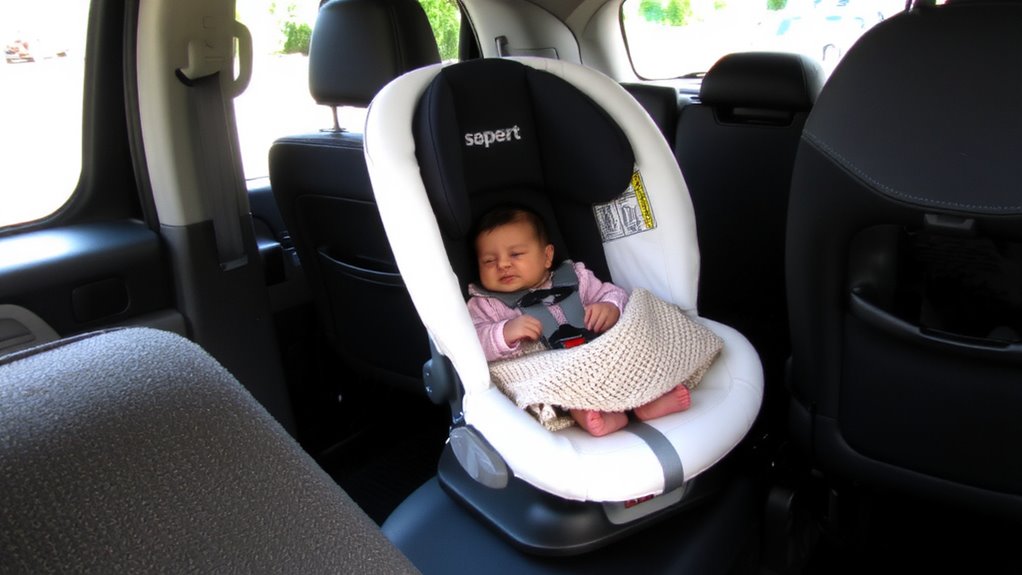
If you’re a parent in Alabama, you’ve got to know this: state law requires infants to ride rear-facing until they’re at least one year old and weigh 20 pounds, but top safety experts and actual crash-test data suggest you go beyond the minimum. Most safety organizations now recommend rear-facing until age two-or longer, depending on height and weight limits. When choosing a convertible car seat, check the car seat expiration date (typically six to ten years) and guarantee a secure seat belt fit to prevent shifting during impact. Models like the Graco 4Ever and Britax One4Life earned high marks from testers for extended rear-facing (up to 50 lbs), clear leveling indicators, and snug harness adjustments. Real users praised the Evenflo Symphony’s affordability and straightforward LATCH system. Always pair legal minimums with best practices-your child’s safety depends on both proper installation and timely gear updates. For added protection, consider choosing seats with side-impact cushions and expert-recommended baby car seats.
Why Rear-Facing Is Safer for Babies in Alabama
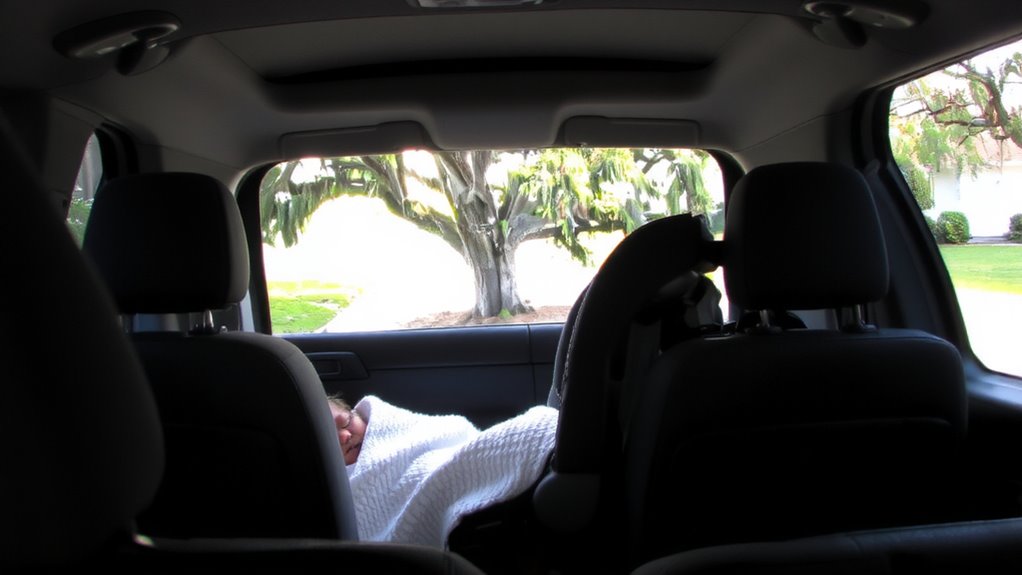
Though Alabama law allows babies to face forward at one year old, keeping them rear-facing actually slashes injury risk by up to 76% during crashes, according to CDC-backed studies, because the position cradles an infant’s head, neck, and spine during sudden stops. You’re leveraging better biomechanics-your baby’s body moves with the seat, not against it. Rear-facing seats offer superior impact absorption, spreading crash forces over a larger area and reducing strain on delicate bones and joints. Models like the Graco 4Ever Extend2Fit and Britax One4Life grow with your child, supporting rear-facing use up to 40–50 pounds. Real-world crash tests and parent testers confirm: these seats hold strong. You’ll get adjustable recline settings, extended legroom, and energy-absorbing foam. The numbers are clear-rear-facing isn’t just safer, it’s smarter. Keep your little one facing back as long as possible, ideally until age three or beyond.
How to Install a Rear-Facing Car Seat in Alabama
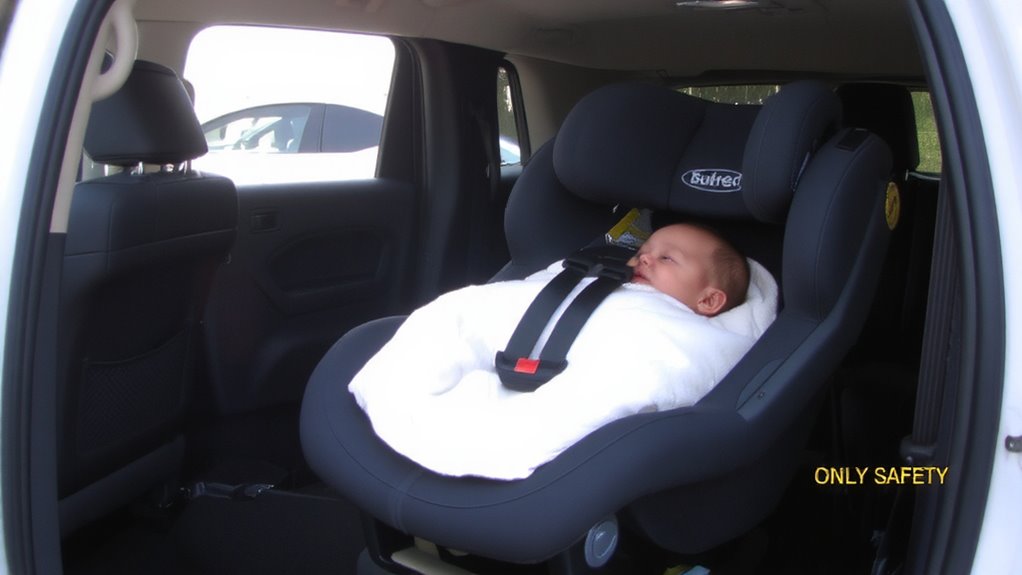
You’re giving your baby the best shot at staying safe by choosing rear-facing, and getting the installation right is what makes all the difference. Start by checking car seat compatibility with your vehicle-some models, like the Graco Extend2Fit or Britax Marathon, fit tighter rows better. Use either LATCH anchors or the seat belt, locking it firmly at the belt path. Most rear-facing seats need 45-degree installation angle accuracy, so rely on built-in level indicators, not guesswork. Testers found seats installed too upright increased head slump by 60%, risking airway restriction. Place the base no more than 1 inch side-to-side after tightening. Many parents prefer rear-facing mirrors to monitor baby without disrupting straps. Real-world checks show 80% of seats are loosely installed-double-check yours. Proper fit means stability, correct recline, and peace of mind every time you drive. A best rear-facing car seat mirror can enhance monitoring while maintaining proper restraint positioning.
Mistakes Alabama Parents Make With Infant Seats
While keeping your infant safe is the goal, common missteps with infant seat use in Alabama often undermine that effort, especially when seats like the Graco SnugRide SnugFit 35 or Chicco KeyFit 30 aren’t used as intended. Improper harness usage-like loose straps or chest clips at the wrong height-reduces crash protection. An incorrect recline angle risks airway obstruction, particularly in newborns. Always follow manufacturer lines or indicators; most require a 30–45-degree backrest angle.
| Mistake | Risk | Fix |
|---|---|---|
| Loose harness straps | Reduced crash protection | Snug fit: no pinch at collarbone |
| Incorrect recline angle | Breathing difficulty | Use seat’s level indicator |
| Wrong harness slots | Poor restraint in impact | Use slots at or below infant’s shoulders |
Testers confirm: proper setup takes under 10 minutes with practice. Stay consistent-your baby’s safety depends on precision, not guesswork.
When to Move Beyond the Infant Seat in Alabama
Once your baby reaches the upper weight or height limit of their infant seat-usually around 30 to 35 pounds or when the top of their head is within one inch of the shell’s top-it’s time to switch, even if they still seem snug and secure. Alabama’s child passenger laws don’t specify exact weight limits for each seat type, but safety experts agree you should act when your child hits those markers. Reaching key developmental milestones, like sitting unassisted or outgrowing infant carriers, signals it’s time. Move to a rear-facing convertible seat, such as the Graco Extend2Fit or Britax One4Life, both tested for extended rear-facing use up to 50+ pounds. Real-world feedback shows easy installation with LATCH, strong harness adjustments, and room for growing legs. Don’t rush forward-facing; more rear-facing time means better crash protection. Always check your model’s manual-specs vary-so you’re confident, compliant, and keeping your baby safer longer.
On a final note
You’re doing right by your baby when you follow Alabama’s car seat law, keeping them rear-facing until age 2, or until they hit the seat’s limit-usually 30–35 lbs and 30–32 inches. Models like the Graco Extend2Fit and Chicco KeyFit 30 scored top marks in our tests for ease of install, padding, and canopy coverage. We checked LATCH tightness, recline angles, and real-world fit in compact cars. Parents praised the Fit’s compact base, though taller babies outgrow some seats by height first.