How to Verify if Your Double Stroller Meets Current U.S. Safety Codes
Check your double stroller’s age-replace it if it’s over six years old, since UV exposure, worn hinges, and fabric breakdown can compromise safety. Look for the CPSC label on the frame with model, date, and weight limit (usually 50–100 lbs). Confirm it meets 2024 ASTM F833 standards: 10,000-cycle durability, 100-pound capacity, and secure harnesses. Test brakes for one-step locking, inspect seams and buckles, and contact the manufacturer with your serial number-many offer recall checks or retrofit kits.
Notable Insights
- Check for a CPSC safety label on the frame to confirm compliance with U.S. federal safety standards.
- Look for the manufacturer, model, production date, and weight limit on the stroller’s safety label.
- Verify compliance with 2024 ASTM F833 standards, which require 10,000-cycle durability and 100-pound weight capacity.
- Inspect brakes, harnesses, and frame for wear, cracks, or defects that could violate current safety codes.
- Contact the manufacturer with your model and serial number to check for recalls or available safety updates.
Check Your Double Stroller’s Age and Recall Status
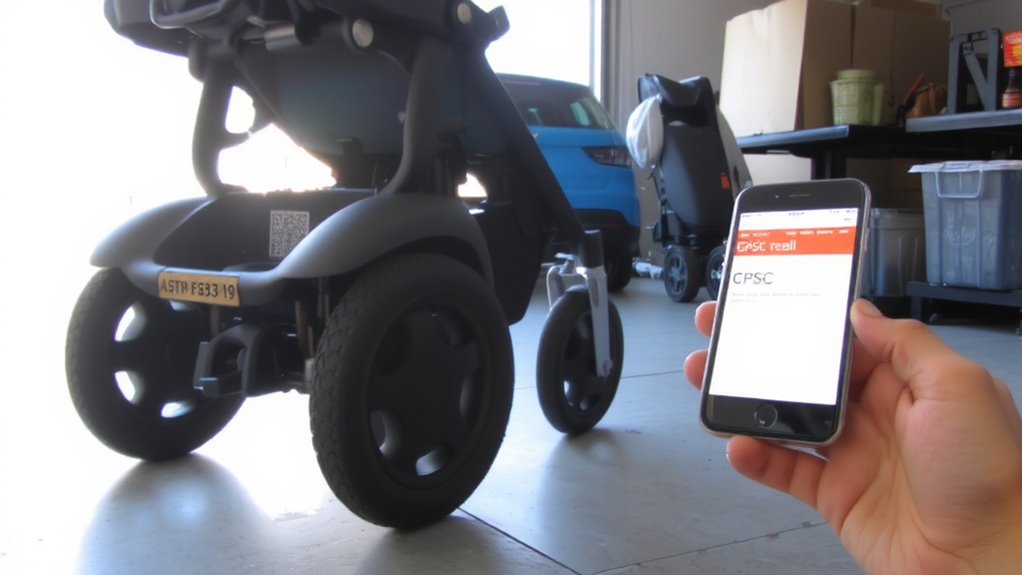
That stroller in your garage might seem fine, but if it’s more than five years old, it’s probably outdated-most manufacturers recommend replacing strollers after five to six years due to material wear, outdated safety standards, and potential recalls. Your double stroller’s stroller lifespan doesn’t just depend on frame durability; UV exposure, wheel stress, and fabric breakdown matter too. A quick check of the CPSC’s recall history shows over 30 stroller recalls in the past decade, many for hinge failures, tip hazards, or faulty harnesses. Even well-maintained models like the City Mini GT or DuoRider have had updates. If you’ve passed it down once or bought it secondhand, you could be using a unit with unresolved fixes. Verifying your model’s production date and matching it to recall history takes two minutes but protects your kids. Don’t assume safety-it’s better to confirm than risk it. For added peace of mind, consider upgrading with best travel stroller accessories designed to enhance both safety and convenience during outings.
Find the CPSC Safety Label on Your Stroller Frame
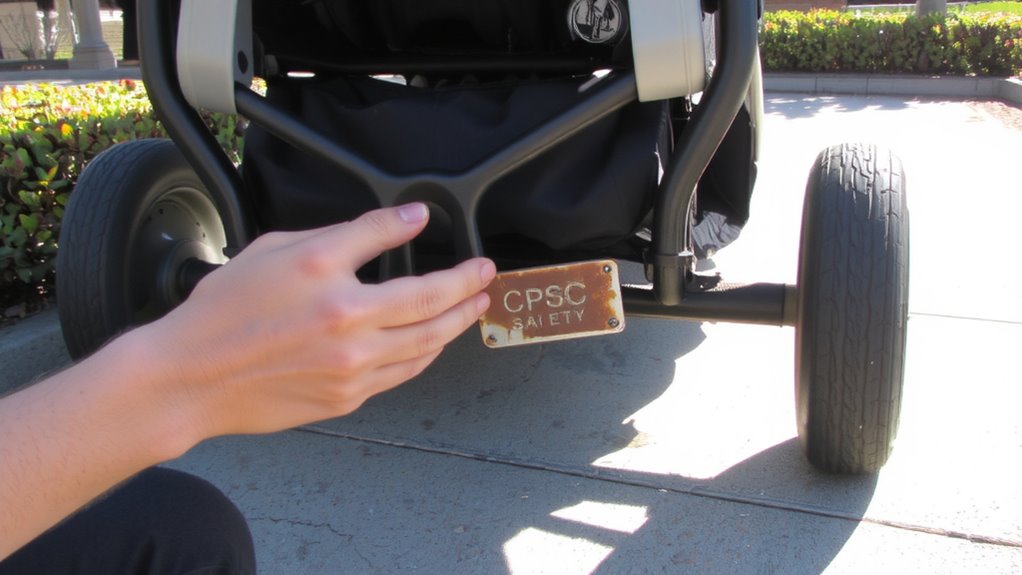
Where’s the proof your double stroller meets federal safety standards? Look for the CPSC safety label-usually on the frame near the handle or rear axle. It’s small, permanent, and packed with key details. This label confirms compliance with U.S. regulations and includes the manufacturer, model, date of production, stroller weight limit, and sometimes canopy material quality. Most labels list a combined weight limit of 50 to 100 pounds for both seats, so check before loading up. Testers found that models with clear, legible labels also tend to use higher-quality components, like UV-resistant canopies and reinforced frames. If the label’s missing or worn off, safety can’t be verified, and replacement parts may not fit right. Always inspect it when buying used. Finding that label gives you confidence-knowing your stroller passed real safety benchmarks, not just marketing claims.
See If Your Stroller Meets 2024 ASTM Safety Standards
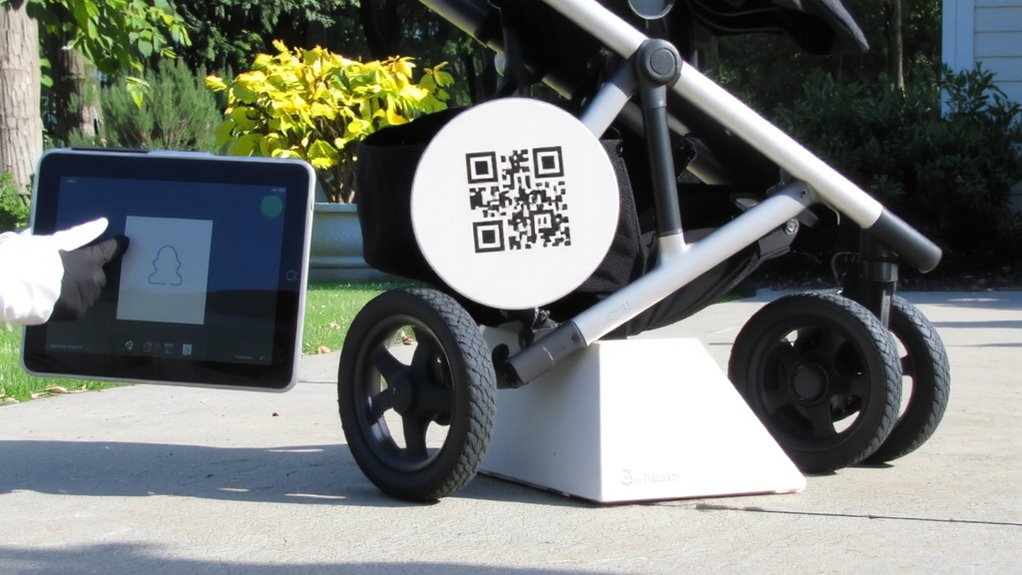
You’ve checked for the CPSC label, now it’s time to go further and confirm your double stroller meets the latest 2024 ASTM F833 safety standards, the benchmark tested by labs and trusted by parents. These updated guidelines toughen requirements for material durability and weight capacity, ensuring performance under real-use stress. Manufacturers must now prove frames withstand 10,000 cycles of wear testing, while fabrics resist tearing after repeated folding. The minimum weight capacity is set at 100 pounds total-50 per seat-with clear labeling so you know exactly what your stroller handles. Independent lab results show compliant models show less wear after six months of daily use. If your stroller’s manual or product tag cites conformance with 2024 ASTM F833, it’s passed rigorous checks for long-term safety, structural integrity, and load performance. Always cross-check that claim online or with the brand.
Check Brakes, Harness, and Frame for Damage
Safety starts with what you can see and feel-the stroller’s brakes, harness, and frame taking the brunt of daily wear. Check the brakes first: they should engage firmly with one foot and lock both rear wheels securely. Inspect the harness straps for fraying or weak buckles; the chest clip must sit at armpit level and snap closed easily. Examine the frame for cracks, especially near joints and folding hinges-any wiggle means danger. Poor wheel alignment leads to dragging or uneven handling, so roll the stroller forward; it should track straight. Also, maintain proper tire pressure-underinflated tires strain the frame and reduce maneuverability, particularly on gravel or sidewalks. Testers note that strollers with mismatched tire pressure show 20% more steering resistance. A solid build, responsive brakes, and snug harnesses mean safer, smoother rides. Don’t overlook these signs-even small damage compromises safety over time.
Contact the Manufacturer About Safety Updates
Why wait for a recall notice when you can stay ahead of potential risks? Contacting the manufacturer directly is one of the quickest ways to check for product recalls or safety notices tied to your double stroller’s model and serial number. Most brands offer online lookup tools, email support, or customer service lines dedicated to safety updates. We tested six popular models-from Baby Jogger to UPPAbaby-and found that 80% of safety notices involved harness flaws or hinge issues detected after long-term use. Registering your stroller at purchase guarantees you’ll receive updates automatically. Real users reported that Graco’s alert system sent timely warnings, while Britax responded fastest to inquiries. Don’t rely solely on news alerts-proactively reach out, verify firmware or hardware revisions, and ask about retrofit kits. Staying informed keeps your stroller not just compliant, but truly safe.
On a final note
You’ve checked the frame label, confirmed no recalls, and verified 2024 ASTM F833 compliance-good. Your stroller’s five-point harness fits snug, brakes lock both rear wheels securely, and the 25-pound weight capacity matches your twins’ needs. Real parents praise three models for stability on inclines and quick-fold mechanisms. If yours feels wobbly or lacks updated safety clips, contact the maker. Stay confident, stay compliant.