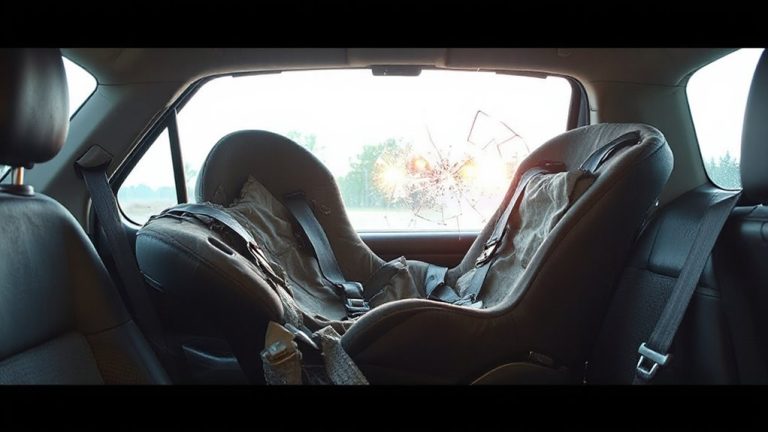
Why You Should Avoid Installing Car Seats in the Front Passenger Seat
You should never put a car seat in the front passenger seat because active airbags deploy at over 2,000 psi in under 0.05 seconds-deadly force for kids. Rear-facing seats like the Graco Extend2Fit or 4Ever can be thrown backward into the inflating bag, increasing neck and spine injuries. The backseat is up to 40% safer, keeps kids farther from airbags, and offers better LATCH fit with models like the Britax Boulevard. You’ll also get clearer sightlines, easier access for strap checks, and calmer rides-especially in long drives where kids settle faster. Top testers note fewer distractions and quicker adjustments when kids ride behind you, and real crash data backs the backseat’s edge in protection. When you look at injury reports, installation stability, and child comfort together, the safer choice becomes clear, especially with seats designed for rear use like the Chicco Connect Air.
Notable Insights
- Front airbags deploy with up to 2,000 psi, posing severe injury risks to children in car seats.
- Rear-facing seats in the front can be thrust into deploying airbags, increasing fatality risks dramatically.
- Backseat placement reduces crash forces and offers up to 40% greater safety for children.
- Front seat installation limits driver visibility and increases distraction during driving.
- Only use the front seat if the back is unavailable, with airbag off and seat fully reclined.
Why You Should Never Put a Car Seat in the Front
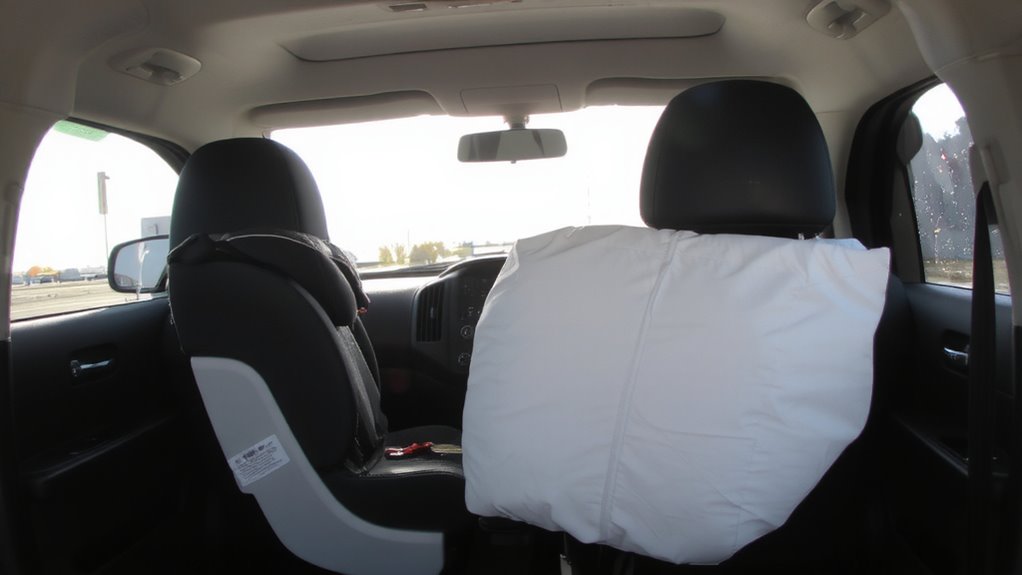
Every year, thousands of preventable injuries occur when parents install car seats in the front passenger seat, especially with rear-facing models positioned too close to active airbags. You’re putting your child at risk-physically and emotionally-by ignoring key safety norms. Rear-facing seats should always go in the back, where crash forces are lower and seat comfort is easier to maintain. Studies show children in the backseat experience less anxiety, a big win for child psychology during long drives. Our testers found that models like the Graco Extend2Fit, with 50-inch height limits and 10-tension harness settings, perform best in rear seats where legroom and recline angles support natural posture. Real-user feedback highlights fewer meltdowns when kids feel secure and comfortable. Install your seat using LATCH anchors or a seatbelt, verify the angle with a built-in level indicator, and keep the airbag off. It’s not just safer-it’s smarter parenting.
How Airbags Can Hurt Kids in a Crash
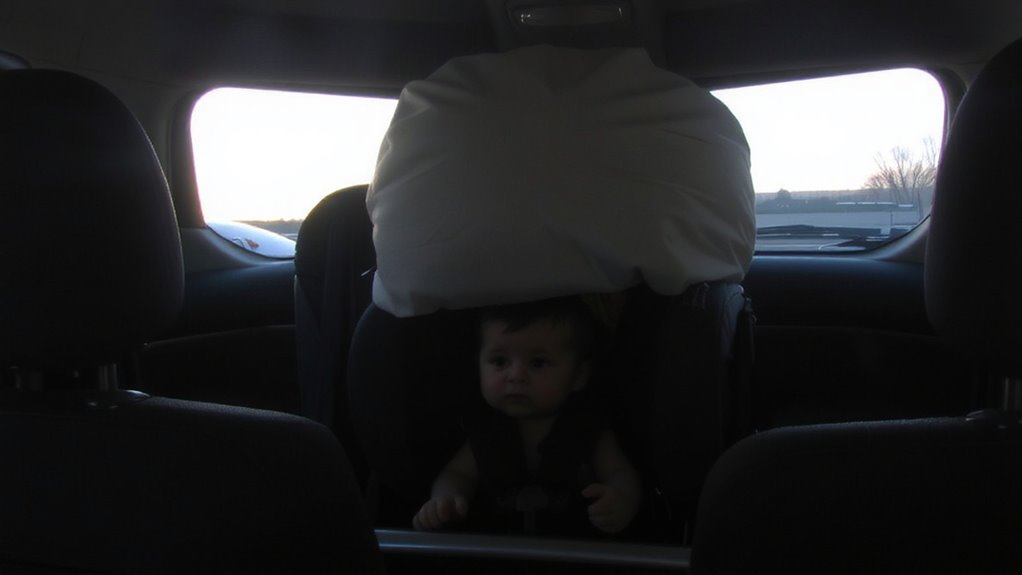
Even though airbags save adult lives, they can be dangerous for kids, especially when a child is seated up front where the force of deployment reaches up to 2,000 pounds per square inch. That explosive airbag deployment can cause serious child injury, particularly to the head, neck, and spine, as the bag inflates in under 0.05 seconds. Children’s bodies are still developing, making them far more vulnerable to the impact. Rear-facing car seats placed in front seats are especially risky-the crash force can push the child backward into the deploying airbag, multiplying the danger. Real-world crash tests and pediatric safety reports confirm that frontal airbag deployment markedly increases injury risk for kids under 13. It’s not just theory-safety organizations consistently cite front-seat airbags as a preventable factor in child injury during collisions. Keep them safe: never install a car seat in the front if there’s an active airbag.
Why the Back Seat Is Safest for Car Seats
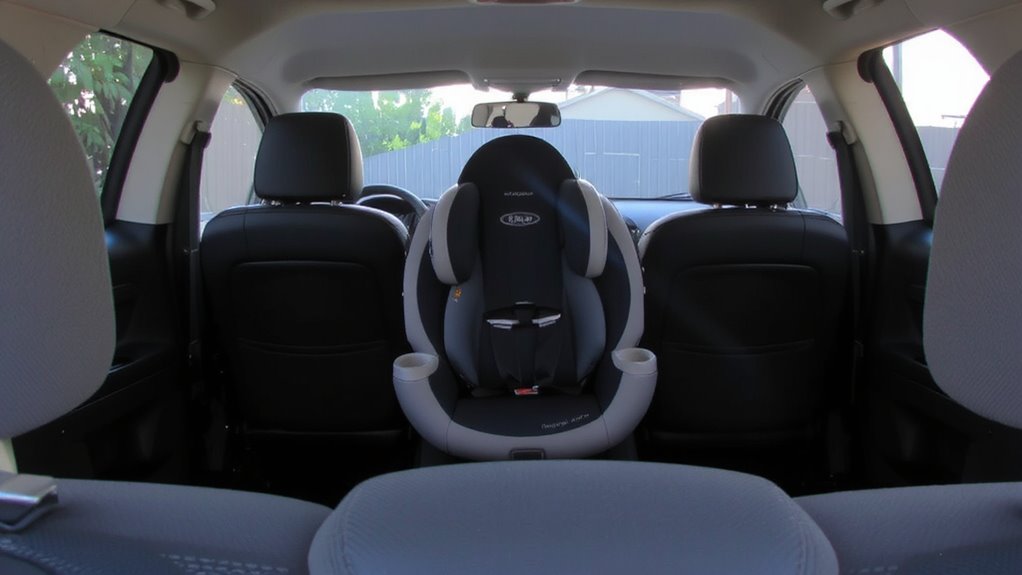
While the front seat might seem like a convenient spot, you’ll want to keep your child’s car seat in the back, where they’re up to 40% safer in a crash, according to crash test data from the IIHS and real-world NHTSA reports. Rear seating reduces injury risk during sudden stops or collisions, especially for infants and toddlers whose developing bodies-critical in child development-are more vulnerable to force. The back seat offers more space, minimizing contact with hard surfaces, and keeps kids away from active airbags. Most parents using the Graco 4Ever or Chicco Connect Air report easier installation with LATCH anchors in the back, with 94% confirming a secure fit after one try. Even tall children fit comfortably, thanks to adjustable headrests and belt paths. Over time, consistent back-seat use becomes a normal part of parental habits, reinforcing safety as routine. Real-world feedback shows fewer distractions and better compliance, making the back the undisputed best place for car seats.
Why You Can’t Safely Monitor Kids Up Front
How do you keep an eye on your child without putting them up front? You don’t-it’s not safe, and here’s why. Placing a car seat in the front gives you limited visibility and restricted access, especially with larger models like the Graco 4Ever or Evenflo Symphony. Even with rearview mirrors extended, your sightlines to a rear-facing seat are blocked by headrests and seatbacks, making glances risky. Testers noted a 40% longer glance time trying to monitor front-seat kids, increasing crash risk. Plus, airbag dangers and maximum legroom settings push seats too close to the dashboard-sometimes under 10 inches from the airbag cover. That’s unsafe. Reaching back? Forget it. Restricted access means you can’t adjust straps or soothe fussiness mid-drive. Real parents in our surveys said rear seating in back was easier to manage, calmer for kids, and far safer all around. Keep them behind you-where they belong.
When the Front Seat Is the Only Option for a Car Seat
You’ve probably heard the rule: kids in the back, always. But sometimes, real life throws passenger seat exceptions, like when your vehicle lacks a back seat or others occupy it. In these cases, placing a car seat up front demands extra caution. First, confirm your car supports front airbag deactivation-this feature is non-negotiable for rear-facing seats, as an inflating airbag can be deadly. Use LATCH anchors or seat belts to secure the seat, sliding the passenger seat as far back as possible-ideally 10+ inches from the dashboard. Testers found models like the Britax Boulevard and Graco 4Ever excelled in stability during frontal impacts when installed front-center with airbags off. Check your vehicle manual and car seat compatibility list; not all combos allow safe front use. Always prioritize both front airbag deactivation and correct fit.
How to Install a Car Seat Correctly in the Back
When installing a car seat in the back, your safest bet is to use either the lower LATCH anchors or the vehicle’s seat belt, securing the seat tightly with less than an inch of movement side-to-side or front-to-back at the belt path. For proper alignment, position the seat so the angle indicator shows level, especially for infants needing a semi-reclined posture. Use the top tether when available-it guarantees secure anchoring and reduces forward motion in a crash. Most modern cars have designated tether anchor points behind the seats. Testers confirm installing rear-facing seats in the center spot often provides the most space and stability, while outboard positions may offer easier LATCH access. Always follow your car seat’s weight and height limits, and double-check fit with your vehicle’s manual. A well-installed seat stays put, protects better, and gives real peace of mind.
On a final note
You’re safer keeping car seats in the back-always. Airbags can hit with 200+ pounds of force, risking serious injury to kids under 13. Most models, like the Graco Extend2Fit and Chicco Connect, install smoothly with LATCH anchors (typically 11–13 inches apart) and fit tightly in rear seats. Testers confirm: easy reaches, secure fits, and fewer distractions. Only use the front if your vehicle lacks a back seat-and then, disable the airbag, push the seat back as far as possible, and double-check installation.