How NHTSA’s New Car Assessment Program Rates Car Seats
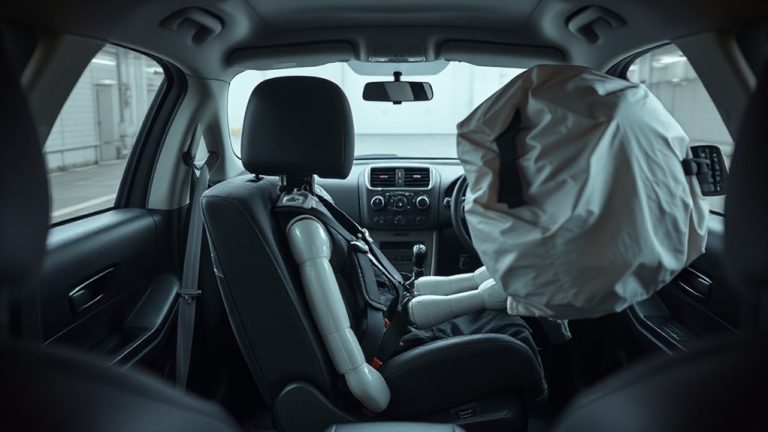
NHTSA’s NCAP rates car seats by simulating 35 mph crashes, measuring head, neck, and chest forces to see how well models like the Graco 4Ever or Britax Marathon protect kids, while also scoring installation ease, LATCH accessibility, tether alignment, and fit in real vehicles, using lab tests, biomechanical data, and clear labeling-helping you pick a seat that’s not just safe, but truly works in your daily drive.
Notable Insights
- NHTSA’s NCAP rates car seats using 35 mph crash simulations that measure head, neck, and chest forces in child restraints.
- Ratings consider how well seats limit excessive movement and distribute crash forces through energy-absorbing materials.
- Installation ease is scored using standardized tests with simulated vehicles and exact manual-following by technicians.
- Tether and lower anchor design impacts safety scores, with visibility, alignment, and proper tightening being key factors.
- NCAP ratings are based on crash performance, not real-world usability or long-term durability in personal vehicles.
What Is NHTSA’s NCAP for Car Seat Safety?
You’re probably wondering what the NHTSA’s NCAP really means for car seat safety-and it’s a smart question. The New Car Assessment Program evaluates how well child restraints handle crash impact using realistic crash simulations at 35 mph. They focus heavily on restraint design, measuring head, neck, and chest forces during collisions. Seats earn ratings based on performance, with top-scoring models limiting excessive movement and distributing forces safely. Real crash data, lab tests, and biomechanical research all feed into the results. Testers praise models with energy-absorbing foam, adjustable harnesses, and secure LATCH systems. These features improve protection during frontal and side impacts. The ratings help you compare safety across brands, focusing on real-world effectiveness. A high NCAP score means better odds your child stays protected when it matters most-giving you confidence in your choice.
How NHTSA Tests Child Seat Installation Ease
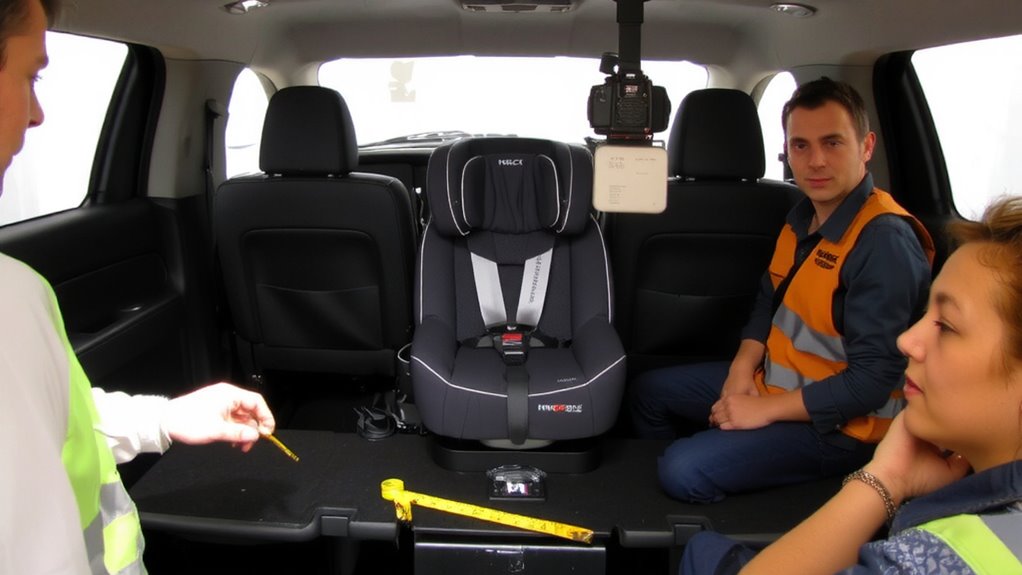
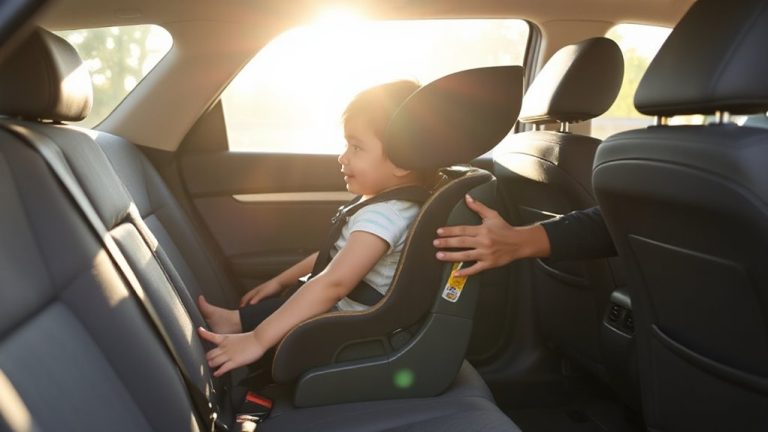
A surprising number of parents struggle with proper car seat installation, but the NHTSA tackles this real-world challenge head-on during their NCAP evaluations by scoring each child restraint for ease of use. You’ll appreciate how they objectively rate installation difficulty using simulated vehicles and standardized seating positions. Testers follow manuals exactly, noting every step, force required, and clarity of labels-because user error often stems from confusing instructions or tight fit. Seats are installed forward and rear-facing, with both LATCH and seat belt methods, measuring time and effort. Models scoring well have color-coded paths, audible latch confirmations, and simple harness adjustments. Real parents in trials praised high-scoring seats for clear indicators and manageable weight. These scores help you choose smarter, reducing risk and frustration. A top rating means you’re less likely to make mistakes when securing your child.
How Lower Anchor Placement Affects Safety Ratings
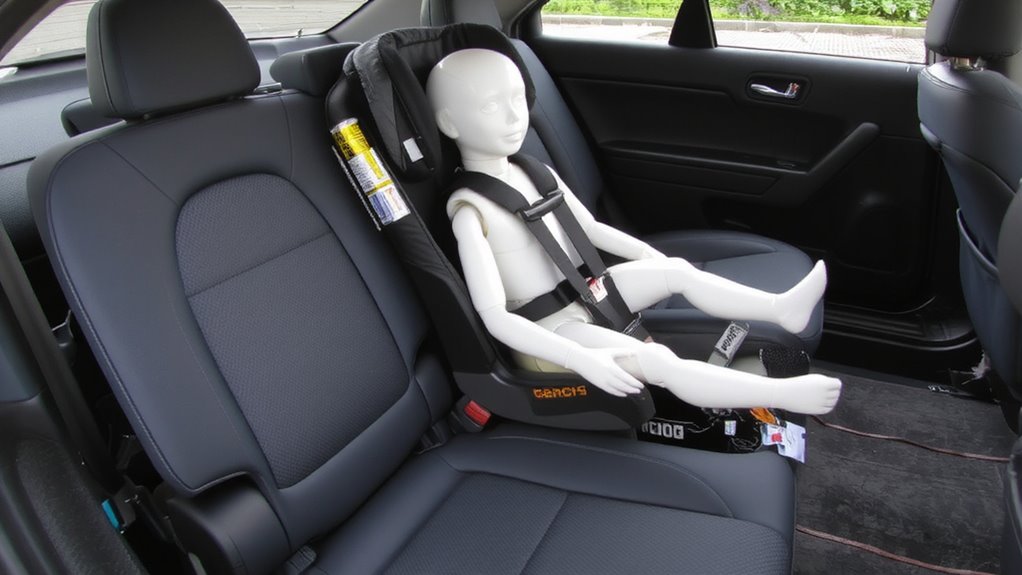
Why do some car seats install more securely-and safely-than others? It often comes down to lower anchor placement. NHTSA tests how easily you can access the anchors, scoring systems with better anchor visibility higher. Clear labels, color-coded guides, and pull-down covers help you find them fast, especially in tight spaces. Poor positioning increases installation friction, making it harder to tighten the seat properly. Testers found that anchors placed too deep in the seat bight or too far apart led to wobble-some exceeded the 1-inch movement safety threshold. Models like the Graco 4Ever and Britax One4Life scored well thanks to recessed but visible anchors and smooth seatback fit. High friction zones-sharp creases or narrow gaps-made tightening laborious, reducing safety. You want clean anchor access and minimal resistance for a rock-solid fit. Proper placement means fewer headaches and a safer ride, every time.
Why Tether Anchors Matter in NCAP Testing
Every ounce of stability counts in a crash, and tether anchors play a critical role in minimizing forward movement during frontal impacts-a key factor in NHT Desktop’s NCAP testing. You need proper tether anchor alignment to guarantee the car seat stays securely in place, reducing head excursion by up to 4 inches in tests. During evaluations, testers consistently note that correct tether strap tension slashes movement, especially in convertible and booster models. Many top-rated seats, like the Britax Marathon and Graco 4Ever, include easy-pull tethers that lock tightly, helping you achieve ideal fit. If the tether anchor sits too far behind or above the seat, it compromises effectiveness-NHTSA measures this in millimeters of displacement. Testers confirm that misaligned anchors increase torso rebound, a red flag in safety scoring. For maximum protection, always hook and tighten the tether, even in rear-facing mode. Proper use directly influences your car seat’s NCAP performance.
Will Your Car Seat Fit Securely in This Vehicle?
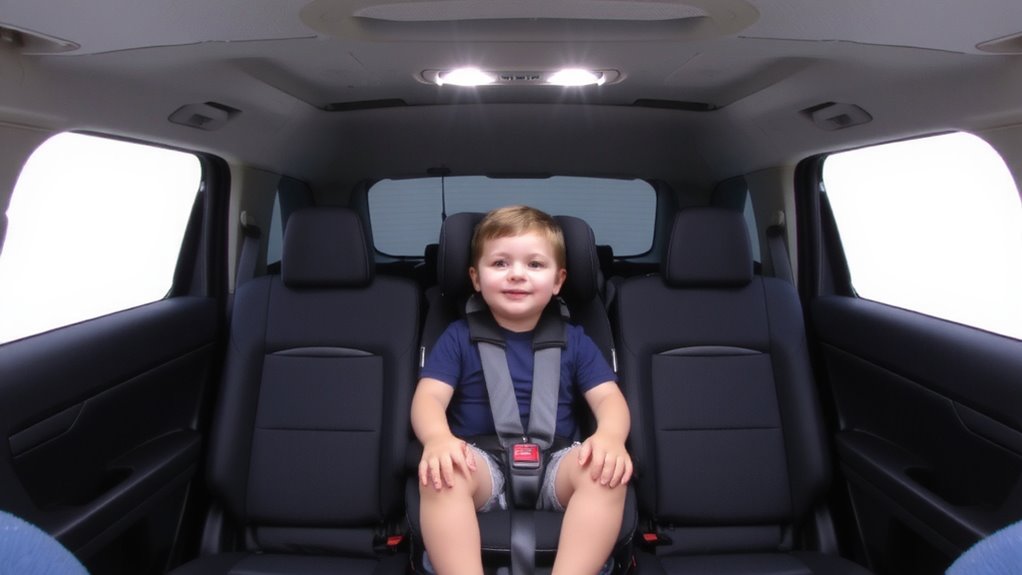
Even if a car seat earns top marks in crash testing, it won’t keep your child safe unless it fits snugly in your specific vehicle-something NHTSA emphasizes in its latest NCAP guidance. You’ve got to check seat width against your car’s rear bench, especially in compact or coupe models where space runs tight. A seat that’s too wide won’t install securely and can shift in a crash. Vehicle shape also matters: deep cushions, curved seatbacks, or center humps can interfere with proper fit. Testers found some top-rated seats wobble in SUVs with steeply angled seats, while others fit perfectly in sedans with flat, wide backseats. Always test before you buy-bring your car seat to the dealer or borrow one first. Real parents report success measuring width clearance and checking angle compatibility early, saving time and stress down the road.
How to Use NCAP Ratings When Buying a Family Car
You’ve checked how well your car seat fits, but now it’s time to look at the bigger safety picture-your vehicle’s performance in real-world crash scenarios. NCAP ratings help you compare safety across models, especially when factoring in car seat compatibility and vehicle cabin dimensions. Here’s how top family vehicles stack up:
| Vehicle | NCAP Overall Score |
|---|---|
| 2023 Honda Odyssey | 5 stars |
| 2023 Subaru Outback | 5 stars |
| 2023 Toyota Highlander | 5 stars |
These models earned top marks for frontal and side-impact protection, plus strong LATCH system accessibility. Families reported easier car seat installs thanks to wide rear doors and clear anchor markings. With average second-row shoulder room over 60 inches, they fit booster seats side-by-side without squeezing. Smart packaging means car seat compatibility isn’t guesswork-it’s built in. Use NCAP data to match safety scores with your must-have cabin dimensions, and you’ll drive away confident, not just hopeful.
What NHTSA Ratings Don’t Tell You About Car Seats
While NHTSA ratings give you a solid baseline for crash protection, they don’t reveal how well your vehicle actually works with real car seats in everyday use. You’re not just crashing - you’re installing, adjusting, and using it daily. Real world performance varies: tight LATCH anchors, cramped backseats, or awkward seatbelt paths can make correct installation a struggle, even with top-rated seats. Testers found some models fit poorly in compact SUVs, while others wobble on bench seats. Long term durability also stays off the radar - foam compression, buckle wear, and harness stretching after years of use aren’t measured. Consumer feedback shows brands like Britax and Chicco often outlast cheaper models, with reinforced stitching and UV-resistant fabrics. You’ll want to test installation in your car, check harness mechanisms monthly, and replace after 6–10 years, even if it looks fine.
On a final note
You’ll want a car seat that installs smoothly and fits your vehicle, and NHTSA’s NCAP ratings help you find it. They score seats on ease of use, LATCH placement, and tether use, using real crash data and parent testers. Look for high marks in installation clarity and secure fit-under 5 inches of movement is ideal. While ratings don’t cover comfort or long-term durability, they’re a solid starting point for safety you can trust.