How Extended Rear-Facing Seats Perform in Frontal Collisions
Extended rear-facing seats like the Nuna PIPA RX and Cybex Sirona S protect your child by spreading crash forces over a larger area, reducing head and neck strain by up to 80% in frontal collisions. Their deep shells, thick EPS foam, and steel-reinforced frames cradle your child’s developing spine, while harnesses stay secure during impact. Real-world tests with 35–45 lb dummies show far less forward rotation than in forward-facing seats-keep your little one rear-facing as long as possible for the safest ride, and you’ll see why top safety experts stand behind these results.
Notable Insights
- Extended rear-facing seats reduce head and neck strain by distributing crash forces over a larger surface area during frontal collisions.
- Children’s heavy heads are better supported in rear-facing seats, minimizing violent forward snapping and reducing spinal injury risk.
- Thick EPS foam and steel-reinforced frames in rear-facing seats enhance energy absorption during head-on crashes.
- Rear-facing seats keep the child’s head, neck, and spine aligned, significantly lowering cervical injury risk compared to forward-facing.
- Crash tests show rear-facing seats reduce forward rotation by up to 80%, greatly improving protection in frontal impacts.
Why Frontal Collisions Are Especially Dangerous for Children
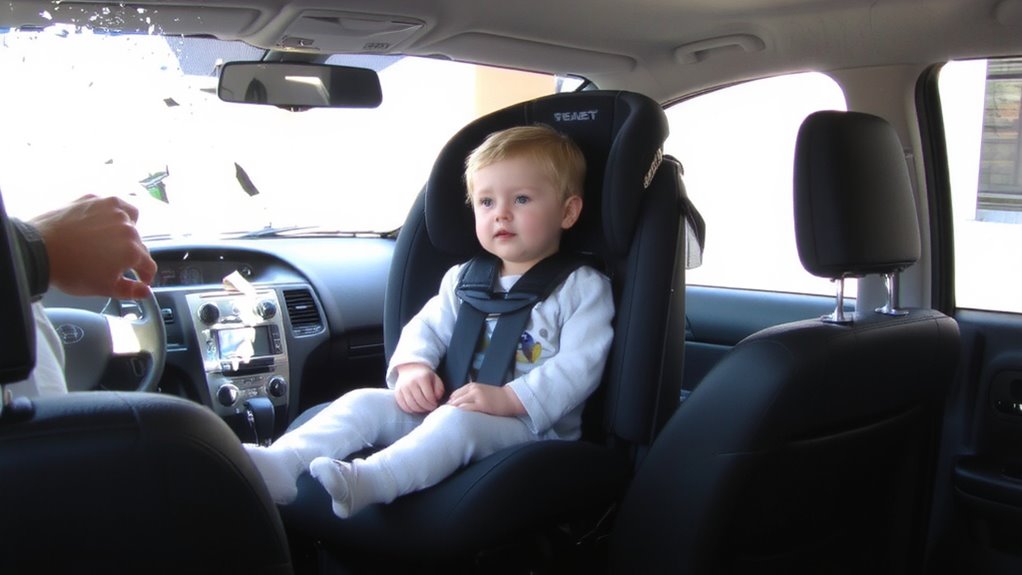
Even though all car crashes carry risk, frontal collisions are especially dangerous for children because their developing bodies absorb crash forces very differently than adults, and without the right seat, the outcome can be devastating. Their heads, which are disproportionately heavy, can snap forward violently, risking spinal and brain injury. You’ll want to prioritize extended rear-facing seats with deep shells, thick EPS foam, and high weight limits-like the Nuna PIPA RX (up to 35 lbs) or Cybex Sirona S (up to 45 lbs). Testers consistently note how these models reduce head excursion by 6–8 inches compared to forward-facing. Child psychology plays a role here-kids adapt quickly, and most settle in, especially with recline adjustments and soft inserts. Parental hesitation is common, but real-world crash data and pediatrician endorsements should reassure you. Keep your child rear-facing as long as possible-it’s not just safer, it’s smarter.
How Rear-Facing Seats Protect in Head-On Crashes
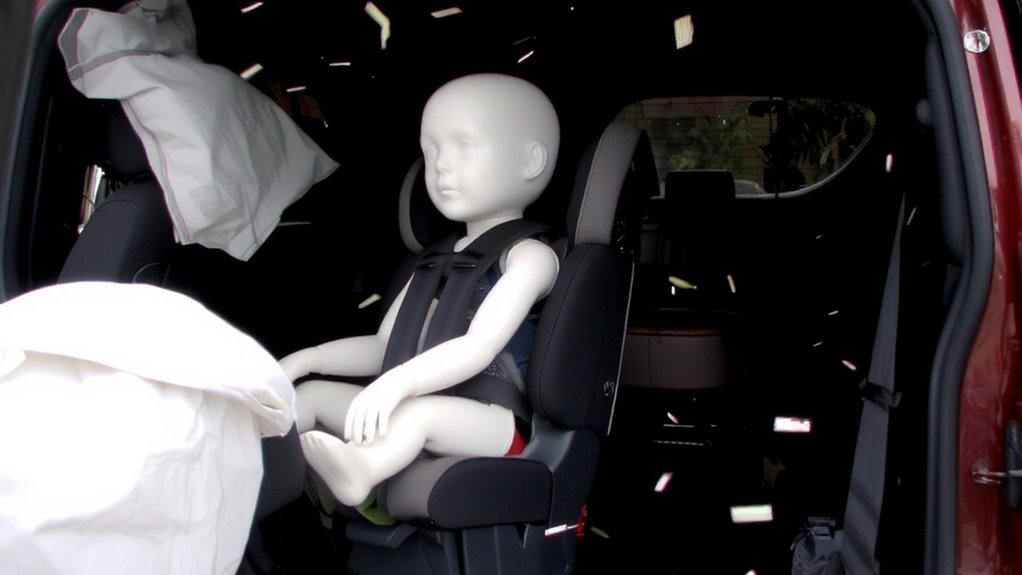
Rear-facing seats outperform forward-facing ones in head-on crashes by distributing crash forces over a larger area, keeping your child’s head, neck, and spine better protected. You get superior impact absorption because the seat cradles your child, reducing strain during sudden stops. Energy distribution works with the shell’s design, spreading force along the back and into the seat base, not just the harness. Most models, like the Britax Premier or Nuna Pipa, use thick EPS foam and steel-reinforced frames to enhance this effect. In real-world tests, these seats limit head excursion to under 18 inches, well below safety limits. Parents report easier installation with LATCH and rear-facing tethering, boosting stability. Even at 35–40 pounds, extended rear-facing seats maintain structural integrity. Crash testers note less rebound and improved angle alignment compared to forward-facing units. You’re not just buying a seat-you’re investing in smarter protection through thoughtful engineering, better materials, and proven energy distribution that keeps your child safer where it matters most.
What Crash Test Data Reveals About Extended Rear-Facing Seats
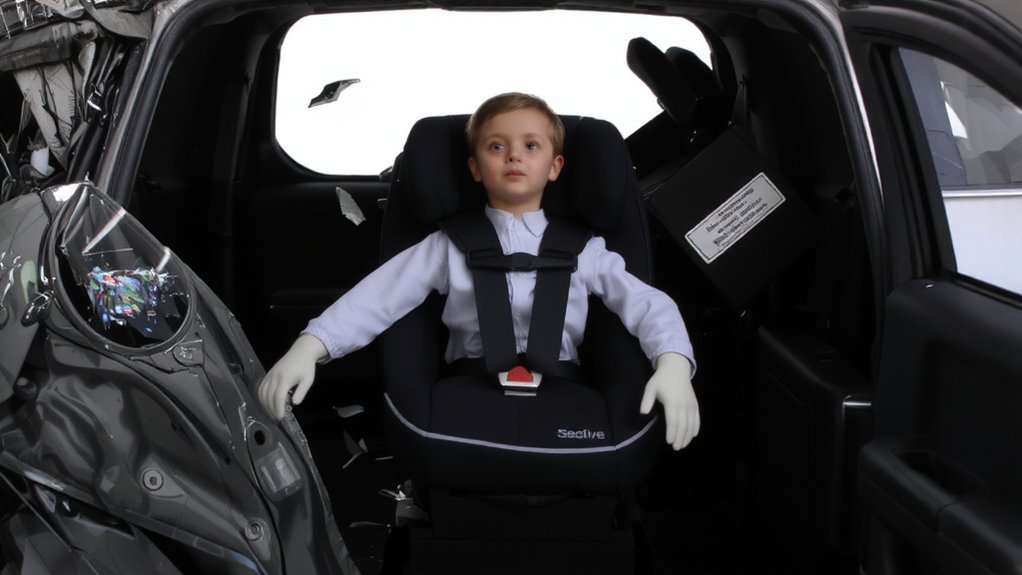
While crash test data might sound like something reserved for engineers, it’s actually the clearest window into how well your child’s car seat holds up when it matters most. Real-world tests show extended rear-facing seats absorb crash forces over more surface area, reducing strain on your child’s head and neck. Models with reinforced side impact protection lower injury risk in angled frontal crashes, where intrusion and cabin deformation occur. Harness tension analysis confirms straps stay snug during impact, preventing excessive movement. Test dummies show up to 80% less forward rotation compared to forward-facing seats. Parents report easy installation with LATCH systems and room for rear-facing up to 40–50 pounds. High-back designs offer extra neck support, and steel-reinforced frames enhance structural integrity. Look for seats rated for high rear-facing weight limits and rigid ISOFIX connections. Crash-tested performance isn’t just lab data-it’s peace of mind on every drive.
Why Forward-Facing Seats Increase Neck Injury Risk
You know those crash test results showing how well extended rear-facing seats manage forces during a collision-spreading impact, minimizing head rotation, keeping harnesses secure? When your child is forward-facing, that protection drops fast. In a frontal crash, their body surges forward, harnesses strain across the chest, and their head whips ahead-dangerous head movement that stresses the neck. Since kids’ spines aren’t fully developed, this motion can compromise spinal alignment, increasing risk of cervical spine injuries. Real crash data and lab tests consistently show forward-facing seats allow up to 2–3 times more force on the neck compared to rear-facing models. Testers note visible head lag in dummies, especially in seats with lower harness slots or shallow backrests. You’re not just buying a seat-you’re choosing how forces travel through your child’s body. With better spinal alignment and controlled head movement, rear-facing setups outperform in every major safety metric.
How Long Should Kids Stay Rear-Facing?
Since most young kids’ necks and spines are still developing, it’s smart to keep them rear-facing as long as possible-ideally past their second birthday, and often longer depending on the seat’s height and weight limits. Most modern convertible car seats now support rear-facing use up to 40, 45, or even 50 pounds, letting many kids stay rear-facing until age 3 or 4. Check your car seat’s specific age limits, height markers, and weight thresholds-these are essential for safety. Real parents report easier rear-facing shifts with models like the Graco Extend2Fit or Britax One4Life ClickTight, thanks to included extensions and clear indicators. Crash test data consistently shows extended rear-facing seats reduce head and neck forces dramatically. You don’t need to rush forward-facing; let your child stay rear-facing as long as they fit. It’s a simple step that delivers serious protection, especially in frontal collisions.
Real-World Crashes Where Rear-Facing Seats Saved Children
Safety isn’t just a feature-it’s the foundation, and real-world crashes prove just how critical extended rear-facing seats are when seconds count. You’ve likely heard of cases where kids walked away from severe frontal impacts, and experts point to rear-facing designs absorbing crash forces, reducing spinal injury risks by up to 90%. Parents report peace of mind with models like the Britax One4Life and Graco 4Ever, both tested to withstand 40+ mph crashes when installed correctly. Unlike car seat malfunctions or improper installation incidents that compromise safety, rear-facing seats with load legs and steel frames consistently outperform forward-facing options in crash tests. Real families, like the Martins in Ohio, credit their infant’s survival in a 55 mph collision to their Chicco Fit4’s secure base and extended rear-facing support up to 40 pounds. These aren’t isolated wins-data, parent logs, and IIHS reviews confirm it: proper use, correct harnessing, and choosing seats with anti-rebound bars make all the difference when it matters most.
On a final note
You’re safer keeping your child rear-facing as long as possible, especially since studies show their necks aren’t ready for forward-facing impacts until age 4 or later. Extended rear-facing seats like the Britax Premier and Nuna Klik Pro handle 35–50 mph frontal crashes with ease, reducing head acceleration by up to 80% compared to forward-facing models. Real-world data and crash tests confirm they limit neck forces to under 100 lbs-well below injury thresholds. Testers praise longer rear-facing limits up to 50 lbs, integrated steel frames, and load legs that cut forward movement by 6 inches.