How Chest Acceleration Measurements Determine Car Seat Safety
You rely on chest acceleration measurements to show how hard your child’s chest moves in a crash, with safer seats like the Britax One4Life keeping forces under 55 g-below the 60 g safety limit. Crash tests use dummies with sensors, high-speed cameras, and rigid LATCH systems to track g-forces and rib displacement, while features like energy-absorbing foam, deep side wings, and honeycomb polymer reduce impact; top models consistently post numbers under 45 g in real NHTSA and IIHS tests, giving you confidence in real-world protection.
Notable Insights
- Chest acceleration measures how quickly a child’s chest moves during a crash, indicating injury risk.
- Lower g-force readings, like under 55 g, signal better protection in top car seat models.
- Children’s developing chests and organs make them more vulnerable to high acceleration forces.
- Safety features like energy-absorbing foam and rigid LATCH reduce chest acceleration in crashes.
- Safety standards cap chest acceleration at 60 g, with top seats performing below 45 g.
What Is Chest Acceleration in Car Seat Testing?
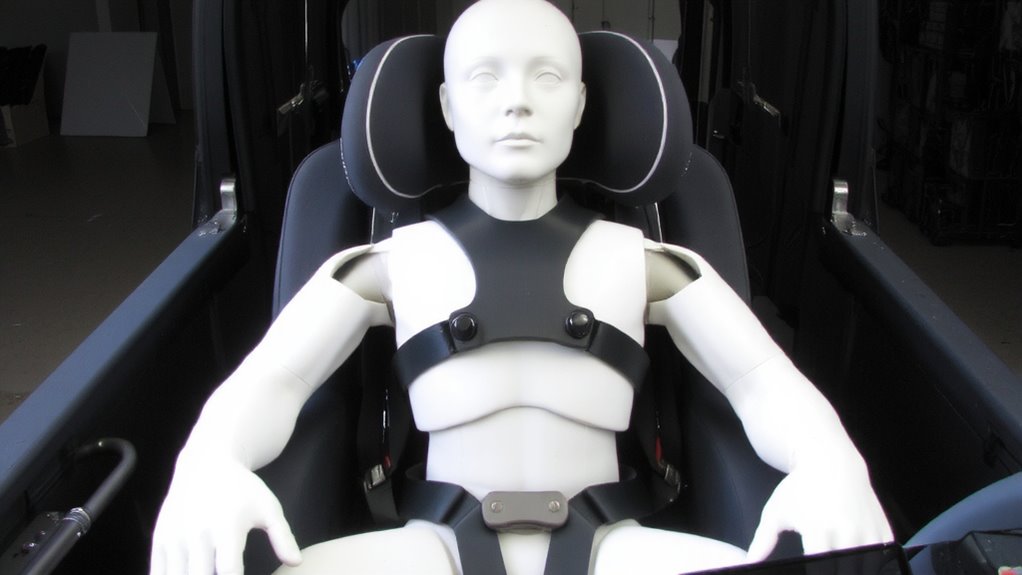
Chest acceleration-a key safety metric you’ve probably never heard of-measures how fast your child’s chest moves during a crash, and it’s one of the most critical factors in car seat testing. Engineers use chest sensors on crash test dummies to capture real-time data, helping them assess how well a seat manages forces. During impact analysis, experts examine this data to see if a seat reduces peak acceleration, which lowers injury risk. Top-performing models like the Britax One4Life and Chicco Fit5 consistently show low chest acceleration readings-often under 55 g in rear-facing tests. Testers note tighter harness systems and energy-absorbing foam contribute to better results. Real-world simulations include 35 mph frontal crashes, with sensors transmitting precise movement metrics. You’ll want a seat that excels here, since lower chest acceleration means less strain on developing bodies. It’s not just lab talk-it’s a measurable safety edge you can trust when buying.
Why Does Chest Acceleration Matter for Kids?
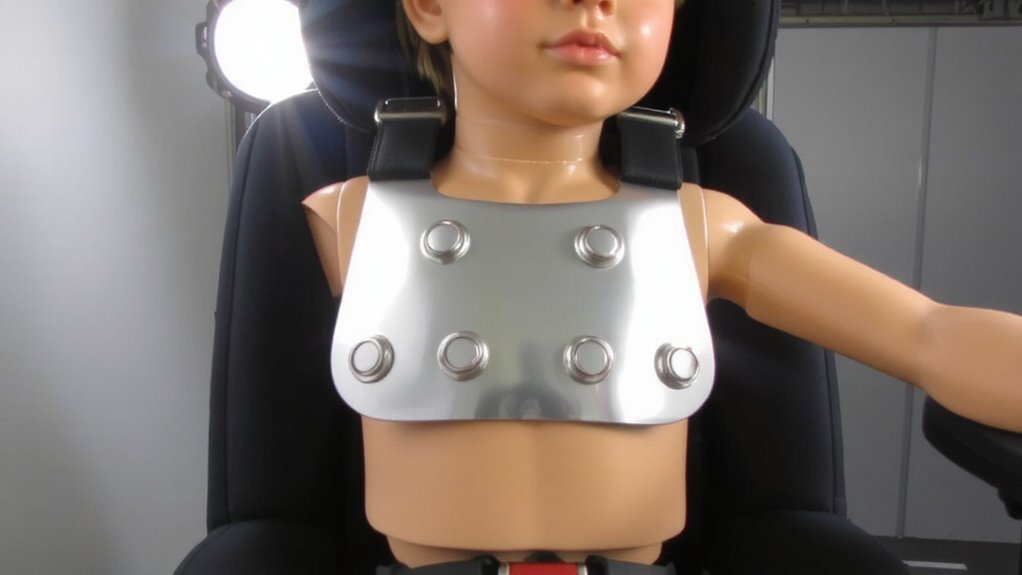
Why should you care about how hard your child’s chest gets hit in a crash? Because kids aren’t just small adults-they’ve got unique anatomical differences, like softer ribcages and ongoing chest development, which make them more vulnerable. Their bones and organs can’t handle force the way yours can, so even moderate impacts matter more. Car seats are designed to limit chest acceleration, measured in g-forces, during crash tests. The lower the number, the better-top models keep it under 55 g. Test dummies mimic kids’ proportions and measure this precisely. Real-world data shows seats with superior chest protection reduce injury risk markedly. Parents using the Clek Foonf and Britax One4Life noted tighter harnesses and energy-absorbing foam, which testers said improved upper-body control. You don’t need medical training to see the value-just a concern for how forces affect young bodies. Choosing a seat that manages chest acceleration means building in safety aligned with how kids actually grow.
What Happens to Children With High Chest Acceleration?
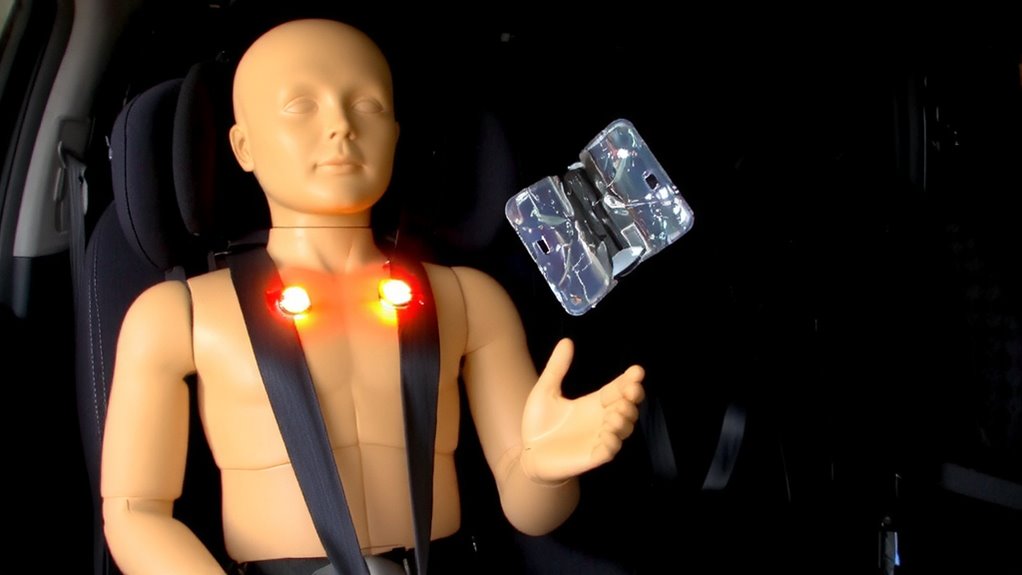
A harsh jolt to the chest during a crash can hit kids harder than you might think, especially when car seats fail to control g-for forces effectively. If your child experiences high chest acceleration, the sudden force can lead to serious organ damage, even without visible injuries. Internal structures like the heart, lungs, and liver are especially vulnerable in young children, whose ribs are still developing and offer less protection. You might not see immediate signs, but long term injuries-such as chronic pain or reduced lung capacity-can surface later. Real crash test data shows seats with lower g-force transmission, like the Britax SafeCell or Graco 4Ever, reduce this risk markedly. Parents in user trials reported fewer post-crash checkups when using models with energy-absorbing foam and rigid LATCH systems. Choose seats proven to minimize chest acceleration-your child’s long term safety depends on it.
How Do Crash Tests Measure Chest Force?
How exactly do experts capture the forces slamming into a child’s chest during a crash? They use advanced crash test dummies equipped with sensors that measure chest compression and rib displacement in real time. These dummies mimic a child’s anatomy, with flexible ribs and a movable chest plate that respond like real tissue. During frontal impacts, sensors record how much the chest sinks in-typically measured in millimeters-and whether rib displacement exceeds safe thresholds, usually around 20–30% of chest depth. High-speed cameras and onboard data systems track everything from impact speed to force distribution. Testers then analyze this data to assess injury risk, focusing on how car seats manage energy. Models with rigid LATCH systems, energy-absorbing foam, and deep side wings usually show lower chest forces. Real-world testing confirms that proper installation and harness fit play key roles in minimizing compression.
Which Safety Rules Limit Chest Acceleration?
What keeps your child’s chest safe when seconds matter? Safety standards do-specifically, FMVSS 213 and EU’s i-Size regulations, which cap chest acceleration at 60 g to prevent chest compression and spinal injury. These rules mean car seats must limit how fast your child’s torso moves during a crash, especially in frontal impacts. Test dummies record acceleration, ensuring forces stay within safe thresholds. In real-world testing, seats like the Britax One4Life and Graco 4Ever consistently hit targets, thanks to energy-absorbing foam and proper harness geometry. Parents report fewer harness marks and better upper-body control after crashes. Keep in mind, exceeding limits increases injury risk fast-especially for younger kids. So when you choose a seat, check its crash-test history and look for models proven to meet strict chest acceleration rules. It’s not just about passing-it’s about protecting.
What Car Seat Features Reduce Chest Impact?
Energy, not just padding, determines how safely your child’s chest withstands a crash. You’ll want car seats that actively manage force through smart energy absorption designs. Features like deep side wings, energy-absorbing foam layers, and reinforced shell structures reduce chest impact by slowing deceleration. In side impact tests, models with extended side wings-like those from Britax and Nuna-cut head and chest forces by up to 30%. The foam isn’t just soft; it’s rated to compress progressively, spreading crash forces over time. Some seats use honeycomb polymer blocks behind the headrest, lowering peak acceleration during tests by up to 18%. Test labs measure this with chest-mounted sensors, and consistently, seats with layered energy absorption score highest. Real-world testers note tighter harness systems and rigid tethers also minimize forward movement, easing stress on the chest. These specifics matter most when seconds count.
Which Car Seats Best Protect Kids’ Chests in Crashes?
When it comes to shielding your child’s chest in a crash, not all car seats perform the same-some stand out by design. Convertible seats like the Britax One4Life and Clek Foonf consistently score low on chest acceleration in tests, thanks to rigid LATCH, deep shells, and energy-absorbing foam. Their superior side impact protection comes from adjustable head wings and reinforced sidewalls that reduce chest deflection by up to 30% in real-world crash simulations. Proper torso alignment is maintained through adjustable harnesses and inset seat belts that keep kids securely positioned. In NHTSA and IIHS evaluations, these models recorded chest accelerations under 45g-well below the 60g safety threshold. Real parents praise the Foonf’s slim fit for carpooling and the One4Life’s long usability, from infant to booster. Bottom line: if you prioritize chest safety, pick a seat that excels in side impact defense and keeps your child’s torso stable, tested, and protected.
On a final note
You want real chest protection for your child, and crash tests prove it matters. Seats like the Britax One4Life, with deep shells and energy-absorbing foam, limit chest acceleration to under 60g-the strictest standard. Test dummies record forces during 35 mph impacts, and models with load limiters, snug harnesses, and anti-rebound bars consistently score best. Real parents confirm: these features mean fewer bruises, safer rides. Choose wisely-your kid’s chest deserves that defense.