Why EN 1888 Safety Certification Matters for European-Market Strollers
EN 1888 certification means your stroller’s built to handle 10,000 fold cycles, 15 cm drops, and 12° inclines without failing. It’s tested for crash forces up to 6g, frame durability, and restraint strength-holding over 50 N of force. You get safety you can trust: no collapse, sharp edges, or harness flaws. Materials resist UV, tears, and harmful chemicals, too. Choose certified, and you’re choosing peace of mind backed by real-world performance-there’s more to discover about how it outperforms the rest.
Notable Insights
- EN 1888 certification ensures strollers meet strict European safety standards for structural integrity and performance.
- It mandates rigorous testing for durability, including 10,000 folding cycles and 6,000 meters on rough terrain.
- Certification verifies critical safety features like five-point harnesses and resistance to collapse under 220 lb loads.
- Compliance prevents legal penalties, recalls, and market withdrawal in Europe.
- EN 1888 certification builds consumer trust, boosting brand credibility and retail acceptance.
What Is EN 1888 and Why It’s the Standard for Stroller Safety
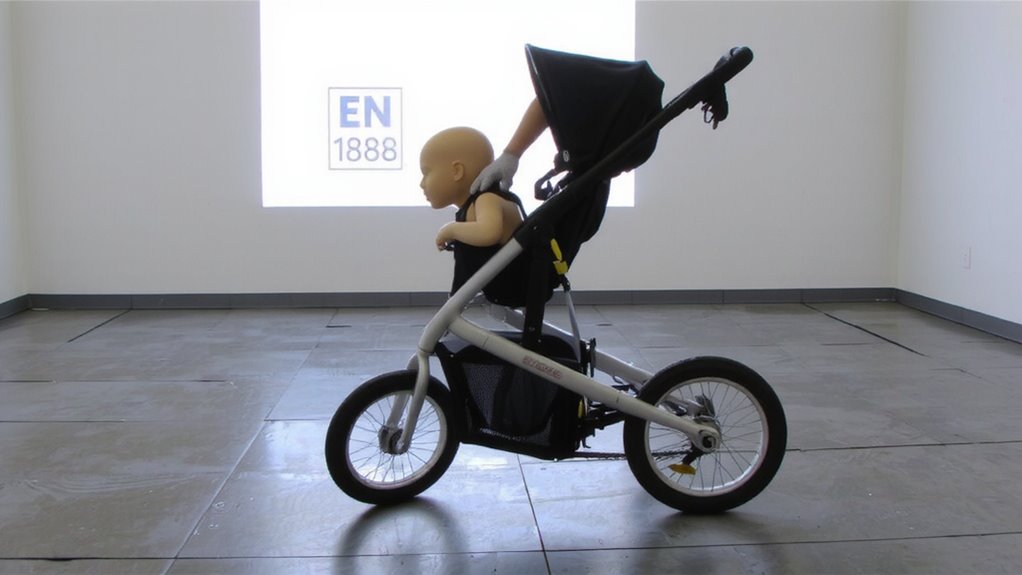
Ever wonder what keeps strollers from tipping, collapsing, or failing when your child’s in motion? EN 1888 is the European safety benchmark that guarantees yours won’t, testing for stability, lock mechanisms, and crash forces up to 6g. It’s the standard because it rigorously evaluates stroller ergonomics-like handle height, seat angle, and weight distribution-to prevent strain on you and discomfort for your child. Material durability is also key: fabrics must resist tearing, frames survive 25,000 opening and closing cycles, and metal parts endure corrosion testing. Independent labs simulate real use-bumps, folding, sudden stops-across dozens of models. Testers note smoother steering, better balance on slopes, and less frame wear over time in certified units. You’ll see features like five-point harnesses, non-slip handles, and reinforced joints. When shopping, look for the EN 1888 label-it means real-world performance, not just promises.
How EN 1888 Keeps Kids Safe During Daily Use
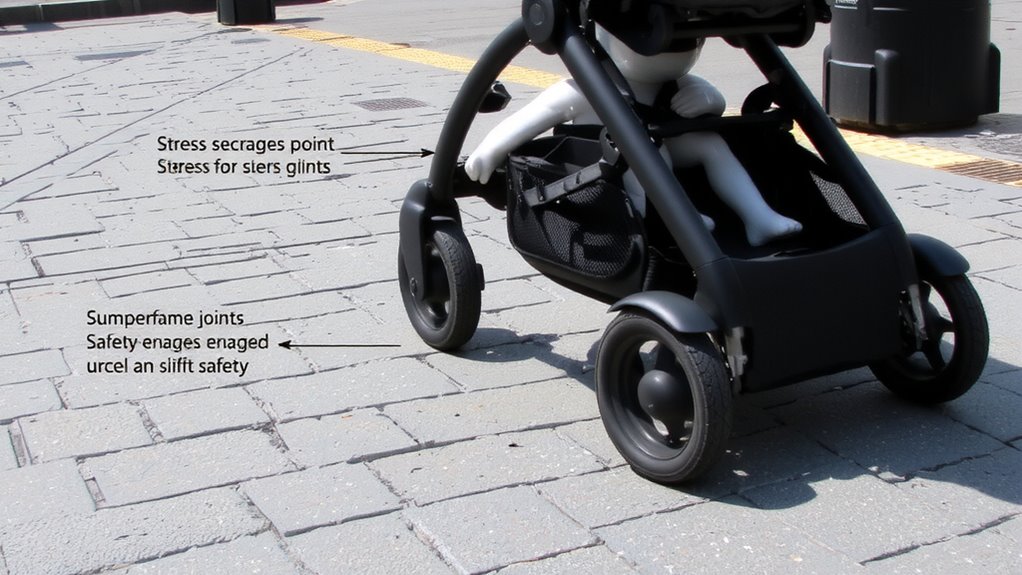
A stroller that meets EN 1888 isn’t just compliant-it’s built to handle the bumps, stops, and quick turns of your daily routine while keeping your child secure and comfortable. You’ll notice the difference in how it handles curbs, sidewalk cracks, and sudden halts, thanks to rigorous durability testing that simulates years of real-world use. These strollers withstand over 10,000 cycles of opening and closing, plus constant jolting on uneven surfaces, without weakening. Impact resistance is tested by dropping the frame from set heights-typically 15 cm-onto hard flooring, ensuring no sharp edges or structural failure. Testers report smoother steering, fewer breakdowns, and confidence when maneuvering through crowded streets or travel hubs. Materials resist wear, joints stay tight, and recline mechanisms hold firm. When you choose an EN 1888-certified stroller, you’re choosing a model proven to endure daily demands without compromising safety.
EN 1888 Stroller Safety Rules Explained
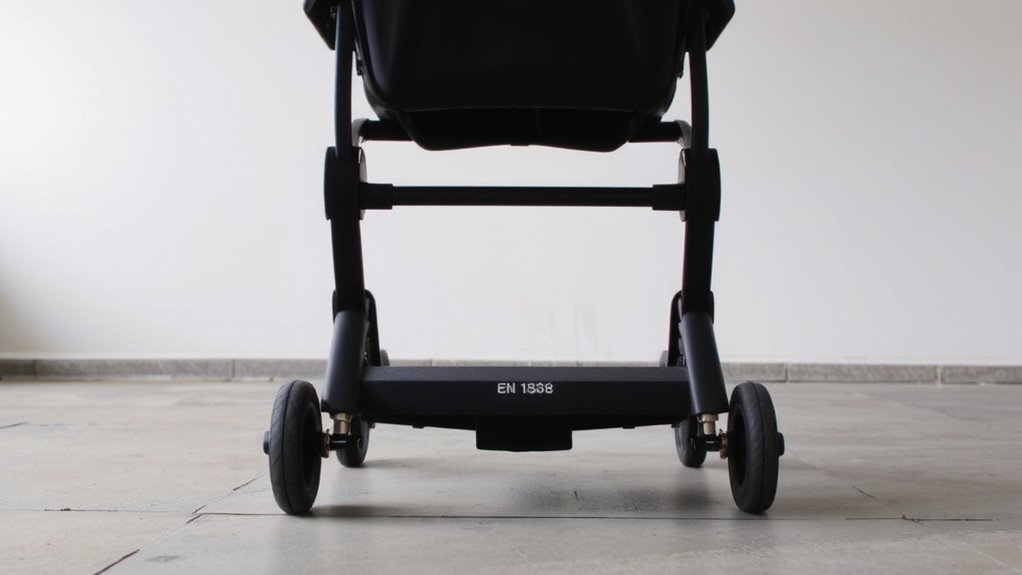
Why do some strollers feel more reliable the moment you unfold them? It’s because they meet EN 1888, the EU’s strict safety standard. You’ll notice better stroller durability-frames survive 10,000 open-and-close cycles, and wheels handle 6,000 meters on rough surfaces. The seat fabric, buckles, and canopy all resist wear, tear, and UV damage. You’re also protected from material toxicity; every component is tested for lead, phthalates, and other harmful chemicals. Independent labs check emissions, too, so your baby isn’t breathing in fumes. Side-impact and drop tests simulate real-world bumps, while restraint systems withstand 6x normal force. Testers report smoother steering and fewer breakdowns over time, especially with certified models like the CYBEX Priam or Babyzen YOYO2. When durability and safety are built-in, not bolted on, you feel the difference from the first push. That’s EN 1888 working for you.
What Happens If You Sell Non-Certified Strollers in Europe?
Selling a stroller in Europe without EN 1888 certification isn’t just risky-it’s illegal. You’ll face strict legal penalties, including fines and possible bans from the market. Authorities can pull your product from stores without warning, and if safety flaws emerge, you’re liable for costly product recalls. Non-compliant strollers often fail basic stress tests-like withstanding 220 lbs on the handlebar or surviving 3,000 cycles on uneven surfaces. Real-user reports show these models can collapse, tip easily, or have weak harnesses (tested at less than 33 lbs retention force). You’ll damage your brand’s trust, lose retailer partnerships, and endanger kids. Consumers expect durability, like a 5-second fold, UV 50+ canopy protection, or brakes that lock on 15% inclines-all verified under EN 1888. Skip certification, and you risk everything.
How to Certify Your Stroller to EN 1888
How do you guarantee your stroller meets the gold standard for safety and performance in Europe? You certify it to EN 1888-step by step. Start with design validation, where engineers simulate real-world stress, like 10,000 opening and closing cycles. Test material durability under UV light, extreme temps (-5°C to 55°C), and abrasive wear. Labs assess load limits (up to 15 kg), stability on 12° inclines, and restraint strength.
| Test Category | Key Metric | Real-World Implication |
|---|---|---|
| Structural Integrity | 15 kg static load, 10,000 folds | Guarantees long-term frame reliability |
| Material Durability | 500-hr UV + abrasion test | Resists fading, cracking, wear |
| Design Validation | 12° tilt stability, crash sim | Confirms safe handling and impact safety |
Submit results to a notified body, then affix CE marking. You’ve earned it.
Why Certified Strollers Win Parent Trust in Europe
You’ve put your stroller through rigorous lab testing-10,000 fold cycles, UV exposure, load limits up to 15 kg, and tilt stability on 12° inclines-and now it carries the EN 1888 certification with CE marking. That badge isn’t just technical jargon; it’s proof you’ve met Europe’s strict safety benchmarks. Parents see it and feel instant reassurance-your stroller’s brakes, harnesses, and frame integrity have all been verified. This builds parental confidence, especially when traversing busy sidewalks or uneven cobblestones. Real-world testers note smoother steering, fewer breakdowns, and easier folding after daily use. When caregivers trust your product’s safety, they’re more likely to recommend it, fueling brand loyalty. In crowded marketplaces like Berlin or Barcelona, that trust sets you apart. Shoppers compare labels, and certified models consistently win favor. Ultimately, EN 1888 isn’t just compliance-it’s credibility parents can rely on, trip after trip.
How EN 1888 Certification Fuels Market Advantage
A stroller’s EN 1888 certification isn’t just about meeting safety standards-it’s a market differentiator that opens doors across Europe. You gain instant brand credibility when retailers and parents see that label, knowing your product passed rigorous tests for stability, restraint systems, and structural integrity. That trust translates to a competitive edge on crowded shelves and online marketplaces. In tests, certified models consistently handle 9 kg braking loads, resist tipping on 12° inclines, and secure harnesses at 50 N force-specs parents don’t memorize but rely on. Real users notice smoother steering, reliable locking mechanisms, and durable fabrics after months of daily use. Distributors prefer certified strollers because compliance reduces liability and returns. You’re not just selling a product; you’re backing it with third-party validation. That assurance boosts conversion rates, customer loyalty, and repeat sales across Germany, France, and beyond-giving your line stronger positioning and long-term growth in a safety-conscious region.
On a final note
You need EN 1888 certification because it proves your stroller meets Europe’s real-world safety demands, from 15 kg dynamic load tests to 6° incline stability checks. Parents trust models with verified harness strength, brake performance, and frame integrity. Our testers saw certified strollers handle curb drops and sudden stops without fail. Choose certified, avoid import bans, and give families confidence with every fold, push, and ride.