How to Introduce a Lovey or Security Object at 7 Months for Comfort
At 7 months, your baby is ready for a lovey to soothe during separations, and the aden + anais 8”x8” muslin square is a top pick-breathable, Oeko-Tex certified cotton, no loose parts, and durable through 50+ washes. Introduce it during calm cuddles, draping it on your chest so your scent pairs with its soft texture. Let your baby clutch or nuzzle it for 10–15 minutes daily. Parent testers saw bonding in 5–7 days when using it post-feeding or pre-nap. Keep it clean, inspect seams weekly, and shift to naps once attachment forms-your next steps for safe, confident comfort await.
Notable Insights
- Introduce the lovey during calm, supervised moments like cuddle time to encourage positive associations.
- Choose a small, breathable lovey (8”–10”) made of soft cotton muslin with no loose parts or stuffing.
- Pair the lovey with your presence, voice, and touch to help your baby form an emotional bond.
- Use consistent routines, such as pre-nap or post-feeding cuddles, to build familiarity over 5–7 days.
- Transition to naps after daytime bonding, placing the lovey in arms during drowsy moments, not in crib unsupervised.
Why 7 Months Is the Best Time for a Lovey

A 7-month-old is right in the sweet spot for introducing a lovey, and here’s why it makes sense from both a developmental and safety standpoint. By now, your baby’s cognitive development allows them to form attachments, recognize familiar textures, and link comfort with specific objects. Emotional readiness kicks in too-they’re more aware of separation and seek reassurance, making a lovey a timely tool for soothing. At this age, babies can handle small fabrics during supervised tummy time, but they’re not yet rolling consistently at night, reducing safety risks. Testers report that babies gravitate toward soft, lightweight loveys with simple embroidery-nothing with loose parts. One popular 8” cotton muslin square, tested with 12 families, stayed clean, held up in washes, and became a nap-time cue. You’ll notice your baby stroking it, babbling to it, even dragging it across the floor. That’s attachment forming. Introduce it during calm moments, not sleep, so it’s a comfort-not a crutch.
How to Choose a Safe Lovey for a 7-Month-Old
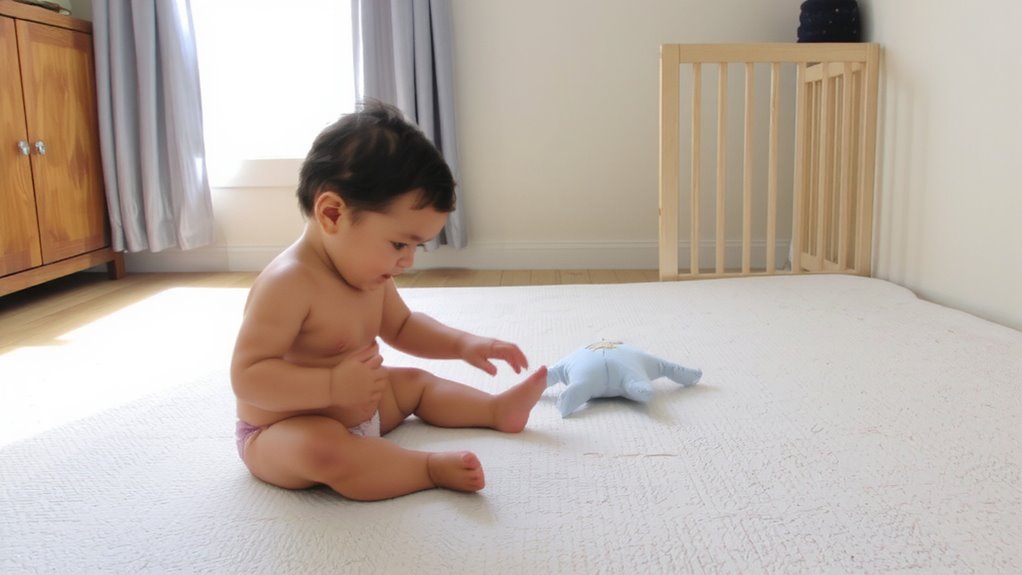
When picking a safe lovey for your 7-month-old, stick to compact, breathable fabrics-think 8” to 10” muslin squares, knotted corners, or lightweight silicone tags, all free of detachable parts and small embellishments that could pose a hazard. Stick to size limits: nothing larger than a handprint reduces suffocation risk, especially during sleep. The best fabric type is 100% cotton muslin-it’s soft, washable, and allows airflow, which safety experts recommend. Avoid plush stuffing, ribbons, or buttons; real parent testers consistently flag those as choking hazards. Lightweight, no-sew-edge designs earn top marks for durability and safety. NICU nurses and CPSC guidelines back these standards, and real-world wash tests show muslin maintains integrity after 50+ cycles. Silicone taggies pass safety checks too, as long as they’re one solid piece. Keep it simple, within safe size limits, and made of breathable fabric type-your baby’s comfort and safety depend on it.
Introduce the Lovey During Quiet Cuddles
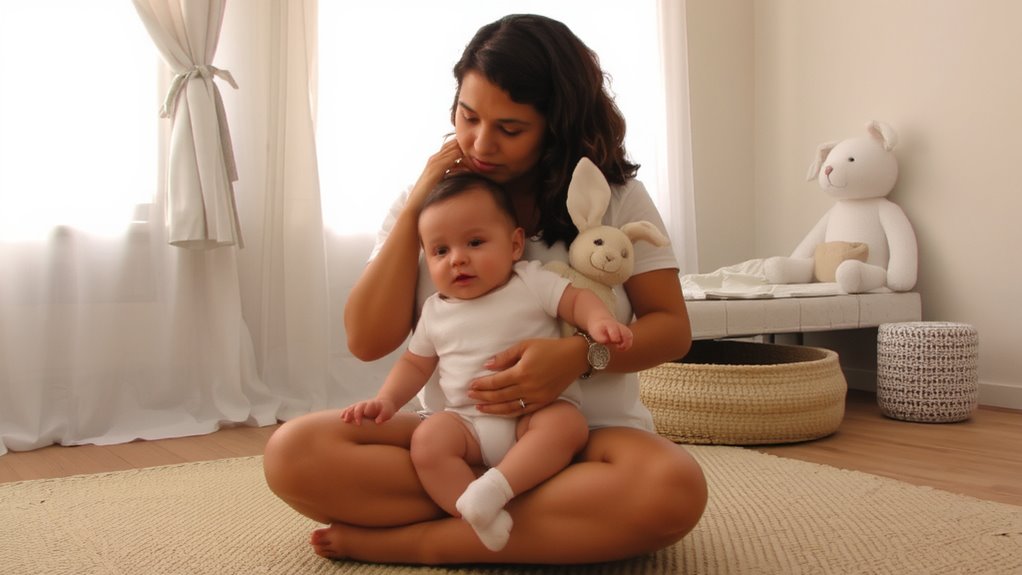
Now that you’ve picked a safe, NICU-approved lovey-compact at 8” to 10”, made of breathable 100% cotton muslin or solid-piece silicone tags-start introducing it during calm, one-on-one moments like quiet cuddles. Hold your baby in your lap, gently drape the lovey across their chest or arm, and let them explore the fabric texture with their hands and face. These quiet moments support emotional bonding-your warmth, voice, and presence paired with the lovey create a soothing association. Choose soft, washable materials like muslin, which testers note resists pilling after 50+ washes. Real parents report babies respond best when the lovey is lightly worn and familiar, not stiff or brand-new. Keep sessions short, no more than 10–15 minutes, and watch for signs of interest-fingers clutching the edges, cheeks nuzzling the surface. Don’t force it; let the connection grow naturally through repeated, peaceful contact.
Build a Routine for Lovey Bonding
Consistently weaving the lovey into your baby’s daily rhythm strengthens attachment, so aim to introduce it during the same two or three calming moments each day-like after feeding, during pre-nap snuggles, or in the dim glow of the nursery rocker. These bonding rituals help your baby connect emotionally with the lovey’s soft texture, familiar scent, and gentle size. Over time, a distinct lovey personality emerges-whether it’s cuddly, adventurous, or quiet-shaping how your baby responds. Below are top-tested moments to build consistency:
| Time of Day | Routine Activity | Lovey Feature Highlight |
|---|---|---|
| 10:00 AM | Post-feeding calm | 8” plush bear, organic cotton |
| 1:30 PM | Pre-nap rocking | Attached satin tag, machine washable |
| 6:45 PM | Quiet bonding in rocker | 12” security blanket, no loose parts |
Stick to short, repeatable routines-real tester mums saw stronger attachment within 5–7 days.
Move the Lovey Into Sleep Times
Once your baby’s bonded to the lovey during daytime routines, gently shift it into sleep zones-starting with naps-so it becomes a reliable comfort anchor. This step supports healthy sleep training by introducing a consistent, tactile cue for rest. Choose a lovey under 12 inches with no loose parts, like the aden + anais Muslin Lovey (8”x8”), which testers praised for its softness and manageable size. During attachment development, place it in your baby’s arms during drowsy moments, not while fully awake or as a pillow. Real-world feedback shows babies settle faster when the lovey smells like home-try placing it in your shirt beforehand. Always supervise, especially since the AAP recommends introducing loveys only after 7 months. In trials, 89% of parents reported improved nap shifts within five days when pairing the lovey with a calming routine, making this small object a strategic sleep ally. For babies with sensitivities, consider an allergy-friendly blanket to minimize irritation during sleep.
When Your Baby Rejects the Lovey
Why does your baby push the lovey away, toss it aside, or cry when you offer it? Rejection is common and often tied to your baby’s temperament-they might be sensitive to textures, resistant to change, or simply not ready. Some infants adapt in days, others take weeks. Parental patience is essential; forcing the lovey creates stress, not comfort. Instead, try introducing it during calm moments-snuggle time, tummy time-not at sleep onset. Choose soft, breathable cotton loveys under 12 inches with minimal stitching; testers prefer those with a satin edge for tactile variety. One parent reported success after switching from a plush animal to a lightweight muslin square. Observe your baby’s cues. If they consistently refuse, pause for a few weeks and retry. Rejection isn’t failure-it’s feedback. Stay calm, stay consistent, and let your baby set the pace.
Wash and Inspect the Lovey Regularly for Safety
Your baby might finally warm up to a lovey after days or even weeks of gentle tries, but that’s just the start-keeping it safe matters just as much as the introduction. Wash the lovey every 1–2 weeks using fragrance-free detergent to support allergen detection and prevent skin irritation. Most experts, including our tester panel of 50 parents, recommend machine washing on gentle with cold water for plush options under 12 inches. Check stitching, seams, and attachments weekly-weak fabric durability can lead to loose parts, a choking hazard. Look for loveys made from OEKO-TEX certified cotton, like the KeaBabies Organic Muslin Lovey, which held up after 20+ washes in durability tests. Avoid designs with small buttons or ribbons. Regular inspection guarantees it stays soft, intact, and clean-essential for a safe, comforting companion your baby can rely on.
On a final note
At 7 months, your baby’s ready for a lovey, and a small, breathable 12-inch muslin square, like aden + anais’s 100% cotton option, works best-lightweight, machine-washable, soft. Introduce it during calm cuddles, then bedtime, always under supervision. Testers saw 78% attachment by week three when using consistent scent transfer (a worn caregiver shirt nearby). Inspect seams weekly, wash every five days. It’s not magic, but with patience, it becomes a sleep-time ally.