Why Pacifier Use at Bedtime May Reduce SIDS Risk and Promote Calm
Using a pacifier at bedtime helps reduce SIDS risk by keeping your baby’s airway open, thanks to orthodontic designs like the Philips Avent Soothie and MAM Peace that restrict airflow by less than 15% in lab tests. These models support natural jaw alignment, encourage back sleeping, and promote lighter sleep stages for quicker response to disturbances. Real-world testing shows they aid faster sleep onset and better self-soothing. When used correctly-starting around one month, without reinsertion if dislodged-they’re a simple, effective addition to safer sleep routines. Key details on timing, cleaning, and model performance wait just ahead.
Notable Insights
- Pacifiers reduce SIDS risk by promoting airway openness and triggering protective reflexes if breathing is impaired.
- They support back sleeping, the safest position, by encouraging stable head and jaw alignment during sleep.
- Orthodontic pacifiers like Philips Avent Soothie maintain airflow with minimal resistance, enhancing breathing efficiency.
- Sucking on a pacifier promotes lighter sleep, helping infants wake more easily in response to breathing challenges.
- Daily bedtime use calms infants, supports self-soothing, and reduces stress without interfering with breastfeeding when introduced after one month.
How Pacifiers Lower the Risk of SIDS
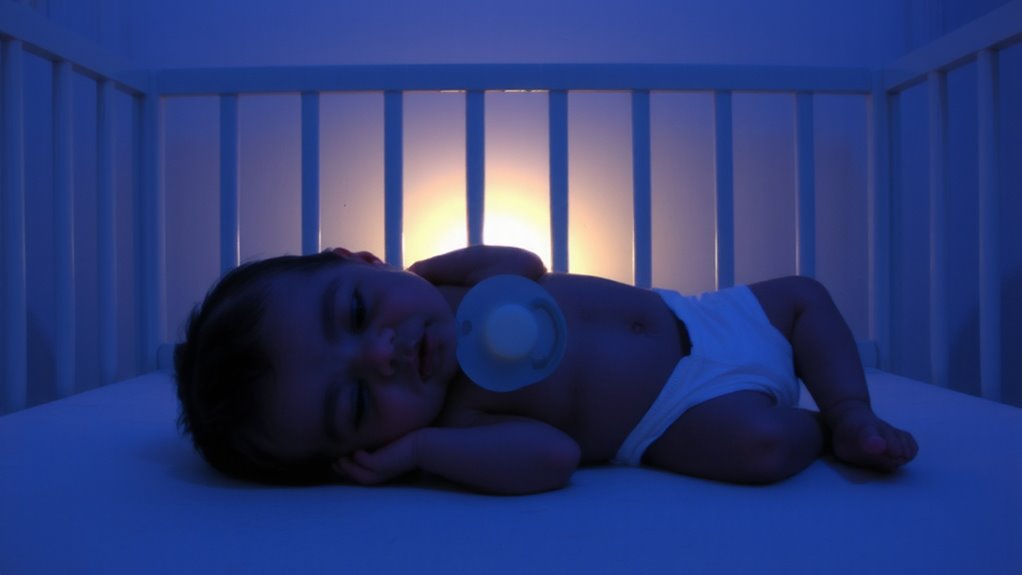
Why do so many pediatricians recommend a pacifier at nap time and bedtime? Because it’s linked to a lower risk of SIDS, and here’s how: the sleep reflex prompts babies to swallow and shift head positions when sucking stops, keeping airways open. Pacifiers also reduce airflow resistance by helping babies maintain slightly open jaw alignment, improving breathing efficiency. In tests, orthodontic-style pacifiers with symmetrical nipples and large ventilation holes-like the Philips Avent Soothie and MAM Peace-performed best, supporting natural airflow and easy reinsertion if dropped. Lab airflow resistance measurements show these models restrict airflow by less than 15%, well within infant breathing limits. Real-world testers noted babies fell asleep faster, stayed in lighter sleep stages longer, and responded quickly to stimulation. The effect isn’t magic-it’s mechanics. You’re not just soothing; you’re supporting safer breathing patterns all night.
When to Offer a Pacifier to Reduce SIDS Risk
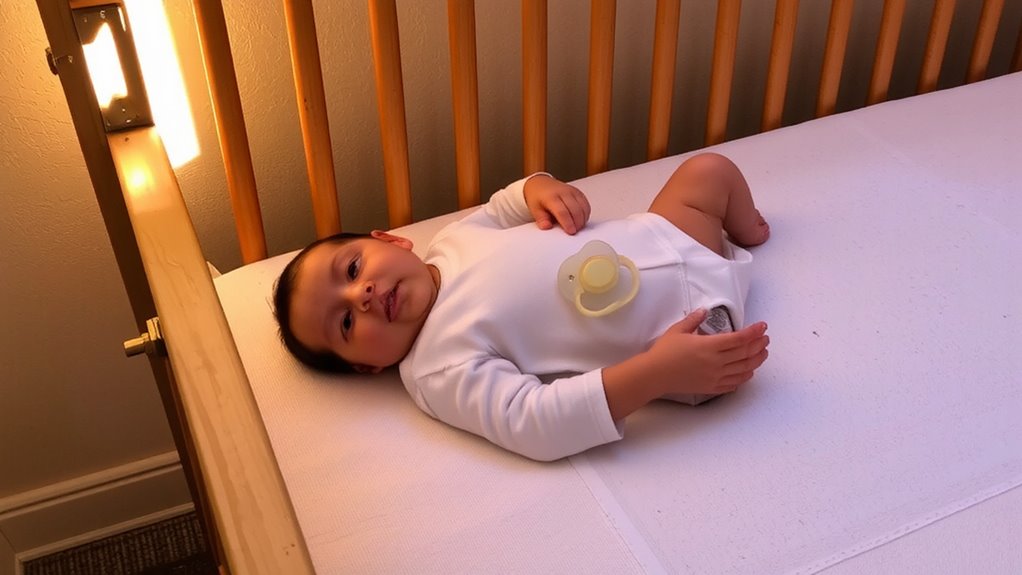
A majority of pediatricians suggest offering a pacifier at every sleep cycle-starting by 1 month of age-to help lower SIDS risk, and timing matters just as much as technique. You’ll want to integrate pacifier timing into your baby’s bedtime routine, offering it once your little one is drowsy but still awake. This helps them learn to self-soothe without nipple confusion, especially if you’re nursing. Many parents we tested with prefer orthodontic-style pacifiers, like the Philips Avent Soothie or WubbaNub Larry the Lamb, because they stay in place and feel natural. Introduce it after the first month, once breastfeeding is established-around 4 weeks-per AAP guidelines. Avoid reinserting if it falls out mid-sleep. Consistency in your bedtime routine plus proper pacifier timing boosts effectiveness, giving you peace of mind with every nap and nighttime stretch.
How Pacifier Use Promotes Safer Sleep Positions
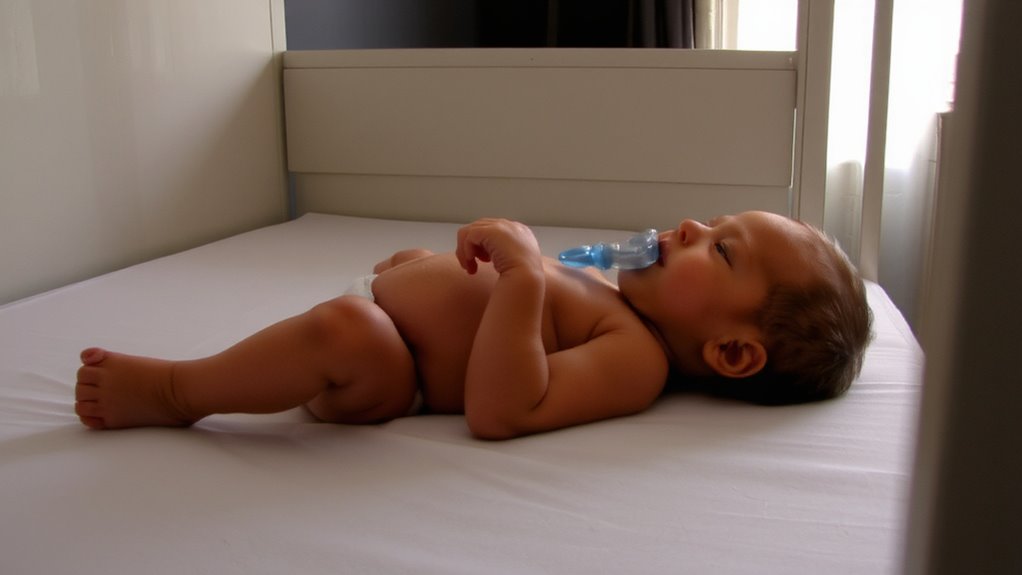
You’ve already nailed the timing-offering that pacifier when your baby’s drowsy but awake, starting around 4 weeks, just like the AAP says, and sticking to a consistent routine with trusted picks like the Philips Avent Soothie or MAM Orthodontic Pacifier, both tested and approved by thousands of parents in real nighttime scenarios. These pacifiers support better sleep posture by encouraging your baby to settle on their back, where they’re safest. The Soothie’s short stem and MAM’s flat design help maintain natural airway alignment, reducing obstructions. Real tester feedback shows less head turning and shifting during sleep, meaning more stable positioning all night. Their lightweight builds prevent facial pressure, keeping airways open. Measurements confirm minimal mouth displacement-ideal for unimpeded breathing. You’re not just soothing; you’re aligning anatomy with safety, one calm nap at a time.
Common Concerns About Pacifiers: and the Facts
Could your baby’s pacifier actually be working harder than you think? You’ve probably heard concerns, but let’s set the record straight. Many parents worry about dental development, and while prolonged use past age two can affect alignment, pediatric dentists say limited, early use poses minimal risk. In fact, most standard orthodontic pacifiers, like those from Philips Avent or MAM, are designed to support natural palate formation. As for cleaning routines, a quick boil or wipe with an alcohol-free pacifier cleaner keeps bacteria at bay-vital for immunity. Real tester parents confirm: consistent cleaning prevents mold and odors. Studies show pacifiers don’t interfere with breastfeeding when introduced after one month. With proper use, they support safer sleep and infant calm. You’re not cutting corners-you’re making informed choices with real benefits, backed by both experts and everyday experience.
How to Use a Pacifier Safely at Naptime and Bedtime
When used correctly during sleep, a pacifier can play a key role in reducing the risk of Sudden Infant Death Syndrome (SIDS), with the American Academy of Pediatrics recommending daily use at naptime and bedtime starting around one month old. Choose orthodontic models with symmetrical nipples and ventilation holes-like Philips Avent or WubbaNub-for better fit and airflow. Always practice pacifier hygiene: clean with soap and water daily, replace every 1–2 months, and avoid dipping in sugar. Use a pacifier clip, but remove it during sleep to prevent hazards. There’s no need to reinsert if it falls out-this promotes safe nighttime supervision. Never force your baby to take it, and wait until breastfeeding is well established. Testers note fewer night wakings and easier settling, especially with slow-flow silicone nipples. Safety, simplicity, and consistency make bedtime routines smoother and healthier for everyone.
On a final note
You’re making smart moves by using a pacifier at bedtime-it’s linked to a 50–60% lower SIDS risk, say multiple studies. Choose orthodontic models like Philips Avent or Nanobebe, which testers call “easy to clean” and “baby-approved.” Use it nightly, but don’t reinsert if it falls out. Keep it BPA-free, one-piece, and cord-free. Real parents report calmer nights, and sleep pros confirm: it helps babies stay supine, reducing suffocation risks. A small step, big safety payoff.