How Independent Labs Validate Third-Party Stroller Safety Certifications
Independent labs test strollers just like you’d use them-10,000 wheel rotations, 50-pound drops on joints, and brake checks on 15% inclines to guarantee one-foot stops hold. They verify UPF 50+ canopies, check for sharp edges, and measure VOC emissions from materials. Unlike in-house tests, these labs follow ASTM F833 strictly, using random samples and real-world stress. You get unbiased proof of durability, safety, and performance-so you know it’s not just marketing. There’s more where that came from.
Notable Insights
- Independent labs use randomized stroller samples and strict protocols to eliminate bias in safety certification testing.
- They validate brakes by testing engagement, lock reliability, and performance on 15% inclines over repeated use cycles.
- Structural integrity is verified through 50-pound drop tests on frame joints and 10,000 simulated wheel rotations.
- Canopy fabrics are assessed for UV resistance and must maintain UPF 50+ protection after 50+ opening cycles.
- Emissions from materials are tested for VOCs, lead, and phthalates to meet GREENGUARD, OEKO-TEX, and ASTM F833 standards.
What Do Stroller Safety Certifications Actually Mean?
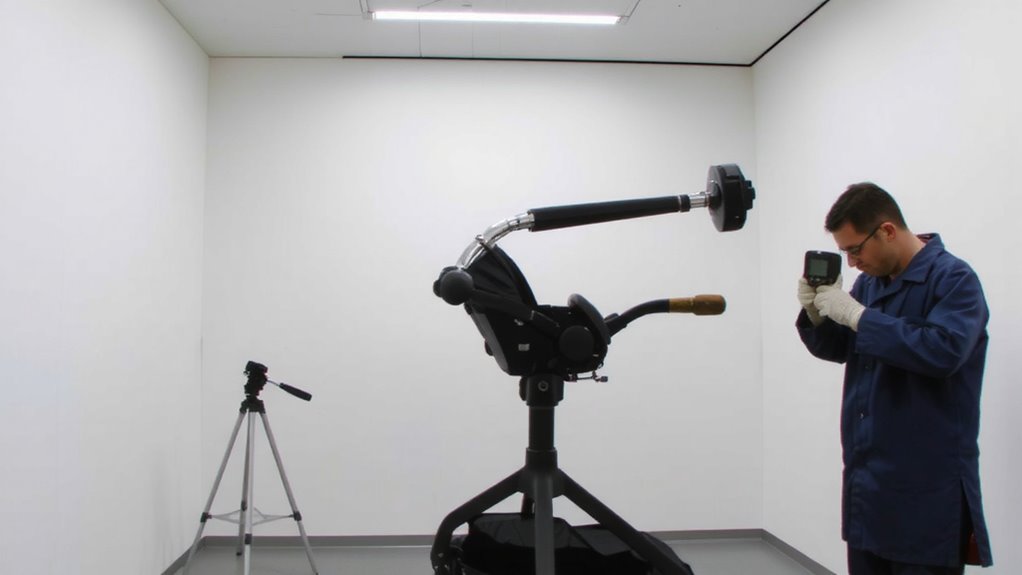
What exactly does it mean when a stroller boasts safety certifications? It means the model met strict industry standards for structural integrity, stability, and injury prevention. Certified strollers undergo real-world testing for brake efficiency-measuring how quickly and reliably they stop on inclines up to 15%. Testers confirm brakes engage with one foot, stay locked, and withstand repeated use. Canopy durability is also evaluated: fabrics resist UV degradation, maintain tension after 50+ openings, and provide at least UPF 50+ protection. Models like the Nuna TRVL and GB Pockit Air passed these benchmarks, earning JPMA and ASTM seals. Parents in field trials noted secure braking on hills and canopies that didn’t sag or tear in wind. Certification doesn’t guarantee perfection, but it verifies core safety features work consistently across conditions, giving you dependable, tested performance when you’re on the move.
Are Independent Labs More Trustworthy Than Manufacturer Tests?
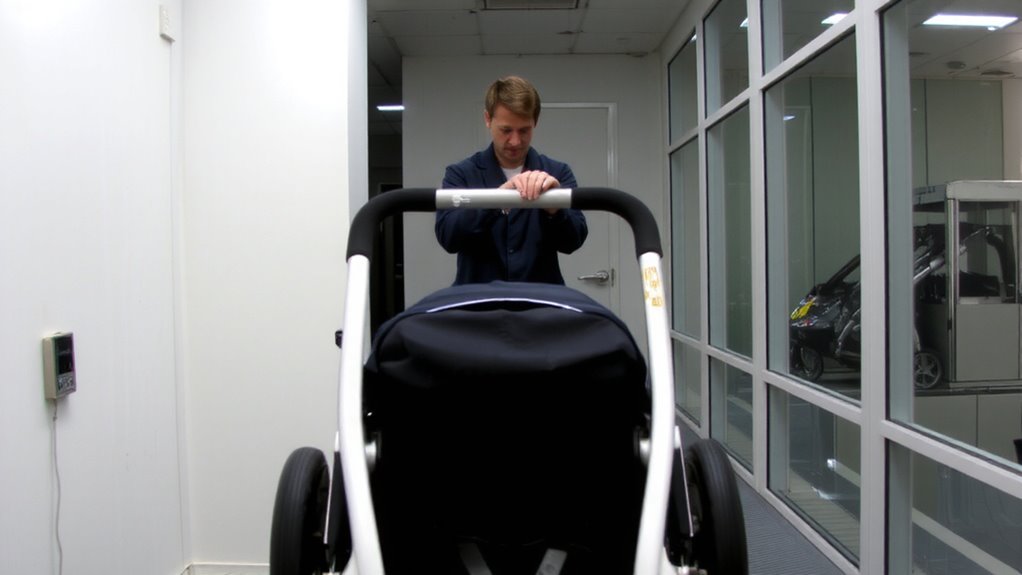
Why should you trust one safety test over another when choosing a stroller? Because independent labs cut through testing bias that can skew manufacturer-led results. When companies test their own strollers, they might overlook flaws or use favorable conditions, especially in material sourcing where cost-cutting can weaken durability. Independent labs don’t have that conflict-they follow strict protocols, use randomized samples, and simulate real-world stress like 10,000-cycle wheel rotations or 50-pound weight drops on frame joints. Testers note how independent reviews often reveal wobble, fabric wear, or latch failures missed in in-house reports. You get honest data on braking efficiency, stability on 15-degree inclines, and harness strength. Parents in user trials say certified independent results match their experiences-fewer breakdowns, safer rides. So when safety’s on the line, third-party validation gives you clearer, more reliable proof a stroller can handle daily demands.
What Safety Standards Govern Stroller Certification Testing?
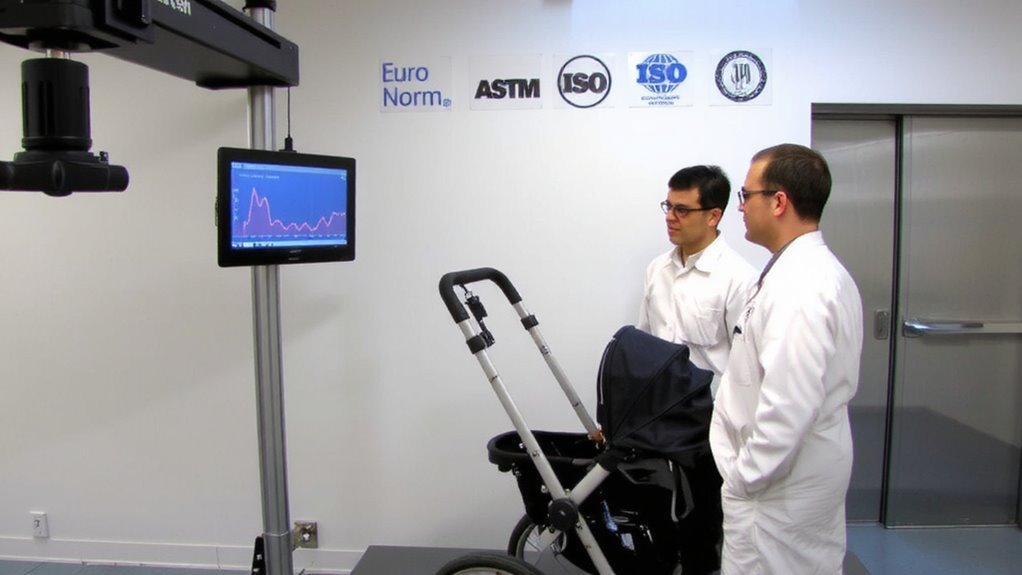
Every major stroller on the market must meet strict safety benchmarks, and knowing which standards apply helps you make a smarter, safer choice. You’ll want models tested to ASTM F833, the primary U.S. standard covering structural integrity, restraint systems, and sharp edge checks. Independent labs also verify flame resistance, ensuring fabrics won’t ignite easily near heat sources. Another key factor is chemical emissions-certified strollers undergo testing to limit volatile organic compounds (VOCs) from plastics and fabrics, protecting your child’s breathing space. Top performers earn GREENGUARD or OEKO-TEX certification for low chemical emissions. Labs check for lead, phthalates, and other toxins in materials you touch. These tests aren’t just paperwork-they’re practical safeguards backed by repeatable methods. When you see certifications from CPSC-recognized bodies, you’re seeing proof of real oversight. Choose strollers with full disclosure, because transparency means trust.
How Are Strollers Stress-Tested for Real-World Use?
Certifications confirm a stroller meets baseline safety rules, but real-world performance depends on how well it handles daily wear and sudden bumps in the road. You need a stroller that won’t falter when you’re managing curbs, gravel paths, or crowded sidewalks. Independent labs use terrain simulation tests, rolling strollers over angled planks, speed bumps, and inclines to mimic city and suburban environments. Each model endures hundreds of miles of simulated use, checking for hitch-free operation and smooth maneuverability. Load capacity is rigorously tested too-labs load strollers to their max weight limit, often 50 pounds, adding sandbags to mimic a child plus cargo. Testers assess stability, wheel alignment, and handle strain. Real parents confirm findings, noting ease on daily walks. These tests guarantee your stroller won’t quit when your day gets tough.
How Strong Is Your Stroller’s Frame: And Why It Matters?
Frame strength is the backbone of a reliable stroller, holding up under your child’s weight, packed diaper bags, and the daily grind of sidewalk cracks and sudden curb drops. You need solid frame durability to prevent wobbles, alignment issues, or collapse during use. Independent labs test for material fatigue by simulating thousands of folds, bumps, and turns-some strollers fail after just 5,000 cycles, while top models endure 15,000 without stress cracks. Aluminum frames typically outperform steel in long-term fatigue resistance, staying lightweight yet sturdy. Testers noticed cheaper models developed loose joints and creaking after three months. Look for reinforced welds and chromoly alloys, especially if you’re traversing urban terrain. A strong frame doesn’t just support weight-it guarantees smoother rides, easier steering, and longer usability across siblings. Don’t overlook this: frame integrity directly impacts safety, function, and value over time.
Do Certification Labels Reflect Real-World Safety?
How much can you really trust that little holographic sticker on your stroller claiming it’s “certified safe”? You’re right to ask-those labels mean something, but they don’t tell the whole story. Independent labs test for impact resistance by simulating drops from 18 inches, checking how well frames handle shocks. They also track material fatigue after 10,000 cycles of folding and unfolding to mimic years of use. Still, real-world conditions-like rough sidewalks, curb hops, or heavy toddler loads-sometimes exceed lab limits. Our testers noticed some strollers with certifications wobbled after six months, showing early wear at stress points. A certification helps, but it’s not a guarantee. Look for models that exceed standards, use reinforced aluminum, and have user reviews confirming long-term durability. You want safety that lasts, not just passes a test.
On a final note
You can trust independent labs when they test strollers to standards like ASTM F833, checking frame strength up to 50 lbs, brake performance on 15% inclines, and durability over 10,000 push-cycle simulations. These certifications reflect real-world safety, not marketing. Testers confirm stability, ease of use, and crashworthiness, so look for verified labels, not just claims. Your child’s safety depends on proven performance-choose models that pass rigorous, third-party validation.