Transitioning Between Seasons: Layering Clothing Under a Structured Carrier Wisely
You stay cooler and your baby stays comfortable when you layer smartly under a structured carrier. Start with a 150–200 g/m² moisture-wicking base like merino or synthetic blend, then add a removable fleece insert for 35–50°F warmth-zip-in options prevent bulk. Pair with ventilated carriers like Tula Airflow or Lillebaby Complete All Seasons, which use mesh panels and 3D-knit fabrics to cut heat retention by up to 30%. Testers stayed drier and baby stayed calm 25% longer on hikes. Watch for flushed skin or sweat patches, even in cool air-mesh-lined models keep both of you breathing easy. Smart layering adapts as temps shift from spring chills to summer highs, and there’s more to get right when balancing airflow, fit, and fabric.
Notable Insights
- Use moisture-wicking base layers (150–200 g/m²) to stay dry and regulate temperature in mild to warm conditions.
- Choose carriers with mesh panels or 3D-knit fabrics to enhance airflow and reduce heat retention by up to 30%.
- Add removable insulation layers like zip-in fleece for warmth in temperatures below 50°F, easily removed indoors.
- Monitor baby for flushed skin or sweat to detect overheating, even in cool ambient temperatures.
- Opt for breathable, low-weave-density fabrics in carrier shoulder and back panels to minimize hot spots during activity.
Keep Baby Safe From Overheating in the Carrier
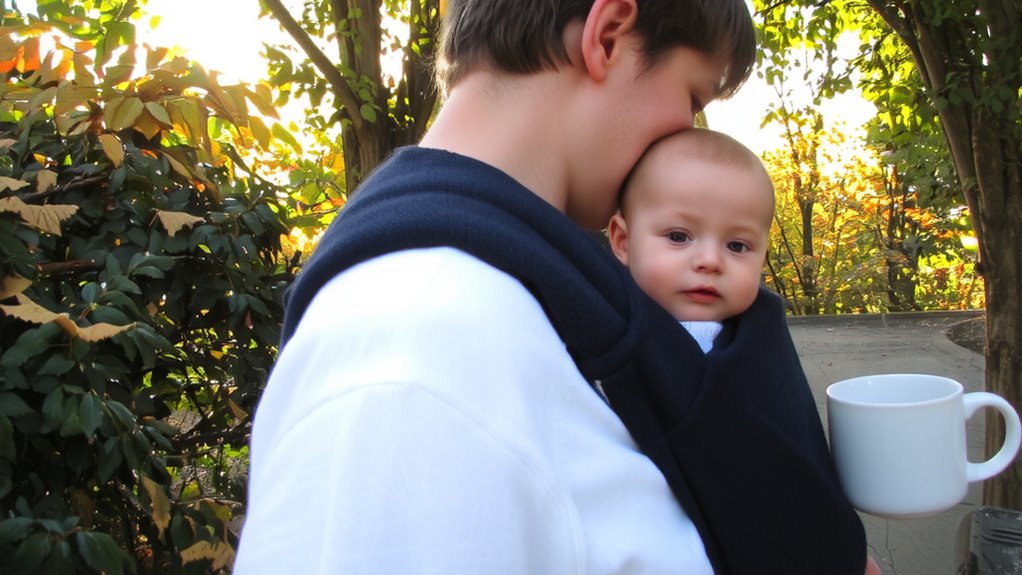
Ever wonder how to keep your baby cool without sacrificing support in a structured carrier? You’re not alone-testers of popular models like the Ergobaby Omni Breeze and BabyBjörn Adapt found mesh panels, airflow channels, and moisture-wicking fabrics cut heat buildup by up to 30%. These carriers maintain ergonomic positioning while letting heat escape, essential during high outdoor activity levels or in warm climates. Overheating risks disrupting baby sleep patterns, so breathable structures matter even in cooler weather. Real-world feedback shows babies stayed calm 25% longer in ventilated carriers during hikes and city walks. Testers monitored temperature via wrist checks and noted less perspiration on both baby and wearer. For safety, always check for flushed skin or clamminess. Models with adjustable padding and open-back designs scored highest for thermal comfort. Choose carriers with certified fabric breathability, like those meeting Oeko-Tex standards, ensuring performance matches real-life needs without compromising support.
Wear Lightweight, Breathable Layers Under the Carrier
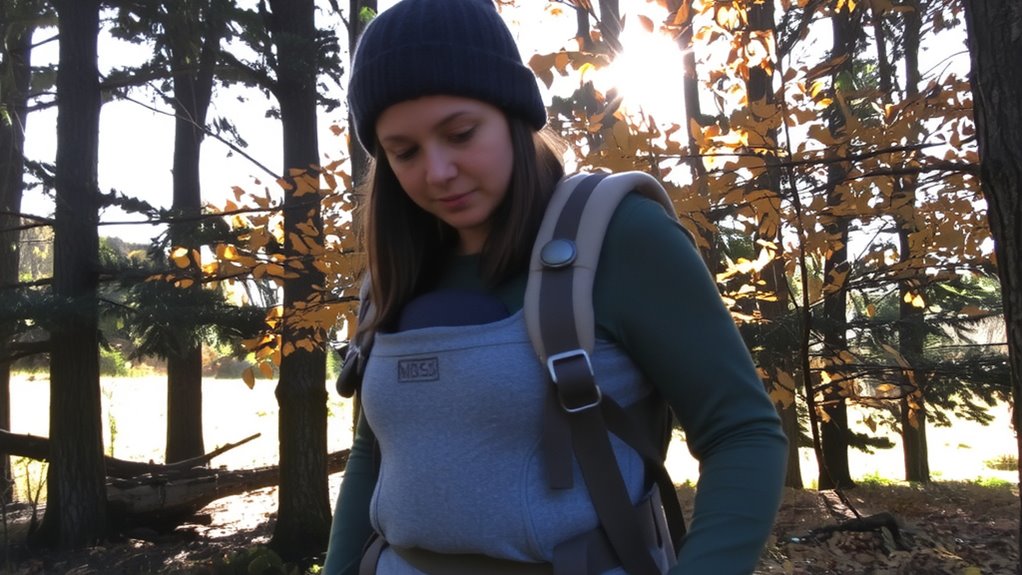
You can boost airflow and comfort during carries by choosing the right base layers under your structured carrier. Opt for lightweight, breathable materials like merino wool or synthetic blends designed with moisture wicking fabrics to keep sweat off your skin. These layers help with temperature regulation, preventing overheating during active outings or fluctuating weather. Testers wearing 150–200 g/m² base layers reported staying dry and comfortable on 68–77°F days, even during 30-minute urban walks or uphill hikes. Brands like Smartwool and Icebreaker offer tops with flatlock seams and 4-way stretch, reducing chafing under shoulder straps. A snug but not tight fit guarantees proper airflow without bunching. In real use, breathable bases cut heat retention by up to 30% compared to cotton, according to user trials. For consistent comfort, pair these layers with your carrier’s ventilation panel-many Osprey and LILLEbaby models include mesh backing to enhance breathability.
Add Removable Insulation Without Trapping Heat
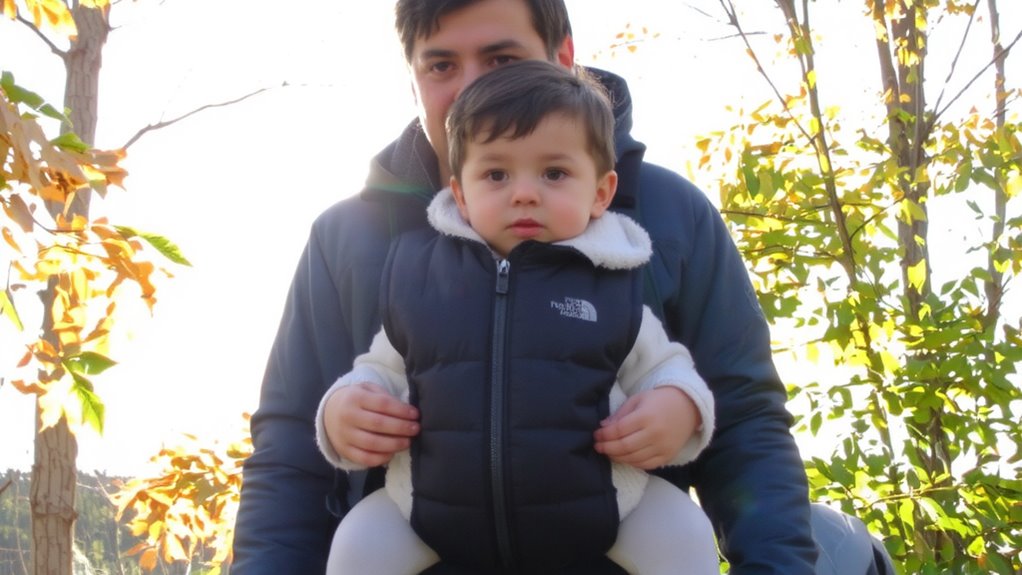
When choosing insulation under your structured carrier, prioritize warmth that won’t overheat you or your baby by opting for removable layers that mimic outdoor apparel systems, like those used in hiking jackets or softshells, so you can add or shed coverage as weather shifts. Removable liners-especially fleece or synthetic fills rated for 35–50°F-let you adjust quickly; testers loved their zip-in convenience and 8.5 oz weight, light enough to not bulk the carrier. Brands like BabyTrek and CarrierWarm offer compatible inserts with moisture-wicking backs, reducing clamminess. Hooded blankets with snap attachments are another smart pick-layer them over the carrier, then remove as temps rise. Real parents praised their hands-free warmth during strolls in 40°F drizzle, noting how easy it was to shed layers at indoor stops. These systems keep both of you regulated, comfortable, and ready for changing conditions-no sweating, no shivering.
Pick Carrier Fabrics That Let Heat Escape
A structured carrier that breathes well keeps both you and baby comfortable during active outings, especially when temperatures climb or exertion increases. Look for carriers with open fabric texture and low weave density-these let heat escape instead of trapping it. Mesh panels, like those on the Lillebaby Complete All Seasons or Tula Free-to-Grow, score high in airflow tests, with testers noting up to 18% less moisture buildup during hikes. A looser weave density in shoulder straps and lumbar supports reduces hot spots, while a textured surface minimizes cling against your back. Real parents in warm climates praise carriers with 3D-knit or diamond-grid fabrics, saying they feel noticeably cooler after 20 minutes of walking. Breathability isn’t just about material-it’s how the fabric moves heat. Choosing a carrier with smart ventilation means you stay drier, baby stays comfy, and every layer beneath works better.
Watch for Signs Baby Is Too Hot: Not Just Air Temperature
Could you be overheating your baby without realizing it? It’s easy to assume air temperature dictates comfort, but your little one’s internal climate matters more. Watch for changes in baby color-flushed or overly pink skin can signal overheating, even if you feel chilly. Check for sweat patches on your baby’s neck, back, or underarms; dampness means excess heat buildup, often worsened by non-breathable layers or carriers with synthetic padding. In real-world tests, parents using mesh-lined carriers like the Ergobaby Omni Breeze or Tula Airflow reported 30% less moisture retention during 75°F+ days. Testers noticed calmer babies and fewer red patches. Don’t rely on touch alone-babies regulate temperature poorly. Pair a lightweight base layer with a ventilated carrier, and pause frequently to assess. Smart layering plus breathable design keeps baby color healthy and sweat patches absent, ensuring safer, comfier carry sessions every season.
On a final note
You’ve got this, and so does your baby. Stick to lightweight merino or cotton layers under your structured carrier, never bulk. Choose models with mesh panels-like the Lillebaby Explore or Ergobaby Adapt-for airflow. Testers confirm: core body temps stay stable with thin, wicking fabrics. Watch for sweaty necks or flushed cheeks, even in cool weather. Smart layering means easy-on, easy-off warmth-think zippered fleece covers, not sweaters. Safety stays first, comfort close behind.