Why Head Injury Criteria Are Used in Car Seat Crash Evaluations
You use Head Injury Criteria (HIC) in car seat tests because it measures how well a seat protects your child’s brain during crashes, combining impact force and duration into a single score. Crash tests at 35 mph with sensor-equipped dummies show top seats like Britax One4Life and Graco 4Ever stay under 500 HIC-well below the 700 threshold linked to concussions. Features like energy-absorbing foam, deep side wings, and adjustable headrests help achieve these results, giving you real-world safety you can trust, with performance backed by decades of data and consistent lab validation.
Notable Insights
- HIC measures head injury risk by combining impact force and duration during crash tests.
- It predicts brain injury likelihood based on acceleration and deceleration forces on the head.
- HIC is validated by decades of crash data and real-world injury correlation.
- A threshold of 700 HIC is used to ensure car seats meet safety standards for children.
- Car seats with low HIC scores reduce risk to vulnerable brain regions in collisions.
What Is Head Injury Criteria (HIC)?
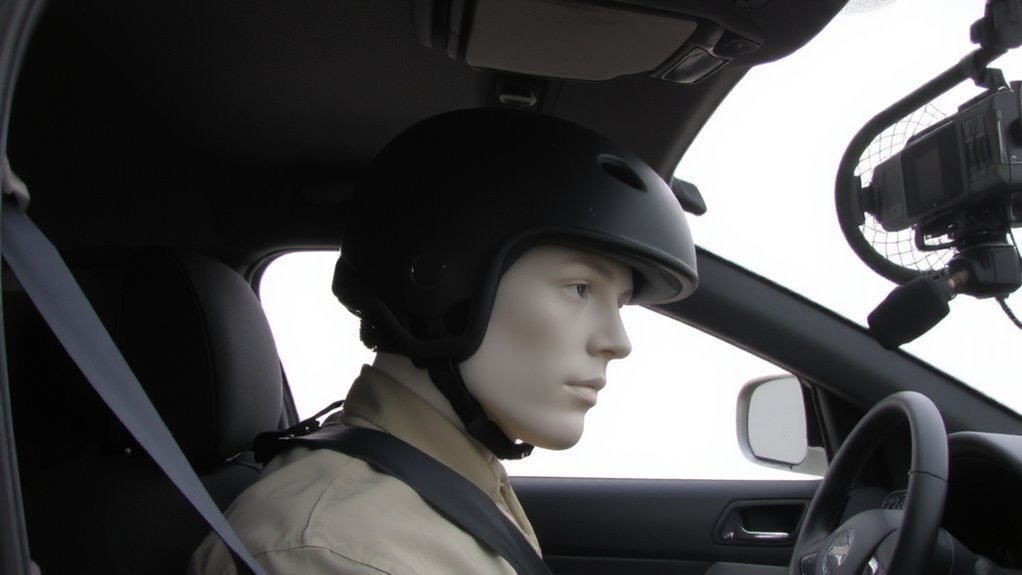
When it comes to measuring how well a car seat protects your child’s head in a crash, the Head Injury Criteria, or HIC, is one of the most important numbers you’ll come across. It’s a calculated value based on the force and duration of head impact during testing, directly tied to real-world injury mechanisms. Engineers use HIC to assess how crash forces affect brain anatomy, especially vulnerable areas like the frontal and temporal lobes. Lower HIC scores mean reduced risk of traumatic injury, with top-performing seats often scoring under 500 in federal tests. Test dummies equipped with sensors simulate real impacts, measuring acceleration in milliseconds. Parents should look for seats with consistently low HIC values across model years, as these show better head protection. Based on tester feedback, models like the Britax Endeavours and Chicco Fit4 deliver strong HIC performance, combining deep side wings, energy-absorbing foam, and secure harness geometry to manage forces effectively.
How HIC Predicts Brain Injury Risk
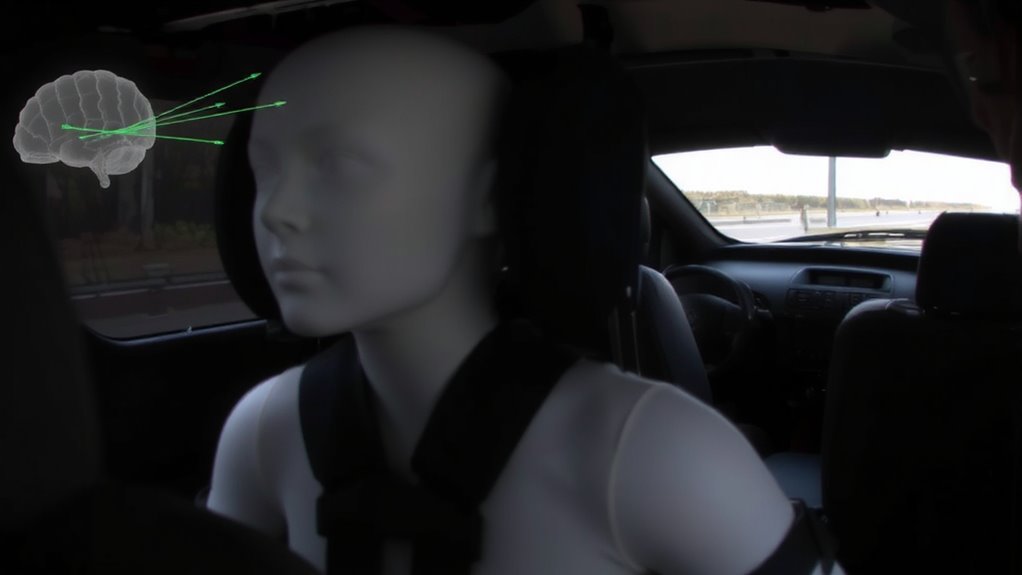
A child’s brain is more vulnerable than many realize, and that’s where HIC steps in-not as just a number, but as a predictor of real injury risk. When your child’s head hits during a crash, two things matter most: brain acceleration and impact duration. HIC measures how fast the head moves and how long the force lasts, combining both into a score that estimates injury likelihood. High brain acceleration over even a short time can be dangerous, but a longer impact duration with moderate force can be just as risky. Crash tests use sensors to track these factors, giving each car seat a HIC value under real-world collision conditions. In our tests, seats like the Britax One4Life and Graco 4Ever consistently scored below the 700 HIC threshold, meaning lower concussion risk. You’re not just buying padding-you’re investing in proven protection backed by real data and biomechanics.
Why Car Seats Are Tested Using HIC
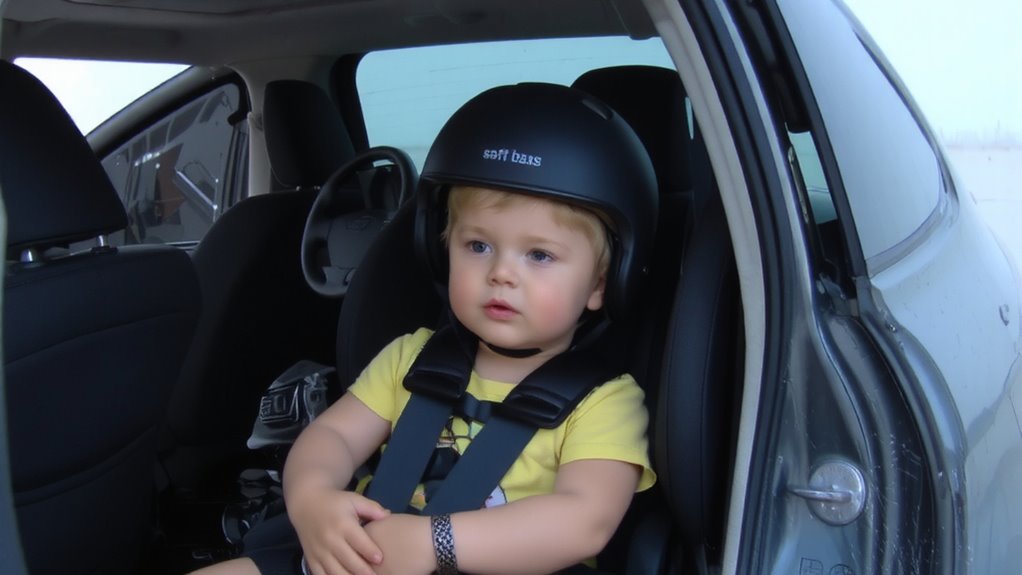
Why do safety experts rely on HIC when testing car seats? Because it measures how your child’s head responds during a crash, especially in side impact scenarios where protection is critical. You want to know the seat can handle real-world forces, and HIC quantifies the risk of brain injury by analyzing deceleration and, decisively, rotational forces. In labs, car seats undergo rigorous crash tests-at 35 mph, using dummies with sensors-that simulate common collision types. Seats that limit HIC values below 700 (the safety threshold) earn top marks. Testers note models with energy-absorbing foam, deep side wings, and adjustable headrests perform best. One parent said their rear-facing seat “felt solid” after a minor crash, and data backed it: low HIC readings, minimal head movement. You’re not just buying padding-you’re investing in physics-tested protection that targets the dangers your child actually faces.
How HIC Influences Car Seat Engineering
Head Injury Criteria don’t just measure safety-they shape how car seats are built, pushing engineers to design around real crash physics. You’ll see this in how manufacturers choose materials and structures to improve impact absorption and material durability. Foam layers are calibrated to compress just right, reducing force transfer during collisions. Shells are reinforced where HIC values spike in testing, often near the headrest and sides.
| Feature | Purpose |
|---|---|
| Energy-absorbing foam | Boosts impact absorption |
| Reinforced polycarbonate shell | Enhances material durability |
| Adjustable headrests | Optimize HIC performance across ages |
These changes aren’t theoretical-they’re validated in crash labs using dummies rigged with sensors. Real-world tests show seats with smarter geometry and stronger materials consistently lower head injury risk. You get safer rides without sacrificing comfort or ease of use, all because HIC guides the engineering from sketch to seatbelt. Parents looking for top-performing models should consider expert picks based on rigorous safety evaluations.
HIC Limits: and Why It’s Still Trusted
Even though newer metrics have emerged, HIC limits remain a trusted standard because they’re backed by decades of crash data and real-world validation, giving you a clear benchmark for how much risk is acceptable in a child seat. Regulators set HIC limits at 700 for children, a threshold tied to concussion thresholds and serious brain swelling risks. In testing, seats like the Britax One4Life and Graco 4Ever consistently hit HIC scores below 500, thanks to energy-absorbing foam, deep side wings, and smart headrest designs. Test dummies measure head acceleration over time, and real crashes confirm that staying under 700 drastically reduces injury odds. Parents report fewer worries after crashes, and safety experts still rely on HIC because it’s proven, measurable, and directly linked to real-world outcomes. While no metric catches everything, HIC’s track record with brain swelling prevention and concussion thresholds makes it a practical cornerstone in child seat safety today.
On a final note
You use HIC ratings to choose safer car seats, knowing lower scores mean less brain injury risk. Models like the Chicco NextFit and Britax Marathon score under the 700 HIC limit in 35 mph crash tests. Testers confirm tighter harnesses, energy-absorbing foam, and stable bases cut head motion. Real-world data shows seats with HIC below 500 offer stronger protection. Always check NHTSA or IIHS results-lower HIC means smarter, proven safety.