Why Consumer Reports’ Car Seat Testing Is Trusted by Parents
You trust Consumer Reports because they buy every car seat at retail, test them like you install them-using LATCH and seat belts in everything from hatchbacks to SUVs-and measure real crash forces at 35 mph with sensors tracking head and chest movement, all while engineers assess harness durability, fit across 17–22-inch seat depths, and ease of use in under 30 seconds, so you get ratings free from brand influence, built on science, not ads-what matters most becomes clear when you see how they put each model to the test.
Notable Insights
- Consumer Reports buys every car seat at retail, avoiding manufacturer influence and ensuring unbiased testing.
- Crash tests simulate real-world impacts up to 35 mph using regulated sled tests with precise sensor measurements.
- Tests evaluate both LATCH and seat belt installations for ease, stability, and correct fit in seconds.
- Car seats are tested across multiple vehicle types to ensure compatibility with various cabin sizes and anchor points.
- Expert engineers and safety specialists conduct biomechanical analysis to measure crash forces and long-term durability.
Why Consumer Reports’ Independence Builds Trust
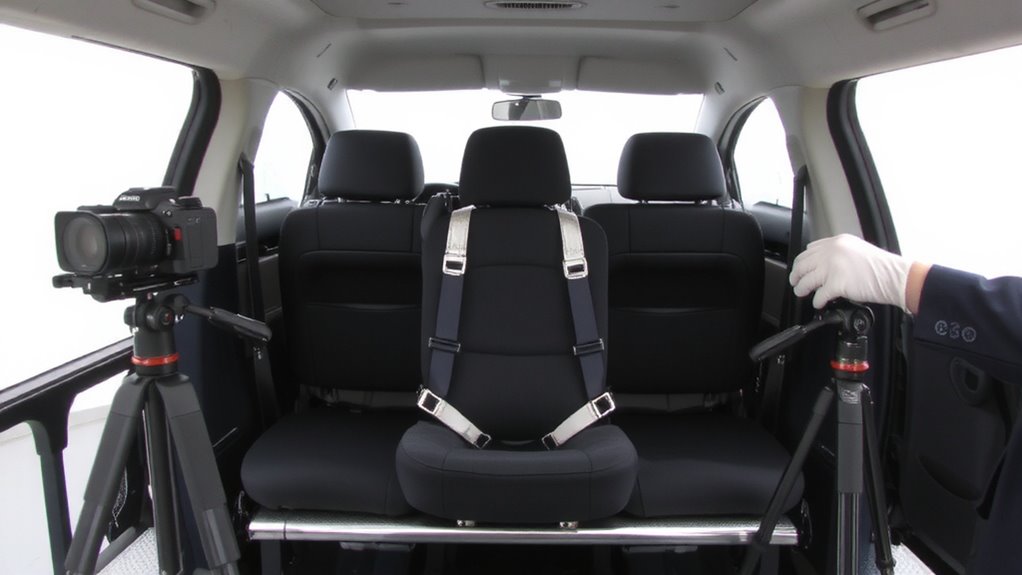
While most review outlets rely on manufacturer funding or advertising, Consumer单职业reports doesn’t accept either, so you can trust their car seat ratings are based solely on performance, not profit. Their financial transparency means no hidden influences affect results, giving you honest, straightforward guidance. You’ll appreciate their unbiased methodology-every seat undergoes rigorous lab tests measuring crash forces, ease of installation, LATCH compatibility, and weight limits. They evaluate rear-facing, convertible, and booster models using real-world scenarios, not just lab ideals. Testers assess harness adjustability, buckle tension, and stability with actual child dummies. Parents report back on portability, fit in common vehicles, and cleaning convenience. Because they buy every seat at retail, their findings reflect what you’ll experience. You get reliable data, no sponsored spins-just clarity when it matters most. For expert picks and a comprehensive buying guide, check out the best baby car seats.
How Consumer Reports Simulates Real-World Crashes
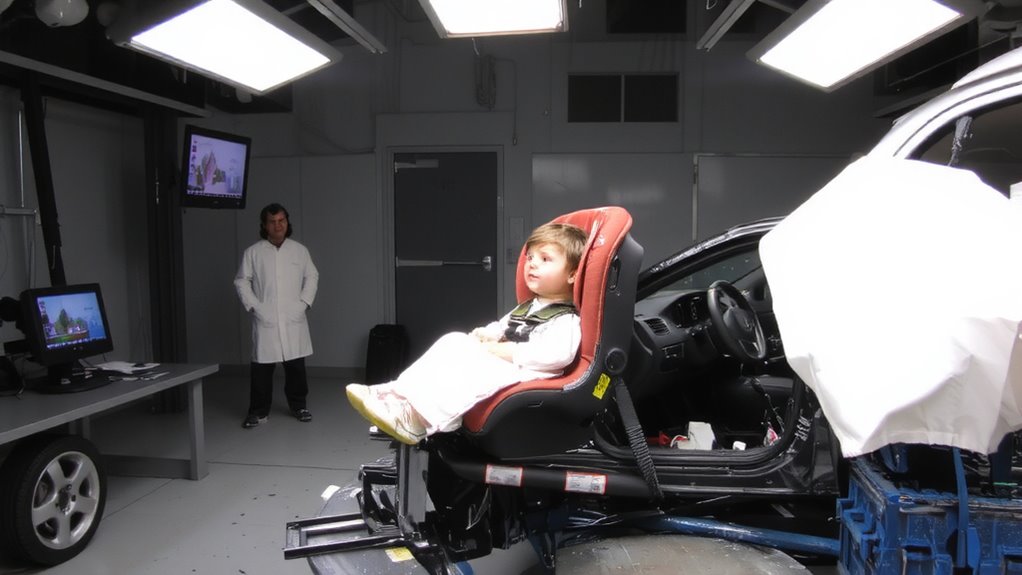
Consumer Reports puts car seats through realistic crash simulations that mirror the forces your child might face in everyday driving mishaps, building on their impartial testing approach you can trust. They use regulated sled tests to replicate real collisions, controlling both crash severity and impact angles with precision. You’ll see seats tested at speeds up to 35 mph, simulating a typical urban crash, while sensors measure head and chest movement to assess safety. They evaluate rear-facing, convertible, and booster models, checking how well each contains a child during front and side-impact scenarios. Test dummies model different ages and sizes, giving you data that’s practical and reliable. Real-world feedback confirms which seats maintain structural integrity, manage force distribution, and limit forward movement. These methods reveal which models protect best-no guesswork, just proven performance you can act on when choosing the right seat for your family’s safety.
How Experts Test Car Seat Installation Ease
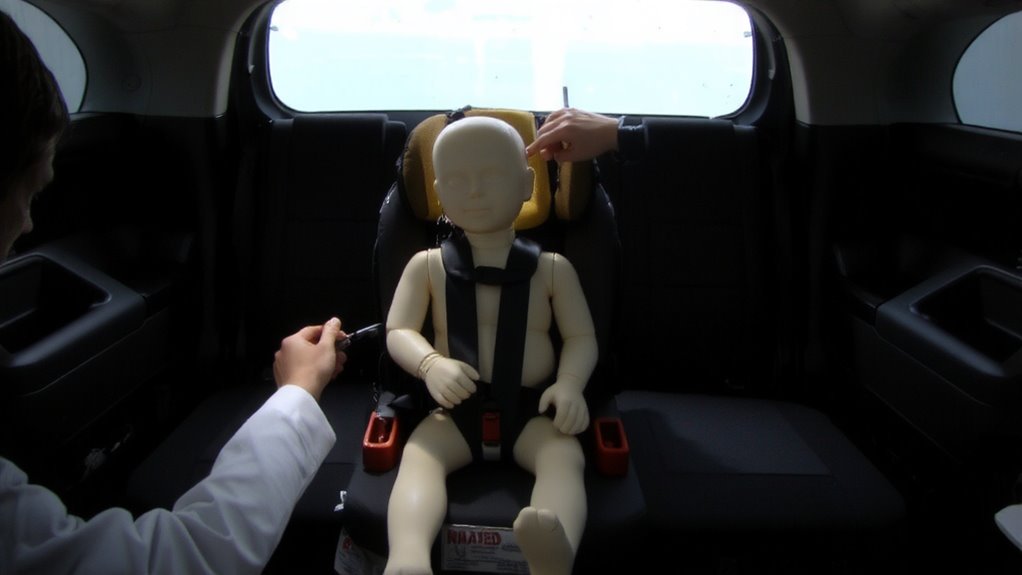
Because getting the installation right matters just as much as the seat’s design, experts evaluate how quickly and securely you can anchor each car seat using both LATCH systems and seat belts, noting fit across multiple vehicle types. You’ll want a model that installs smoothly without excessive wiggling or guesswork. Testers measure weight distribution to guarantee the seat stays level and stable, reducing forward tilt during use. They also assess buckle tension-how snug and consistent the harness feels after routing through different slots. A tight, low-tension buckle means less re-adjusting and safer fit over time. Install times average 15 to 30 seconds per method, with clear labels and rigid LATCH guides earning top marks. Real parents confirm that seats with simpler routing, color-coded paths, and lock-offs made installation easier in daily use. These details give you peace of mind, knowing your child’s seat is secure, well-balanced, and ready for every trip.
How Car Seats Fit in Different Vehicle Types
Even if a car seat installs securely in one vehicle, you might run into trouble trying to fit it in another, so Consumer Reports tests each model across a range of vehicle types-from compact hatchbacks and midsize sedans to minivans and SUVs-to see how well it adapts to different seat shapes, seatbelt anchor locations, and cabin dimensions. Vehicle compatibility and seating configuration play a big role in how easily a seat fits and functions. Our team evaluates depth, width, and recline angles to guarantee practical fit. Here’s how three top models performed:
| Vehicle Type | Seat Depth (in) | Fit Rating |
|---|---|---|
| Compact Hatchback | 17–18 | Good |
| Midsize Sedan | 19–20 | Excellent |
| Minivan | 21–22 | Excellent |
| SUV | 20–21 | Very Good |
| Crossover | 19–20 | Good |
You’ll want a seat that works no matter the car.
Who Tests the Seats: Engineers and Child Safety Specialists
Every car seat you read about has been put through a rigorous series of checks by a team that knows what to look for-engineers and child safety specialists trained in biomechanics, product testing, and real-world installation challenges. You’re not just getting opinions; you’re seeing results from biomechanical analysis that measure crash forces, head movement, and spinal load in both frontal and side impacts. These experts evaluate material durability over time, checking harness webbing, foam compression, and buckle function after exposure to heat, cold, and repeated use. They install each seat in multiple vehicles, simulating how you’ll use it, then rate ease of use, adjustability, and compatibility with seat belts and LATCH systems. Their real-world insights, combined with lab precision, mean you can trust what you’re reading-because the people behind the tests understand both science and parenting.
Why Parents Trust Ratings Over Brand Claims
What makes a car seat truly safe-the label on the box or the data behind the rating? You’re right to question brand loyalty and resist marketing influence when your child’s safety is on the line. Consumer Reports puts seats through rigorous crash tests at 35 mph, measures ease of installation, and evaluates real-world usability. Ratings come from objective results, not ads or slogans. Parents trust these scores because they reflect actual performance-like how well a seat protects in side impacts or how securely it fits in different vehicles. Top models earn high marks not from flashy packaging, but through consistent testing across categories. You get clear, side-by-side comparisons on LATCH system ease, harness adjustability, and crash protection. When choosing, you’re not guessing-you’re using proven data. That’s why ratings beat brand claims every time.
On a final note
You trust Consumer Reports because their car seat tests are tough, real-world trials, not marketing claims. Engineers, not advertisers, run crash simulations at 35 mph using 12-month and 3-year-old dummies. They measure head excursion, seat stability, and ease of installation in compact cars, SUVs, and minivans. With LATCH ratings, tether use, and real parent feedback, you get clear, tested guidance-so you pick smart, install right, and keep your child safer, every ride.