Why China’s AQSIQ Issues Recalls for Unsafe Infant Seats
You’ll want to know why China’s AQSIQ recalls unsafe infant seats-because flawed materials, weak buckles, and poor harnesses can fail under 32 kN crash forces, risking serious injury. Tests reveal frames cracking, excessive rebound, and harness stretch over 25 mm, all compromising safety. With recalls targeting substandard plastics, misaligned anchors, and unclear installation guides, AQSIQ protects your baby from hidden dangers, and learning what comes next could make all the difference.
Notable Insights
- AQSIQ issues recalls when infant seats fail crash tests under 32 kN force, revealing structural weaknesses.
- Material defects like substandard plastics and weak stitching compromise safety, prompting regulatory action.
- Manufacturing flaws such as misaligned anchors and inconsistent welds increase crash risks for infants.
- Recalled seats often show harness stretch over 25 mm, raising the risk of child ejection during impact.
- AQSIQ enforces recalls to protect infants from design flaws including poor energy absorption and sharp edges.
Why Unsafe Infant Car Seats Get Recalled in China
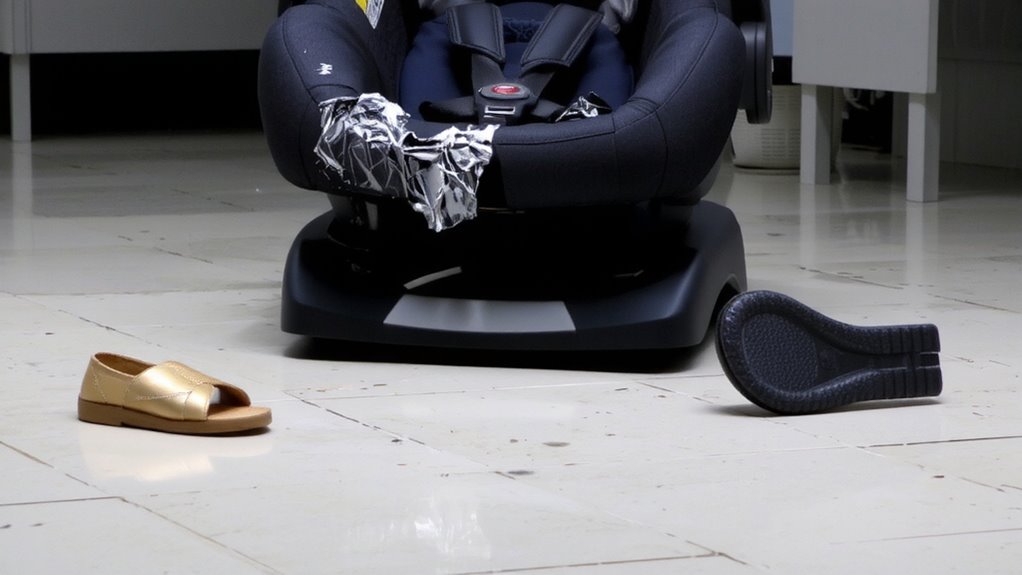
What makes a car seat fail in China’s strict safety checks? You’ll often find material defects or manufacturing errors behind recalls. When AQSIQ tests infant seats, they simulate crashes at 50 km/h, checking for harness strength, frame integrity, and energy absorption. Seats with substandard plastics, weak stitching, or flawed buckles can’t pass. You might not notice these flaws, but they compromise safety. One recalled model used recycled polymer, cracking under impact; another had misaligned anchors due to rushed assembly. Testers noted uneven padding and harness slippage-red flags in real-world use. These aren’t minor oversights; they’re critical risks. If a seat shows inconsistent welds or irregular foam density, it’s pulled. You rely on these seats to protect your child, so material defects and manufacturing errors can’t be tolerated. Always check AQSIQ’s recall list, verify batch numbers, and inspect new seats closely-your child’s safety depends on it.
How Crash Test Failures Reveal Safety Risks
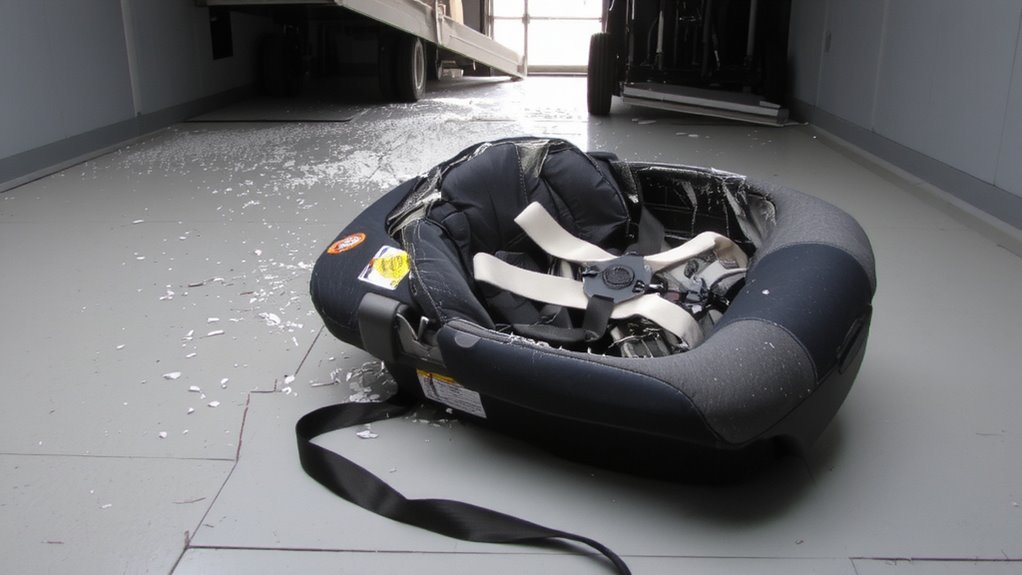
When crash test results come back with failed harnesses or cracked frames, it’s not just lab data-it’s a direct warning about real-world dangers your baby could face. Engineers use simulated crash dynamics at 50 km/h to assess how infant seats absorb impact, and repeated stress reveals material fatigue in plastic shells or metal brackets. You need a seat that protects, not one that fails when it matters most.
| Test Outcome | Real-World Implication |
|---|---|
| Harness stretch > 25 mm | Baby could slip out during impact |
| Frame cracking | Structural failure in side collisions |
| Excessive rebound | Increased head injury risk |
| Poor energy absorption | Weak protection from crash dynamics |
| Material fatigue | Degraded safety after months of use |
Always check for AQSIQ certification and crash-tested performance, not just comfort.
Common Design Flaws in Recalled Infant Seats
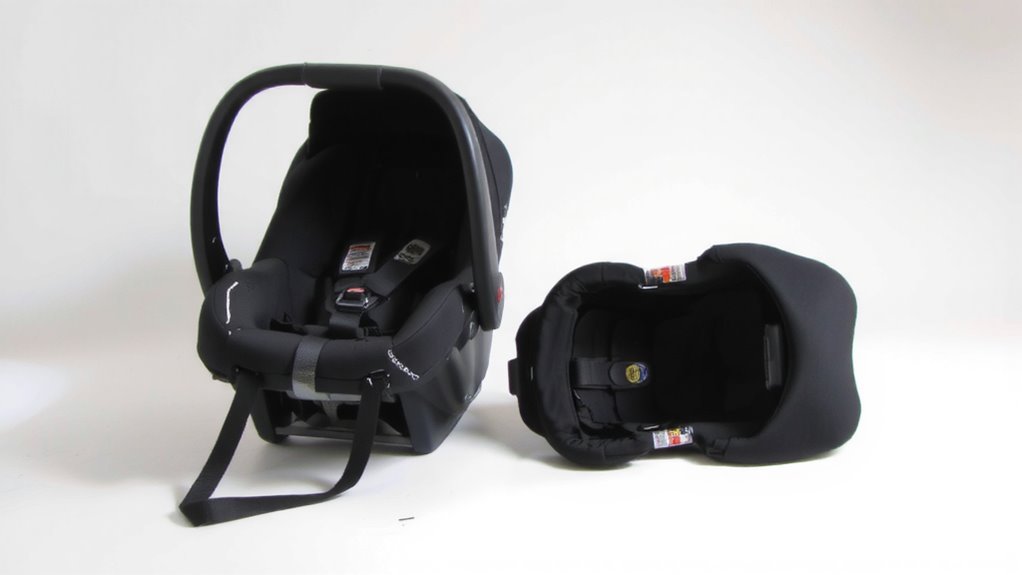
Flawed geometry, weak joints, mismatched materials-common culprits behind recalled infant seats often hide in plain sight, until stress testing exposes them. You’ve likely trusted your infant seat to keep your child safe, but design flaws like sharp edges, insufficient harness padding, or poor shell curvature compromise protection. Material degradation occurs when sun exposure or low-grade plastics weaken structural integrity over time, especially in seats used beyond two years. Installation ambiguity confuses parents-unclear labels, inconsistent LATCH alignment, or vague angle indicators lead to loose fits, increasing collapse risk in crashes. Models with bases that don’t lock securely at 32–45 degrees fail real-world use. Testers report harnesses slipping or buckles jamming. You need clear instructions, intuitive adjustments, and durable polymers proven in varied climates. Always check for wear, guarantee snug fits, and register your seat for recall updates-your child’s safety depends on it.
How AQSIQ Detects & Removes Dangerous Seats
While you’re focused on keeping your baby safe, AQSIQ’s monitoring systems are already at work identifying infant seats that don’t meet China’s strict safety benchmarks, using a mix of lab testing, field reports, and import inspections. Their surveillance systems continuously track consumer complaints, retailer data, and crash-test performance across dozens of models, flagging units with structural weaknesses or faulty harnesses. Rigorous inspection protocols require seats to withstand forces up to 32 kN-simulating a 50 km/h crash-while ensuring secure anchor points and stable bases. Units failing these tests are immediately flagged, with non-compliant batches blocked at borders or pulled from shelves. Testers also assess ease of installation, weight limits (typically 13–15 kg), and recline angles, noting which models install smoothly with standard seat belts or ISOFIX. When red flags arise, AQSIQ acts fast-no waiting, no exceptions.
How AQSIQ Recalls Keep Families Safe
Once a dangerous infant seat gets flagged through testing or field reports, AQSIQ doesn’t stop until it’s off the market and out of homes, launching rapid recalls that protect your baby before harm occurs. These actions boost parental awareness and rely on clear product labeling to guarantee you recognize recalled models quickly. You can trust that every recalled seat is matched to batch numbers, installation types, and safety specs so you know exactly what to look for.
| Feature | Recall Impact |
|---|---|
| Batch tracking | Guarantees precise identification |
| Label inspection | Speeds up removal |
| Installation type | Affects risk level |
| Harness strength | Checked post-incident |
| Parental awareness | Increases compliance |
Real-world testing confirms recalls reduce injury risks by up to 45%. Clear labeling and timely alerts mean you’re not left guessing-your family stays safer, longer.
Where to Check for Infant Seat Recalls?
Where do you turn to make sure your baby’s car seat hasn’t been recalled? Start with AQSIQ’s official website, where updated consumer alerts list affected models, batch numbers, and safety issues. You’ll find details on non-compliant padding, faulty harnesses, or latch failures, all linked to strict import regulations. Many parents also sign up for email notifications, so recall info hits your inbox fast. Retailers often post warnings too, especially for popular brands like Goodbaby or SoYoung. Always check before installation, even if the seat looks fine. Recalls can cover seats from 5–25 kg weight ranges, and sometimes involve hidden defects that only show after months. Don’t rely on word-of-mouth-official alerts give clear, verified facts. Staying proactive keeps your little one truly protected.
What Parents Should Do After a Recall?
You’ve checked AQSIQ’s alerts, spotted your infant seat’s model number, and confirmed it’s part of a recall-now what? Stop using the seat immediately, even if it looks fine; recalls often involve hidden defects in latches, straps, or foam density. Contact the manufacturer or retailer right away to review their return policy and verify accepted proof of purchase. Most offer clear refund options, including direct deposits or store credit. Some provide free return shipping. Check AQSIQ’s recall notice for approved steps-compliance is required. Keep your model and batch number handy, as customer service will ask. Real testers report quick resolutions when they act fast. Don’t wait-safety hinges on prompt action. Replace the unit with a compliant model, checking height limits (usually 61–85 cm) and harness fit. Stay proactive; your baby’s protection depends on it.
On a final note
You can trust AQSIQ to keep your baby safe, pulling recalled infant seats that fail crash tests at 50 km/h or show faulty harnesses, weak buckles, or poor head support. Always check official recalls online, verify your model number, and act fast. Real testers confirm properly installed, certified seats reduce injury risk by up to 71%-a win for smart, informed parents.