What Utah’s Child Passenger Safety Law Requires
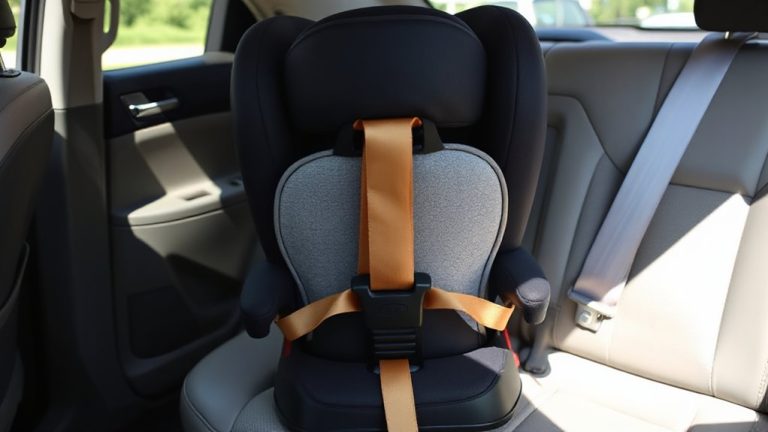
You must keep your child rear-facing until age 2, as Utah law requires, using a seat like the Graco Extend2Fit that supports up to 50 pounds. Switch to a booster only after age 4, when height or weight exceeds your seat’s limits-typically around 40 inches or 40 pounds. Use a high-back booster like the Britax Pioneer until your child reaches 4 feet 9 inches tall or 80 pounds, ensuring the seat belt lies low on the hips and the shoulder belt crosses the chest. Keep kids in the back seat until 13, where LATCH anchors and optimized geometry enhance safety. Violations can cost up to $75 per child, so check fit with a free inspection at a local fire station-knowing you’re covered gives real peace of mind. There’s more where that came from.
Notable Insights
- Children must ride rear-facing until at least age 2, or longer if within 1 inch of the seat’s top.
- Kids under 8 must use a booster seat unless they are 4 feet 9 inches tall or taller.
- All children under 8 or under 57 inches tall must use a car seat or booster.
- Children under 13 should ride in the back seat for maximum safety.
- Violating child passenger safety laws can result in a fine of up to $75 per child.
When Must Kids Use a Car Seat in Utah?
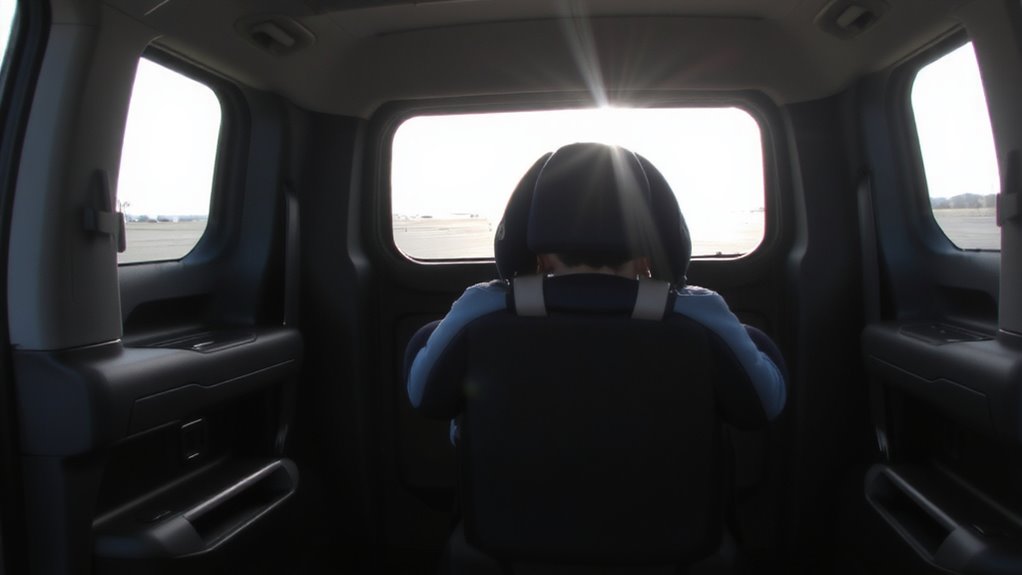
While Utah law sets clear rules, knowing exactly when your child needs a car seat comes down to age, height, and weight-not just one factor alone. You should keep your infant rear-facing until at least age 2, per Utah’s rear facing guidelines, ideally longer if their head is still within an inch of the shell’s top. Most infants fit snugly in convertible seats like the Graco Extend2Fit, which offers 50 lbs rear-facing limits and adjustable no-rethread harnesses. Height and weight matter: many 2-year-olds exceed 30 inches, triggering the need for higher-capacity seats. Car seat inspections, offered free at local fire stations, guarantee proper fit and installation. Testers consistently report reduced wobble with LATCH-equipped models and appreciate quick-adjust straps. Always follow manufacturer specs-your child’s safety hinges on matching their size to the right seat, not just age.
When Can a Child Switch to a Booster Seat in Utah?
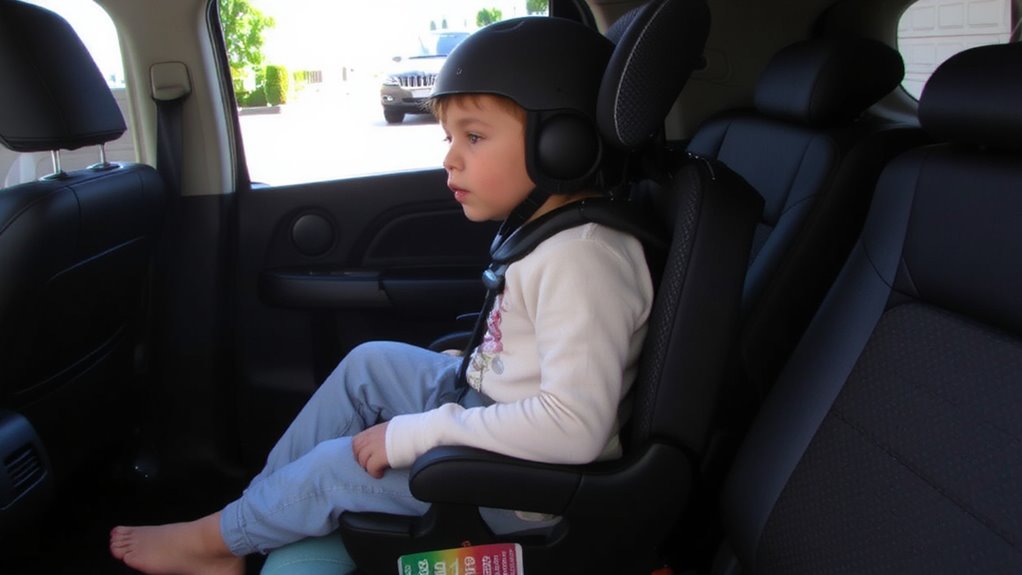
You’ve kept your child rear-facing until at least age 2, and now they’ve outgrown the height or weight limits of their convertible seat-usually hitting around 40 inches tall or nearing 40 pounds-so it’s time to contemplate a booster. Utah’s booster shift guidelines recommend waiting until your child is at least 4 years old and shows clear height based readiness, typically around 40 inches. Look for forward-facing seats with high weight limits (100+ lbs) and high backs that ease the shift. Testers praise models like the Graco Argos 200 and Britax Pioneer for their snug fits, adjustable headrests, and easy belt routing. Proper fit means the lap belt sits low on hips and the shoulder belt crosses the chest, not the neck. Most parents switch between ages 5–7, depending on maturity and size. Prioritize fit over age-your child must pass the vehicle seat belt test before skipping a booster. For continued safety, consider a high-back best booster seat that accommodates your child’s growth and ensures proper seat belt positioning.
How Tall or Heavy to Stop Using a Booster in Utah?
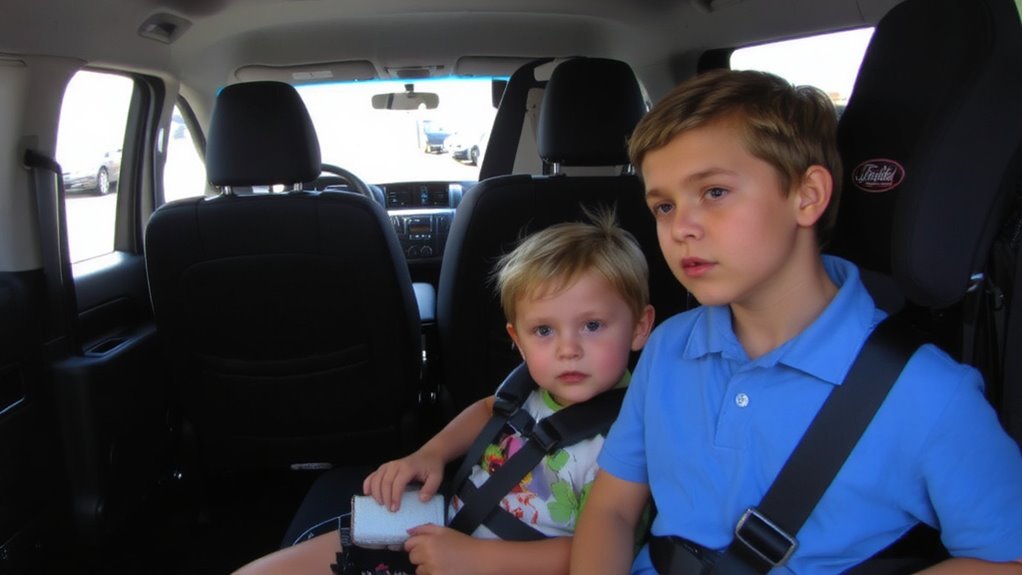
How do you know when your child’s finally ready to ditch the booster? Look at the booster height and booster weight guidelines-most kids can stop using one once they reach 4 feet 9 inches tall and weigh about 80 pounds. That’s the general standard for proper seat belt fit across shoulder, lap, and hip. In Utah, the law follows this benchmark, requiring boosters until either the child turns 8 or meets that size threshold. Real-world testing shows kids under this height often have seat belts resting on their necks or stomachs, which is unsafe. Check that the lap belt lies low across the hips and the shoulder belt crosses the center of the chest. Many parents we surveyed switched between ages 8 and 12, depending on their child’s growth. When both booster height and booster weight are met, and the seat belt fits right, your child’s ready.
Can Children Sit in the Front Seat in Utah?
Where’s the safest spot for your child in the car? It’s the back seat-every time. Utah doesn’t set legal age limits for front seat riding, but safety experts strongly recommend keeping kids under 13 out of the front seat. Why? Airbags deploy with up to 2,000 pounds of force, posing serious risks to small bodies. Testers note that even in vehicles with adjustable airbags or on-off switches, the back seat reduces injury risk by up to 40%. Real-world data and crash tests consistently show better outcomes for children seated behind the driver or passenger. Most car seats and boosters are designed for rear seating positions, with anchors (LATCH) and seat belt geometry optimized there. While older, taller kids might fit well in the front, delaying the move until at least age 13 guarantees better protection. Keep them safer-just buckle them in the back.
What Happens If You Break Utah’s Car Seat Law?
Breaking Utah’s child passenger safety law doesn’t just risk your child’s safety-it comes with real legal and financial consequences. You could face legal penalties, including court fines up to $75 per child not properly restrained. Law enforcement can issue citations on the spot, especially during traffic stops or checkpoints. These fines stack quickly if multiple kids are involved, and some counties add administrative fees. While the law focuses on compliance over punishment, repeated violations may lead to mandatory education courses or harsher penalties. The goal isn’t to fine parents but to guarantee every child rides safely in the right seat for their age, weight, and height. Car seats like the Graco Extend2Fit, with 50-inch height limits and steel-reinforced frames, make compliance easier. Testers praise its LATCH system clarity and room for growing kids-small details that prevent mistakes and keep you on the right side of the law.
How Do You Install a Car Seat Correctly in Utah?
While Utah’s car seat law sets clear rules for child safety, getting it right starts with proper installation-and that means securing the seat tightly, using either the LATCH system or seat belt, so it moves less than an inch at the connection point. You’ve got several car seat types to take into account: rear-facing, forward-facing, and booster-each with specific weight and height limits. Choose one that fits your vehicle and child. Installation methods vary: LATCH is convenient for younger kids, while seat belts work for heavier children. Check the manual, align the seat angle correctly, and use a level if needed. Testers report high success with Britax and Chicco models, praising clear labels and snug fit. Use a rolled towel or locking clip if needed, and double-check positioning. Proper installation guarantees real-world protection every time. For trusted recommendations, consider checking expert-tested options like the Best Baby Car Seats.
Are Car Seats Required in Taxis and Rideshares in Utah?
What if you’re hopping in a taxi or rideshare with your little one-do you still need a car seat in Utah? Good news: Utah’s car seat law includes taxi exemptions, so cabs aren’t required to provide child restraints. The same applies to most ride share rules under state law-companies like Uber and Lyft aren’t obligated to supply car seats. That said, your child’s safety doesn’t take a backseat. For kids under 8, unless they’re over 57 inches tall, a proper car seat or booster is essential. Lightweight, easy-install models like the Graco TurboBooster or Chicco GoFit fit compactly in your bag. Testers praise the GoFit’s slim design (14.5” W) and quick LATCH connect. While convenience tempts you to skip it, bringing your own seat guarantees consistent protection, crash-tested to 5x body weight. Play it safe-taxis and rideshares may be exempt, but your peace of mind isn’t.
On a final note
You’ve got this: Utah’s rules keep kids safer when you pick the right seat, install it tightly, and switch only when they’re tall enough-57 inches or more. Testers praise convertible seats like the Graco 4Ever for growing with kids, easy cleaning, and snug fits. Always check labels, anchor with LATCH or seatbelt, and avoid front seats under 13. Real parents confirm: proper fit means fewer wiggles, longer use, and peace of mind on every ride.