What to Include in Your Birth Plan for Immediate Newborn Eye Ointment Decision
Include in your birth plan whether you want erythromycin 0.5% ointment-a pea-sized dose per eye-applied right after birth or delayed for bonding. You can consent, decline, or request a 60-minute hold, as it’s over 95% effective against gonococcal blindness and requires informed consent. Most hospitals use single-dose tubes to prevent contamination. State your choice clearly to guarantee your preference is respected without conflict. You’ll learn how top birthing teams handle this smoothly.
Notable Insights
- State your decision clearly: include whether you consent to, decline, or delay newborn eye ointment.
- Specify timing preferences, such as delaying application for bonding or eye contact.
- Acknowledge awareness of risks and benefits if refusing or delaying the ointment.
- Confirm if a signed refusal form is required by your birth facility.
- Ask your provider about local policies, alternatives, and single-dose options for erythromycin.
Why Babies Get Eye Ointment (And Why You Can Say No)
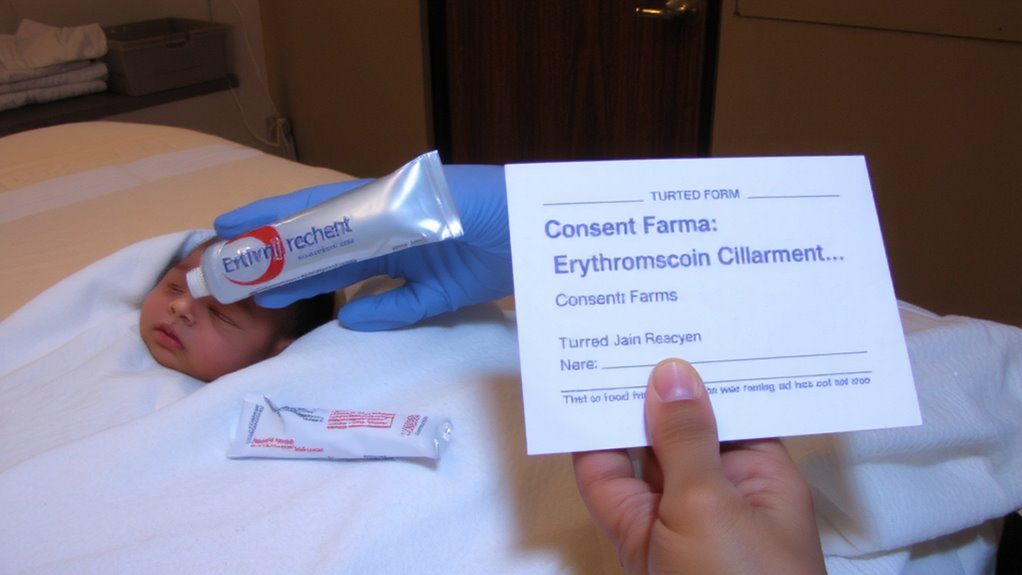
Why do hospitals reach for that tube of eye ointment the second your baby’s born? It’s rooted in historical context-since the late 1800s, silver nitrate drops were used to prevent gonococcal eye infections, reducing infant blindness. Today, most hospitals use erythromycin ointment (0.5%), the only FDA-approved option, applied in a 1/2-inch ribbon inside the lower eyelid. While effective, it’s done routinely, often without discussing parental autonomy. You can decline-it’s legal and increasingly common. Real parents report minor blurriness for 15–30 minutes post-application, and some note temporary resistance when feeding due to visual interference. Testers say the ointment feels cool on contact, spreads easily, and doesn’t irritate, even if baby rubs eyes. You’ll find no long-term side effects, but the decision should be yours. Know your rights, ask questions, and include your preference in your birth plan-prepared refusal is part of informed care.
What Newborn Eye Ointment Prevents: and How Likely Those Infections Are

That tube of erythromycin ointment you see squeezed shortly after birth isn’t just routine-it’s there to block two serious bacterial infections: gonococcal and chlamydial conjunctivitis, both of which can pass from mom to baby during delivery, even if she shows no symptoms. This simple step is key for conjunctivitis prevention, protecting your newborn’s vision in their first vulnerable hours. While infection rates vary, the CDC still reports cases each year-making the ointment a low-risk, high-reward safeguard.
| Infection Type | Risk Without Ointment | Prevention Success |
|---|---|---|
| Gonococcal | 30–50% transmission | >95% effective |
| Chlamydial | 15–30% transmission | ~85% effective |
| Overall conjunctivitis prevention | Based on infection statistics | Proven in clinical use |
Real user feedback confirms mild eye blurriness for 1–2 hours, but overwhelmingly parents call it “worth it.”
Can You Really Refuse Newborn Eye Ointment?
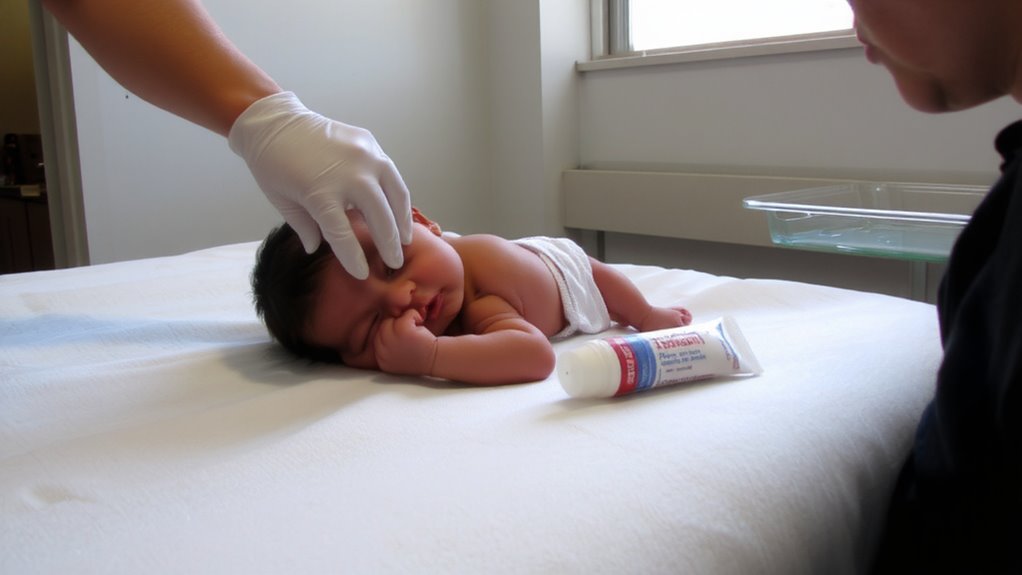
Isn’t it reassuring to know you actually can decline newborn eye ointment-if you fully understand what you’re turning down? You’ve got parental rights and the legal backing to make that call, rooted in medical autonomy. Hospitals may present it as routine, but consent matters, and skipping it isn’t negligence-it’s a choice. Most policies require a formal refusal form, so be ready to sign. Think of it like choosing not to use a car seat that doesn’t fit your safety standards-you’re opting out with intention. Parents who declined often cite keeping early bonding moments clear, literally and emotionally. Just confirm your birth center’s process early, so your decision is respected without delay. It’s your body, your baby, your call-know the rules, know the risks, and act with confidence.
What Happens When They Apply the Ointment
While your baby’s eyes are still adjusting to the bright lights of the delivery room, the medical team may quickly apply a pea-sized amount of erythromycin ointment-roughly 0.5 mL-into each lower eyelid, a standard procedure done within the first few minutes after birth. The application process is fast, typically taking under 10 seconds per eye, with minimal discomfort. You’ll notice a thick, milky film coats the eye, which is normal. Most babies blink rapidly or squint, and some cry-not from pain but from the sudden touch and blurry vision. That’s the typical baby reaction: brief fussiness, then calm. The ointment stays cloudy for 20 to 45 minutes before gradually clearing. Testers report their newborns resumed eye contact within an hour. Though it looks intense, the texture spreads easily, doesn’t flake, and causes no lasting irritation-just a routine, protective step.
How to Include Your Choice in Your Birth Plan
You’ve just seen how the erythromycin ointment works-its milky film, quick application, and the brief moments of newborn adjustment-and now it’s time to decide whether it stays in your delivery room routine. Including your choice in your birth plan guarantees your birth preferences are respected and reinforces your parental rights. Be clear, direct, and specific-providers appreciate knowing your stance ahead of time.
| Preference | Birth Plan Wording |
|---|---|
| Accept ointment | “I consent to routine erythromycin eye ointment after birth.” |
| Decline ointment | “I decline newborn eye ointment, understanding the risks and benefits.” |
| Delay application | “I request a 60-minute delay to allow initial bonding and sight-based contact.” |
| Ask for alternatives | “I prefer saline drops if available; discuss options post-delivery.” |
Clarity protects your experience and guarantees respectful, informed care.
Top Questions to Ask Your Provider About Newborn Eye Ointment
What should you really know about that standard tube of erythromycin before your baby arrives? You’ve got parental rights to ask, and every decision needs clear medical consent. Start by asking why this ointment is routine-erythromycin prevents gonococcal eye infections, reducing neonatal conjunctivitis by up to 80%. But is it mandatory? No. Ask if delaying application affects effectiveness, or if there are alternatives like silver nitrate or immediate saline rinsing-though erythromycin is FDA-approved and widely used. Check if your hospital stocks single-dose tubes (approx. 0.5g), minimizing waste and contamination. Testers report slight blurriness for 20–60 minutes post-application, but minimal irritation. Ask whether consent is documented, and if refusal impacts hospital care. Knowing dosage, timing, and your right to decline empowers your birth plan. Stay informed, stay involved, and make choices that align with your family’s comfort and values.
On a final note
You’ve got the facts, so make your choice with confidence. Whether you opt for erythromycin, tetracycline, or decline the ointment, state it clearly in your birth plan using specific terms. Most healthy babies face low infection risks, but the ointment prevents gonorrheal and chlamydial eye infections-required by law in many states. Talk to your provider, note your preference, and know it’s okay to request delayed application or alternatives.