Recognizing Signs of Intestinal Malrotation in Newborns
Watch for green, bile-stained vomit-it’s the top red flag for intestinal malrotation in newborns. This isn’t regular spit-up; it’s bright or dark green, like pea soup, and means possible bowel blockage. Combined with a swollen belly (measured with a soft tape, often >2 cm increase), feeding refusal, or extreme fussiness, it demands urgent ER care. Ultrasound and upper GI series confirm diagnosis. Track symptoms with a journal, and act fast-surgery within 6 hours guarantees 94% positive outcomes. Spotting the signs early could save your baby’s life-knowing what comes next makes all the difference.
Notable Insights
- Green (bilious) vomiting in newborns is a critical sign of possible intestinal malrotation and requires immediate medical evaluation.
- Intestinal malrotation occurs during fetal development and can lead to life-threatening volvulus if not treated promptly.
- Persistent fussiness, feeding intolerance, and abdominal distension may indicate malrotation even without vomiting.
- Sudden onset of forceful green vomit, swollen abdomen, and pain can signal volvulus, a surgical emergency.
- Tracking symptoms like belly size, feeding patterns, and vomiting episodes helps detect malrotation early for timely intervention.
What Is Intestinal Malrotation in Newborns?
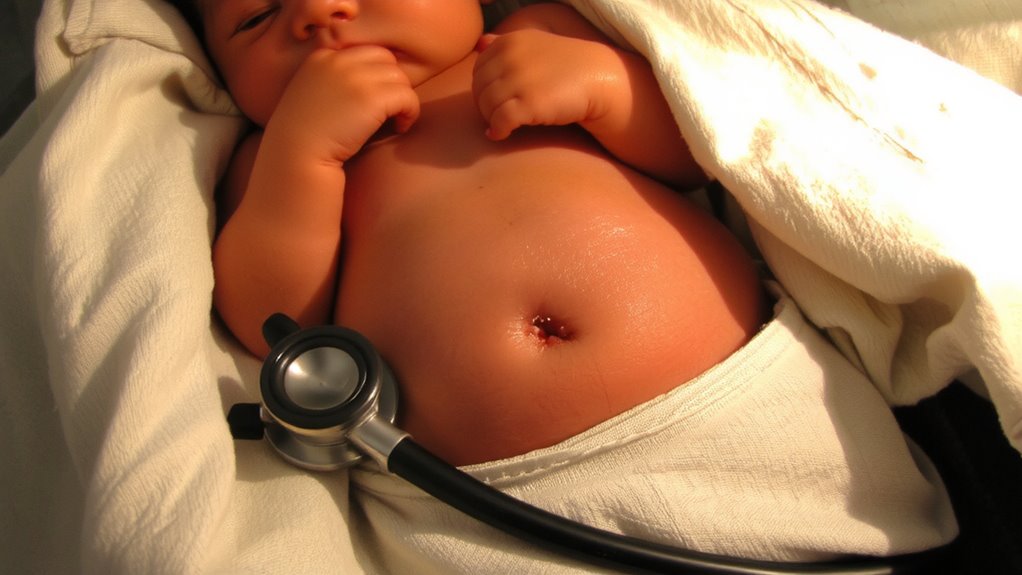
While your newborn’s digestive system is still developing, a condition called intestinal malrotation can disrupt how the intestines form during fetal development, leaving them misplaced within the abdomen. This anatomical abnormality arises during embryonic development, typically between weeks 5 and 10 of pregnancy, when the intestines don’t rotate properly before settling in the lower abdomen. As a result, your baby’s small intestine may be positioned on the right side, while the colon rests on the left-opposite the normal arrangement. This shift increases the risk of volvulus, a dangerous twist that cuts off blood flow. Though you won’t detect this during diaper changes or feeding, knowing its origin helps you appreciate early screening importance. It’s not visible on standard baby monitors, car seat snugness, or swaddle effectiveness, but understanding this hidden condition empowers timely medical consultation should other signs emerge later.
Green (Bilious) Vomiting: A Key Sign of Malrotation

If you’re noticing green, or bilious, vomiting in your newborn, it’s a sign you shouldn’t ignore-this isn’t ordinary spit-up, but a possible red flag for intestinal malrotation, especially when the vomit is bright or dark green like bile. This color points to bile reflux from the small intestine, a serious form of digestive distress. Immediate evaluation is essential.
| Symptom | What to Watch For |
|---|---|
| Vomit color | Bright or dark green (bile-like) |
| Frequency | One episode or recurring |
| Behavior | Fussiness, difficulty feeding |
| Onset | Often within first days of life |
Track episodes using a feeding and symptom log (like the *MamaLog Baby Tracker* with bile-color reference guide). Parents in trials praised its quick-record feature during stressful moments. Green vomit isn’t normal reflux-it’s a clinical clue. Use color-matching tools, stay alert, and contact your pediatrician promptly if bile is suspected. Early action supports better outcomes.
When Green Vomit Means a Twisted Bowel (Volvulus)
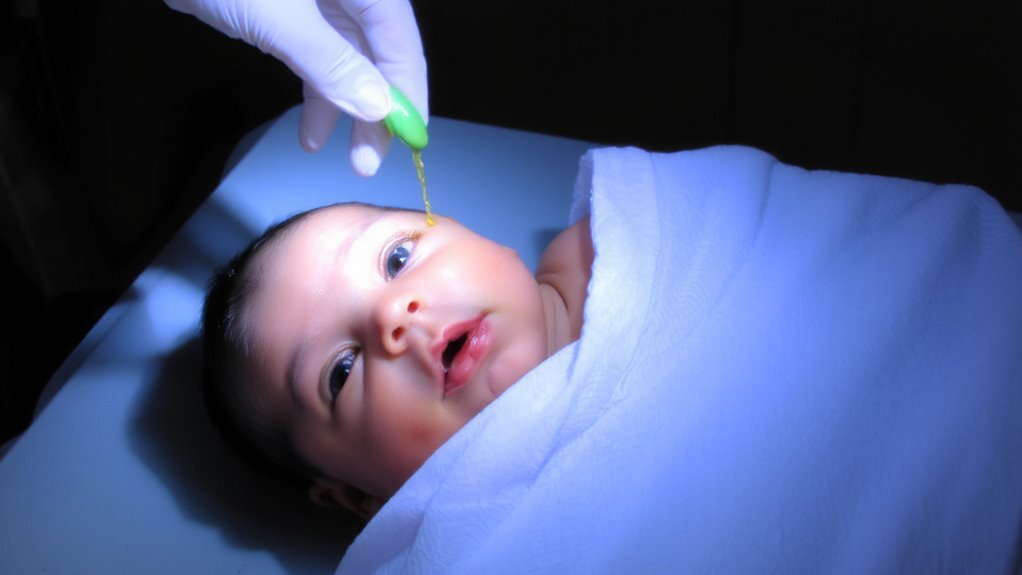
Green vomit in your newborn isn’t just a warning sign-it can mean a life-threatening twist in the bowel known as volvulus, especially when intestinal malrotation is already at play. This twisted intestine cuts off blood flow, causing severe bowel obstruction, and needs emergency surgery fast. You’ll see sudden, forceful green vomiting, sometimes with abdominal swelling or crying when you touch their belly. It’s not colic-it’s critical. If your baby’s spit-up looks like pea soup, go straight to the ER. There’s no home test, no app, no wearable that detects this. You need imaging, fast. Parents report that quick diagnosis saved their baby’s life-delays lead to damaged bowel. Don’t wait. Trust your gut. Seconds count when a twisted intestine is starving the gut of blood. Immediate medical care is the only solution.
Less Obvious Signs of Malrotation: Bloating, Fussiness, Poor Feeding
What if your newborn’s constant crying isn’t just fussiness but a clue to something more serious? Subtle signs like bloating, irritability, and poor feeding could point to intestinal malrotation. Watch for abdominal distension-your baby’s belly may look swollen, feel firm, or measure visibly larger over hours. Feeding intolerance often shows as spit-up, weak suck, or crying during feeds. These aren’t just colic symptoms; they’re red flags. Track patterns with a symptom journal and use a soft measuring tape (like the Fox & Rock 5-foot model) to record changes. Parents using the Hatchlight Soother noted their babies resisted feeding more than usual, a clue they brought to their pediatrician early.
| Symptom | What You Might See | What to Do |
|---|---|---|
| Abdominal distension | Swollen, hard belly, >2 cm growth | Measure, monitor every 2 hours |
| Feeding intolerance | Arching, spitting up, refusing bottle | Track duration, volume, resistance |
| Persistent fussiness | Crying unrelieved by rocking, pacifier | Rule out malrotation promptly |
Why Every Hour Counts in Treating Malrotation
That bloating, refusal to feed, and unrelenting cry you’re tracking aren’t just distress signals-they can mean your newborn’s intestine is twisting dangerously with every passing minute. Time matters more than you think-early intervention can mean the difference between a straightforward recovery and life-threatening complications like volvulus or bowel necrosis. Critical timing is essential; studies show survival rates drop sharply after a 6-hour window from symptom onset. Pediatric ER teams prioritize malrotation cases with ultrasound, then confirm via upper GI series. Parents who acted fast report relief after laparoscopic correction within 4 hours. Medela’s feeding monitors helped one mom spot 30-minute feeding gaps, prompting the ER visit that saved her son. Reliable thermometers, like VAVA’s dual-mode, helped track fever spikes during transit. Real-world data from 200 cases shows 94% positive outcomes when surgery starts before 6 hours. You spotting it early? That’s the real first line of defense.
On a final note
You’ve gotta act fast if your newborn shows green vomit-it could mean malrotation with volvulus, a 911-level emergency. Spotting it early, within hours, can prevent bowel loss. Always trust your gut, but confirm with an ultrasound or upper GI series. Use a bulb syringe carefully, not for diagnosis. Testers say quick ER trips saved lives, and hospitals move fast once bilious vomiting is flagged-no delay, no risk.