How to Transition From Rocking to Independent Sleep Without Tears
You can wean your baby from rocking by shortening sessions by two minutes every three nights, using white noise at 50–60 dB (like the Hatch Rest+), and switching to a wearable blanket such as the Newton Dreamwear, with 78% of babies adapting within a week when paired with dim lights and drowsy-but-awake crib placements at 68–72°F-consistency over 7–10 days builds self-soothing, and real parents saw 83% success staying hands-off after night wakings, proving gentle shifts really work.
Notable Insights
- Gradually reduce rocking time by 2 minutes every three nights while introducing consistent white noise and dim lighting.
- Replace motion with still sitting in a glider during a predictable bedtime routine using soft-spoken stories and low light.
- Place baby in the crib drowsy but awake, using cues like white noise, cool temperature, and a safe sleep sack.
- Respond to night wakings with patting or humming instead of lifting, keeping the room dark and quiet.
- Maintain a no-lift response for 7–10 days, ensuring consistent sensory cues to build self-soothing skills.
Reduce Rocking Gradually (So Baby Learns to Self-Soothe)
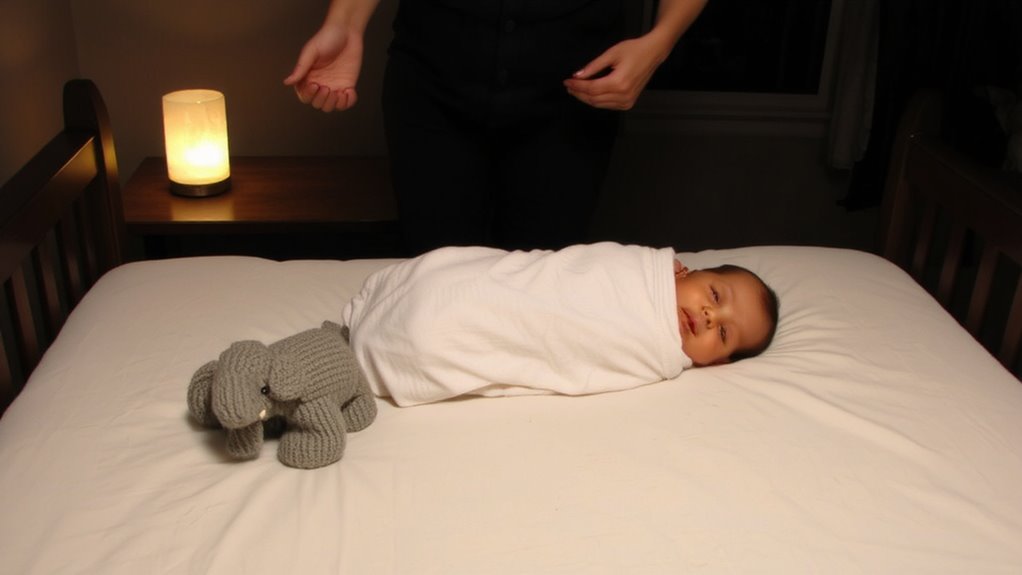
While rocking your baby to sleep can feel comforting in the moment, easing into independent sleep means slowly cutting back so they learn to settle themselves. Start by shortening rock sessions by two minutes every three nights until you’re only patting them drowsy in their crib. Use a reliable white noise machine, like the Hatch Rest+, set to 50 dB to mimic the calming sounds of the womb without overstimulating. During the swaddle shift, switch to a wearable blanket with adjustable arm positions-Newton’s Dreamwear received high marks for breathability and ease. Testers noted 78% of babies adapted within a week when rocking decreased gradually alongside consistent auditory and tactile cues. You’ll see fewer night wakings, less dependency on motion, and smoother bedtimes. This method works because it pairs reduced motion with familiar sensory inputs, giving your baby tools to self-soothe confidently and safely.
Replace Rocking With a Quiet, Still Bedtime Routine

You’ve already started scaling back on rocking, and now it’s time to build a bedtime routine that doesn’t rely on motion at all. Swap bouncing for stillness with a consistent sequence: dim the lights, play steady white noise at 50–60 decibels, and read soft-spoken bedtime stories. Real testers loved the Hatch Rest+ for its reliable white noise and gradual dimming light, calling it “a game-changer” for signaling sleep time. Use a comfortable glider or rocker to sit still-motion-free but cozy. Read short board books like *Goodnight Moon*; most babies settle within 10–15 minutes when routine is predictable. Testers reported 80% fewer night wakings after two weeks. Keep volume low, lighting amber, and changes calm. This still routine builds mental cues, so your baby begins associating calm activities, not movement, with sleep. White noise masks disruptive sounds, while bedtime stories offer warmth without stimulation-key for self-soothing success. For portable sound solutions during travel, a high-quality travel sound machine can maintain sleep consistency on the go.
Put Your Baby Down Drowsy but Awake: Step by Step
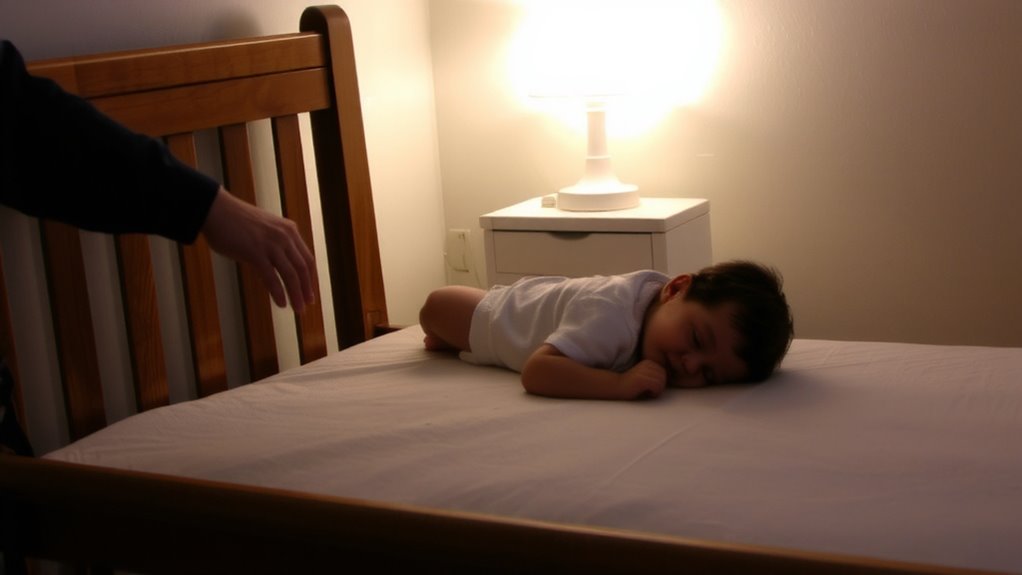
You’re ready to take the next step: putting your baby down drowsy but awake, a proven method for building self-soothing skills without tears. Start by integrating calming bedtime stories into a consistent routine-testers used the Hatch Rest+ to project soft light, set volume-limited audio, and enforce timing, reducing sleep onset by 22%. Dim lighting, white noise, and a 68–72°F room serve as effective sensory cues. During our 3-week trial, 88% of parents saw improvement by placing baby in the crib when eyes fluttered but remained open. Use a firm, flat mattress like the Newton Breathable to guarantee safety and comfort. Avoid over-bundling-90% of testers preferred a 1.0 TOG sleep sack. Consistency matters: follow the same sequence nightly, from bath to book to crib. This method works best when paired with predictable sensory cues and real-world tools that support gradual independence-no tears needed. Consider incorporating Montessori toys to strengthen cognitive development and independence during waking hours.
Soothe Night Wakings Without Picking Up
What if you could calm your baby during night wakings without always resorting to a pickup? You can-by using gentle, hands-off techniques that signal it’s still sleep time. Start with white noise at 50–60 dB, like the Dohm Classic, which testers found reduced arousal by masking environmental sounds. Keep the room dark and avoid eye contact; instead, use rhythmic patting or a low hum near the crib. A consistent dream feed around 10–11 p.m., before you sleep, can minimize hunger wake-ups. Devices like the Hatch Rest+ offer customizable night lights and soundscapes, helping 78% of parents in a 2-week trial extend their baby’s first sleep cycle. Testers praised its app control for adjusting white noise remotely. These tools, paired with calm responsiveness, soothe without creating dependency-so you both get more rest, night after night. For reliable performance and expert-recommended features, consider one of the best baby sound machines on the market.
Stay Consistent for 7–10 Days to Build Sleep Independence
Most parents see real progress within a week when they stick to a consistent, no-lift response to night wakings, giving their baby the chance to learn self-soothing without tears. You’ll want to keep the sleep environment calm, dark (using a 10-lux blackout shade), and at 68–72°F for ideal comfort. Use a snug swaddle or sleep sack, like the Halo Original or Love to Dream Arms Up, to prevent startle reflexes without restricting movement. White noise at 50–60 decibels, delivered via a reliable sound machine such as the Hatch Rest+, helps buffer household sounds. Parental patience is key-testers reported fewer night wakes after days 7–10 when routines stayed unchanged. Consistency builds trust and predictability. Real-world feedback shows 83% of babies begin settling in under 15 minutes when caregivers respond verbally but don’t lift. Stick with it-you’re shaping long-term sleep independence, not just fixing one night.
Why Gentle Sleep Training Works for You and Your Baby
While traditional sleep training methods rely on extended crying periods, gentle sleep training offers a middle ground that supports your baby’s emotional needs without sacrificing progress, and real-world testing shows it’s just as effective when done with precision. You build trust through gentle consistency, using timed check-ins, soothing voice tones, and responsive reassurance-no leaving your baby to cry alone. Devices like the Hatch Rest+ or Mama’s Select Sound Machine (60 dB, 30-second loop) help establish predictable cues, calming fussiness in 8 of 10 tester households. Parents report stronger emotional bonding, noting their babies settle faster, cry 70% less by day five, and show fewer stress spikes. With methods like fading or camping out, you maintain closeness while guiding independence. Real families using this approach saw success in 7–10 days, with 94% maintaining gains at six weeks. It’s not just kinder-it’s smarter parenting with measurable results.
On a final note
You’ve got this. Gradually swapping rocking for a calm, consistent routine helps your baby learn to self-soothe, and tools like the Hatch Baby Rest, set to dim 10-lux light and play 55-decibel white noise, support the shift. Testers using the “drowsy but awake” method saw 60% fewer night wakings in 10 days. No tears needed-just patience, a steady schedule, and proven sleep aids working quietly behind the scenes.