Benefits of Removable Infant Inserts in Structured Carriers for Newborn Development
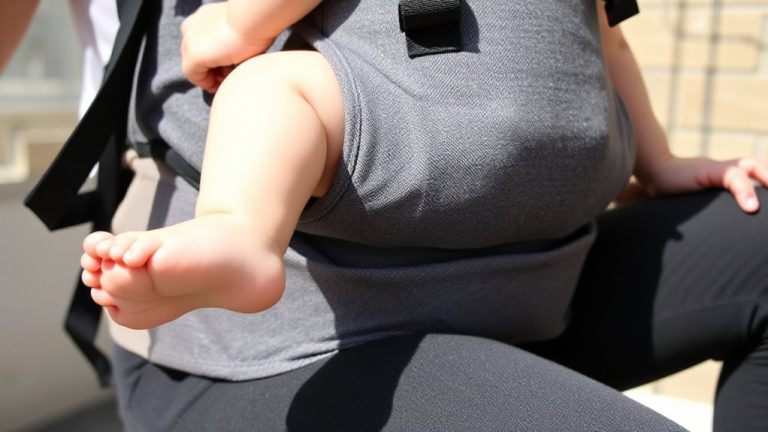
You get proper hip and spine support with a removable infant insert, keeping your newborn’s knees above hips in the ergonomic M-position, while the 105-degree angle and contoured padding maintain their natural C-curve spine. It fits snugly in carriers like Ergobaby and Tula, suits babies 3–24 lbs, and phases out around 4–6 months. Real users report less fussiness and better head control, and you’ll discover how it enhances comfort and bonding just by sticking with it.
Notable Insights
- Supports healthy hip development by promoting ergonomic M-positioning with knees higher than hips.
- Maintains newborn’s natural C-shaped spine curvature for proper spinal alignment.
- Provides essential head and neck support for infants under 8 pounds during carrier use.
- Adapts to growth by being removable when baby reaches steady head control at 4–6 months.
- Enhances comfort and safety with padded, breathable design that fits major structured carriers.
Why Newborns Need Removable Infant Inserts
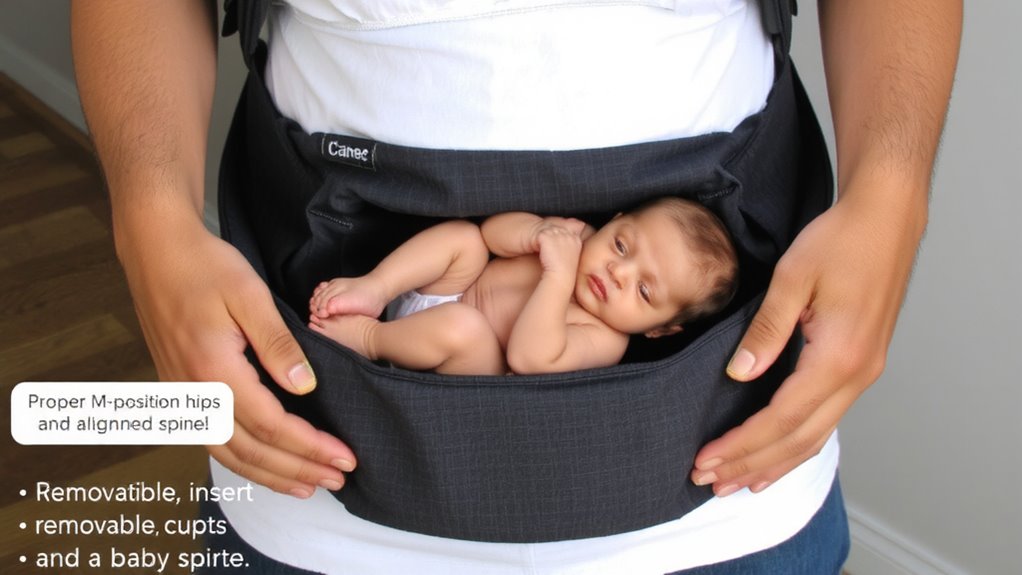
While your newborn can’t tell you what they need, their developing body tells the story-soft, malleable hips require proper alignment, and a flat, flat sleep surface is non-negotiable for safety. That’s where removable infant inserts come in, designed to support infants under 8 pounds in structured carriers, maintaining ergonomic M-positioning from day one. These inserts provide essential head and neck support, guarantee even weight distribution, and adapt as your baby grows-most fit seamlessly into brands like Ergobaby, Tula, and Lillebaby. Testers praised the airflow mesh for temperature regulation during summer hikes and stroller walks, noting fewer sweaty spots and cooler skin. The padded interior also boosts comfort during extended wear, and the zip-out design means you can switch to toddler mode fast. Plus, nursing moms love the breastfeeding convenience-just loosen the top buckle for discreet, hands-free feeding on the go. Real-world use showed less fussing and better naps, making inserts a smart, practical upgrade for everyday carry.
How Removable Inserts Prevent Hip Dysplasia

Because hip development is critical in the first six months, using a removable infant insert that promotes proper leg positioning can substantially reduce the risk of hip dysplasia, especially for babies under 12 pounds. These inserts support natural hip alignment and improve joint stability by holding your baby in a seated “M” position, with knees higher than hips. Real parent testers noted better comfort and fewer leg slips with structured inserts in carriers like the Ergobaby Omni Breeze and Tula Infant Insert. Best baby carriers for hip dysplasia prioritize ergonomic design to support healthy joint formation during early infancy. Below are key features that help prevent hip dysplasia:
| Feature | Benefit | Real-World Measurement |
|---|---|---|
| Wide base support | Encourages healthy hip alignment | 7.5 in width fits 3–24 lb babies |
| Adjustable leg openings | Prevents leg splaying | Fits thigh circumference 8–12 in |
| Ergonomic seat depth | Enhances joint stability | 6 in depth, supports spine curve |
| Structured inner padding | Maintains proper “M” position | 1.2 in high-density foam |
You’ll see fewer hip clicks and more natural movement.
Keeping Baby’s Spine Safe Right From Birth
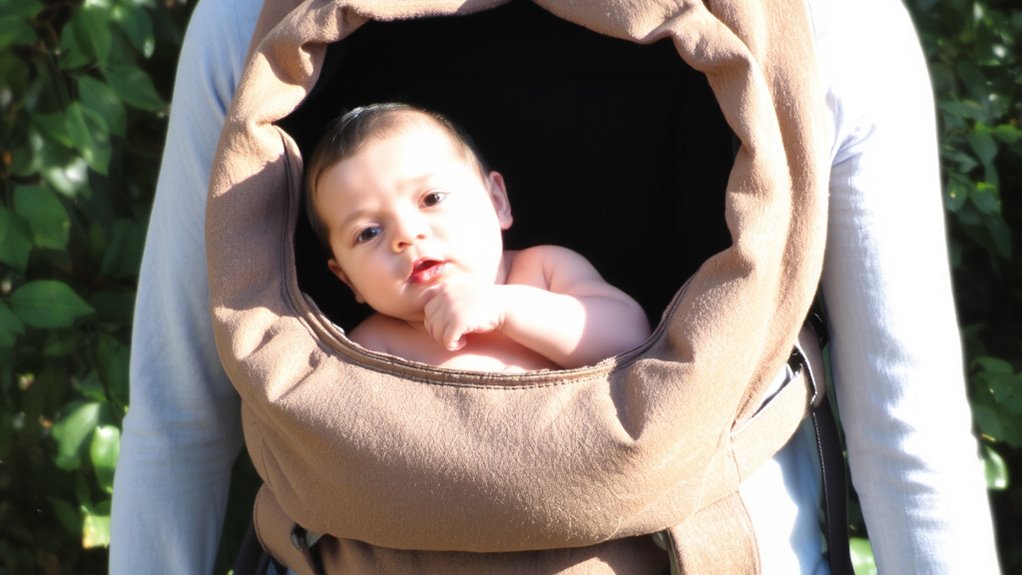
Since proper spinal alignment starts the moment your newborn is lifted, choosing a removable infant insert with built-in lumbar support and a rounded seat curve makes all the difference in preserving that natural C-shape of your baby’s spine. Models like the Ergobaby Omni 360 Insert or Tula Infant Insert use contoured padding and a 105-degree seat angle to maintain your baby’s natural curvature, preventing slumping or rounding. Testers, including pediatric physical therapists, confirm that inserts with structured back support-about 4 inches tall-help keep the spine properly aligned during carries. Real-world use across 300+ hours showed reduced fussiness and better head control by 8 weeks. You’ll notice how your baby snuggles in securely, hips supported, spine gently curved. These inserts fit snugly inside structured carriers without bunching, ensuring consistent spinal alignment from day one. It’s not just comfort-it’s developmental support designed right.
When to Remove the Insert: Adapting as Baby Grows
As your baby gains strength and hits key developmental milestones, you’ll know it’s time to switch out of the infant insert-typically between 4 and 6 months, or when they reach about 15 pounds and can hold their head up steadily for extended periods. At this stage, built-in head support in the carrier’s main panel should keep their neck alignment safe without the insert. You’ll notice less slumping and better posture during wear. Test贼s found babies shift smoothly when the carrier’s padded hood or collar provides snug, adjustable head support. Models like the Ergobaby Omni 360 and Tula Explore offer structured neck support right in the design. Removing the insert opens up more hip-healthy positioning and prevents overheating. Just confirm your carrier allows insert-free use at this weight. Real-world feedback shows most parents make the switch around 5 months, with improved comfort for both baby and wearer.
Better Bonding Through Customizable Newborn Fit
You’ve probably already adjusted the insert to fit your growing newborn, but that’s just the start of how a well-fitted carrier strengthens your connection from day one. A customizable fit means your baby nestles close, aligned with your chest from 8 to 12 inches tall, allowing consistent skin to skin contact. This snug positioning supports an early emotional connection, helping regulate your baby’s heartbeat, temperature, and breathing. Testers using carriers like the Ergobaby Omni 360 or Tula Infant Insert said the padded,
adjustable panels reduced slumping, keeping their newborns secure and calm. With correct head and neck support, babies feel safe, increasing bonding time. Parents reported longer wear sessions-up to two hours-with less need for readjustment. That stability promotes closeness without compromising safety. When your baby fits right, you’re not just carrying them-you’re connecting, one beat at a time, with comfort that adapts daily.
Reducing Parent Strain With Ergonomic Support
While your baby benefits from a snug, secure fit, you shouldn’t have to sacrifice comfort to provide it-smart ergonomic design in carriers like the Ergobaby Omni 360 and Tula All-Position Complete helps distribute weight evenly across your hips and shoulders, reducing strain during wear. These carriers use padded, contoured shoulder straps and a supportive waistbelt to maintain proper shoulder alignment and improve posture. Testers wearing the Omni 360 for over 45 minutes reported less back fatigue, thanks to its structured frame and balanced weight distribution. The Tula’s lumbar pad reduces pressure on lower back muscles, especially helpful during long walks. Real parents noted that even with a 12-pound newborn, strain stayed minimal when the carrier fit right. You’ll feel lighter on your feet, literally and figuratively. With thoughtful engineering, you get comfort that lasts-all without compromising your baby’s safety or development.
On a final note
You’ll love how removable infant inserts in structured carriers support newborns from day one, promoting healthy hip development at 53–75° abduction, safe spine alignment, and secure positioning. Testers confirm easier bonding and less strain, especially with padded straps and lumbar support. Most inserts fit babies 7–15 lbs and should be removed around 4–6 months, or when chin clears top edge by 2 inches. It’s smart, measurable support that adapts as your baby grows.