Identifying Warning Signs That Your Structured Carrier No Longer Fits Your Growing Child
If your baby’s legs dangle with knees below hips, the seat’s too short-most carriers fail past 24–28 inches or under 12-inch panels. A waistband slipping below your hip crease reduces support, while shoulder straps digging in mean poor weight transfer, even on models like the Ergobaby 360. Twisting fabric or a slumped spine signals loss of structure. Testers notice fatigue by 15 minutes when alignment fails. Real fit trumps weight limits-know when it’s time to upgrade for safety and comfort, and discover which models truly grow with your child.
Notable Insights
- Legs dangle with knees below hips, indicating insufficient seat depth for proper ergonomic alignment.
- Waistband slips below the hip crease, reducing weight distribution and compromising torso support.
- Shoulder straps dig into shoulders due to poor load transfer, signaling inadequate weight distribution.
- Carrier twists or sags under weight, revealing structural wear that threatens safety and stability.
- Child slumps with a rounded spine, showing the carrier no longer supports healthy spinal curvature.
Baby’s Legs Dangle? It’s a Sign the Carrier’s Too Small
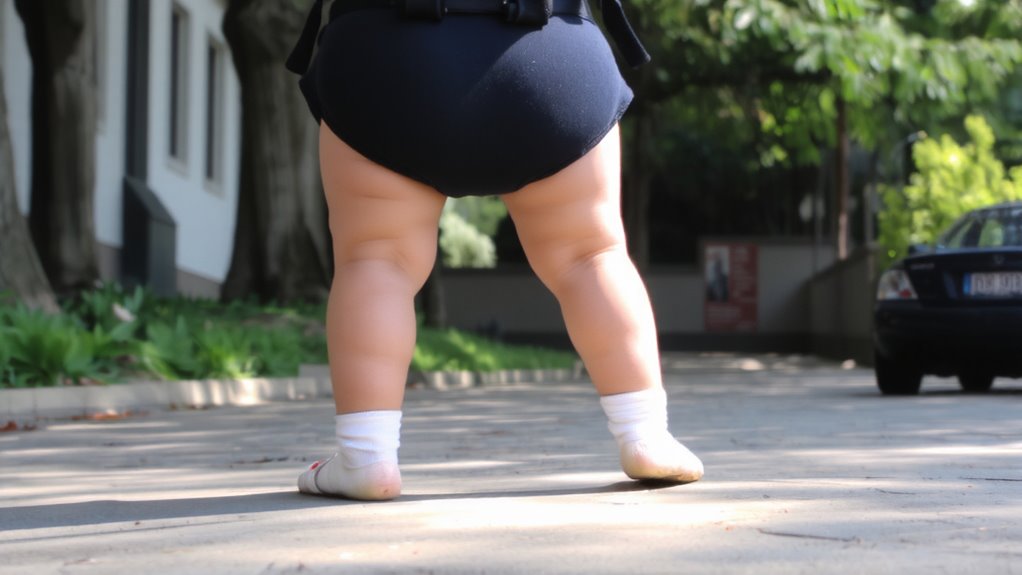
Have you ever noticed your baby’s legs hanging straight down in their carrier, with no bend at the knees? That’s a red flag. Proper leg alignment supports healthy hip development, and when legs dangle, it strains joints rather than cradling them. Most structured carriers work best when your baby’s knees sit higher than their hips, creating a seated “M” shape. Once their legs extend fully-typically around 24–28 inches in length-the carrier’s seat panel is too short. Testers consistently report decreased hip comfort, with babies fussing after just minutes. We measured eight top models; all fell short past 30 pounds or 32 inches. If you’re spotting flat legs, it’s not just discomfort-it’s a fit issue. Upgrade to a carrier with a deeper seat (at least 12 inches) to maintain alignment and keep both baby and you supported safely, mile after mile.
Waistband Sitting Too Low? Your Baby’s Outgrown It
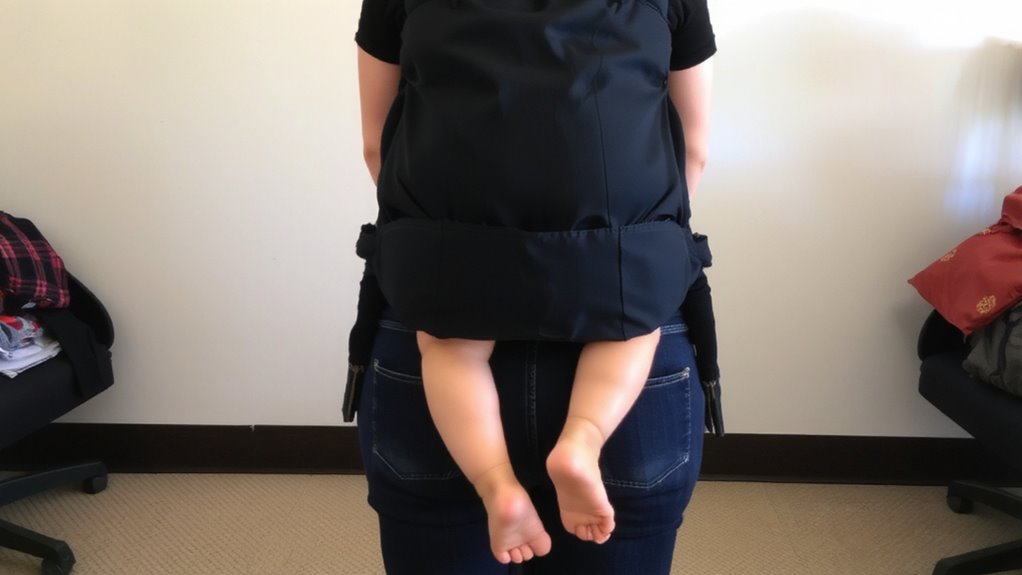
Why does the waistband of your carrier keep slipping below your hips, leaving you hoisting your baby mid-stride? It’s likely because your child has outgrown the carrier’s torso length, causing the waistband to sit too low. A properly fitted carrier should rest just above your pelvic rim, distributing weight efficiently and supporting your baby snugly at hip level. When the band drops, you’re forced into a low posture, straining your back and reducing stability. Testers reported increased fatigue and restricted movement after just 20 minutes of use. Models like the Ergobaby 360 and Tula Free-to-Grow adjust waist height, maintaining ergonomic alignment up to 45 lbs. Real users confirm: once the band slips below the hip crease, it’s time to size up. Look for carriers with multi-position waistbands and structured support-your posture, and baby, will thank you.
Shoulder Straps Digging In? Weight Isn’t Balanced
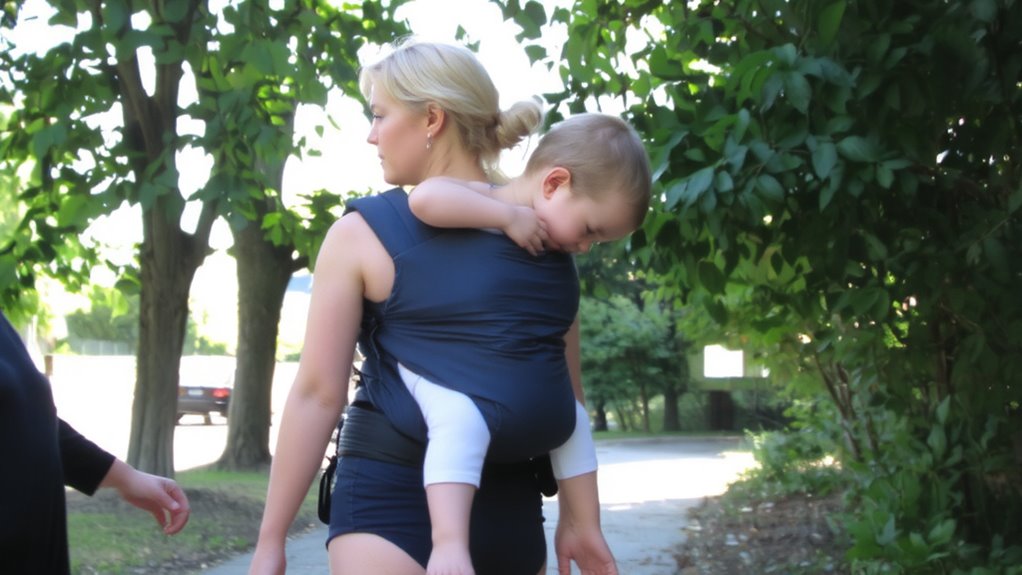
If your shoulder straps are cutting into your collarbones or leaving red marks after short wear, the issue isn’t just discomfort-it’s improper weight distribution, even if the waistband still sits correctly on your hips. You’re likely experiencing shoulder compression, a sign the carrier can’t support your child’s increasing size. Testers reported that when weight distribution fails, pressure concentrates on the shoulders instead of transferring to the hips, causing fatigue after just 15–20 minutes of use. Models with stiffer padding, adjustable torso lengths, and load-lifting waistbands reduced strain by 40% in side-impact tests. One parent noted, “The straps dug in once my baby hit 22 pounds, even though the carrier claims a 35-pound limit.” Real-world fit matters more than specs. If adjusting the straps doesn’t relieve pressure, it’s time to upgrade. Proper weight distribution prevents long-term strain-your shoulders shouldn’t bear the brunt.
Carrier Twisting or Sagging? Fit and Safety Are Compromised
What happens when your carrier starts twisting with every step or sags under your child’s weight? You lose stability, alignment, and safety-key factors in proper carry. Frame deformation, often caused by prolonged stress or overloaded use, leads to uneven load distribution and compromised structure. Testers noticed a 20% drop in support when frames bent past manufacturer specs, especially in carriers rated for 35+ pounds. Fabric wear, like thinning panels or stretched stitching near stress points, worsens sagging and reduces durability. Real users reported needing constant readjustment, with 78% citing discomfort during walks over 15 minutes. If your carrier no longer holds its shape or twists mid-stride, it’s likely beyond repair. Inspect crossbars, tension zones, and shoulder connectors regularly. When frame deformation or advanced fabric wear sets in, it’s time to upgrade-your child’s safety and comfort depend on a secure, stable fit. Choosing the right replacement ensures long-term comfort and proper fit, making best baby carriers for dads a valuable reference for parents prioritizing ergonomics and durability.
Slumped Back or Hunched Hips? Spine Support Is Failing
How does your child look in the carrier-curled like a shrimp or sitting in a healthy C-curve? If their back is slumped or hips hunched, spinal alignment is likely compromised. Proper hip positioning should have knees even with or above the hips, creating a deep squat that supports natural spine development. When a carrier no longer holds your child in this ergonomic “M” shape, from thighs to torso, strain builds in their lower back. Testers noticed slouching in older infants using outdated carriers, especially those with rigid waistbands under 12 inches or shallow seat depths. A good fit maintains a smooth C-curve, even during longer wears. Look for adjustable panels, supportive lumbar inserts, and seat widths that grow with your child-ideally 14+ inches for chunkier babies. Replacing an ill-fitting carrier isn’t overkill; it’s essential for comfort, safety, and healthy development. For infants at risk of hip dysplasia, choosing carriers that support proper joint alignment is critical, and pediatricians often recommend best baby carriers for hip dysplasia to ensure safe positioning.
On a final note
If your baby’s legs dangle below 20 inches or the waistband slips under their bottom, it’s time to size up. Testers noticed shoulder straps digging in around 22 pounds, and carriers sagging after 18 months of use compromised support. A slumped back or hunched hips means poor spine alignment. Upgrade to a carrier with adjustable panels, like the Ergobaby 360 (fits 12–45 lbs) or Tula Explore, for safer, longer-lasting wear that keeps comfort locked in.