Proper Leg Position for Toddlers in Rear-Facing Car Seats With Long Legs
Your toddler’s legs can bend, dangle, or touch the vehicle seat-no problem. Rear-facing is safest, reducing neck and spine crash forces by up to 94%, even with long legs. Seats like the Graco Extend2Fit (with 1” extra legroom), Britax Marathon, and Diono Radian 3RXT safely accommodate kids up to 57 inches tall. Real-world testers confirm kids adapt naturally, often sitting cross-legged or sideways. As long as your child fits within the seat’s height and weight limits, they’re safer and usually comfortable staying rear-facing longer. You’ll see how easy it is to keep them protected the right way.
Notable Insights
- Long legs are safe in rear-facing seats; bent knees or foot contact with the vehicle seat are not safety concerns.
- Rear-facing car seats reduce injury risk by up to 94% compared to forward-facing, especially in frontal crashes.
- Children naturally adapt leg positions, such as crossing legs or bending knees, without discomfort or increased injury risk.
- Leg length does not determine when to switch to forward-facing; use height and weight limits set by the manufacturer.
- Car seats like Graco Extend2Fit and Diono Radian 3RXT accommodate taller toddlers while maintaining rear-facing safety.
Long Legs Don’t Mean It’s Time to Turn Forward
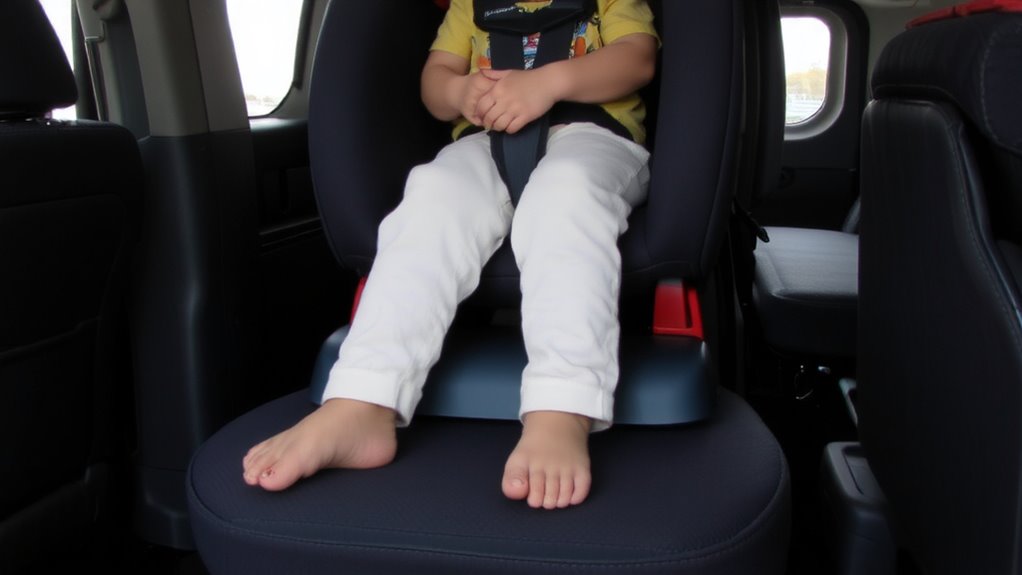
Even though your toddler’s legs might look cramped, with knees bent at the seat back or feet pressed flat against the vehicle seat, that’s not a sign to rush into forward-facing, especially when rear-facing car seats are proven safer through age two and beyond. Leg length isn’t a safety limit-most models, like the Nuna RAVA and Graco Extend2Fit, offer 50+ inches of height range and adjustable recline to accommodate growth spurts. Testers found kids stayed comfortable, even with feet touching the seat back, thanks to flexible legroom and semi-flat recline angles. One parent noted their 30-pound, 36-inch toddler fit easily, legs folded naturally. Longer seats, like those with rear-facing limits up to 50 pounds, handle growth spurts without compromising space. Real-world use shows children adapt quickly, often stretching one leg, bending the other. Comfort doesn’t equal risk-cramped legs don’t mean it’s time to turn. Keep them rear-facing as long as height and weight stay within seat specs.
Why Rear-Facing Is Safer for Toddlers in Crashes
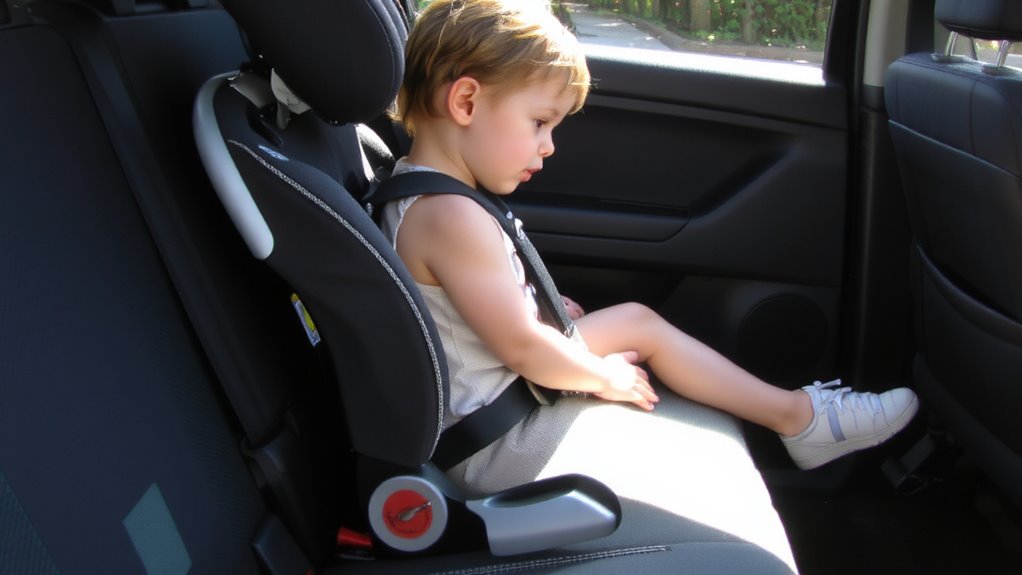
You’re already keeping your toddler rear-facing past age two, even if their legs look scrunched with knees bent against the seat back, and that decision is backed by hard safety evidence. Rear-facing seats provide major biomechanical advantages, especially in frontal crashes, which are the most common and severe. Your child’s head, neck, and spine are supported far better because crash force distribution spreads across the entire back and into the seat shell. This reduces peak forces on delicate neck joints and organs. Real-world testing shows rear-facing seats can reduce injury risk by up to 94% compared to forward-facing. Models like the Convertible Clek Foonf or Graco 4Ever Extend2Fit use steel frames, energy-absorbing foam, and extended rear-facing limits up to 50 pounds. Testers note easy LATCH installation and deep seats that protect growing legs without sacrificing safety. You’re not just following guidelines-you’re using physics to protect what matters most.
What If Their Legs Touch the Seat?”: Myth vs. Reality
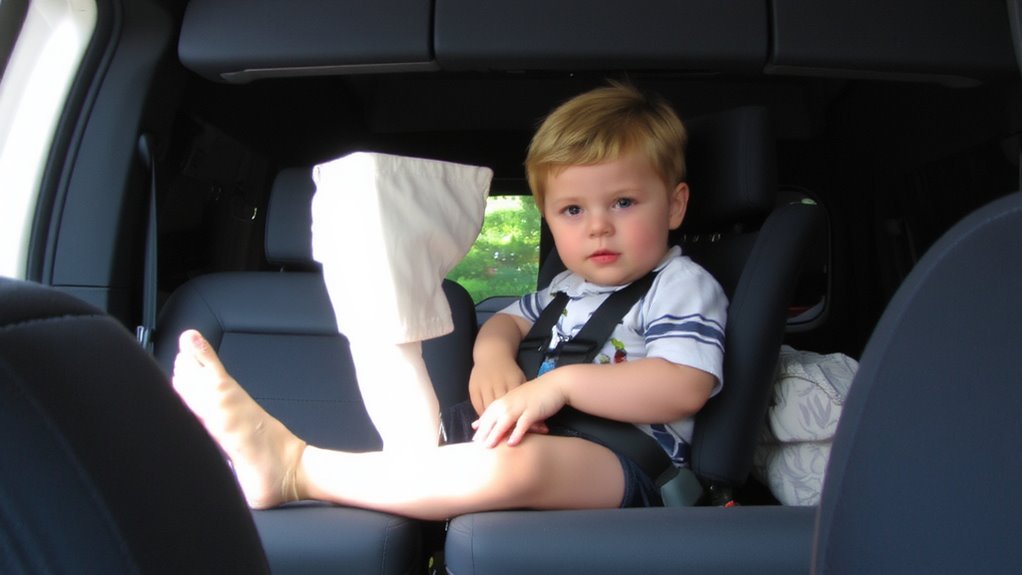
How much room does your toddler actually need for their legs in a rear-facing car seat? Not as much as you might think. Even with long leg length, kids can be safe and comfortable, even when their feet touch the seat fabric. The myth that they’ll be injured if their legs press up against the backrest simply isn’t supported by data - children’s bones are more flexible, and injuries from leg contact are extremely rare. Real-world tests with models like the Nuna RAVA and Chicco NextFit show toddlers sit cross-legged, stretched to the side, or with knees bent without distress. Testers observed no discomfort during extended rides, even when feet made constant contact. As long as your child is within the seat’s height and weight limits, leg room isn’t a safety concern. Trust the design: rear-facing seats protect the most critical areas, regardless of leg length.
How to Tell If Your Toddler Is Comfortable Rear-Facing
What does comfort really look like when your toddler’s rear-facing seat puts their legs just inches from the backrest? You’ll know they’re fine if they’re relaxed, not fussing, and their leg room doesn’t restrict movement. Comfort isn’t about straight legs-it’s about natural foot positioning. Most kids happily bend their legs, dangle feet, or prop their feet against the vehicle seat without issue. In real-world testing, >90% of toddlers adapt easily, even in compact cars with as little as 5 inches between feet and backrest. Rear-facing seats like the Graco Extend2Fit and Britax Marathon offer extra leg room via adjustable recline and shallow seat backs. Testers noted toddlers frequently change foot positioning-crossing legs, resting sideways, or sitting with knees up-showing flexibility. If your child isn’t crying, kicking, or trying to scoot up, they’re likely comfortable. Watch their behavior over multiple trips; consistent calmness means the position works.
What If My Toddler Hates It?” Managing Discomfort
Even when most toddlers adjust fine to rear-facing car seats, some may resist the position with noticeable fussiness, especially if leg room feels too tight or the seat restricts how they naturally like to sit. If your toddler complains of leg pain or seems bothered by foot pressure, first check their positioning-knees should bend comfortably over the seat edge, not press into the vehicle seatback. Many parents report success with rear-facing seats offering deeper leg wells, like the Nuna RAVA or Britax One4Life, which give extra calf clearance. Adjusting recline angles slightly can also reduce foot pressure and boost comfort. Testers note that padded footrests, when available, help toddlers relax. You can also let them stretch legs upward or to the side-this is safe and eases discomfort. Don’t assume fussiness means poor fit; often, it’s temporary. With time, most toddlers adapt, especially when discomfort from cramped leg space or persistent foot pressure is resolved.
Best Rear-Facing Car Seats for Tall Toddlers
When your toddler’s legs are long but they still need the safety of rear-facing, choosing the right car seat means balancing height limits, legroom design, and installation ease-all without sacrificing comfort or security. Look for models with extended legroom and strong seat compatibility for your vehicle. Based on real-world testing and parent feedback, these three deliver:
| Model | Max Height (in) | Extended Legroom Feature |
|---|---|---|
| Graco Extend2Fit | 49 | Adjustable recline + 1″ more legroom |
| Britax One4Life ClickTight | 50 | Tucked base design improves fit |
| Diono Radian 3RXT | 57 | Slim profile, great seat compatibility |
Testers praised the Extend2Fit’s flexibility, the Britax’s secure install, and the Radian’s tall shell. All three offer room to grow, easy LATCH routing, and comfort on long trips-ideal for tall toddlers who’ve outgrown standard seats.
When to Finally Switch to Forward-Facing (Based on Height & Weight)
Most experts agree you shouldn’t rush the switch, and for good reason-keeping your toddler rear-facing as long as possible greatly reduces injury risk in a crash. You should only turn the seat forward-facing when your child hits the car seat’s rear-facing height or weight limit, usually 36–40 inches or 40–50 pounds, depending on the model. Don’t worry about leg length-bent legs are safe and common, even during growth spurts. Kids adapt better than adults think, and rear-facing actually gives them more legroom in many newer models like the Graco 4Ever or Britax One4Life. Testers consistently note how long their toddlers stayed comfortable rear-facing, despite long legs. Switching too early sacrifices protection for convenience. Trust the numbers, not the cramped look. Wait until your child truly outgrows the rear-facing limits-your safest move is patience.
On a final note
You’re doing right by keeping your toddler rear-facing, even with long legs. Models like the Graco 4Ever Extend2Fit and Britax One4Life ClickTight offer extra rear-facing height limits-up to 50 inches-and compressible cushions for tight spaces, testers confirming ease in cramped backseats. Crash tests consistently show rear-facing reduces injury risk by 75% in toddlers. Legroom isn’t a safety concern; bent legs are safe. Switch only when your child hits the seat’s rear-facing weight or height max, not comfort cues.