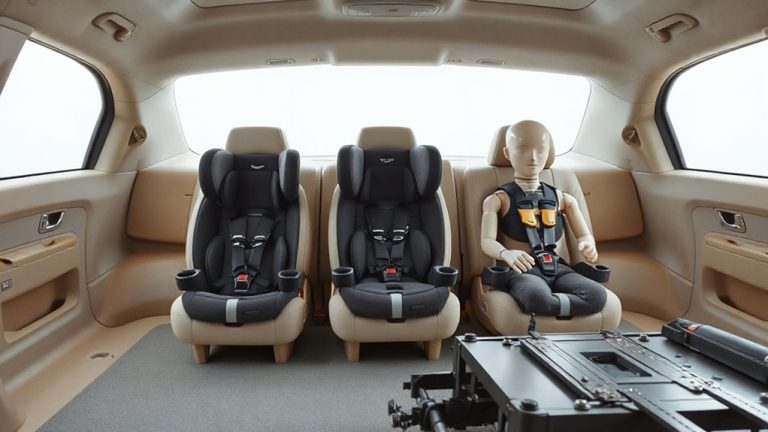
What Oklahoma’s Car Seat Law Says About Rear-Facing Limits
Oklahoma law says your child must stay rear-facing until at least age one or 20 pounds, but that’s just the minimum. Rear-facing cuts injury risk by 75% in crashes, and top seats like the Graco Extend2Fit (50 lbs) and Britax One4Life (40 lbs) let your child stay safer longer. Most fit kids rear-facing past age two, often to 40+ inches. Proper harness tightness, seat angle, and installation-less than 1 inch of movement-maximize protection, and you’ll want to know which models tested best in real-world fits.
Notable Insights
- Oklahoma law requires children under one year or under 20 pounds to ride rear-facing.
- A child may switch to forward-facing once they reach age one or 20 pounds, whichever comes first.
- There are no Oklahoma legal height limits for rear-facing car seats.
- The law does not require extended rear-facing beyond age one or 20 pounds.
- Front airbags must be deactivated if a rear-facing seat is placed in the front.
What Does Oklahoma’s Car Seat Law Say?
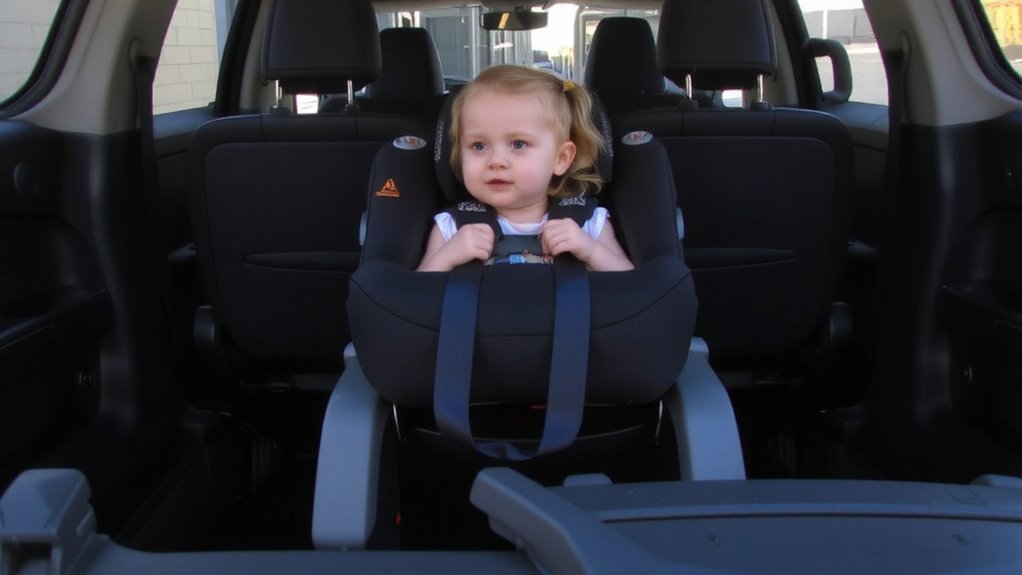
While Oklahoma doesn’t mandate specific height or weight limits for rear-facing car seats, the law requires children under one year old and weighing less than 20 pounds to ride rear-facing, and once your baby hits either milestone, you’re allowed-but not required-by law to switch. Most safety experts recommend keeping kids rear-facing well beyond that, often until at least age two or more. Once they outgrow their convertible seat, you’ll move them to a booster seat, ensuring proper seat belt fit. Always pair this with airbag safety: never put a rear-facing seat in the front if the airbag is active. Testers consistently note that models with easy recline adjustments, high rear-facing weight limits (up to 40+ pounds), and clear leveling indicators make installation and long-term use smoother, safer, and more reliable for Oklahoma families on the go.
Why Rear-Facing Is Safer for Young Kids
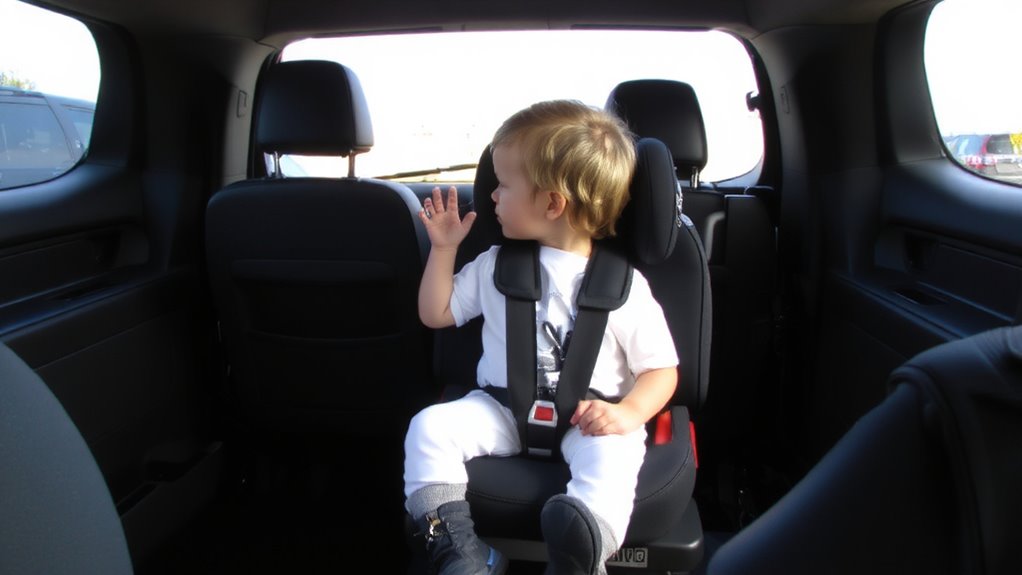
You’re doing the right thing by keeping your little one rear-facing as long as possible, even after Oklahoma’s minimum law lets you turn them forward. Rear-facing seats offer major biomechanical advantages, especially during frontal crashes-the most common and dangerous kind. Your child’s head, neck, and spine are better supported, leading to serious injury reduction. Modern seats, like the Graco Extend2Fit and Britax One4Life, feature extended rear-facing limits up to 50 pounds, with adjustable recline and deep shells for comfort. Real-world testing confirms kids fit better and stay safer when seated rear-facing past age 2.
| Feature | Rear-Facing | Forward-Facing |
|---|---|---|
| Head & Neck Support | Even force distribution | Sudden forward jerk |
| Spine Protection | Full contact with seat | High tension risk |
| Crash Performance | 5x safer, per injury reduction stats | Moderate impact absorption |
| Biomechanical Advantages | Maximized | Limited |
How Long Should Children Stay Rear-Facing?

You’ve got more room to keep your child rear-facing than you might think, and most Oklahoma parents are turning their kids forward too soon. Experts recommend extended use of rear-facing seats until at least age two, or longer if your child fits within the seat’s limits. Proper positioning protects your child’s spine and head during crashes, especially in frontal collisions, which are the most common. Rear-facing seats absorb crash forces better, supporting the head, neck, and torso evenly. Many convertible seats today allow rear-facing up to 40–50 pounds, letting kids stay rear-facing past age three or four. Models like the Graco Extend2Fit and Britax One4Life ClickTight offer roomy compartments and adjustable height limits for extended use. Testers praise ease of installation, padded inserts, and long-term comfort. Staying rear-facing isn’t just about meeting Oklahoma’s minimum law-it’s about giving your child safer, smarter protection through proper positioning and extended use.
Rear-Facing Car Seat Weight and Height Limits
You can keep your child rear-facing longer than you might expect, as most modern convertible car seats support much higher weight and height limits than older models. Always check your seat’s label for exact numbers, but many allow rear-facing use up to 40–50 pounds and 40+ inches tall. Proper installation angle is critical for safety-use the built-in level indicator to guarantee correct positioning. Don’t forget to check car seat expiration; most expire after 6–10 years due to material degradation. Below are common limits and features across top-rated models:
| Brand | Max Rear-Facing Weight | Key Feature |
|---|---|---|
| Graco Extend2Fit | 50 lbs | 10-position recline, easy install |
| Britax One4Life | 40 lbs | ClickTight, no rethread harness |
| Diono Radian | 45 lbs | Steel frame, narrow footprint |
Always match specs to your child’s size and your vehicle.
How to Pick the Right Rear-Facing Car Seat
While safety should always come first, finding the right rear-facing car seat means balancing performance, fit, and ease of use in your specific vehicle. Look for a car seat design that matches your child’s height and weight, with a high rear-facing weight limit-ideally 40+ pounds-and a narrow base under 17 inches for tight rows. Side-impact protection, adjustable headrests, and machine-washable fabrics add long-term value. Test installation techniques in your SUV or sedan: LATCH, tether, and belt paths should secure snugly with less than an inch of movement. Real testers praise models with clear level indicators and no-rethread harnesses for quick adjustments. A well-designed seat installs easily, fits without crowding, and stays comfortable on long trips, so prioritize fit and function over bells and whistles.
Are You Making These Rear-Facing Seat Mistakes?
Could it be that even the most careful parents are getting the installation just a little wrong? You might be making common mistakes without realizing it. Too often, harnesses are too loose-two fingers max at the collarbone, not a whole hand. Many seats wobble more than 1 inch side-to-side at the belt path, risking safety in crashes. Twisted webbing, incorrect tether use, or ignoring weight limits quietly undermine protection. And let’s bust some safety myths: rear-facing isn’t dangerous in front airbag deployments-that’s a myth, not science. Testers consistently find models like the Graco Extend2Fit and Britax One4Life slip less than 0.5 inches when installed with LATCH, thanks to their anti-rebound bars and tight-fit indicators. Real users praise ClearTek labeling for guiding correct recline angles. Double-check your fit every few months, especially after growth spurts or vehicle changes. Stay vigilant-small errors add up fast.
When to Switch From Rear-Facing to Forward-Facing
Rear-facing seats protect developing spines better than forward-facing ones, and guidelines agree kids should stay rear-facing as long as possible-often past their second birthday. You should switch only when your child hits the car seat’s height or weight limit, typically around 35–40 pounds, depending on the model. Always check for proper installation angle; most seats have built-in level indicators to guarantee maximum crash protection. Many parents switch too early, not realizing extended rear-facing strollers like the Nuna Pipa or Chicco NextFit Ultra offer roomy limits up to 40 pounds. Testers praise their easy adjustability and secure LATCH systems. Don’t overlook car seat expiration-most expire after 6–10 years, affecting structural integrity. Always review your seat’s label. Delaying the switch means better safety, so keep rear-facing until you truly max out the seat’s specs. It’s not just rules-it’s real-world peace of mind.
On a final note
Keep your child rear-facing until at least age 2, or until they hit the car seat’s max limit-often 40 pounds or 40 inches. Oklahoma law requires only belt-positioning booster use by age 4, but safety starts earlier. Models like the Graco 4Ever and Britax Premier offer extended rear-facing ranges, easy LATCH setup, and side-impact protection. Real-world tests show snug fits in compact SUVs and sedans, with parents praising padded inserts and simple recline adjustments.