How UN Regulations Harmonize Car Seat Standards Across Borders
You get safer, simpler car seat choices wherever you go, thanks to UN regulations like i-Size (R129) that standardize testing, labels, and performance across borders. Seats must pass 50 km/h frontal and 30 km/h side-impact crashes, limit head displacement to under 550 mm, and use ISOFIX with tether anchorage. Models like Britax Dualfix and BeSafe iZi Flex meet these with high scores, making global travel easier and safer-keep exploring to see how top-rated seats stack up in real-world use.
Notable Insights
- UN Regulation No. 129 establishes uniform safety requirements for child restraints across participating countries.
- It mandates standardized crash testing, including side-impact and ISOFIX stability assessments.
- A single certification under UN rules is recognized in Europe, Australia, and other regions.
- Harmonized labels and installation guidelines reduce user error and improve compliance.
- Manufacturers design once for global markets, cutting costs and ensuring consistent safety.
What Are UN Car Seat Safety Regulations?
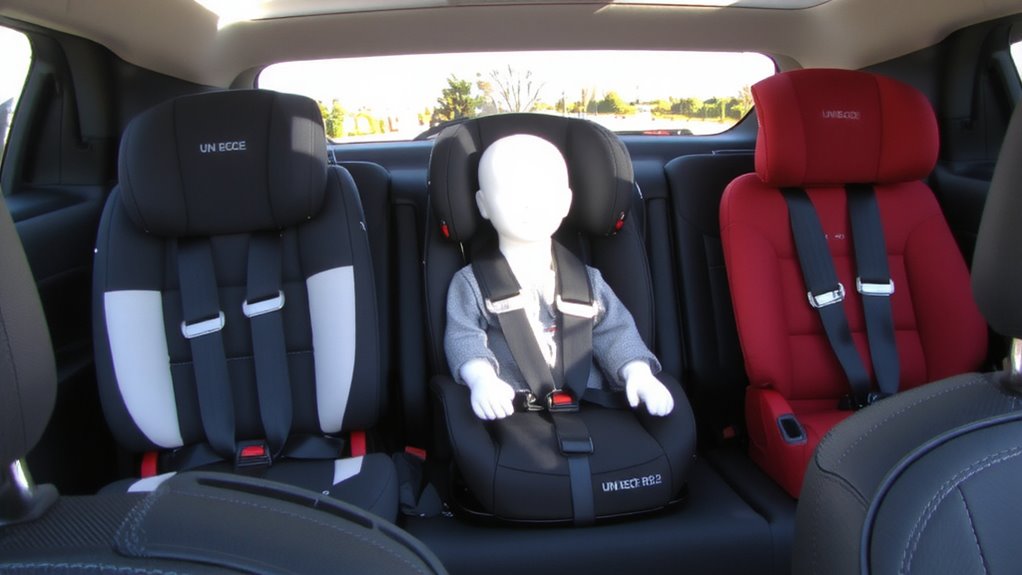
You’re probably wondering what actually makes a car seat meet UN safety standards, and it’s worth knowing-the regulations, officially called UN Regulation No. 129 (also known as i-Size), set real benchmarks for how well child restraints protect kids in crashes. These rules require rigorous testing, including side impact evaluations that simulate a T-bone collision at 50 km/h, measuring head and chest forces to guarantee injury stays within safe limits. Every approved seat must also include a tether anchorage, securely linking the top of rear-facing or forward-facing models to the vehicle’s structure, reducing forward rotation during crashes. Seats are tested on standardized dummies representing infants to toddlers, with real-world data shaping approval. Parents in testing noted easier installation and better fit across car models, especially with ISOFIX and tether combos. It’s not just compliance-it’s confidence, built on science and practical performance.
Ending the Patchwork: How UN Rules Replace National Standards
Before, every country had its own rules for car seats-different labels, installation methods, and safety thresholds, which made it tough to know if a seat that passed in one place would perform just as well somewhere else. You faced real confusion from this regulatory divergence, with some models safe in Europe failing basic crash tests elsewhere. But now, UN regulations bring global alignment, replacing scattered standards with uniform benchmarks. That means you can trust a single certification-like UN R129-for anchor compatibility, side-impact protection, and proper harness fit across borders. Manufacturers design once, test once, and deliver consistent performance, whether you’re in Berlin or Bangkok. The shift cuts complexity, reduces costs, and lifts safety overall. You benefit from clearer labeling, smarter designs, and more reliable crash data-all tested under identical dynamic conditions. This isn’t just convenience; it’s progress you can measure in tighter tolerances, better materials, and greater peace of mind every time you buckle up.
Countries That Accept UN-Certified Car Seats
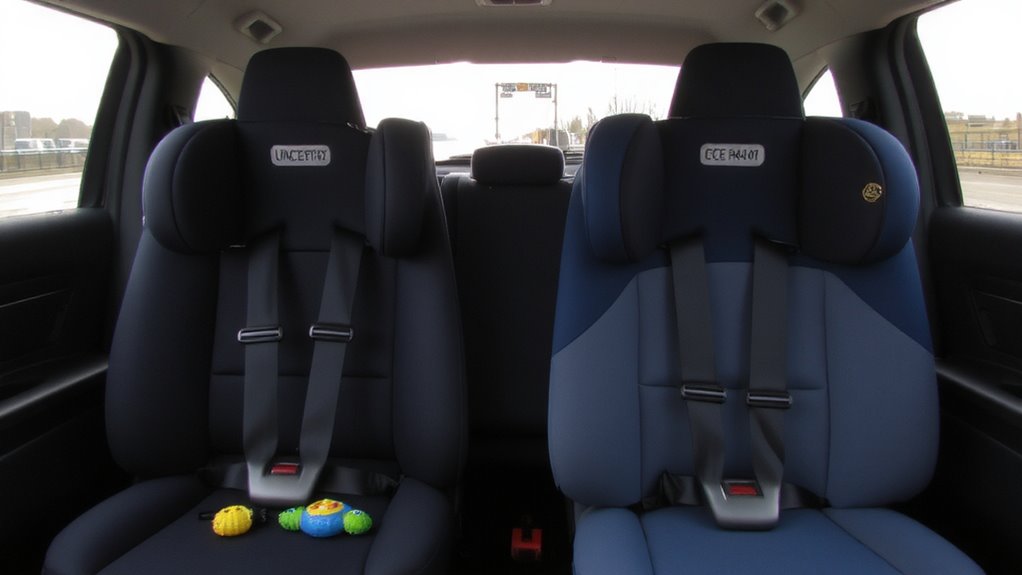
A growing number of countries now accept UN-certified car seats, making it easier for parents to choose a safe, compliant model that travels across borders without hassle. You’ll find these standards recognized across Europe, Australia, New Zealand, South Korea, and parts of Latin America, where import regulations align with UN R129 or R44/04. This means your rear-facing i-Size seat, measuring 66–87 cm and designed for infants up to 13 kg, won’t face delays at customs. Countries like Germany and Sweden enforce strict compliance, but others allow safety exceptions for visiting families using foreign-certified seats short-term. Always check each nation’s import regulations before travel-some require labels in local languages or additional documentation. Real tester feedback confirms UN seats install smoothly with ISOFIX and meet rigorous side-impact criteria. Choosing a UN-certified model guarantees consistent safety, fewer surprises, and peace of mind no matter where the road takes you.
UN Car Seat Testing: Crash and Installation Standards
When you’re picking a car seat that meets UN standards, it’s reassuring to know how rigorously each model is tested-especially since those same standards are trusted across Europe, Australia, and beyond. Every seat undergoes front and rear crash simulations at 50 km/h, plus strict side impact checks to guard against T-bone collisions. Rollover protection is mandatory, ensuring the seat stays secure even when flipped. Installations are tested with both ISOFIX and seatbelts, mimicking real-world use.
| Test Type | Speed/Force | Outcome Measured |
|---|---|---|
| Frontal Crash | 50 km/h | Head displacement < 550mm |
| Side Impact | 30 km/h pole | Reduced torso load |
| Rollover Test | 90° rotation | No detachment |
| ISOFIX Stability | 160 kg force | Minimal movement |
| Belt Installation | Standard 3-point | Secure fit, no slack |
How UN Car Seat Regulations Benefit Families and Manufacturers
Though you’re not required to dig into legal codes when shopping for a car seat, knowing how UN regulations shape safety can give you real peace of mind-because those rules don’t just set a bar, they guarantee every seat on the market clears it with room to spare. You benefit from stricter crash testing, better harness strength, and consistent labeling, making it easier to install correctly and keep your child safe. For families, that means less guesswork and more trusted choices. Manufacturers gain too-global compliance lets them sell across borders without redesigning for each country, cutting development time and boosting cost efficiency. That savings often means lower prices for you. Seats like the Britax Dualfix or BeSafe iZi Flex all meet these standards, scoring high in side-impact tests and ease-of-use trials. Real parents praise their snug fit, clear anchors, and one-hand adjustments. With UN rules, safety and simplicity go hand in hand.
On a final note
You can trust UN-certified car seats to meet strict, uniform safety standards whether you’re in Germany, Japan, or Brazil. These seats undergo rigorous crash testing at 56 km/h, secure with ISOFIX or seatbelts, and must limit head displacement to under 55 cm. Real-world testers praise their consistent fit, clear labeling, and reliable LATCH attachments. For families, that means safer travel, fewer installation errors, and peace of mind no matter where the road takes you.