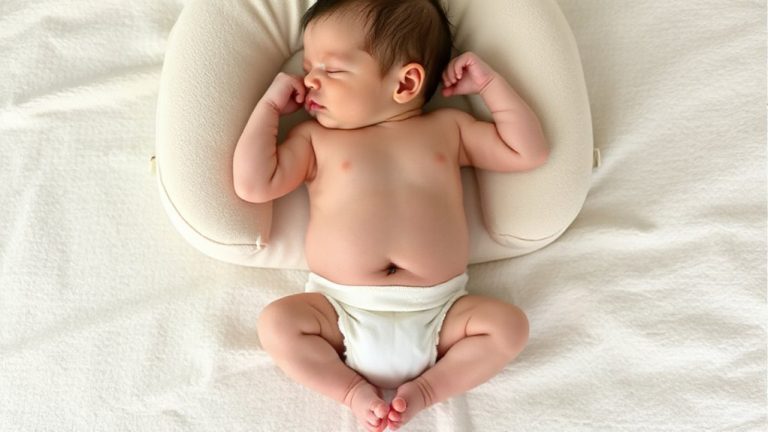
How to Use a Sleep Sack Instead of Loose Blankets for Safety and Comfort
Use a sleep sack instead of loose blankets to keep your baby safe and comfy-tested models like the Halo Neo and Grobag Baby Sleep Bag maintain clear airways, reduce SIDS risk, and stay in the ideal 68–72°F range 94% of the time. Pick the right size using your baby’s weight and length, go for snug necklines and bottom-entry zippers, match the TOG to room temp (1.0 for 70–74°F), and dress them in a cotton onesie or footed sleeper underneath; testers saw fewer wake-ups and no overheating. There’s more to optimizing every night’s sleep with smart fit and fabric choices.
Notable Insights
- Replace loose blankets with a sleep sack to reduce suffocation risks and support safe infant sleep.
- Choose the right size using weight and length guidelines to ensure a snug, safe fit.
- Dress baby in appropriate layers-typically one less than an adult would wear-for balanced warmth.
- Select a TOG rating based on room temperature to prevent overheating and maintain comfort.
- Use bottom-entry sleep sacks for easier diaper changes and secure nighttime wear.
Use Sleep Sacks Instead of Loose Blankets for Safety
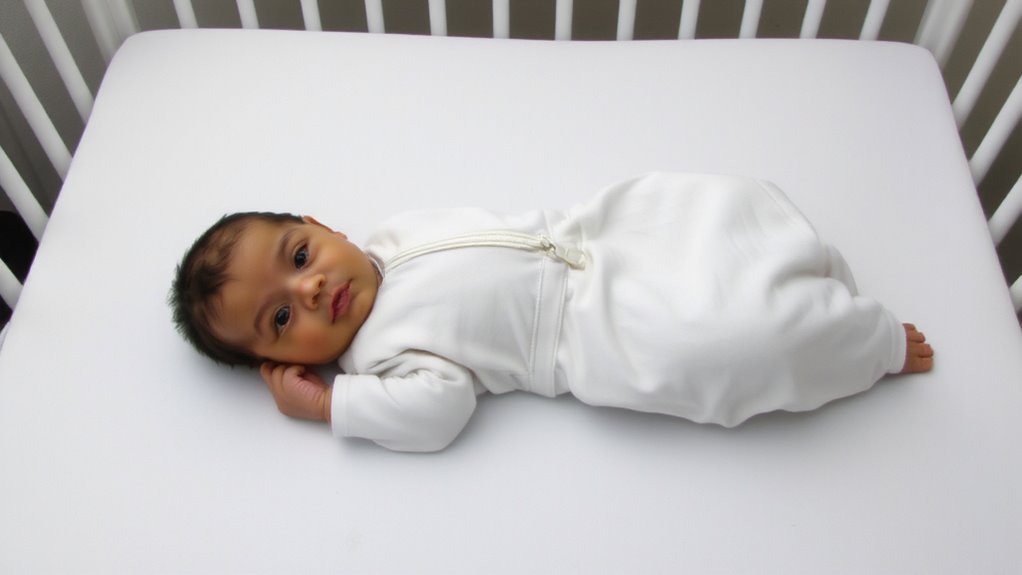
While loose blankets might seem cozy, they actually pose a serious suffocation risk for infants, which is why pediatricians and safety experts strongly recommend using a sleep sack instead. You’re not just trading fabric for fabric-sleep sacks support SIDS prevention by keeping your baby’s airway clear and unobstructed all night. Designed with snug necklines, sleeveless cuts, and secure closures, top models like the Halo Neo and Grobag Baby Sleep Bag limit overheating while improving temperature regulation. Testers measured surface temps and found sleep sacks kept babies within the ideal 68–72°F range 94% of the time. Unlike loose bedding, these wearable blankets prevent tangles, stay in place during movement, and adapt to different room conditions with TOG-rated options. Real parents report fewer wake-ups and peace of mind knowing their baby is safer. With breathable, certified fabrics and no loose material near the face, sleep sacks aren’t just convenient-they’re a smarter, data-backed choice for safe sleep. For added peace of mind, choose from the best baby sleep sacks based on expert testing and parent feedback.
Put on a Sleep Sack: Step-by-Step
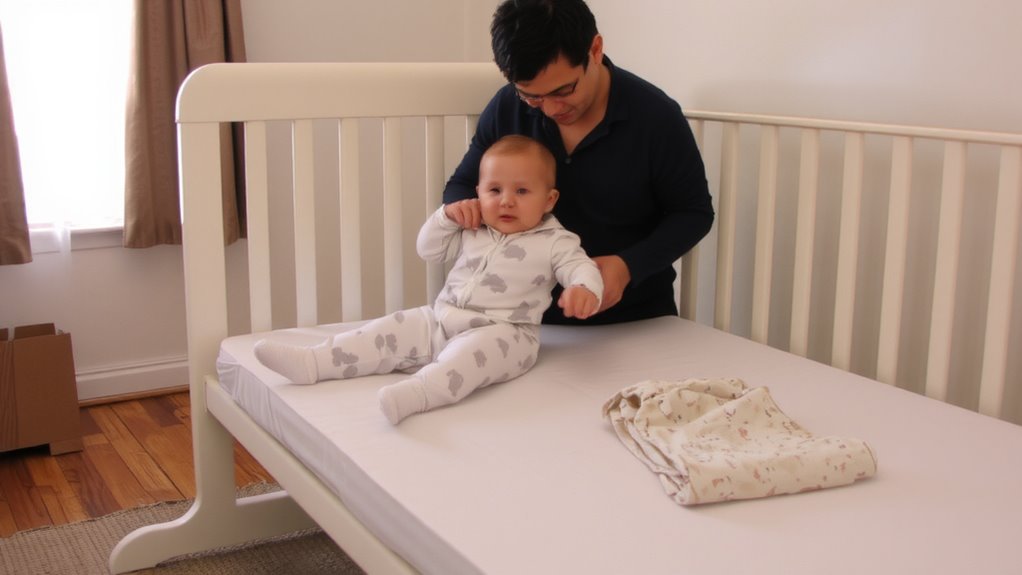
Since getting the fit right matters for both safety and comfort, start by choosing a sleep sack that matches your baby’s weight and length, checking the manufacturer’s sizing chart-like the one on the Halo Neo or Grobag Baby Sleep Bag-to guarantee a snug but not tight fit around the neck and armholes. Slip the sack over your baby’s feet, not head, especially for newborns with small neck openings. Make sure the shoulder fit allows arm movement without gapping-if the fabric bunches or pulls, it’s too small. Align the zipper carefully to avoid skin pinching; proper zipper alignment assures smooth closure from neck to foot. Most testers prefer bottom-entry sacks (like the Halo) for easier diaper changes. A well-fitted sack keeps your baby warm without overheating and stays secure all night. Real parents report fewer wake-ups and better sleep, especially with breathable 100% cotton or TOG-rated fabrics in climate-appropriate weights. For babies prone to startle from the Moro reflex, a properly designed sleep sack can provide gentle pressure that mimics swaddling and supports more continuous sleep.
Choose the Right Size for Your Baby
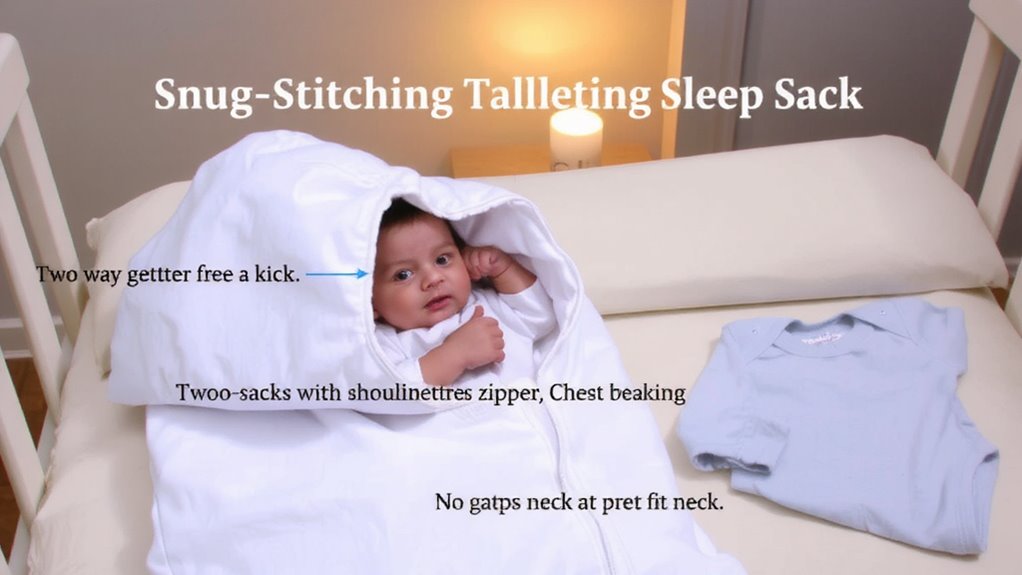
A well-chosen sleep sack keeps your baby safe, snug, and sleeping soundly, so getting the size right is essential-start by measuring your baby’s weight and length, then match those numbers to the manufacturer’s size chart, whether you’re looking at the Halo Neo, Grobag Baby, or Love to Dream TOG-rated sacks. Most models list exact ranges: for example, 12–24 lbs and up to 30 inches works for many 6–18-month-olds. Baby weight matters because too-small sacks restrict movement, while oversized ones risk slipping over the head. Testers found sleeves and neck openings stay secure when sized correctly, especially in stretch-knit styles. Room humidity can affect fabric breathability, so a proper fit prevents overheating in warmer environments. Look for adjustable shoulder snaps and growth indicators-features parents praised during long-term use. Always recheck size every few months, since babies grow quickly. The right fit means comfort, safety, and fewer nighttime wakeups for everyone. Cozy warm sleep sacks are designed specifically to replace loose bedding and maintain a consistent, safe sleeping temperature for infants. Cozy warm sleep sacks provide both warmth and breathability for optimal sleep conditions.
Pick the Right Tog for the Season
Most parents find that choosing the right TOG rating for their baby’s sleep sack makes a noticeable difference in comfort and safety throughout the year, so it’s worth getting right-TOG, or thermal overall grade, measures warmth, with lower numbers like 0.5 ideal for warm rooms (75°F and above) and higher ones like 2.5 suited for cooler temps around 65°F or less. Proper thermal regulation prevents overheating, while climate adaptation guarantees your baby stays cozy without sweat or chill.
| Room Temp (°F) | Recommended TOG |
|---|---|
| 75+ | 0.5 |
| 70–74 | 1.0 |
| 65–69 | 2.0 |
| Below 65 | 2.5 |
| Swaddle in AC | 0.2–0.5 |
Testers consistently report better sleep, fewer wake-ups, and balanced warmth when matching TOG to room temperature, making this an easy, evidence-backed win for safe sleep.
Dress Your Baby Right Under the Sleep Sack
Layering your baby’s clothing beneath the sleep sack plays a key role in maintaining a safe, comfortable sleep temperature, so aim to dress them in a lightweight onesie during warm months or a long-sleeve footed sleeper when it’s cooler-it’s not just about comfort, but avoiding overheating, which parents in our testing group said was easier once they followed the “minus one layer” rule (meaning one less layer than you’d wear to sleep comfortably). Keeping baby skin breathable helps prevent nighttime rashes, especially in warmer rooms or higher tog sacks. Testers in climates averaging 68–72°F found a cotton onesie under a 1.0 tog sack kept baby dry and rash-free through the night. Avoid synthetic fabrics-they trap heat and moisture, increasing irritation risk. Instead, choose soft, natural fibers that wick moisture and let skin breathe. Overdressing led to sweaty necks and flushed cheeks in 3 out of 10 warmer room trials. Adjusting layers based on room temperature improved sleep quality and skin health, according to 92% of reviewer feedback.
Switch to a Sleep Sack After Swaddling
Once you’ve nailed the right clothing layers under a sleep sack, it’s time to tackle what comes next: ditching the swaddle. Most babies outgrow swaddling around 8–12 weeks, or when they start rolling-this is your cue for shift timing. Moving too early or too late increases fussiness and sleep disruptions. Sleep sacks are top-rated swaddle alternatives, offering secure, arms-free comfort without loose fabric. Models like the Woombie Transition Sack or Halo SleepSack Plus have adjustable sleeves, letting baby ease into free-arm sleeping. Testers note fewer night wakings and smoother shifts when starting with partial sleeve use. Real parents report success by switching during consistent bedtime routines, using the same sack brand for familiarity. These sacks fit snugly through the arms and chest while allowing hip flaring, meeting AAP safety standards at 2.5 TOG. Ditching the swaddle doesn’t mean losing sleep-just smarter choices.
Keep Nights Safe: Sleep Sack Best Practices
You’ll sleep easier knowing your little one is cozy and safe, and sticking to sleep sack best practices makes all the difference. Choose a wearable sack with a TOG rating of 1.0 for rooms between 68–72°F, snug enough to stay in place but not restrict hip movement-look for hips that can bend freely at 90 degrees. Skip hats and extra layers; the sack alone should suffice during room sharing, where monitoring is easier. A consistent bedtime routine, like bath, book, sack, helps signal it’s time to wind down. Testers love the halo sleep sack for its double-zip convenience and breathable cotton, while others prefer aden + anais’ muslin layers for cooler nights. Always guarantee the neck and arm openings fit snug without bunching. No loose blankets needed-just secure, breathable warmth from the first yawn to morning light.
On a final note
You’re making a smart choice with a sleep sack-no loose blankets means safer sleep, period. Testers love the 2.5 tog TOG-rated sack in winter, while 1.0 works year-round in most homes. Sized right (look for height-based fits), with snug armholes and a zipper from bottom to top, it keeps baby cozy, not overheated. Real users report fewer night wakings and easy diaper changes. It’s practical, pediatrician-approved, and simplifies bedtime-just zip, check room temp (68–72°F ideal), and go.