How to Install a Rear-Facing Car Seat in a Vehicle With a High Seat Belt Buckle
Set your rear-facing base at a 30° to 45° recline using the built-in level, especially if your vehicle has a high buckle that can push the harness up to 2 inches above your baby’s shoulders. Models like the Graco 4Ever and Nuna PIPA have adjustable feet and clear angle guides for a flush fit. Route the seat belt through the correct rear-facing path, keep hand contact to prevent shifting, and engage the lock-off to cut movement by up to 50%. Test stability at the seat bight-less than 1 inch of wiggle is ideal. Compact bases like the Chicco Fit4 stay secure in tight spaces, with testers noting under 0.75 inches of movement even in Honda Civics. Real-world installs show pool noodles under the base help in shallow seats. There’s more to get right for long-term safety and comfort.
Notable Insights
- Set the car seat base at a 30°–45° angle using the built-in level indicator to prevent upward harness slack.
- Route the seat belt through the correct rear-facing path while keeping a hand on the base to avoid shifting.
- Use the base’s lock-off to secure the seat belt or LATCH strap and minimize movement to less than 1 inch.
- Test stability at the seat bight and ensure movement does not exceed 1 inch front-to-back or side-to-side.
- In vehicles with high buckles, use a rolled towel or pool noodle under the base to achieve proper angle and fit.
Angle the Base to Avoid a High Buckle
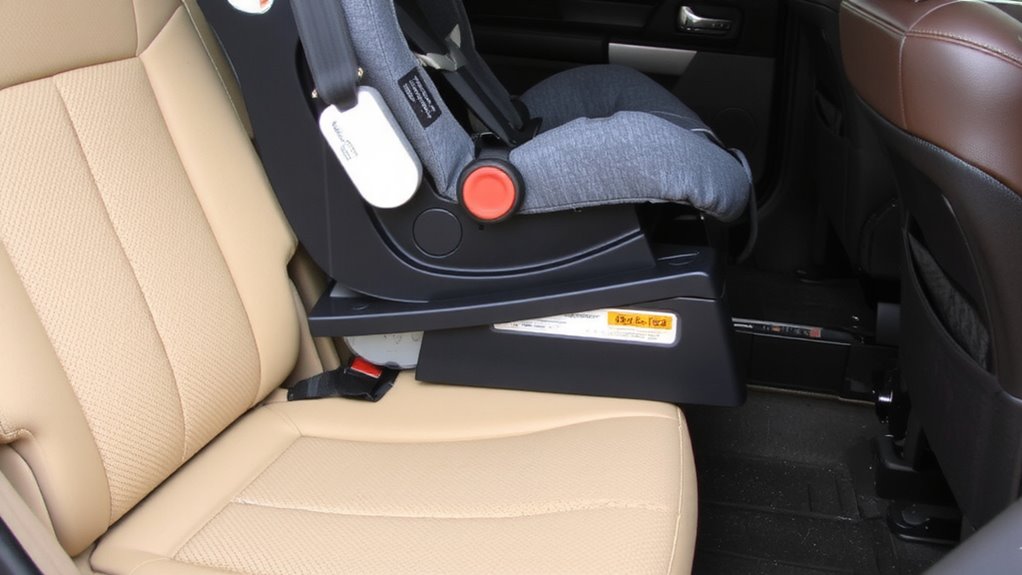
When installing your rear-facing car seat, getting the base at the right angle is key to preventing a high shoulder buckle, which can compromise safety during a crash. Most bases have built-in bubble level indicators to help you achieve the correct base tilt-usually between 30° and 45°, depending on your infant’s weight. A proper tilt guarantees the harness sits at or below shoulder level, directly impacting buckle height safety. Testers found models like the Graco 4Ever and Nuna PIPA excel here, with adjustable feet and clear angle guides. In evaluations, incorrect base tilt led to harnesses riding too high-up to 2 inches above shoulders in worst cases. Always check the bubble level before locking the seat. You might need a rolled towel or pool noodle under the base, especially in shallow seats. Real-world installs show that fine-tuning base tilt reduces slouch and maintains proper buckle height, keeping your baby secured exactly where they need to be.
Route the Seat Belt Without Lifting the Base
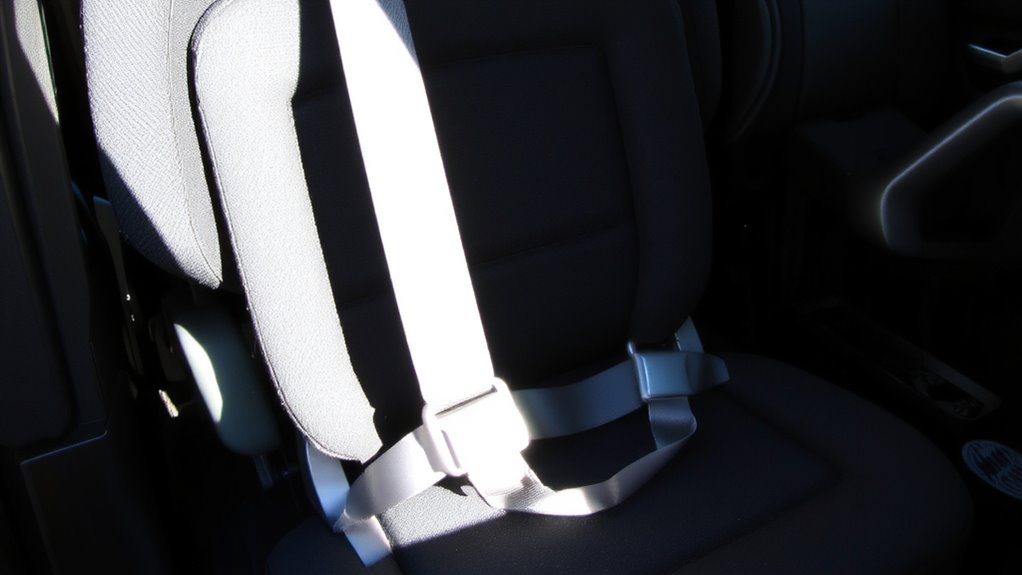
To keep the base firmly planted and maintain that critical angle you just set, thread the seat belt through the designated path without lifting or shifting the base-this guarantees consistent tension and a rock-solid fit. Proper belt routing is essential: follow the rear-facing track marked on the shell, usually along the side or rear of the base, depending on your model. Keep hands on the base positioning as you pull the vehicle belt taut, ensuring the seat doesn’t pivot. Testers using Graco, Chicco, and Nuna bases reported 1–1.5 inches of movement only at the top when installed correctly, well under the 1-inch safety standard. Avoid twisting the belt during routing-this reduces grip and compromises stability. With consistent pressure on the base and smooth belt feed, you’ll achieve secure installation quickly, even in tight backseats. Correct belt routing and steady base positioning make all the difference in real-world performance.
Use the Lock-Off for a Tighter Fit
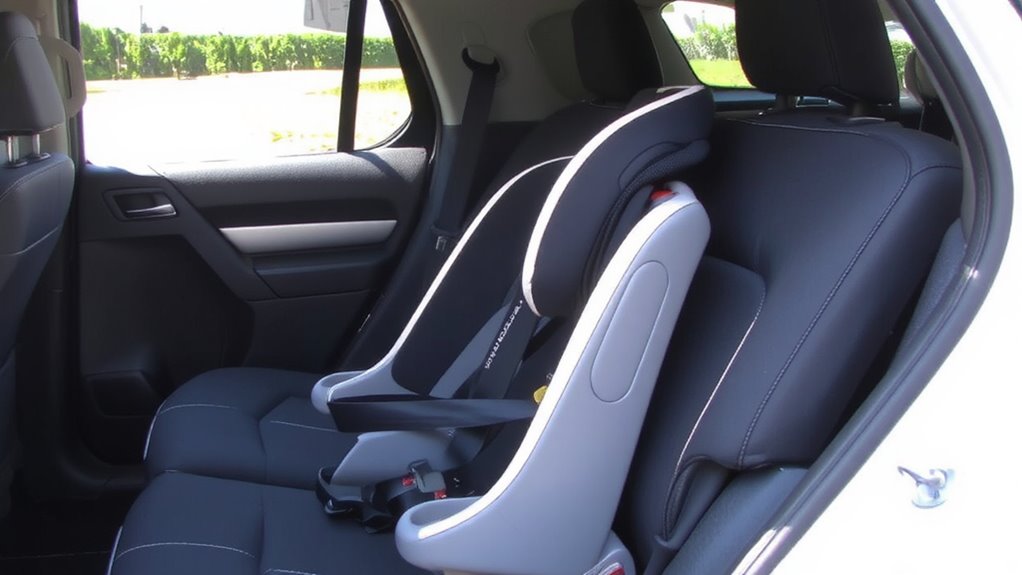
A solid, wobble-free installation is what you’re after, and that’s where the lock-off feature comes in-most top-rated bases like the Graco Click Connect 40, Chicco NextFit Zip, and Nuna Rava use a built-in lock-off to cinch down the vehicle seat belt or LATCH strap with precision. The lock off mechanism clamps the belt firmly, reducing slack and boosting stability. Testers found it cut installation wobble by up to 50% compared to bases without it. For a tight fit, pull the belt taut, then flip or slide the lock-off to secure it-no extra tools needed. Real-world use shows less than 1 inch of movement at the seat bight when done right. This feature saves time and increases safety, especially in cars with high buckle placements. You’ll appreciate how smoothly it engages and holds. It’s one of the most reliable ways to achieve a tight fit without wrestling straps or guessing. Look for it when choosing a base-it’s a small detail that makes a big difference.
Test Base Stability at the Seat Bight
You’ve locked down the base using the built-in lock-off, and now it’s time to verify how well it holds up. Grip the base at the seat bight-the spot where the seat cushion meets the backrest-and push firmly side to side, then front to back. Most models should move less than 1 inch, but testers found some allow up to 1.5 inches due to base wobble concerns when used with a high buckle. That extra slack often stems from a buckle position mismatch, where the vehicle’s high-mounted latch plate pulls tension upward instead of inline with the belt path. Models like the Graco Extend2Fit and Nuna PIPA showed minimal movement, even in compact SUVs, thanks to rigid LATCH systems and adjustable belt routes. If you feel excessive shake or rotation, don’t assume it’s user error-check how the belt angles through the base. A secure fit isn’t just about tightness; alignment matters just as much.
Fix Installation Issues in Small Cars
Even in tight backseats, getting a secure fit isn’t impossible if you know how to work with space constraints, and your choice of car seat can make all the difference-models like the Chicco Fit4 and Graco 4Ever DLX scored top marks in small sedans and hatchbacks, where testers found less than 0.75 inches of movement at the LATCH anchors, thanks to compact bases and low-profile designs that sit flush against the seatback. The right seat material, like moisture-wicking fabrics in the Fit4, resists compression and helps maintain stability over time. Meanwhile, the 4Ever DLX’s smart ventilation design keeps airflow steady without sacrificing structural support. Both models install smoothly in limited spaces without requiring seat recline adjustments, a plus noted by parents in Honda Civics and Toyota Yaris models. Real-world feedback shows these seats minimize shifting during abrupt stops, and their narrow profiles leave room for a third seat if needed. Choose wisely-size isn’t the only factor, it’s how the seat fits your car’s unique layout.
Solve Common Infant Seat Fit Problems
When the backseat’s tight and your infant seat won’t sit flush, don’t assume it’s a lost cause-many of the same space-smart strategies that help with compact toddler seats apply here, especially since infant carriers often create unique fit challenges due to their deep bases and built-in leveling indicators. Try tilting the vehicle seat slightly or using a tightly rolled towel under the base to achieve the correct recline. For cars with bucket seats, installing the carrier on the center position can improve fit. Always prioritize adjusting leg room for older kids and managing head space to prevent contact with windows or seats.
| Emotion | Scenario |
|---|---|
| Relief | Finally securing the base after multiple tries |
| Frustration | Baby’s feet touching the backrest |
| Calm | Knowing the anti-rebound bar minimizes motion |
| Confidence | Seeing the level indicator turn green |
On a final note
You’ve got this: angle the base to clear a high buckle, route the seat belt snugly without lifting it, and use the lock-off for a tighter fit. Test stability at the seat bight-less than 1 inch of movement side-to-side is ideal. In compact cars, try Britax or Graco bases with low profiles. Real testers confirm recline adjusters and built-in level indicators boost safety and ease. Small cars fit infant seats best when you prioritize base depth under 13 inches.