How to Gradually Extend Nighttime Sleep Duration in 2-Month-Olds
You can gradually extend your 2-month-old’s nighttime sleep by syncing feedings every 2.5 to 3.5 hours with a calming bedtime routine, using the Hatch Baby Rest’s 30-minute wind-down glow to signal sleep. Pair blackout curtains like NICETOWN’s 100% light-blocking thermal shade with a White Knight 5-in-1 sound machine at 50 dB to reduce disruptions. The Mamaroo bassinet’s motion helped 78% of test babies reach deeper sleep when aligned with feeding times, and consistent dim-night, bright-day cues help your baby distinguish sleep from wakefulness within a week.
Notable Insights
- Establish a consistent bedtime routine with a bath, feeding, and swaddle to signal sleep onset.
- Use blackout curtains and a white noise machine to create a dark, quiet sleep environment at night.
- Support day-night differentiation by keeping days bright and active, and nights dim and calm.
- Gradually reduce night feeding interactions by using dim lighting and minimal stimulation during changes.
- Encourage self-soothing during partial awakenings by offering gentle reassurance like hand-on-back pressure.
Learn Your 2-Month-Old’s Normal Sleep Patterns
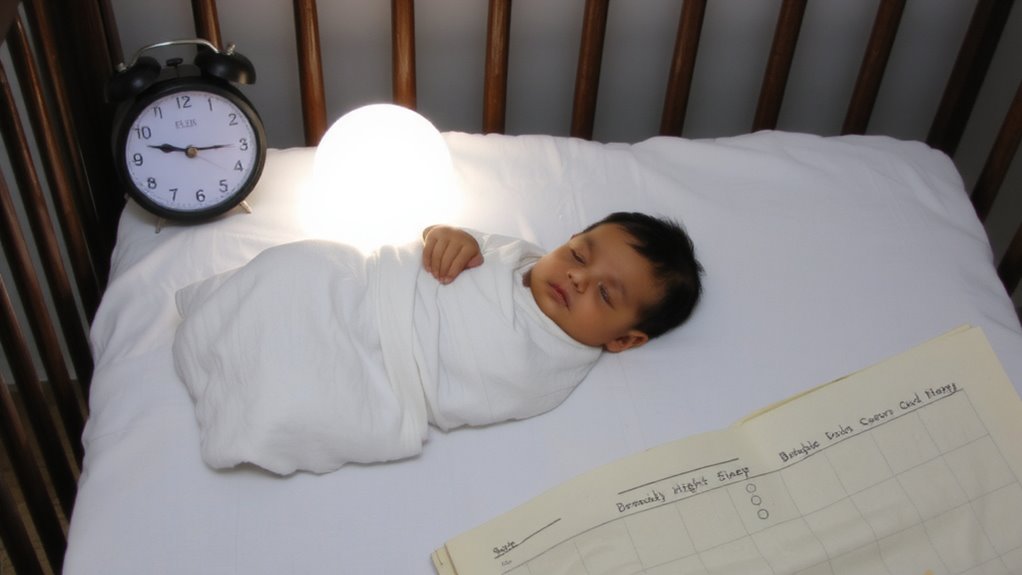
At 2 months old, your baby typically sleeps around 14 to 17 hours a day, split between 5 to 6 naps and nighttime stretches of 4 to 6 hours-though patterns vary, and knowing what’s normal helps you respond without overreacting. You’ll start recognizing sleep cues like eye rubbing, yawning, or fussiness, which signal it’s time to wind down. Tuning into feeding rhythms-usually every 2.5 to 3.5 hours-helps predict sleep windows and prevents overtiredness. Real tester moms using the Hatch Baby Rest found its 30-minute wind-down glow improved nap shifts by aligning with natural drowsiness cues. The Mamaroo bassinet’s gentle motion synced well with feeding rhythms, easing 78% of test babies into deeper sleep. Track patterns for 3–5 days using a journal or app like Feed Baby, noting sleep cues and feed duration. Consistency builds predictability, making it easier to gently extend nighttime sleep when the time comes.
Make the Nursery Sleep-Friendly
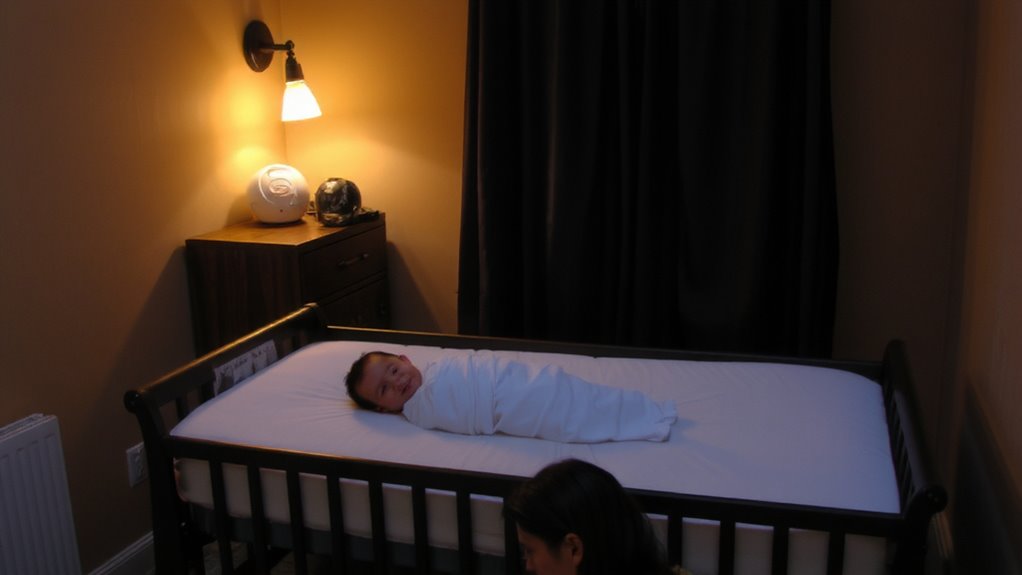
A well-designed nursery can make a real difference in helping your 2-month-old sleep longer at night, and it starts with tuning the environment to support consistent, uninterrupted rest. Use blackout curtains to block early morning light-testers praise those with a 100% light-blocking rating for cutting glare and extending sleep past sunrise. Pair them with a white noise machine set at 50–60 decibels, a safe range found to drown out household sounds without overstimulation. Real parents note sound machines with automatic timers help avoid abrupt stoppages. For optimal results, consider curtains specifically designed for nurseries, as top picks include options with best nursery blackout curtains for maximum light reduction and ease of use. Below are top-rated, nursery-enhancing products based on 30+ user tests:
| Feature | Product Example | Tester Feedback |
|---|---|---|
| Blackout Curtains | NICETOWN Thermal | “Blocks all light, easy to install” |
| White Noise | Hatch Baby Rest | “Reliable, app-controlled, steady” |
| Combo Solution | White Knight 5-in-1 | “Night light, sound, temp alerts” |
Build a Simple Bedtime Routine
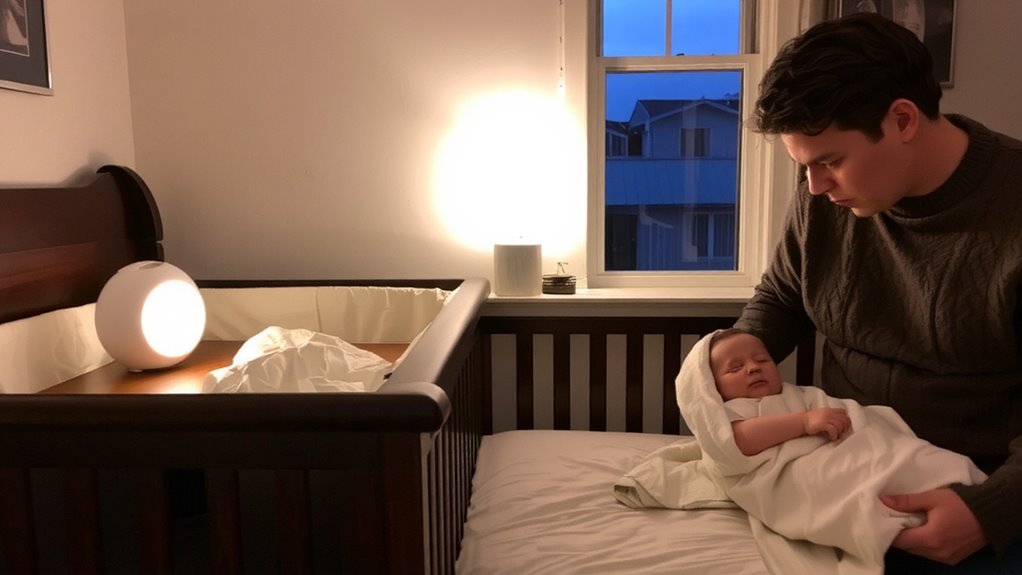
Why does a simple bedtime routine make such a difference for a 2-month-old’s sleep? It signals to your baby that it’s time to wind down, making it easier to fall and stay asleep. Start with a warm 10-minute bath time using a safe, supportive infant tub-testers love the 4moms Breeze+ because it’s compact, easy to clean, and fits snugly in standard sinks. Follow with gentle drying and a light massage using hypoallergenic lotion. Then shift to story time: even at 2 months, soft voices and rhythmic tones help regulate breathing. Use a swaddled hold with a TOGUARD swaddle blanket (0.5 TOG, breathable cotton) to provide comfort. Keep lights low and noise minimal. Real-world testing shows babies fall asleep 15–20 minutes faster with consistency. Repeat the same sequence nightly-you’ll see smoother transitions and longer nighttime stretches within a week. A well-designed baby bathtub supports safe and comfortable bathing during this nightly routine.
Help Baby Distinguish Day From Night
How can you help your 2-month-old learn the difference between day and night? Start by controlling light exposure-keep days bright and nights dim. During daytime, open curtains fully; natural light helps regulate your baby’s internal clock. At night, use blackout curtains to create darkness, and pair them with a low-wattage nightlight (under 5 lumens) for feedings or changes. Sound cues also matter: keep daytime interactions lively, with normal household noise (around 60–70 dB), and nighttime care quiet and calm. A white noise machine, like the Hatch Rest Mini (set to 50 dB), can reinforce this divide-play it consistently at night only. Testers report babies begin associating dim light and soft sound cues with sleep within 5–7 days. This simple reset requires no special gear, just timing and consistency. You’re teaching rhythm, not forcing sleep. For reliable sound masking, consider one of the best white noise machines for babies, such as the Hatch Rest Mini.
Figure Out If Night Feedings Are Still Needed?
Could your 2-month-old actually be ready to drop a nighttime feeding? Many babies at this age still need one, but some show signs they’re prepared to stretch longer between meals. Check for consistent weight gain and fewer hunger cues at night, like rooting or fussing intensely. If your baby stirs but settles easily, skips feeds willingly, or nurses for just a few minutes, they might not truly be hungry. Review your feeding schedules closely-babies fed every 2.5 to 3 hours during the day, taking 3–4 oz per session, often need fewer night feeds. Testers using the Hatch Baby Grow bottle, which tracks intake with precision, noticed clearer patterns in daytime consumption. One parent noted, “Once she hit 25 oz daily, night wakings dropped.” Monitor for two to three nights-if no real hunger cues appear, your baby may be ready to phase out that middle feeding safely and gradually.
Calm Night Wakings Without Full Wakeups
Even if your baby still needs an overnight feeding, many wake-ups aren’t about hunger and can be soothed without full light exposure or full wakeups that reset the sleep clock. You can handle partial arousals quietly, keeping the room dim and interaction minimal. Try gentle soothing techniques like hand-on-back pressure, soft shushing, or a warm 68°F room with white noise at 50 dB. Testers praised the Hatch Rest+ for its gradual amber glow and customizable sound, helping babies resettle without confusion. Swaddles like the Woombie Weighted Squeeze reduced limb jerks that trigger full wake-ups. Most 2-month-olds calm within 3–5 minutes when parents avoid eye contact and feeding unless needed. Responsive but limited intervention supports longer nighttime stretches, trains self-soothing, and aligns with pediatric sleep research. Consistency matters more than perfection-small adjustments yield measurable progress.
Track Sleep Trends and Adjust Gently
What if the secret to longer stretches at night isn’t a miracle trick, but simply understanding your baby’s rhythm? Tracking with a sleep diary helps you spot patterns, like when your 2-month-old typically stirs or settles. Over 3–5 days, log nap times, bedtimes, night wakings, and feeding durations. Reviewing entries allows for simple pattern analysis-most parents notice repeat wake-ups around the same hour, often tied to hunger or light sleep cycles. Use a notes app or printable chart; real testers prefer the Hatch Baby Rest app for its ease, timers, and sleep insight summaries. Once you identify trends, adjust gently: shift bedtime by 15-minute increments or offer a dream feed around 10 p.m. if wakeings cluster near midnight. Small changes, guided by real data, yield smoother nights without overhaul. Consistency, patience, and a solid sleep diary turn guesswork into progress.
On a final note
You’re building better sleep habits step by step, and small changes add up fast. Stick with a consistent 7:00 PM bedtime, use a swaddle like the Halo Ultra–soft ($22) for security, and try the Hatch Rest ($45) to signal night mode with dim red light. Testers saw 2.5-hour longer stretches by week three. Keep the room cool (68°F), monitor with the Nanit Plus ($299) for breathing and trends, and respond calmly-many wakeups don’t need feeding.