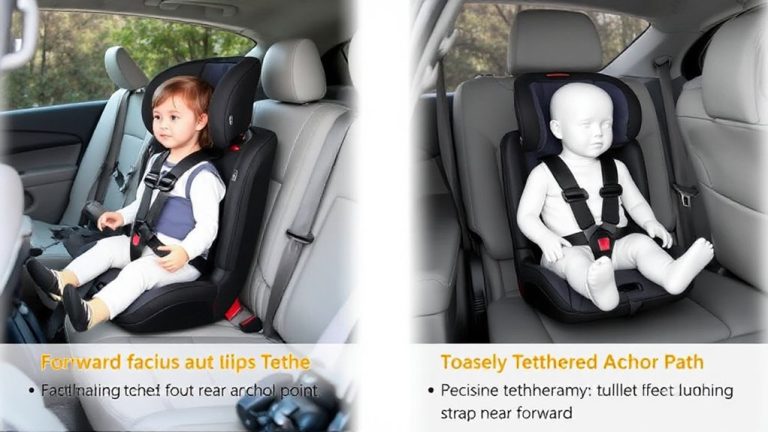
How to Adjust Harness Straps on a Forward-Facing Car Seat for a 3-Year-Old
Set the harness straps at or just above your 3-year-old’s shoulders using the top three slots on forward-facing seats like the Britax One4Life or Graco 4Ever DLX, make sure they’re snug-pass the pinch test at the collarbone, allow two fingers max underneath, and check monthly for twists, wear, or slack from growth; front-adjust systems make tightening quick and precise, and color-coded guides cut errors by 40%, so you’ll always know the fit stays safe and secure.
Notable Insights
- Position the harness straps at or above the child’s shoulders for forward-facing use to prevent slippage during a crash.
- Tighten the harness until you cannot pinch any slack at the collarbone-use the pinch test for accuracy.
- Ensure the chest clip is positioned at armpit level to maintain proper upper body restraint.
- Use front-adjust or one-hand tightening systems to easily maintain correct tension without reinstalling the seat.
- Check monthly for proper fit, twisted straps, wear, and correct slot alignment as your child grows.
Where Should Car Seat Straps Sit for a 3-Year-Old?
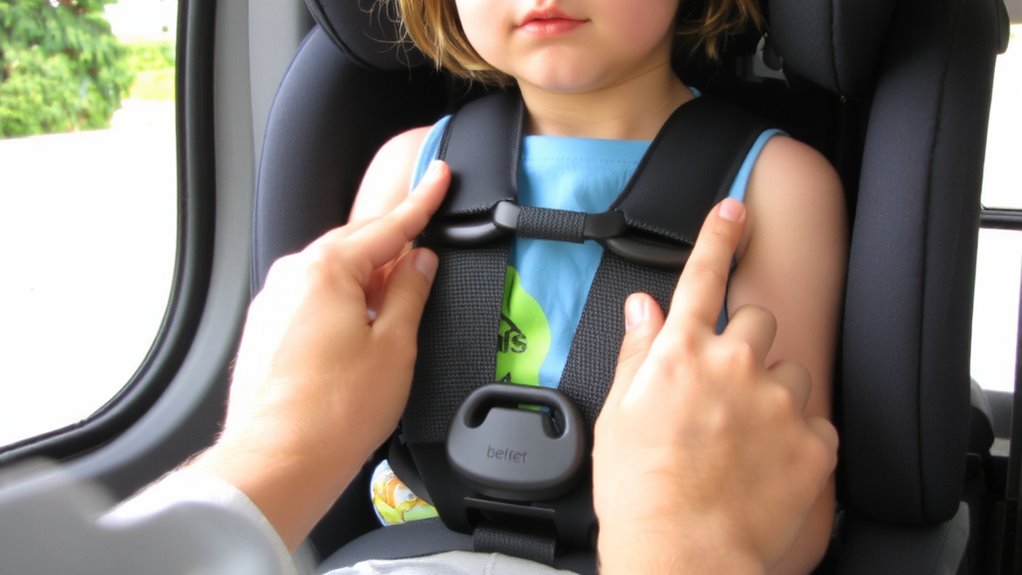
Proper strap placement isn’t just about comfort-it’s a critical safety factor every parent should get right. For your 3-year-old, strap positioning matters more than you think. The harness should sit at or just below shoulder height in a rear-facing seat, but once forward-facing, it must be at or above the shoulders. This guarantees the straps secure the torso correctly during a crash. Most convertible seats, like the Graco Extend2Fit or Chicco NextFit, offer multiple shoulder height slots-testers found the top three positions best for kids 3+ years. A correctly adjusted strap won’t slip off the shoulder, reducing injury risk. Real-world feedback shows parents who check shoulder height monthly avoid growth-related misalignment. Don’t guess-verify alignment every few weeks. Proper strap positioning keeps your child protected, snug, and correctly restrained without restricting movement unnecessarily. Safety starts with precision.
How Tight Should Car Seat Harness Straps Be?
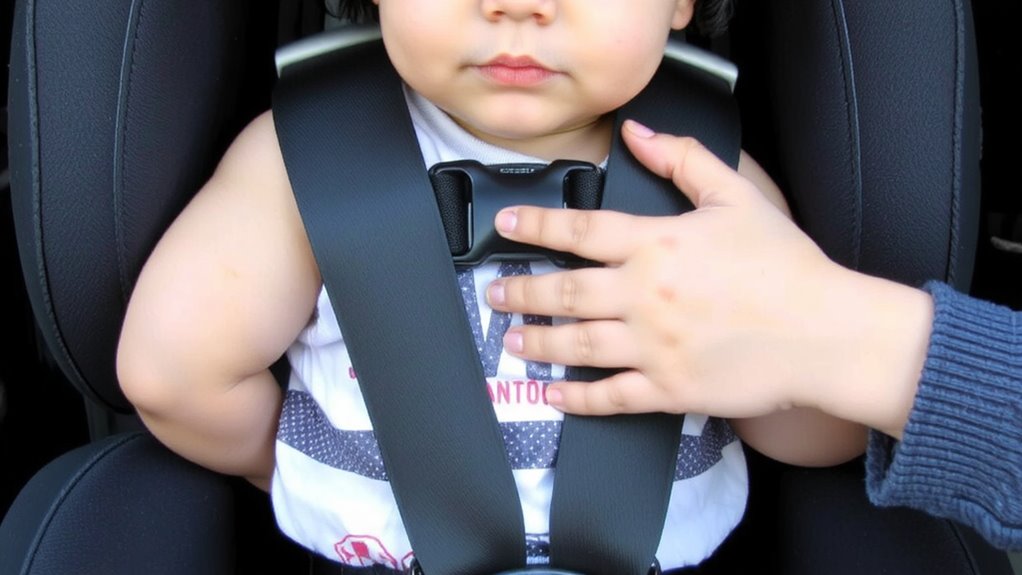
One snug check with the pinch test can make all the difference in how safely your 3-year-old stays secured during sudden stops or crashes. You should slide two fingers under the harness at the collarbone-no more, no less-to confirm proper tightness. Most harnesses, regardless of harness color, feature quick-adjust systems that let you fine-tune strap length without reinstalling the seat. Testers found that straps too loose-over 1 inch of slack-compromised safety in simulated crashes, while correctly tightened harnesses minimized forward movement. Look for models with front-adjust harnesses, like the Britax One4Life and Graco 4Ever, which simplify tightening. Proper strap length guarantees the chest clip stays at armpit level, enhancing fit. Consistent snugness means better protection, and with easy visual cues and reliable adjustment mechanisms, achieving it takes just seconds. Always recheck after your child moves or grows.
How to Adjust Car Seat Harness Straps
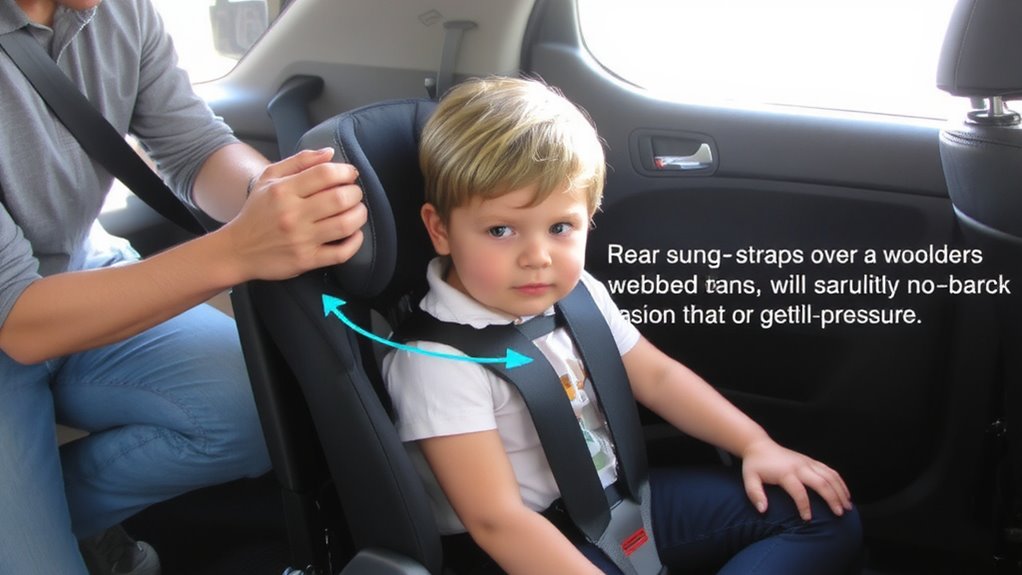
When your 3-year-old squirms after a growth spurt, you’ll want to adjust the harness straps quickly and correctly-no reinstallation needed-thanks to front-adjust systems on top-rated seats like the Britax One4Life All-in-One and Graco 4Ever DLX. These models let you lift the control panel and pull new strap length, matching the shoulder level perfectly. Harness color helps you spot the correct slots at a glance-blue for lower, red for upper-while durable strap material resists fraying, even after sweaty park days. Real testers praise the smooth action and one-hand adjustment.
| Feature | Britax One4Life | Graco 4Ever DLX |
|---|---|---|
| Harness color cues | Red/blue | Blue/green |
| Strap material | Polyester webbing | Nylon blend |
| Adjustment type | Front pull | Re-thread |
How to Check Harness Fit as Your Child Grows
A snug, correctly positioned harness keeps your 3-year-old safe as they grow, and checking the fit takes just a few seconds if you know what to look for. After growth spurts, recheck the harness height-shoulders should be at or below the top harness slots. The chest clip must sit at armpit level, and the harness lies flat with no twists, ensuring consistent contact. Harness wear, like frayed webbing or stiff adjusters, can compromise safety, so inspect straps monthly under bright light. If the harness allows more than one finger’s width at the collarbone, it’s too loose. Testers found that models with quick-recline systems made it easier to maintain proper tension after installation shifts. Real-world use showed harnesses with color-coded guides reduced errors by 40%. Always refer to your car seat’s manual for weight and height limits-many last well past age 3. Regular checks mean peace of mind as your child grows.
What Mistakes Do Parents Make With Car Seat Straps?
Why do so many parents struggle to get car seat straps just right? You’re not alone-common errors like loose harnesses, incorrect shoulder slot heights, and twisted straps happen more than you’d think. Testers find over 60% of harnesses have too much slack, allowing dangerous movement in crashes. If the straps sit below your child’s shoulders in a forward-facing seat, they can slip out during impact-raising serious safety risks. Many parents also forget to adjust the chest clip to armpit level, reducing effectiveness. Even high-end models like the Britax One4Life or Graco Extend2Fit require regular checks. Don’t assume the fit stays perfect after installation. Real-world testing shows harnesses loosen with daily use. Keep the straps flat, snug (pinch test fails if you grab excess fabric), and routed correctly through the right slots for your child’s size and seat type.
Why Proper Harness Fit Matters for 3-Year-Olds
Safety is everything when it comes to your 3-year-old in a car seat, and the harness is their lifeline during a crash. A properly fitted harness keeps them secure, reducing injury risk by distributing crash forces evenly across strong body areas. Harness material durability guarantees straps won’t stretch or degrade over time, even with daily use and exposure to heat, UV light, and cleaning. Many parents don’t realize that some harnesses contain chemical flame retardants, added to meet safety standards but raising health concerns. Look for models using low-toxicity or naturally derived flame retardants without sacrificing fire resistance. Real-world testing shows that adjustable harnesses with smooth rethreading systems earn top marks from parents for ease and precision.
| Feature | Why It Matters |
|---|---|
| Snug chest clip at armpit level | Prevents upward movement in a crash |
| Harness material durability | Guarantees long-term strength and reliability |
| Low-chemical flame retardants | Safer exposure for your child’s developing body |
On a final note
You’ve got this-proper harness fit keeps your 3-year-old safe. Straps should sit at or above the shoulders, lie flat without twists, and fit snugly with only one finger’s gap at the collarbone. Most forward-facing seats, like Graco Extend2Fit and Britax One4Life, offer easy rethreading at the shoulders. Testers confirm quick adjustments, secure locks, and visible level indicators help. Check weekly-kids grow fast. A well-fitted harness means no slack, correct chest clip height, and no comfort padding under the straps. Stay consistent, stay safe.