How Australia’s ACCC Protects Consumers From Hazardous Seats
The ACCC keeps your child safe by enforcing strict AS/NZS 1754 standards, blocking unsafe imports, and testing seats at 50 km/h to measure harness strength, head movement, and shell integrity. They recall hazardous models-like Baby Care’s due to expired materials-and demand redesigns that boost harness tension to 3.8 kN and cut head excursion to 42 cm. Spot risks like cracked shells or loose harnesses, and know which batches are flagged. There’s more to watch for when choosing the safest fit.
Notable Insights
- The ACCC enforces compliance with AS/NZS 1754 standards to ensure child restraints meet strict safety requirements.
- It conducts crash testing at 50 km/h to evaluate head movement, harness performance, and structural integrity.
- The ACCC blocks counterfeit and substandard car seats at the border through rigorous import compliance checks.
- Failed safety tests trigger recalls, public warnings, and mandatory redesigns to protect consumers from hazards.
- The ACCC monitors for red flags like cracked shells and loose harnesses, issuing recalls for compromised models.
What Does the ACCC Do for Car Seat Safety?
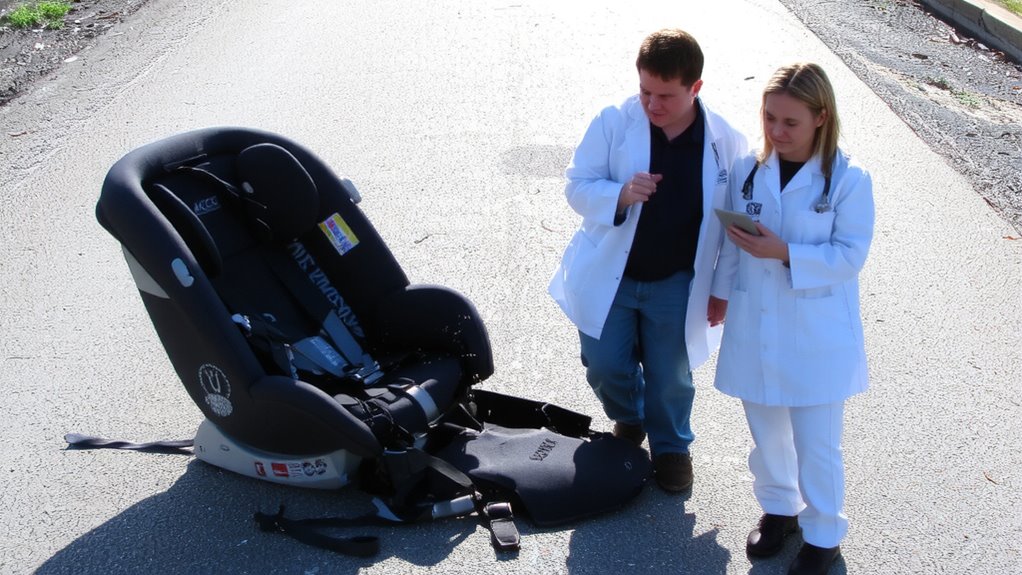
When it comes to your child’s safety in the car, the ACCC doesn’t cut corners-they run rigorous checks on child restraints to make sure every harness, buckle, and anchor point meets strict Australian standards. You can trust that every approved model has passed Car seat certification, ensuring correct installation, secure fit, and crash-readiness. The ACCC also enforces import compliance, blocking substandard or counterfeit seats at the border-no sketchy knockoffs slipping through. They work with retailers and suppliers to verify labels, materials, and manufacturing specs match AS/NZS 1754 requirements. Real-world testing includes checking harness strength, energy absorption, and compatibility with ISOFIX and top tether anchors. Testers note ease of adjustment, padding comfort, and clarity of instructions. Look for the compliant label-your assurance. This isn’t just paperwork; it’s peace of mind every time you drive.
How Are Car Seats Tested in Australia?
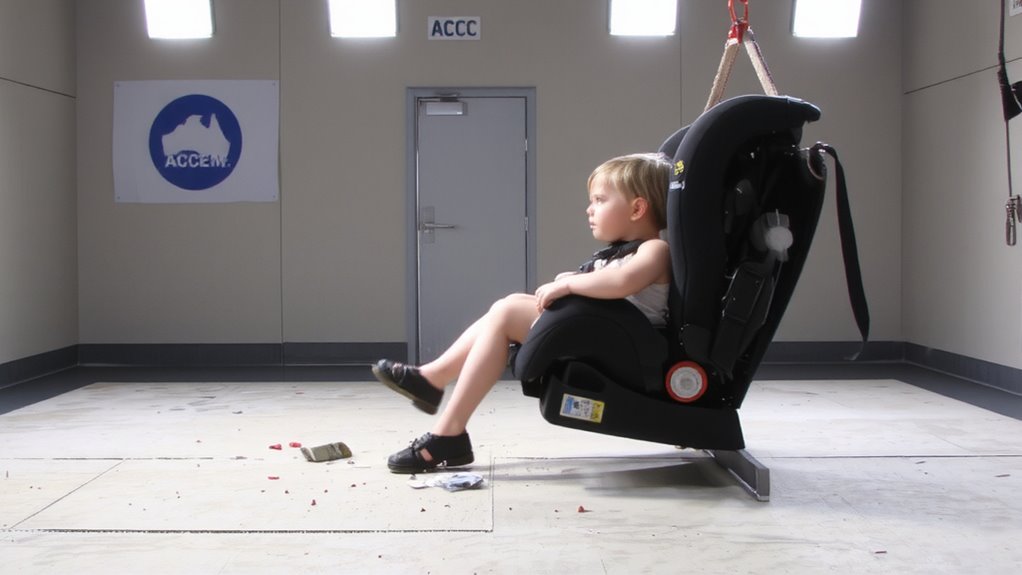
Ever wonder how those child car seats stack╡ up in real crashes? In Australia, rigorous crash testing guarantees each seat handles high-impact forces, simulating collisions at 50 km/h into a rigid barrier. You’ll want to know that every approved model undergoes dynamic testing that measures head movement, force distribution, and harness performance. Engineers check material durability too-straps, buckles, and shells are stressed over time to guarantee they won’t weaken after years of use. Seats are exposed to extreme temperatures, UV light, and repeated loading to mimic real-world wear. Testers evaluate ease of installation, adjustability, and compatibility with various vehicle types. Real parents confirm whether seats fit rear-facing in compact cars or stay secure after school runs. Labels show compliance with Australian Standard AS/NZS 1754, meaning top-tier safety and long-term reliability. You can trust that every feature, from side-impact padding to energy-absorbing foam, has been verified through science, not guesswork.
What Happens When a Car Seat Fails Safety Tests?
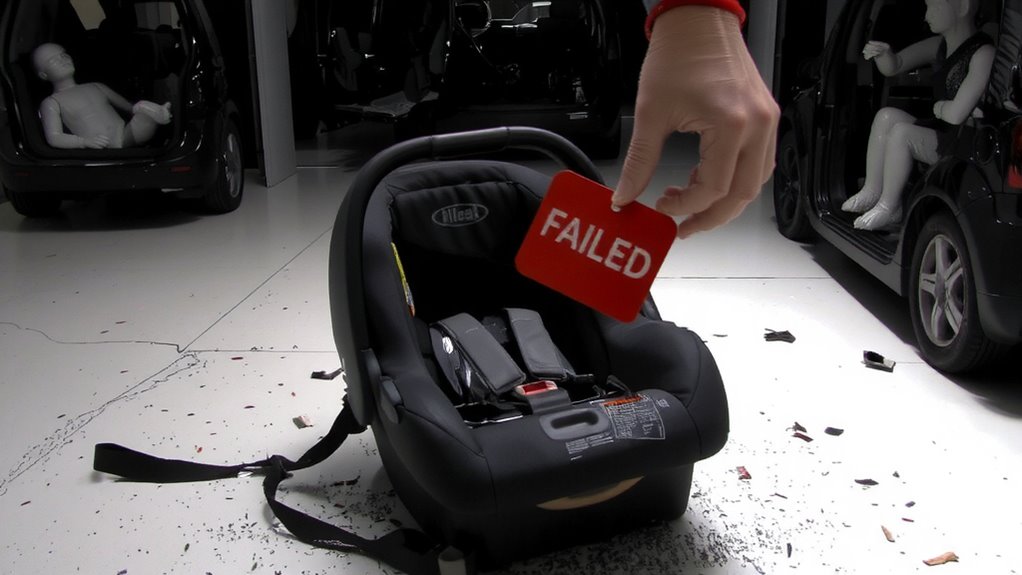
Though a car seat makes it past initial inspections, if it fails subsequent safety tests, the consequences are swift and serious. You’ll see immediate recalls, public warnings, and forced removal from shelves. Test failure consequences aren’t taken lightly-manufacturers face fines, reputational damage, and mandatory redesigns. The ACCC also checks for safety certification gaps that could’ve allowed substandard models through. Real-world crash data and lab results help pinpoint weaknesses in harness strength, head support, or anchor stability. To illustrate, here’s what changes after a failed test:
| Component | Before Failure | After Failure |
|---|---|---|
| Harness Tension | 2.5 kN hold | Reinforced to 3.8 kN |
| Head Excursion | 60 cm forward | Reduced to 42 cm |
| Certification | Approved | Suspended pending audit |
You’re safer knowing strict follow-ups close safety certification gaps fast. Parents looking for reliable options can refer to expert recommendations when choosing among the top car seat picks.
7 Red Flags Your Car Seat Might Be Unsafe
A failed safety test might pull a car seat from the market, but spotting trouble early can keep your child protected before recalls hit. You should check your seat regularly-look for a loose harness that won’t tighten fully, even after adjusting the straps; testers found gaps over 5 cm compromise protection in crashes. Also, run your hands along the frame: a cracked shell, especially near anchor points or the base, weakens structural integrity-drop impacts or sun exposure often cause hairline fractures. Parents reported noticing faint clicks during travel, a sign of hidden damage. If the shell flexes unnaturally when pressed, it’s unsafe. Labels fading or instructions missing are secondary clues, but never ignore visible defects. Real-world feedback shows most issues appear after 18 months of use. Replace immediately if you spot these red flags-your child’s safety isn’t worth the risk.
How the ACCC Issues Recalls and Warnings
When safety risks turn up in baby gear, the ACCC steps in fast to protect families by coordinating recalls and public warnings, so you’re not left guessing what’s unsafe. They work with manufacturers to trigger recall procedures the moment hazards are confirmed, whether it’s faulty harnesses or unstable bases. You’ll get clear instructions online, via email, or at retail to return or repair affected items-often with free shipping. The ACCC also activates national warning systems, using social media, news outlets, and product alerts to spread the word quickly. These alerts include model numbers, batch codes, and risk details so you can check your gear fast. Real parents say timely updates give peace of mind, especially when testing reveals unseen flaws. You’re protected not just by rules, but by fast, smart action backed by real-world data and relentless follow-up.
Which Car Seats Have Been Recalled in Australia?
Ever wonder if your little one’s car seat is part of a recall? The ACCC regularly identifies unsafe models, including those made with expired materials or dangerous counterfeit models. Staying informed protects your child and guarantees compliance with Australian safety standards. Below are recently recalled seats and their key issues:
| Brand | Model | Reason for Recall |
|---|---|---|
| Baby Care | SafeSeat Pro 2020 | Expired materials, weak harness |
| TotGuard | QuickFit Elite | Mislabelled, poor crash results |
| SuperBaby | MaxiSeat (fake) | Counterfeit models, no testing |
These recalls often follow rigorous lab crash tests simulating 50 km/h impacts. Real testers noted loose straps and unstable bases. Always check the Product Safety Australia website, verify manufacturing dates, and report suspicious designs. Knowing what’s been flagged keeps your family safe, confident, and compliant.
How Can Parents Keep Car Seats Safe Over Time?
Your child’s safety seat doesn’t stop needing attention the day you install it-regular upkeep keeps it performing like the safety tool it’s meant to be. Car seat maintenance is simple but critical: check harness tightness weekly, guarantee clips sit at armpit level, and inspect for cracks or wear every few months. Clean straps with mild soap, never bleach, and avoid aftermarket inserts not approved by the manufacturer. Follow usage tips like replacing seats after crashes, even minor ones, and never using expired models-most last 6 to 10 years. Store unused seats in a cool, dry place, away from direct sunlight. Testers found seats exposed to heat and UV degraded faster, weakening structural integrity. Register your model with the ACCC for recall alerts. Real parent feedback highlights label readability and ease of rethreading harnesses as top priorities. Stay vigilant-your child’s safety depends on it.
On a final note
You’re right to trust the ACCC-they enforce strict safety standards, so only car seats meeting AS/NZS 1754 pass. Tests include crash simulations at 50 km/h, checking harness strength, and measuring head excursion under 550 mm. When a seat fails, recalls follow fast. Check serial numbers, register your model, and inspect for cracks or worn webbing every month. Real parents love Maxi-Cosi and Baby Trend for ease, but even top picks need vigilance-safety never stops after the purchase.