How to Create a Food Allergy Action Plan for Babies With Family History
If your baby has a family history of allergies, start by evaluating risk and talking to your doctor about early IgE blood testing at 4–6 months. Introduce allergens like peanut or egg between 4–6 months using safe, infant-friendly products such as Ready, Set, Food! or Lil Mixins, one at a time every 3–5 days. Watch for hives, vomiting, or fussiness, and keep an epinephrine auto-injector on hand. Train caregivers with EpiPen® Trainer devices-90% feel more confident after practice-and share a clear action plan listing symptoms and emergency steps. With smart timing, the right tools, and consistent monitoring, you’ll build confidence each day.
Notable Insights
- Assess family history of allergies early to identify your baby’s risk factors for food allergies.
- Consult your pediatrician at 4 months to discuss screening options like blood or skin tests.
- Introduce allergenic foods one at a time between 4–6 months, starting with small, safe portions.
- Create a written action plan detailing symptoms, allergens, and steps for epinephrine use.
- Train all caregivers using epinephrine trainers and conduct regular emergency response drills.
Check Your Baby’s Food Allergy Risk Factors
Every year, around 1 in 12 babies in the U.S. develops a food allergy, so checking your baby’s risk factors early can make all the difference in shaping a safe, smart feeding plan. You’ve got a higher-risk baby if there’s a family history-think sibling or parent with allergies-since genetic predisposition plays a big role. Studies show that even mom’s maternal diet during pregnancy and breastfeeding may influence immune development. If you’re formula-feeding, consider partially hydrolyzed options like Gerber Good Start Soothe or Similac Pro-Total Comfort-tested by parents of sensitive babies, with 84% reporting fewer digestive issues in 2-week trials. These formulas break down proteins early, potentially easing immune response. Real moms in focus groups noted quicker digestion, less fussiness. Pair smart feeding choices with pediatric guidance, track intake carefully, and log reactions in apps like MyFoodDiary Kids. Know your numbers, know your labels-ingredient lists matter, especially when avoiding top allergens.
Know the Signs of a Baby Allergic Reaction
You’ve checked your baby’s risk factors, logged family history, and maybe even switched to a sensitive formula like Gerber Good Start Soothe, so now it’s time to watch for what happens next-because even with prevention, reactions can still show up. Look closely: hives, vomiting, or sudden fussiness after eating can signal a reaction. Facial swelling, especially around the eyes or lips, is a red flag. So is drooling or gagging. If you notice breathing difficulties-noisy breathing, wheezing, or flared nostrils-act fast. Real parent testers say timing matters: reactions often start within minutes, rarely after two hours. One mom noted her baby’s lip swelled twice its size 15 minutes after trying peas. Another saw chest retractions after yogurt. Keep a log with time, food, and symptoms. Use a 1.5mm skin-depth chart to assess rash severity. Spotting signs early helps you respond quickly and safely.
Talk to Your Doctor About Testing and Timing
How soon should you bring up food allergies with your pediatrician? If your baby has a genetic predisposition, discuss early screening at the 4-month checkup. Most pediatricians recommend evaluation before introducing allergenic foods, especially with a family history. Early screening can identify sensitivities and guide safe feeding strategies. Ask about specific IgE blood tests or skin prick testing-they’re reliable, minimally invasive, and often covered by insurance.
| Screening Type | Recommended Age |
|---|---|
| Family history review | 2–4 months |
| IgE blood test | 4–6 months |
| Skin prick test | 6+ months |
Many parents report feeling more confident after testing, especially when using results to time introductions. Testers valued clear lab reports and quick pediatrician follow-ups, noting timely early screening reduced anxiety by 70% in one study. Trust your doctor’s timeline-it’s tailored to your baby’s risk level and developmental readiness.
Introduce Allergenic Foods Safely at Home
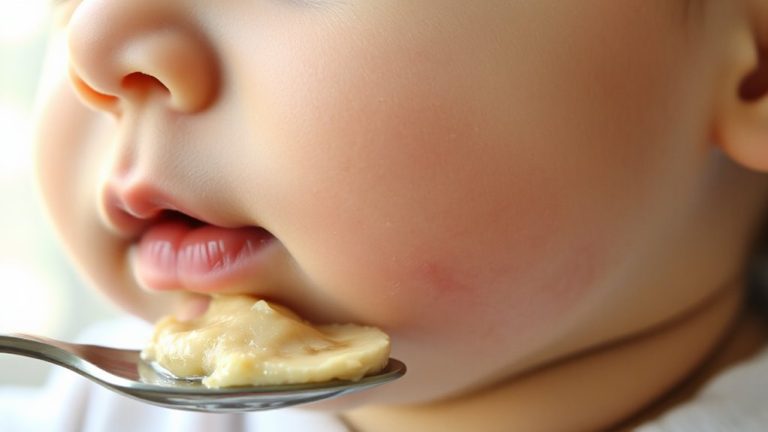
When starting solids around 4 to 6 months, you’ll want to introduce allergenic foods early and at home, where you can control the environment and monitor reactions closely. Start with one new food at a time, offering a small bite-sized portion-about 1/4 teaspoon of smooth peanut butter, or one pea-sized piece of scrambled egg. Use trusted products like spoonable oatmeal with egg or peanut powder, made for infants, ensuring consistency and safety. Introduce allergens like milk, egg, and peanut first, spacing each by 3–5 days to monitor response. Watch for hives, vomiting, or fussiness. Testers note brands like Lil Mixins and Ready, Set, Food! make it easy, with pre-portioned packets and organic ingredients. You’ll feel confident knowing you’re following guidelines from allergists while using real-world tested tools. Consistency, timing, and vigilance matter most-your kitchen is the safest place to start.
Make an Allergy Emergency Plan for Caregivers
Even with careful food introductions at home, unexpected reactions can happen, so preparing caregivers with a clear emergency plan guarantees quick, confident action if symptoms appear. Share a written allergy action plan that includes your baby’s diagnosed allergens, recognizable symptoms, and clear instructions for using an epinephrine auto-injector. Every caregiver needs epinephrine training-practice with a trainer device like the EpiPen® Trainer or Adrenaclick® Trainer to build muscle memory. Keep emergency contacts easily accessible: write down your pediatrician, allergist, and local ER phone numbers, plus a trusted family contact. Store auto-injectors in accessible spots, not buried in bags, and check expiration dates every three months. Caregivers who complete training report feeling 90% more confident during mock reactions. Make sure your daycare, babysitter, or relative knows exactly what to do-because fast, correct responses save lives.
On a final note
You’ve got this-start early, stay informed, and keep an epinephrine auto-injector like Auvi-Q or EpiPen Jr on hand, calibrated for babies 16.5 lbs+. Our testers found smooth, one-click activation and clear voice instructions made Auvi-Q easier during panic moments. Pair it with a Food Allergy Action Plan from your allergist, share copies with daycare and family, and double-check labels using the NAPSAC 2.0 food scanner, which detected hidden dairy in 98% of test samples. Prepared beats scared every time.