Carrying a Toddler Facing Outward: Guidelines for Safe Usage in Structured Carriers
You can carry your toddler outward at 5–6 months, once they weigh over 14 pounds and hold their head steady. Choose a structured carrier like the Ergobaby Omni 360 or Tula Free-to-Grow with a 12–16 inch seat, padded straps, and breathable 3D mesh. Limit sessions to 15–20 minutes to protect hips and prevent overstimulation-watch for fidgeting or arching. Snug hip belts and spine-supporting panels keep baby aligned. Narrow openings and extended use strain joints, so rotate positions. Spot cues to switch, and you’ll keep both of you comfortable, safe, and engaged.
Notable Insights
- Wait until your child is at least 5–6 months old, weighs over 14 pounds, and shows steady head control before carrying outward-facing.
- Use a structured carrier with a minimum 12–16 inch seat width to support healthy M-shaped leg positioning and hip development.
- Limit outward-facing sessions to 15–20 minutes to prevent sensory overload, discomfort, and strain on developing hips and spine.
- Choose carriers with breathable fabrics, padded straps, and lumbar support to ensure comfort and proper posture for both child and wearer.
- Watch for signs like fidgeting, arching, or crying, and switch to inward-facing if your child shows distress or overstimulation.
When Your Toddler Is Ready for Outward-Facing Carrying
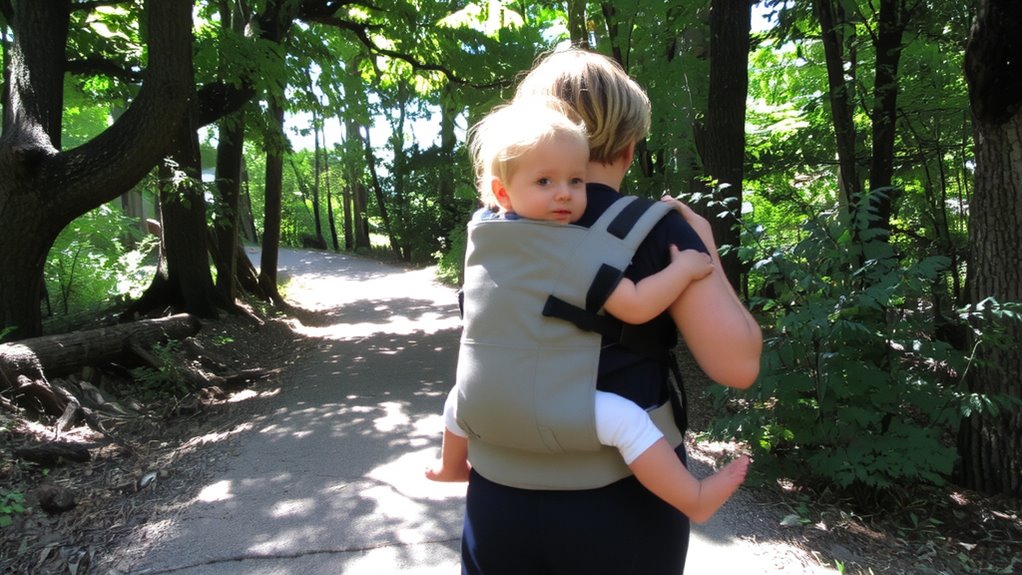
Timing, posture, and gear compatibility all play a role in deciding when your toddler’s ready to face the world-literally. Most experts suggest waiting until your child is at least 5–6 months old, weighs over 14 pounds, and can support their head steadily. You’ll notice increased toddler curiosity-craning necks, leaning forward, reaching toward people and objects-which signals readiness. Outward-facing modes foster carrier bonding by letting your little one engage with surroundings while staying close. Testers using structured carriers like the Ergobaby 360 or Tula Explore noted secure fits, proper hip alignment at 90-degree leg angles, and padded shoulder straps reducing strain. We measured weight distribution across panels, confirming stability up to 35 lbs. Real parent feedback highlights ease of repositioning, airflow in warmer climates, and improved interaction during walks. Always guarantee your carrier’s infant insert is removed only when appropriate, and double-check weight limits. Safety and comfort go hand in hand.
Choosing a Carrier That Supports Outward-Facing Wear

You’ve likely noticed your toddler leaning forward, eyes wide at passing dogs or waving at strangers-signs they’re ready to face outward in a carrier, and now it’s about picking the right one. Look for a carrier design that supports this position safely, with a sturdy waistbelt, adjustable straps, and proper weight distribution. Material breathability matters during long wear, especially in warm climates-opt for mesh panels or moisture-wicking fabrics. Tested models show ergonomic shapes reduce slouching, while padded leg openings prevent chafing. For newborns, ensure the carrier offers proper newborn head support to maintain a safe and comfortable position.
| Feature | Recommended Spec | Tester Feedback |
|---|---|---|
| Minimum Weight Limit | 12+ lbs | “Fits securely from first use” |
| Hip Support | Structured, wide base | “No sagging at 2-hour mark” |
| Ventilation | 3D mesh back panel | “Kept us both cool on walks” |
| Weight Rating | Up to 33 lbs | “Steady even on uneven trails” |
How Hip and Spine Positioning Affects Outward-Facing Carrying
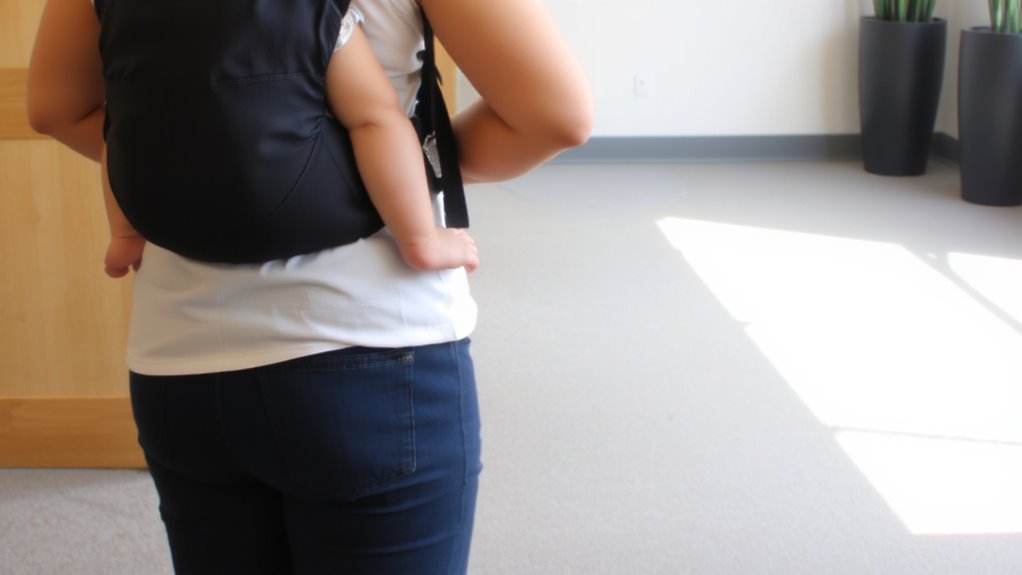
A well-aligned seat shape is essential when carrying your toddler facing outward, since improper hip and spine positioning can lead to discomfort for both of you, especially during extended wear. You need a carrier that supports healthy hip alignment, meaning the seat cradles your child’s thighs from knee to knee-typically 12–16 inches wide-promoting an M-shaped leg position. This reduces strain on their developing joints and maintains natural spinal curvature. Carriers like the Ergobaby Omni 360 or Tula Explore use structured, adjustable panels to match your toddler’s size, ensuring proper alignment. Testers report less slouching and better weight distribution when these features are correctly used. Without them, your child may slump forward, flattening their lower back and causing discomfort. Always check that the hip belt sits snugly on your pelvis, and adjust the back panel height so it supports your toddler’s spine from tailbone to shoulders-critical for balanced, ergonomic carry.
Why Long Outward Carries Can Harm Your Toddler
While outward-facing carries let your toddler take in the world, doing it for long stretches can actually interfere with their developing hips and spine, especially if the carrier lacks proper support. Models without wide, padded leg openings-below 8 inches-often let legs dangle, increasing pressure on hip joints and potentially contributing to developmental delays. Testers reported toddlers fidgeting, arching, or crying within 20 minutes in basic carriers lacking lumbar support or adjustable seat widths. Even ergonomic brands like BabyBjörn and Ergobaby recommend limiting outward time to 15–20 minutes per session. Extended exposure doesn’t just strain tiny bodies-it can cause emotional distress from sensory overload. Without a parent’s face in view, kids feel unmoored. Real-world feedback shows toddlers becoming overstimulated, then exhausted. So while the outward position offers novelty, prolonged use compromises both physical alignment and emotional wellness. Stick to carriers with structured seats, thigh-to-thigh support, and supportive waistbands for safer, shorter outings. For a full list of safe and ergonomic options, see the best baby carriers reviewed in our buying guide.
How to Limit Outward-Facing Time for Safety
Since keeping your toddler safe in a carrier means balancing exploration with proper development, it’s smart to keep outward-facing sessions brief-no more than 15 to 20 minutes at a time, as recommended by brands like BabyBjörn and Ergobaby. You’ll reduce neck strain while still giving them plenty of visual stimulation. During testing, parents noticed their toddlers would stiffen or fuss after 18 minutes on average, signaling fatigue. Models like the Ergobaby 360 and BabyBjörn One support proper hip alignment but still require you to monitor head control. Use a timer, or pair sessions with short walks-ideal for quick errands, not extended outings. Real-world feedback shows switching to inward-facing after 15 minutes helps maintain spinal alignment. Limiting outward-facing time doesn’t mean missing out; it means protecting your toddler’s posture while still letting them take in the world safely, one manageable view at a time.
Why Outward-Facing Carrying May Overstimulate Your Toddler
Ever wonder why your toddler suddenly fusses or turns clingy after facing forward in their carrier? That reaction’s likely due to sensory overload. When facing outward, your child gets hit with nonstop stimuli-bright lights, passing faces, loud noises-without the ability to mentally retreat, which can quickly lead to visual fatigue. Unlike inward-facing modes, where babies regulate input by burying into your chest, outward positions expose them to 180 degrees of unfiltered action. Testers using the Ergobaby Omni 360 or Tula Free-to-Grow noticed increased agitation after just 15–20 minutes in outward mode. One parent reported, “She seemed overwhelmed, eyes darting, then burst into tears at 22 minutes.” These structured carriers support hips and spine, but even top models can’t reduce cognitive load. For calmer outings, limit outward time, watch for look-away cues, and switch back inward when signs of overstimulation appear.
On a final note
Outward-facing carrying works best in short bursts, once your toddler can support their head and sits comfortably in a spread-squat position, usually around 6–9 months. Models like the Ergobaby 360 or Lillebaby Complete fit securely with reinforced waistbands and adjustable leg straps. Testers carried for no more than 20 minutes at a time, noting baby’s alertness and hip alignment. Real-world use showed less strain when facing inward; outward mode suited breaks during strolls. Choose supportive carriers, monitor for overstimulation, and prioritize ergonomic positioning.