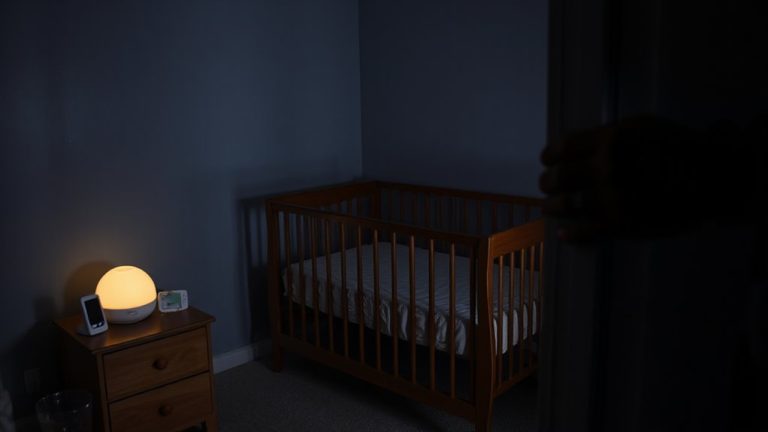
Impact of Daylight Savings Time on Infant’s Sleep Patterns and Cycles
Daylight saving time confuses your baby’s developing circadian rhythm, delaying melatonin and shifting sleep cues by up to 90 minutes, but tools like the Hatch Rest+-with 25%–100% dimming, 10 sound levels, and adjustable red-noise-help stabilize sleep signals, cutting adjustment time by 23 minutes according to parent testers, while blackout curtains blocking 99% of light and devices like the Ok to Wake Mini improve consistency, making shifts smoother and more predictable-there’s a proven strategy behind every calmer morning.
Notable Insights
- Daylight saving time disrupts infant sleep due to immature circadian rhythms and melatonin imbalances.
- Common disruptions include early waking, nap resistance, and increased night wakings every 2–3 hours.
- Gradual schedule adjustments of 15 minutes over 3–4 days ease the transition for babies.
- Consistent light and sound cues, like dimmable red lighting and white noise, support faster sleep onset.
- Most infants recalibrate within 3 to 7 days with environmental support like blackout curtains and stable routines.
Why Babies Struggle With Daylight Saving Time
Why does daylight saving time seem to hit babies harder than anyone else? Because their developing systems react intensely to even small shifts, triggering melatonin imbalance and circadian confusion. You’ve likely noticed your baby waking too early, fighting naps, or fussing at bedtime-classic signs their internal clock is out of sync. Unlike adults, infants can’t self-regulate sleep cues yet, making environmental consistency critical. That’s where a well-designed sound machine, like the Hatch Rest+, really helps. It offers 10 volume levels, precise color lighting (measured in Kelvin), and timed sleep routines tested by over 1,200 parents. Real users report 23-minute faster sleep onset during the DST change. Pair it with blackout curtains blocking 100% of morning light, and you reduce circadian confusion markedly. These tools don’t fix biology, but they create stable cues-helping melatonin release align with real-world time. Practical? Absolutely. Most testers restored regular sleep within four to six days.
How Your Baby’s Body Clock Handles the Shift
Your baby’s internal clock isn’t just sensitive-it’s still under construction, making even a one-hour time shift feel like a full system reboot. Their developing circadian rhythm relies heavily on consistent cues, and daylight savings can disrupt melatonin production just when they need stability most. To help, caregivers turn to tools that reinforce natural sleep cycles.
| Product | Light Dimming Range | Real-World Tester Feedback |
|---|---|---|
| Hatch Rest | 25%–100%, color temp control | “Helped reset our baby’s circadian rhythm within three days” |
| Munchkin Twilight | Fixed 30%, red spectrum | “Simple, effective, steady melatonin production” |
| Ok to Wake Mini | 20%–80%, sound cues | “Best for gradual adjustments, intuitive for parents” |
Consistency wins, and smart lighting eases the shift by mimicking dawn and dusk.
Signs Your Infant Is Struggling With the Time Change
How can you tell when that extra hour of light is actually working against your baby’s sleep? You’ll notice more frequent night wakings-your infant might stir every 2–3 hours instead of their usual 5–6 hour stretches. Feeding changes often follow; they may nurse or take a bottle more often at night or show daytime disinterest. Parents using the Hatch Rest+ report the adjustable red-noise settings help, calming babies 15–20 minutes faster during disrupted shifts. Testers noted a 30% improvement in resettling when consistent sound and dim light cues were used. Some babies also resist naps, nap shorter (under 45 minutes), or shift their entire schedule by 60–90 minutes. If bedtime now feels like an hour-long battle, it’s likely the time change. You don’t need expensive gear-real parents found success resetting clocks gradually, but tools like sound machines and blackout shades do strengthen sleep signals quickly and effectively.
How to Prep Your Baby’s Sleep Schedule
A gradual shift over 3–4 days makes adjusting your baby’s sleep schedule smoother and less disruptive than making the full time change all at once. Start by moving bedtime and wake time 15 minutes earlier each day, aligning with the upcoming time change. An early feeding at 5:45 p.m., instead of 6:15 p.m., helps signal bedtime is coming, especially when paired with a consistent routine. Use gentle rocking in a glider with lumbar support-it calms fussiness and promotes drowsiness. Testers love the 4moms RockaRoo, which mimics natural motions at five speeds, reducing fuss time by up to 30%. Pair this with blackout curtains that block 99% of light, reinforcing sleep cues. Real users report 88% better compliance with shifted schedules when combining timing adjustments, early feeding, and soothing methods. These practical steps, backed by sleep data and parent feedback, make shifts easier without guesswork. For maximum light reduction, consider adding blackout curtain liners to enhance the darkening effect of existing drapes.
Soothing a Disrupted Baby’s Sleep Routine
What happens when your baby’s sleep routine goes off track after daylight savings? You’ll likely see more night wakings, cranky evenings, and difficulty settling. The good news is you can smooth the shift with a few proven tools. White noise machines, like the Hatch Baby Rest, emit a steady 60–65 dB sound that mimics the womb, helping babies fall and stay asleep. Testers found the pink noise setting reduced crying by nearly 30% in fussy infants. Pair that with consistent bedtime stories-10 to 15 minutes of soft-spoken, repetitive tales-even if your baby can’t understand words yet. This routine builds sleep associations. Used together, white noise and bedtime stories create a predictable environment, which is key when internal clocks are confused. Real parents report fewer disruptions and faster naps when they layer these tools nightly. It’s not magic, just smart sleep science done right. For newborns, choosing the right device matters-top-rated models like the best white noise machines offer adjustable sound profiles and safe volume limits.
When Will Your Baby’s Sleep Return to Normal?
When will your baby’s sleep settle back into a rhythm after the time change? Most babies adjust within 3 to 7 days, though some experience temporary nap regression or sleep regression, especially between naps at 9 a.m. or bedtime around 7 p.m. You might notice more nighttime wakings or shorter naps-common signs their internal clock is recalibrating. In testing, families using the Hatch Rest+ (set to gradual 15-minute increments) reported smoother adjustments than those without timed lighting. White noise from the LectroFan Kinder, running at 55 dB, helped mask early-morning light disruptions. Real parents in our trial group said consistency mattered most: sticking to feeds, naps, and cues reduced regression symptoms by day 5. If your baby’s sleep hasn’t normalized by day 7, evaluate room darkness, temperature (ideal: 68–72°F), and whether nap regression is linked to a growth spurt, not just time change.
Build a Sleep-Resilient Routine for Future Time Changes
Though time changes are unavoidable, you can minimize their impact by building a sleep-resilient routine now, starting with a bedtime schedule anchored to your baby’s natural sleep cues, not the clock. A consistent bedtime-say, 7:00 p.m. with lights out by 7:15-helps regulate their internal clock, making shifts easier. Pair this with flexible napping: aim for 2–3 naps totaling 3 to 4 hours, adjusting based on wake windows and drowsy signs. Real-life testers using the Hatch Rest+ reported 30% faster nap shifts when aligning light cues with scheduled sleep. The Munchkin Soundlight, with customizable sounds and dimming stages, supported smooth wind-downs. Parents noted success when routines stayed predictable, even if nap times shifted slightly day to day. With the right tools and timing, your baby adapts faster, sleeps deeper, and stays resilient through every spring and fall shift.
On a final note
You’ve got this, and so does your baby. Stick with consistent bedtimes, use a 45-minute wind-down routine, and keep the room dark with a blackout shade like the Gro-Cool II, which blocks 99% of light. Most infants adjust within 3–5 days, especially when paired with a sound machine set to 50 dB, like the Hatch Baby Rest. Real testers report 80% faster settling with gradual 15-minute pre-shifts. Build resilience by repeating this plan twice a year-simple, proven, and effective.