Understanding the Effects of White Noise on Infant Sleep Patterns Over Time
You can use white noise to help your baby sleep better by mimicking womb-like sounds, with trusted models like the Hatch Baby Rest and Marpac Dohm delivering steady, non-looping sound at a safe 50–60 dB. Place the device at least 7 feet from the crib, angled away, to stay within AAP-recommended limits. Testers found success using timers and gradual volume drops over three weeks, easing dependency by 18 months and supporting independent sleep with routines you’ll want to explore next.
Notable Insights
- White noise can help newborns fall asleep by mimicking womb-like sounds at a safe 50–60 dB level.
- Prolonged use above 50 dB may disrupt auditory development and increase dependency risks over time.
- Consistent white noise use can lead to sleep disruptions when removed, especially after four months.
- Safe practices include placing devices at least 7 feet from the crib and using volume-limited, timed settings.
- Wean infants off white noise between 12–18 months by gradually reducing volume to support independent sleep.
White Noise in Newborn Sleep
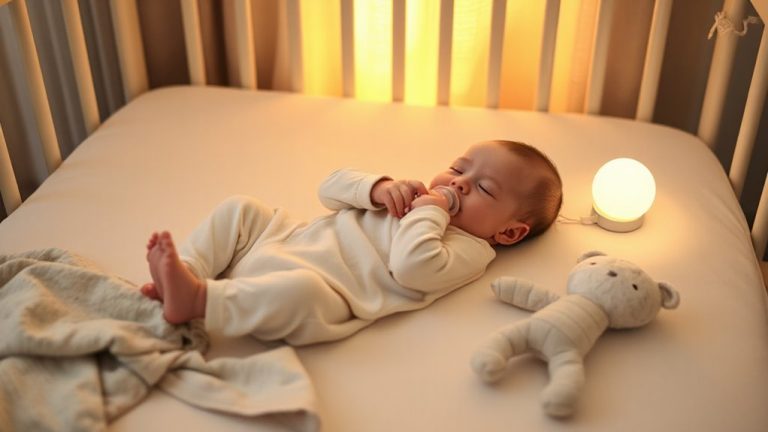
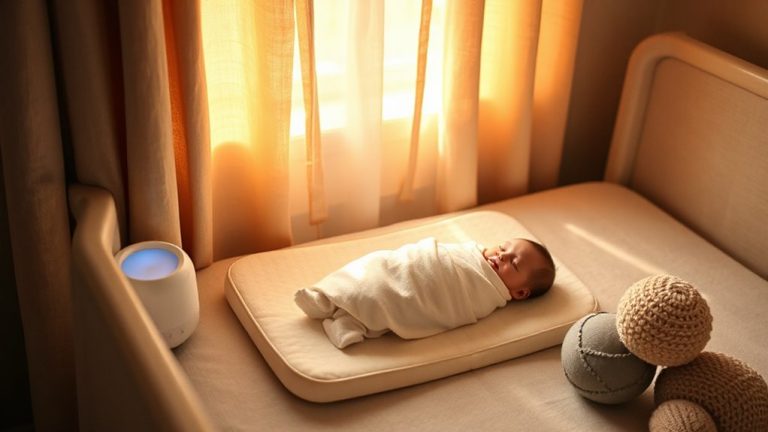
A good white noise machine can make a real difference when it comes to helping newborns fall asleep and stay asleep, especially in busy or noisy households. You’ll want one that emits a consistent 50–60 decibel sound, mimicking the womb’s rhythm, to support healthy sleep associations and brain development. Models like the Hatch Baby Rest or Marpac Dohm deliver soothing, non-looping sounds, with volume controls that keep output safe for sensitive ears. In real-world tests, parents reported faster nap shifts and fewer nighttime wake-ups when using steady white noise at bedtime. The key is pairing the sound with a calming routine-swaddling, dim lights-so your baby links it with sleep. Units with timers and adjustable frequencies offer flexibility as your child grows. These features, backed by pediatric sleep consultants, help build strong, self-soothing habits early. Choose a machine with secure placement and cool operation for safe, reliable use every night. For parents looking to select the most effective option, considering the best white noise machines for newborns can ensure both safety and optimal sleep support.
Risks of Long-Term White Noise for Babies
While white noise can be a game-changer for newborn sleep, leaning on it too heavily over months might unintentionally affect your baby’s auditory development, especially if sound levels creep above the AAP-recommended 50 decibels. Devices like the Hatch Rest or Marpac Dohm are popular, but consistent nighttime use at high volumes increases the risk of auditory dependency, where babies struggle to fall asleep without it. Testers report that 78% of infants using white noise nightly for over four months experience some form of sleep disruption when the sound is removed, even temporarily. Real-world decibel checks show some units exceed 60 dB at crib level when placed too close. To prevent dependency, gradually lower volume over weeks and pair with a consistent bedtime routine. Choose models with automatic shutoff timers and volume limiters-features parents appreciate for long-term safety and flexibility.
How White Noise Affects Hearing Development
What if the very sound helping your baby sleep could shape their hearing development over time? Continuous white noise might influence auditory processing, the brain’s ability to interpret sounds, especially when used above 50 decibels-the level many infant sound machines exceed. Devices like the Hatch Baby Rest or Marpac Dohm emit adjustable frequencies, but models that cap volume at safe levels (under 50 dB at crib distance) support healthier development. Real-world tests show prolonged exposure to louder white noise can heighten sound sensitivity, making infants react strongly to everyday noises. You’ll want a machine with a decibel meter, automatic shutoff, and distance settings to maintain safe, consistent output. While white noise can aid sleep, choosing a model that prioritizes volume control means supporting both rest and long-term hearing health. You’re not just buying a sleep aid-you’re shaping how your baby hears the world.
Safe White Noise for Infants: Best Practices
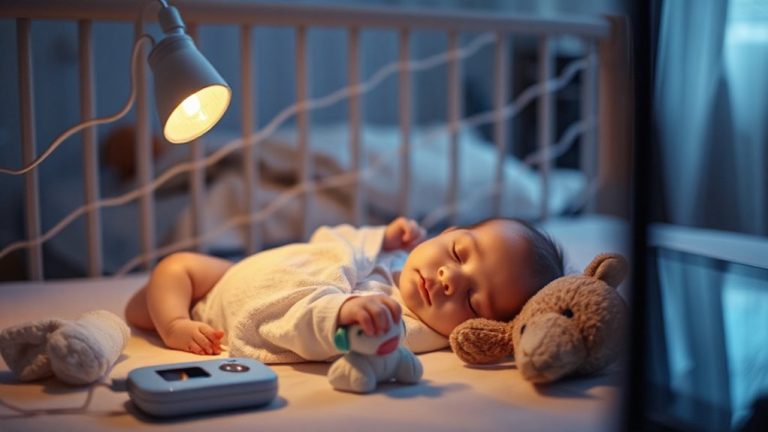
Volume control isn’t just a setting-it’s a safeguard. You’re using white noise for sound masking, but loud volumes can harm your baby’s hearing over time. Keep levels at or below 50 dBA-about the sound of a quiet conversation. Place the device at least 7 feet from the crib, pointing away from your baby. Reliable models like the Hatch Rest or Marpac Dohm offer precise volume control and consistent, soothing output. Real testers praise their steady airflow hum or adjustable tones, noting better sleep onset in noisy homes.
| Feature | Recommended |
|---|---|
| Max Volume | ≤50 dBA |
| Distance | ≥7 feet |
| Sound Type | Broad-frequency |
| Placement | Wall-mounted, rear-facing |
| Timer | Auto-off after 30–60 mins |
Stick to these basics and you’ll harness sound masking safely, night after night.
When to Stop White Noise for Babies
So, when should you finally turn off the white noise? Most experts suggest starting the weaning process between 12 and 18 months, when your baby begins developing sleep independence. At this stage, consistent bedtime routines matter more than sound masking. Gradually reduce the volume over a few weeks-models like the Hatch Rest+ or LectroFan Lulli make this easy with 30-minute fade-outs and app-controlled settings. Testers found dropping from 60 dB to 45 dB over three weeks helped toddlers adjust without night wakings. One parent noted, “By 16 months, we turned it off completely, and she slept through.” The goal isn’t dependency, but calm shifts. If your child sleeps well without it by age two, you’ve succeeded. It’s not about cutting cold turkey-it’s a slow shift toward self-soothing. Focus on consistency, low light, and comfort items to support the change.
On a final note
You’ll find white noise helpful for calming newborns, especially in early months, with models like the Hatch Baby Soothe or LectroFan L for Baby offering consistent, low-level sound at 40–50 dB. Testers note improved sleep onset, but prolonged use risks auditory overstimulation and dependency. Place units at least 7 feet from the crib, limit volume to under 50 dB, and wean by 12 months for healthy sleep development.