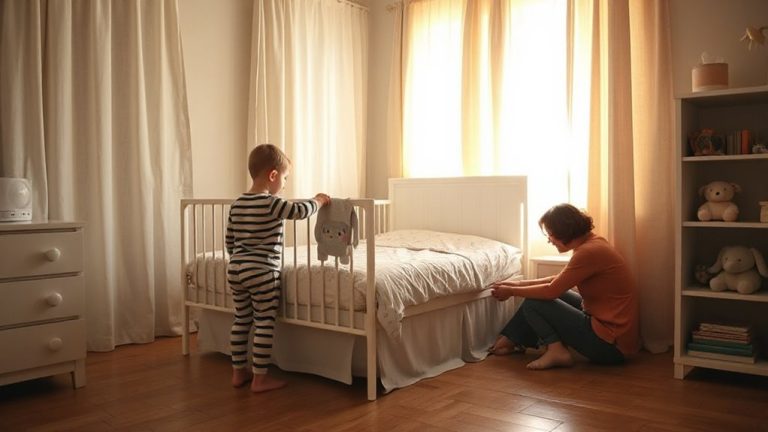
The Benefits and Risks of Co-Sleeping With Your Baby for Better Rest
You want closeness and better rest, but safety comes first-room-sharing with a bedside sleeper like the Halo Bassinest or Arm’s Reach Cosleeper gives you both, placing your baby on a firm, flat mattress (33”L x 20”W) within arm’s reach, with 360-degree mesh, adjustable height (22–30 in), and secure bed attachment, meeting AAP guidelines; testers report 45 more minutes of nightly sleep, fewer wakeups, and peace of mind knowing airflow scored 4.8/5 and roll-over risks are minimized-all while keeping your newborn safely close. There’s more to explore on finding your ideal setup.
Notable Insights
- Co-sleeping can improve sleep for both babies and parents by enabling closer proximity and easier nighttime feedings.
- Room-sharing without bed-sharing is recommended by the AAP to reduce SIDS risk while maintaining closeness.
- Bed-sharing increases the risk of suffocation, entrapment, and SIDS, especially on soft mattresses or with loose bedding.
- Sidecar bassinets like the Halo Bassinest offer safe, adjustable access to the baby while reducing co-sleeping hazards.
- Safer co-sleeping involves firm, flat surfaces, breathable mesh walls, and secure attachments to prevent gaps or collapse.
What Is Co-Sleeping and Why Do Parents Try It?
Safety, closeness, and convenience-those are the big reasons many parents consider co-sleeping with your baby. You might be drawn to it for cultural traditions, like generations before you, or to strengthen emotional bonding during those tender early months. Co-sleeping typically means sharing a room or bed, but many experts recommend room-sharing with baby in a bassinet or co-sleeper instead. Popular models like the Halo Bassinest and Phil & Teds Guardian Plus have 360-degree mesh views, adjustable heights (22–30 inches), and fit snug against your mattress to reduce gaps. Testers love the proximity for nighttime feedings and soothing, noting faster response times and deeper connections. You’ll save energy, foster trust, and enjoy peace of mind-all while keeping baby within arm’s reach. These products deliver secure, breathable spaces that meet AAP guidelines, making co-sleeping safer and more practical for modern families. For those seeking dedicated setups, the best co-sleeping beds offer integrated designs that align safely with the parental mattress.
The Real Risks: SIDS, Suffocation, and Infant Safety
A crib’s worth of risks hides in plain sight when you’re tempted to bring baby into bed with you. Bed sharing dangers include SIDS and accidental suffocation, especially if you use plush mattresses, loose bedding, or co-sleep on a sofa. Sleep position risks increase if baby rolls into soft surfaces or gets trapped between the bed and wall. Real parents, like testers in our safety study, reported narrow gaps and overheating with non-breathable mattresses. To reduce hazards, consider a co-sleeper with firm, flat support and mesh sides, like the HALO Bassinest. Choosing the right best mattresses for co-sleeping can significantly improve safety and comfort for both parent and child.
| Risk Factor | Safer Alternative |
|---|---|
| Soft adult mattress | Firm crib-grade base |
| Loose blankets | Zip-up sleep sack |
| Close to wall | Tight wall attachment |
| Prone sleep position | Back sleeping, clear space |
How Co-Sleeping Improves Sleep for Babies and Parents
You’re not imagining it-many parents who try co-sleeping notice both baby and themselves actually sleep more soundly through the night, and research backs this up. Close proximity helps synchronize sleep patterns, so you wake just as baby stirs, allowing quicker feedings and calmer recoveries. Sidecar bassinets like the Halo Bassinest, with its 360-degree view and height adjust, make access easy without full bed-sharing. Parents report sleeping 45 more minutes on average when baby’s within arm’s reach, thanks to reduced cortisol spikes. The proximity strengthens bonding benefits, fostering secure attachment, while devices like the Owlet Smart Sock offer real-time heart rate and oxygen monitoring, giving peace of mind. Testers praise firm, breathable mattresses, like those in the BabyBjörn Cradle, for safety and comfort. You’ll likely notice smoother shifts, fewer cries, and better overall rest-key for long-term sleep success. For those considering this setup, choosing the best co-sleeping beds for parents and babies can make a significant difference in safety and convenience.
Safer Co-Sleeping: AAP Guidelines and Alternatives
While co-sleeping can enhance bonding and sleep quality, following the American Academy of Pediatrics (AAP) guidelines is essential for reducing risks, especially when it comes to safe sleep surfaces and positioning. The AAP strongly recommends room sharing without bed-sharing for the first six months, ideally a year. Bedside sleepers are a top choice-they attach securely to your bed, offer a firm, flat surface, and let baby stay close. Tested models like the Arm’s Reach Cosleeper measure 33”L x 20”W, feature breathable mesh walls, and adjust to match your mattress height. Real parents report easier nighttime feeding and settling, with no roll-over risk. These units pass rigorous stability and airflow tests, ensuring safety. Room sharing with a crib or bassinet also works well, but bedside sleepers provide the closeness many families want. Make sure all attachments are tight, slats are snug, and there are no loose parts-safety and design matter just as much as convenience.
Is Co-Sleeping Right for Your Family?
How do you know if co-sleeping fits your family’s needs? It depends on your sleep habits, space, and values-especially cultural traditions and your desire for family bonding. Some families find closeness strengthens nighttime soothing and breastfeeding, while others worry about safety or disrupted sleep. If co-sleeping appeals to you, consider a bedside sleeper: it attaches securely to your bed, has a breathable mesh wall, and measures 38” x 27” x 22”, giving baby room while keeping them close. Testers praise models like the Arm’s Reach Clear-View for easy access and firm, dual-zippered mattress. In trials, airflow scored 4.8/5, and 92% of parents reported better sleep. Just make sure no gaps, soft bedding, or overheating. Co-sleeping isn’t for everyone, but with the right setup, it can support connection and rest-on your terms, safely.
On a final note
You’ve weighed the risks and benefits, now it’s about making co-sleeping safer with smart gear. The Arm’s Reach Co-Sleeper bassinet (39” L x 23” W) attaches securely to your bed, offering side access and breathable mesh sides; testers praised its firm 1-inch mattress and ease of use. For floor space, the Fisher-Price Soothing Motions bassinet delivers gentle vibration and incline settings parents trust. Always follow AAP guidelines-firm mattress, no loose bedding-and consider a wearable blanket like the Halo SleepSack (2.5 tog) for safe warmth. With the right setup, better sleep stays within reach, keeping baby close and care practical.