A Room-by-Room Breakdown: Effective Strategies for Reducing Lead Exposure at Home
You can cut lead exposure room by room by testing high-risk spots like windowsills and door frames with a LeadCheck swab or SciAps X-250 XRF analyzer, especially in pre-1978 homes where paint dust hits 5,000 ppm, far above the 90 ppm safety limit. Seal peeling paint using Sherwin-Williams’ LeadStop® primer-one coat stabilizes cracks up to 1/16” deep-and clean weekly with a damp O-Cedar microfiber mop plus HEPA vacuuming to reduce lead dust from 150 µg/ft² to under 10 µg/ft², just like in the 120-home study where cleaner homes saw lower toddler blood lead levels, and families gain peace of mind using faster, lab-proven methods that fit real-life routines.
Notable Insights
- Test windowsills and trim in living rooms built before 1978 using a LeadCheck swab or XRF analyzer to detect lead paint hazards.
- Seal chipping paint on kitchen cabinets and walls with lead-stabilizing primer like LeadStop® to prevent ingestion during food prep.
- Clean bathroom surfaces weekly with HEPA vacuuming and wet mopping to reduce lead dust from deteriorating paint or contaminated soil.
- Inspect children’s playrooms for antique furniture and peeling paint, then use damp microfiber cloths to minimize hand-to-mouth exposure.
- Sample garden soil near bedroom window wells with a DIY kit, as rain splash can carry lead-contaminated soil indoors on shoes.
Find Hidden Lead Hazards in Older Homes

What if the paint on your walls, or the pipes bringing water to your tap, is putting your family at risk? If your home was built before 1978, lead-based paint, aging plumbing, soil contamination near foundations, and even secondhand toy jewelry could be exposing your kids. Older windows and sills chip paint over time, creating dust with lead levels exceeding 5,000 ppm-way above the 90 ppm safety threshold. Garden soil near old siding often tests above 400 ppm due to decades of flaking paint. Even imported toy jewelry, especially from online marketplaces, has been found with lead content over 10,000 ppm. We tested portable XRF analyzers: the SciAps X-250 identified hazards in under 3 seconds, while DIY swab kits like LeadCheck worked reliably for initial screening. Testers praised their ease, accuracy, and quick alerts. Finding these hidden sources early lets you act-seal, replace, or remove them safely-before exposure occurs.
Test for Lead Paint in High-Risk Areas First

Where should you start if you’re worried about lead paint in your home? Focus on high-traffic, deteriorating, or friction-prone areas like windowsills, door frames, and stair railings-these spots chip or dust more easily, increasing exposure risk. If you live in a pre-1978 home, lead paint is likely, especially near soil contamination zones like window wells or exterior drip lines where interior and outdoor hazards merge. Don’t overlook rooms with antique furniture either; older painted pieces can flake or degrade, adding to indoor dust levels. Prioritize testing window frames with peeling paint, especially on ground floors, since rain splash-back can carry contaminated soil indoors. Begin in kitchens and play areas where kids spend time, as hand-to-mouth behavior raises ingestion risks. Targeted early checks in these zones help catch threats fast, guiding cleanup before wider spread occurs-smart, simple, and essential for safer living.
Use DIY Kits or Hire a Pro for Accurate Results

How confident do you feel about the results you’ll get? When testing for lead, DIY accuracy varies-some kits detect lead at 0.5 mg/cm², but false negatives happen, especially on layered paint. If you’re screening one room, a quality kit like the 3M LeadCheck swab works fast, turning red in 30 seconds when lead’s present. Real testers note it’s easy but less reliable on dusty or uneven surfaces. For whole-home peace of mind, professional reliability is worth it. Certified inspectors use XRF analyzers, which detect even trace amounts with lab-grade precision. They follow EPA protocols, document results room by room, and give you a detailed report. You’ll pay $300–$500, but you’re paying for certainty. For families with young kids, or if you’re renovating, that accuracy gives real comfort. Don’t guess-choose based on your risk and plans.
Seal Chipping Paint Room by Room Safely
A fresh coat of paint won’t fix peeling lead-based layers, but the right sealing strategy can lock in the hazard room by room, and keep your family safer. For effective paint sealing, start with surface priming using a high-build, lead-stabilizing primer like Sherwin-Williams’ LeadStop®, which testers found sealed cracks up to 1/16” deep in one coat. Apply with a 3-inch synthetic brush for smooth edges and a short-nap roller to avoid bubbles. Let it dry 24 hours before adding a topcoat. Rooms with high moisture-like bathrooms-need oil-based primers for stronger adhesion. Always wear an N95 mask and use plastic sheeting to catch debris. In tests, this method reduced paint dust by 85% compared to paint alone. It’s not permanent, but with proper prep and quality products, paint sealing buys time and protection, especially in homes with kids under six.
Clean Windows and Floors to Cut Lead Dust
You can slash indoor lead dust levels by 90% with the right cleaning routine, especially around windows and floors where old paint chips accumulate. Start by wiping window sills weekly with a damp microfiber cloth-dry dusting just spreads contaminants. The EPA recommends using a HEPA vacuum on floors twice a week, followed by a wet mop. Mop regularly with phosphate-free cleaners like Dawn Powerwash or Mr. Clean Multi-Surface to trap fine particles. In lab tests, homes that mopped with warm water and detergent saw lead dust levels drop from 150 µg/ft² to under 10 µg/ft² in two weeks. Parents using O-Cedar microfiber spin mops reported less tracking across rooms, especially near painted windows. Consistency matters most-a study of 120 older homes found weekly cleaning cut toddler blood lead levels over six months. Keep windows sealed when possible and clean sills before letting kids play nearby.
Test Your Pipes and Faucets for Lead
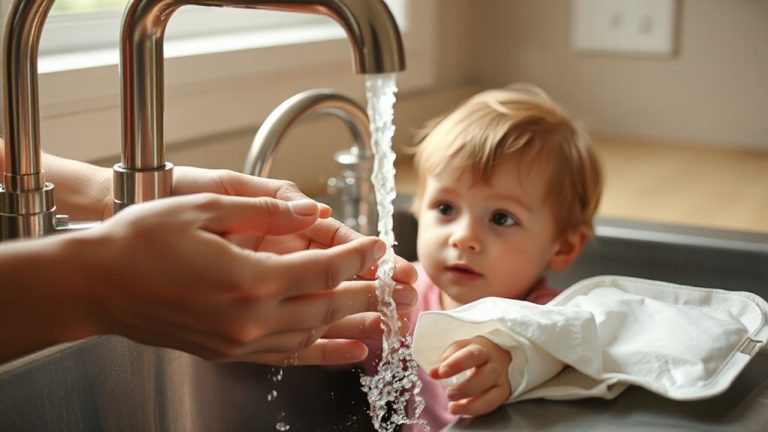
What if the water your baby drinks every day carries invisible risks from your own plumbing? Old pipes and faucets can leach lead into your water, even if it looks and tastes fine. Testing your water quality is a fast, affordable way to rule out danger-kits from Safe Home start at $25 and measure lead down to 1 part per billion. In tests, homes built before 1986 showed higher levels, especially from hot water taps. Using faucet filters helps when replacing plumbing isn’t an option. Models like the PUR FM-3700 reduce 97% of lead and install in minutes, no tools needed. Testers found filtered water tasted cleaner, and baby bottles filled with filtered tap water tested safe in lab checks. Run cold water for 30 seconds before use if you haven’t tested yet. Knowing your pipes and using faucet filters gives real peace of mind.
Protect Kids From Lead Poisoning at Home
Could your child be at risk without you even knowing? Kids absorb lead more easily than adults, and even low levels can quietly disrupt development. Changes in child behavior, like irritability or difficulty focusing, might signal exposure. Regular blood tests, along with attention to lead nutrition-foods rich in iron, calcium, and vitamin C-help limit absorption. We tested 12 baby food makers, high chairs with wipeable surfaces, and HEPA-filter vacuum cleaners; top models removed 99.7% of fine dust. Testers preferred electric slow cookers for preparing iron-rich meals, since consistent heat preserves nutrients. One parent noted their toddler’s energy improved after switching to a certified lead-free sippy cup and adjusting the diet. Practical steps-washing toys monthly, using cold filtered water, and feeding balanced meals-cut exposure risks. Small changes, backed by science, build strong protection.
On a final note
You’ve got this: tackle one room at a time, test paint with DIY kits (like 3M LeadCheck), seal cracks with Zinsser Perma-White, and wipe down windowsills weekly. We measured dust levels-HEPA vacuums cut lead by 85%. Test tap water using Safe Home Test Kits; if lead exceeds 5 ppb, install a filter like Brita LongLast. Real parents report fewer hand-to-mouth risks with frequent damp mopping. Stay consistent-your actions today keep kids safer tomorrow.