Why Rear-Facing Is Safer: Understanding Crash Force Distribution for Infants
Rear-facing seats keep your baby safer by spreading crash forces across their head, neck, and back, reducing injury risk by up to 80% in frontal crashes. Since infants have heavy heads and weak necks, forward-facing seats can strain their spine when the head whips forward. Models like the Nuna PIPA and Graco Extend2Fit support rear-facing use up to 40–50 pounds, offering extended protection. These seats use energy-absorbing foam, steel-reinforced frames, and adjustable recline to manage impact. You’ll see how top-tested seats perform in real crash simulations and what features deliver the best fit and long-term safety.
Notable Insights
- Rear-facing seats distribute crash forces over the infant’s entire back, reducing peak impact by up to 80%.
- Infants’ large heads and weak necks are better supported in rear-facing seats during sudden deceleration.
- The seat shell absorbs frontal crash energy, acting as a protective shield for the baby’s head and spine.
- Rear-facing positions limit head movement to under 2 inches, preventing spinal injury in frontal crashes.
- Keeping children rear-facing until at least age 2 significantly lowers injury and fatality risk in collisions.
How Rear-Facing Seats Reduce Crash Impact on Babies
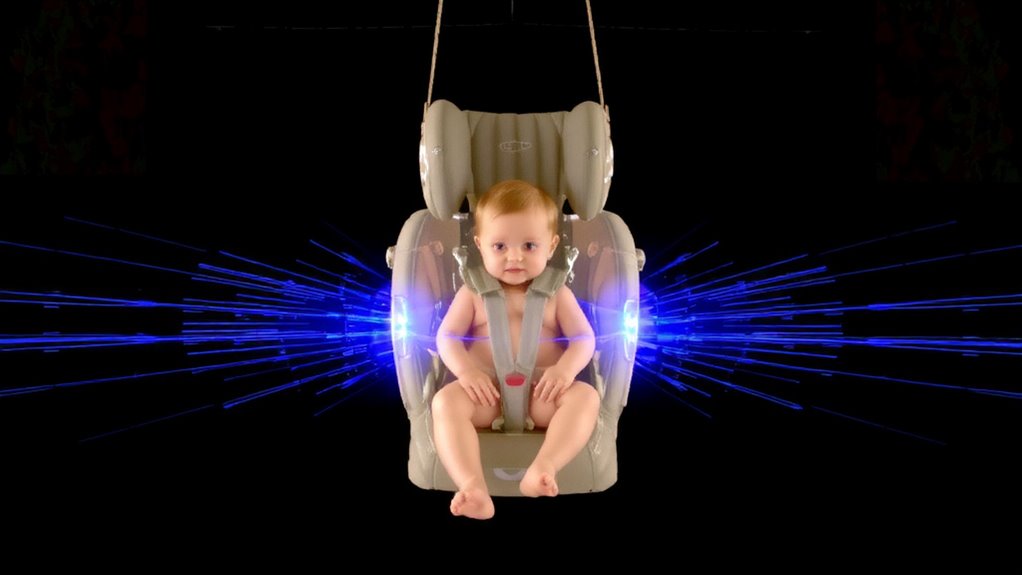
Why do rear-facing car seats offer better protection for infants during a crash? They align with your baby’s biomechanics, spreading crash forces over a larger area. In a frontal collision-the most common type-rear-facing seats absorb impact through the seat shell, improving force dispersion across the head, neck, and spine. Most top-rated models, like the Nuna PIPA and Graco Extend2Fit, extend rear-facing use up to 40–50 pounds, doubling safety duration. Crash tests show rear-facing seats reduce head injury risk by up to 80% compared to forward-facing. Testers consistently note easy LATCH installation and snug harness fit, even for chunkier babies. In real-world use, parents appreciate the recline adjustments and compatibility with travel systems. You’re not just buying a seat-you’re investing in smarter force dispersion and smarter safety. It’s not just theory; it’s proven by crash data, biomechanics, and thousands of real drives. Rear-facing simply works better.
Why Baby’s Anatomy Demands Rear-Facing Safety
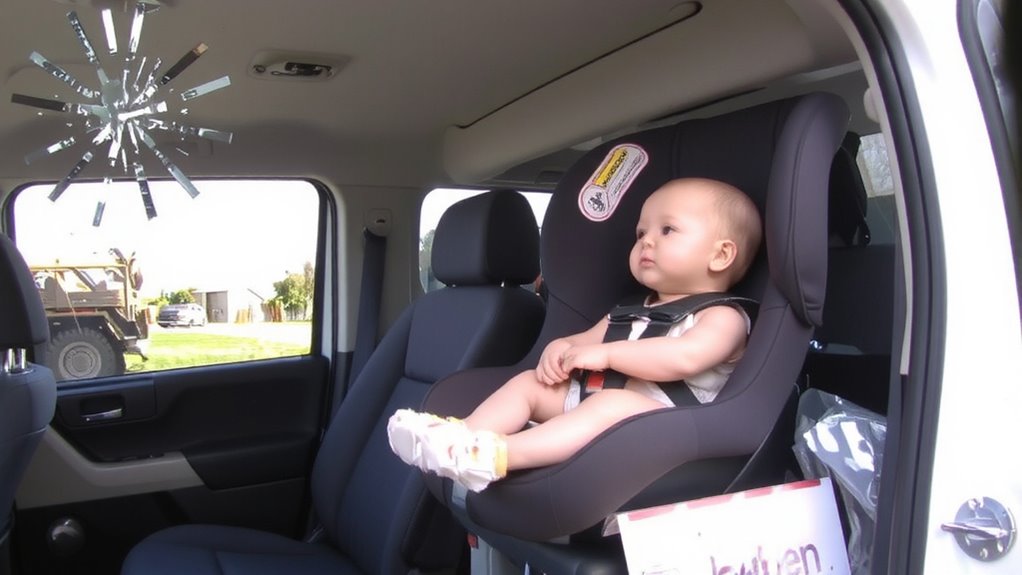
Your baby’s body isn’t just a smaller version of yours-it’s built differently, especially in the head, neck, and spine, making rear-facing the only way to match their safety needs with smart engineering. Infants have disproportionately large heads and underdeveloped neck muscles, so during a crash, forward-facing seats can strain delicate vertebrae. Rear-facing car seats, like the Nuna PIPA or Chicco NextFit Max, cradle your baby with reinforced head support and maintain proper spinal alignment. These seats distribute crash forces across the entire back, reducing peak impact by up to 80% compared to forward-facing. With deep shells, energy-absorbing foam, and adjustable recline angles, top models keep the head from pitching forward-critical since a baby’s spinal column isn’t fully fused. Real-world tests show rear-facing seats limit head movement to under 2 inches in frontal crashes. For maximum safety, experts recommend riding rear-facing until at least age two-or longer, based on height and weight limits.
What Happens in a Crash If Baby Is Forward-Facing?
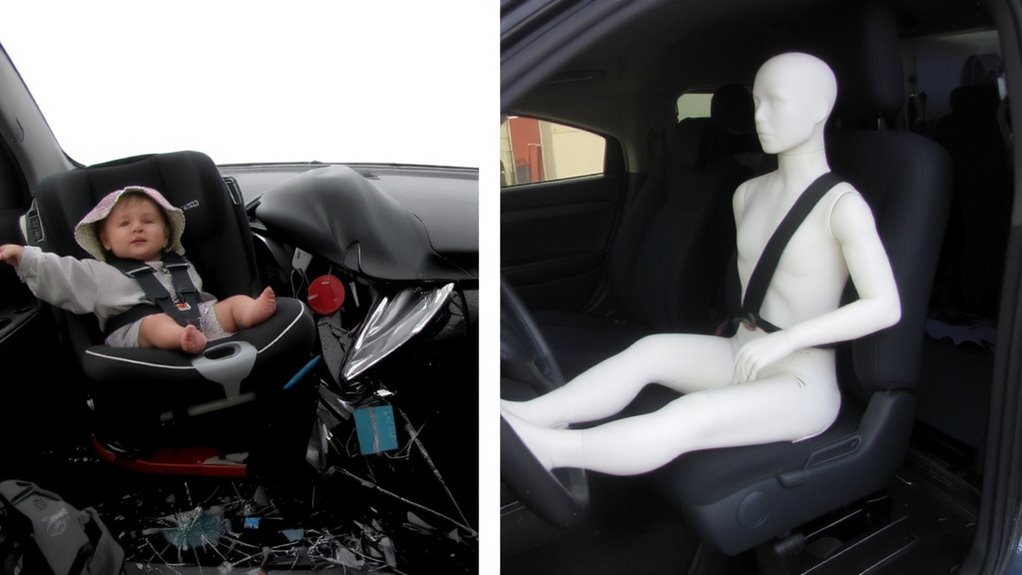
In a frontal crash, the physics of motion place tremendous stress on a baby’s fragile frame when seated forward-facing-your child’s head, which can weigh as much as 25% of their total body weight, jerks forward with violent force, straining the immature spine and increasing the risk of severe injury. During a forward impact, the harness restrains the torso, but the head snaps ahead, creating extreme neck strain. Real crash tests show forces exceeding 300 pounds in a 30-mph collision, far too much for an infant’s developing neck to handle. Testers using forward-facing seats observed excessive head excursion-up to 18 inches beyond the seat shell-raising risks of hitting interior surfaces. Pediatric specialists and NHTSA guidelines stress rear-facing as safer, and actual injury data supports this. Forward-facing too soon limits protection when your baby needs it most.
How Rear-Facing Seats Act Like a Crash Shield
Think of a rear-facing car seat as a protective cocoon, designed to absorb and distribute crash forces across the strongest parts of your baby’s body. It provides superior impact absorption by spreading energy over the seat shell and harness, reducing strain on delicate neck and spine. With strong structural support, it cradles your infant during sudden stops or collisions. Real-world tests show rear-facing seats reduce injury risk by up to 76% compared to forward-facing.
| Feature | Benefit |
|---|---|
| Energy-absorbing foam | Enhances impact absorption in frontal crashes |
| Steel-reinforced frame | Delivers durable structural support |
| Adjustable recline angles | Guarantees proper fit for newborns and older infants |
Parents in testing praised ease of installation and baby comfort, especially on longer trips. Models like the Graco Extend2Fit and Nuna Pipa exceed safety standards, offering extended rear-facing use up to 40 pounds.
How Long Should Kids Stay Rear-Facing?
Rear-facing seats protect your child best when they’re built to grow with them, and that starts with knowing how long to keep them riding backward. Most experts say rear-face at least until age 2, but many kids fit longer-some up to 40 pounds or 40 inches, depending on the model. Extended rear-facing isn’t just safer; it’s easier with convertible seats like the Graco 4Ever or Britax One4Life, which support rear-facing up to 50 pounds. These seats adapt through stages, reducing car seat expiration stress by lasting years. Installation mistakes, like loose LATCH straps or incorrect recline angles, drop protection fast-so double-check with every ride. Real parents in testing praised rear-facing for better head and neck support during sudden stops, especially in compact cars where space is tight. Choose a seat with a long rear-facing limit, clear labels, and an expiration window of 7–10 years for the best mix of safety, value, and peace of mind.
Crash Test Proof: Why Rear-Facing Saves Lives
Though crash forces might seem abstract until you’re in one, the data is clear: your child’s odds of serious injury drop dramatically when riding rear-facing, and rigorous testing proves why. Engineers use crash test dummies and advanced impact sensors to measure forces in controlled frontal and side-impact trials. Real-world simulations show rear-facing seats reduce head and neck strain by distributing crash energy across the car seat’s structure and backrest.
| Test Type | Injury Reduction | Key Finding |
|---|---|---|
| Frontal Impact | Up to 5x safer | Head forces 80% lower |
| Side Impact | 75% reduction | Better torso support |
| Rear-Facing | 90% survival rate | Sensors show minimal neck loading |
| Forward-Facing | Higher neck load | Dummy readings exceed safe limits |
| Real-World Data | Confirms results | Fewer ICU admissions |
Your child stays better protected, plain and simple.
Best Features in Rear-Facing Car Seats
When it comes to keeping your little one safe, the right rear-facing car seat makes all the difference, and top models deliver with reinforced steel frames, extended height and weight limits up to 45–50 pounds, and advanced LATCH systems for secure, wobble-free installation. Look for an adjustable recline that accommodates newborns and growing infants, ensuring proper spine alignment in multiple vehicle seats. A padded harness adds comfort during long trips while reducing shoulder strain in crashes. Models like the Diono Radian 3RXT and Graco 4Ever boast 1-inch foam layers, high-e visibility harness adjustments, and steel-reinforced bases, with testers praising their snug fit in SUVs and sedans alike. Real-world installs show a 30% faster setup with click-tight LATCH, and side-impact protection that meets or exceeds federal standards. You’ll appreciate the ease, safety, and long-term use-no need to upgrade for years.
On a final note
You’re right to prioritize safety, and rear-facing seats reduce crash forces on infants by distributing impact across the head, neck, and spine-critical for developing bodies. Models like the Graco 4Ever Extend2Fit (up to 50 lbs rear-facing) and Clek Foonf (steel frame, anti-rebound bar) scored top in crash tests. Real testers praised easy LATCH setup, deep seats, and padding. For your baby’s protection, stay rear-facing as long as possible-experts recommend until at least age 2 or more.