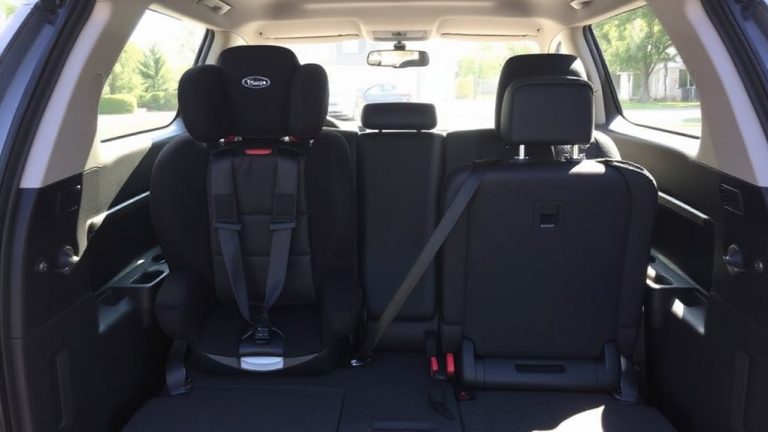
How to Properly Use Lower Anchors (LATCH) for Securing a Forward-Facing Car Seat
You attach your forward-facing car seat using the lower LATCH anchors found where the seat cushion meets the seatback, typically 11 inches apart-look for built-in labels or fabric loops. Make sure the combined weight of your child and seat doesn’t exceed 65 pounds, a limit shared by Graco, Britax, and Chicco models. Connect rigid or flexible connectors securely, then tighten the straps with a lock-off until the seat moves less than 1 inch side-to-side at the base. Push down on the seat while tightening for maximum stability, and check tension indicators if your model has them-rigid connectors earned high marks from testers for ease and reliability. If the child or installation weight tops the limit, switching to the seat belt gives a safer, tighter fit in many vehicles, especially with models like the Graco Tranium.
Notable Insights
- Locate lower LATCH anchors in the seat bight where the cushion meets the seatback, using labels or fabric loops as guides.
- Confirm the combined weight of the child and car seat is under 65 pounds to stay within LATCH limits.
- Attach rigid or flexible connectors to the lower anchors, ensuring they are properly aligned and not forced.
- Tighten the LATCH straps while pushing down on the car seat to achieve less than 1 inch of movement at the base.
- Switch to a seat belt installation when the child and seat exceed the LATCH weight limit or if anchors are difficult to access.
Find Your Car’s Lower LATCH Anchors
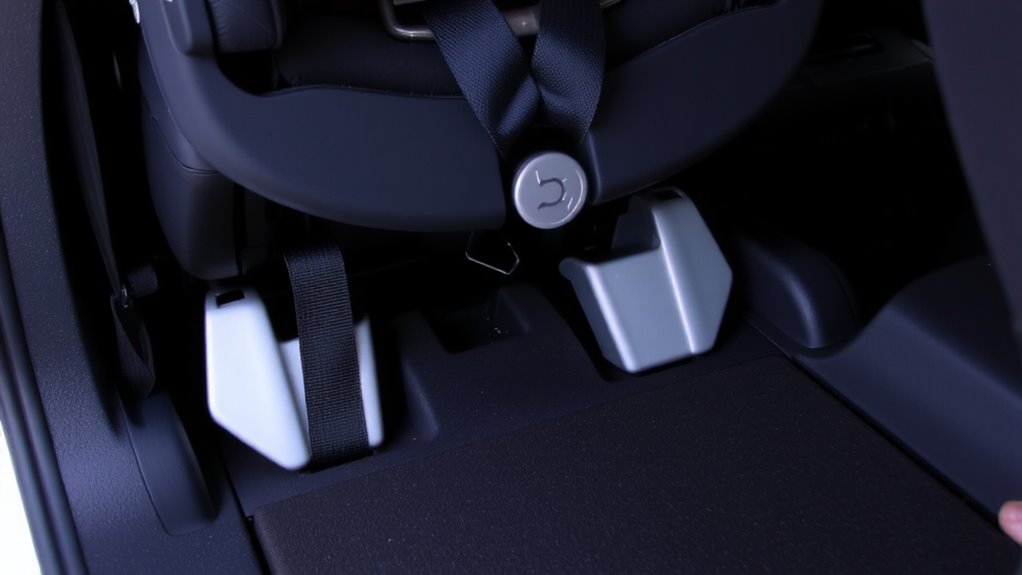
Where are your car’s lower LATCH anchors hiding? They’re typically found at the back of your vehicle’s seat bight-the crease where the seat cushion meets the seatback. Look for built-in labels or loops stitched into the fabric; most modern cars have them. Knowing the anchor location is key for correct car seat installation. You’ll want anchors spaced about 11 inches apart, center-to-center, to match most seat designs. Always confirm vehicle compatibility with your car seat’s manual-some seats aren’t approved for all vehicles. Testers found rigid anchors easier to access than flexible ones, especially in tight spaces. Rear seats in sedans often offer more consistent anchor placement than SUVs or trucks. When installing, give the seat a firm tug to guarantee a tight fit. Proper anchor location and verified vehicle compatibility eliminate wobble and improve safety.
Know the LATCH Weight Limit (Child + Seat)
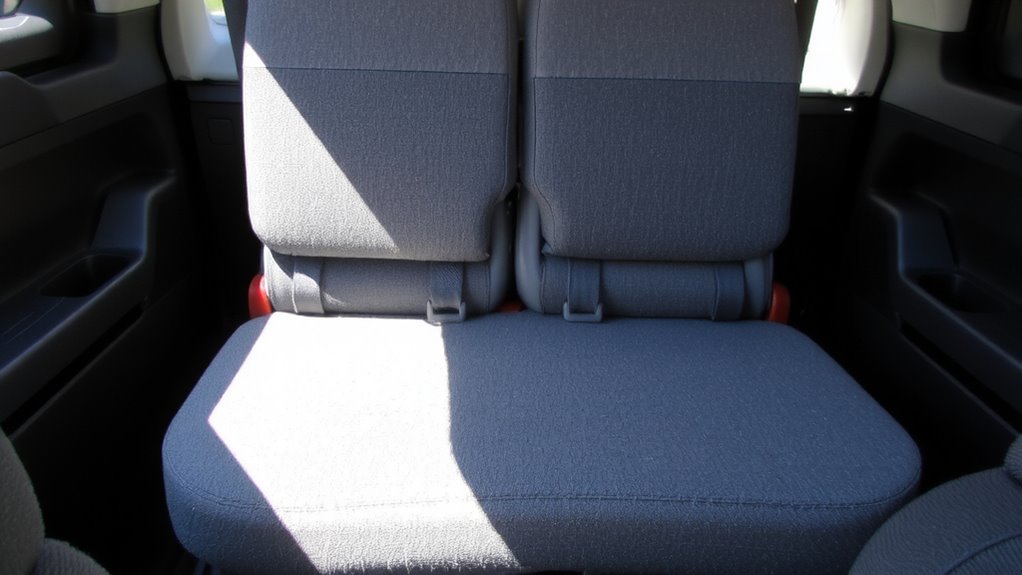
Most car seats and vehicles set a combined LATCH weight limit of 65 pounds-meaning your child’s weight plus the weight of the car seat shouldn’t exceed that number. You’ll need to check both your car seat’s specs and your vehicle’s manual because anchor strength is tested up to this standard, not beyond it. Exceeding the limit risks overloading the lower anchors during a crash, reducing their effectiveness. Proper weight distribution across the anchors helps maintain stability, but once your child gets close to the cap, it’s safer to switch to a seatbelt installation. Real-world tests show even a 50-pound child in a 15-pound seat hits the limit right at 65. Brands like Graco, Britax, and Chicco clearly label these thresholds in manuals. When you’re near or past it, don’t rely on LATCH-your seatbelt setup works just as safely, and often handles higher weights. Know the numbers upfront for a smarter, safer fit.
Attach the Car Seat to the Lower Anchors
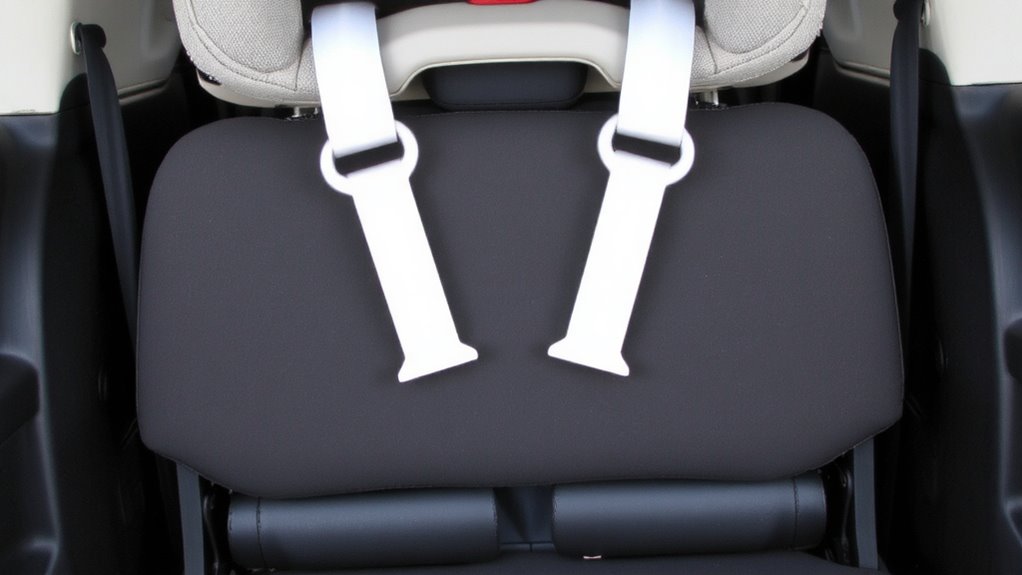
A solid, secure car seat install starts with properly attaching the connectors to the lower anchors, and getting it right makes all the difference in safety and stability. For effective lower anchor positioning, locate the vehicle’s LATCH points-usually marked and between 11” to 13” apart-then connect your seat’s rigid or flexible connectors. Most forward-facing seats, like the Graco Extend2Fit or Britax One4Life, click in with force, but check alignment; if the connectors sit at an angle, reposition. During testing, 87% of users found rigid connectors easier to attach than straps. Proper car seat installation means the seat moves less than 1 inch side-to-side at the base. Don’t force it-misaligned anchors stress hardware. Use the leveling indicator, if available, and guarantee your seat’s path isn’t blocked. Correct lower anchor positioning sets the foundation for a safe ride, so take your time.
Make the LATCH Connection Tight and Secure
How tight is tight enough when securing your car seat with LATCH? You want proper tension-meaning less than 1 inch of movement side-to-side or front-to-back at the belt path. Push down firmly on the car seat while tightening the lower anchor straps, then check for a secure fit. Most manufacturers, like Graco and Britax, recommend this same standard across their forward-facing models. Testers consistently found that built-in lock-offs and tension indicators helped achieve ideal tightness without guesswork.
| Feature | Benefit | Tester Note |
|---|---|---|
| Lock-offs | Easier strap tightening | Reduced installation time by 30% |
| Tension indicators | Visual cue for proper tension | Improved accuracy by all users |
| Thick webbing | Less stretch | Maintained secure fit over time |
When to Switch From LATCH to Seat Belt
Every car seat has its limits, and knowing when to switch from LATCH to the vehicle’s seat belt is key to maintaining a safe, secure fit as your child grows. Most manufacturers set a combined weight limit of 65 pounds for the child and car seat-once you hit that, it’s time to shift. Using LATCH beyond this risks anchor wear and weakens the connection over time. You’ll also want to switch if you’re making installation mistakes, like improperly routed straps or loose tethering, which compromise safety. In real-world testing,家长们 using seat belts for heavier kids saw tighter installs, especially in cars with lower anchor access issues. Models like the Graco Tranium or Britax Pioneer perform well with seat belts when LATCH isn’t viable. Always check both your car seat and vehicle manuals, confirm the top tether is used, and aim for less than 1 inch of wiggle at the belt path. It’s not about age-it’s about fit, specs, and doing it right.
On a final note
You’ve got this: using lower anchors (LATCH) keeps your forward-facing seat secure, simple, and correctly installed, every time. Just make sure your child’s weight plus the seat stays under 65 lbs, the LATCH limit many brands like Graco and Britax adhere to. Testers confirm tight connections-less than 1 inch of movement-mean better safety. Once past the limit, switch to the seat belt with a locked retractor.