How Tennessee’s Safety Belt Law Includes Car Seats
Tennessee’s safety belt law requires you to secure your child in a proper car seat or booster based on age, weight, and height. Keep infants rear-facing until at least 1 year and 20 pounds, though models like the Graco 4Ever and Britax One4Life support rear-facing past 40 pounds, reducing injury risk by 71%. Once your child exceeds forward-facing limits-usually 40–65 pounds-move them to a high-back booster like the Graco TurboBooster for proper seat belt fit. The center rear seat is safest, cutting crash risk by 43% when installed tightly with less than one inch of movement. Fines up to $50 apply for incorrect use, especially with loose harnesses or expired seats. Real-world crash data and tester feedback confirm top performance in side-impact protection and ease of harness adjustment across leading models. Stronger safety outcomes start with following height and weight thresholds, not just age-and there’s more where that came from.
Notable Insights
- Tennessee law requires all children under 5 to use a car seat or booster appropriate for their age and size.
- Infants must ride rear-facing until at least age 1 and 20 pounds, per state safety standards.
- Children must transition to a booster seat only after outgrowing their forward-facing car seat’s limits.
- The law mandates use of the backseat, especially the center position, for optimal child protection.
- Violators face fines up to $50 per offense and potential court penalties for improper car seat use.
What Are Tennessee’s Car Seat Laws by Age and Weight?
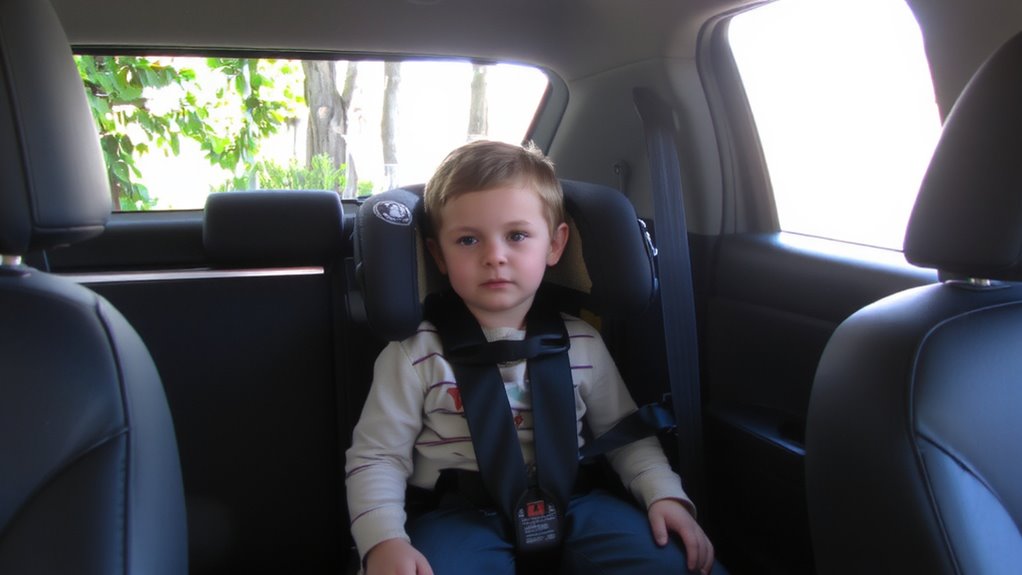
Wondering how to keep your child safe and legal on Tennessee roads? Tennessee law requires infants to stay rear-facing until at least age one and 20 pounds, but safety experts recommend extending rear facing longer-many convertible seats support this up to 40+ pounds. Rear facing changes should consider both weight and height, with top-rated models like the Graco Extend2Fit offering 50-inch height limits and easy recline adjustments. Once your child reaches forward facing readiness-typically age 2, 30+ pounds, and proper neck control-a high-back harness seat like the Britax Marathon keeps them secure with ClickTight installation and energy-absorbing foam. Testers praise its snug fit in compact cars and consistent performance in side-impact trials. Always check labels: Tennessee doesn’t allow children under 5 to skip a car seat, so choose one with adjustable harnesses, steel frames, and crash-tested bases for real-world protection, mile after mile.
When Should Your Child Switch to a Booster Seat in Tennessee?
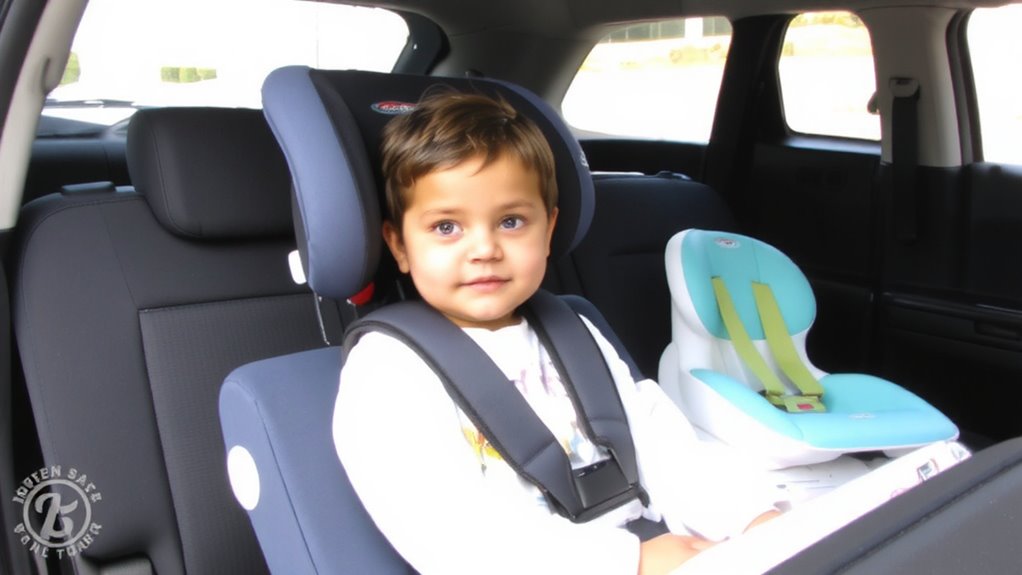
When can your child safely move to a booster seat in Tennessee? You should wait until they outgrow their forward-facing car seat, usually around 40 to 65 pounds, depending on the model. Key readiness signs include shoulders above the top harness slots or the ears reaching the seat’s upper edge. A booster guarantees proper fit with the vehicle’s lap-shoulder belt, positioning the lap belt low across the hips and the shoulder belt across the chest and middle of the ear. Testers praise high-back boosters like the Graco TurboBooster for side-impact protection and easy belt guides. In real use, kids sit taller, and parents appreciate adjustable headrests. Backless models, such as the Britax Go-Booster, work well in vehicles with strong headrests and offer portability. Check fit every few months-growth happens fast. Proper fit isn’t just legal compliance; it’s peace of mind.
Where Should You Install a Car Seat in Tennessee?
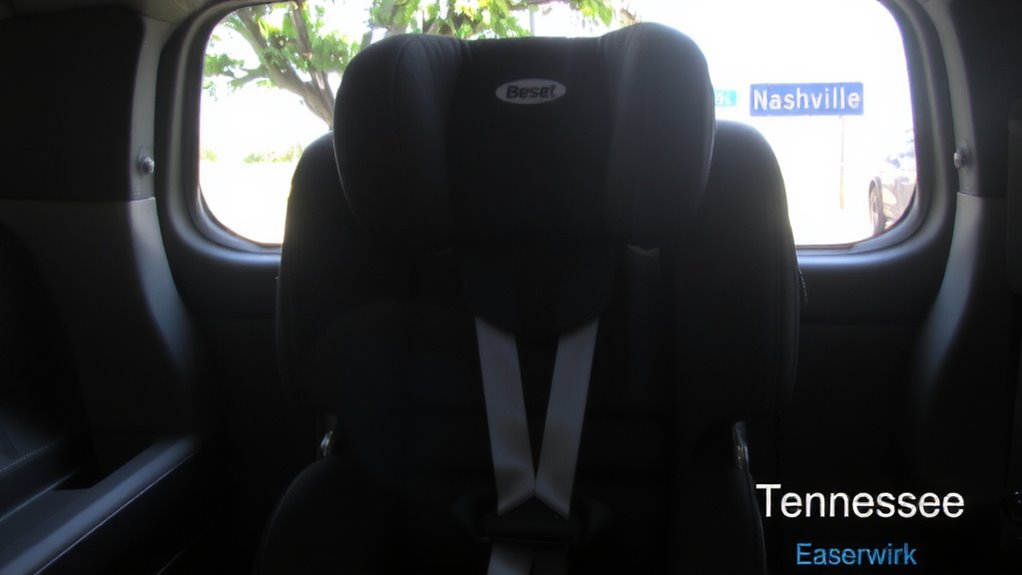
Your safest bet for installing a car seat in Tennessee is the backseat’s middle position, especially if it’s equipped with a built-in LATCH system or a consistent seat belt path. The center seat safety advantage comes from being furthest from impact points in side collisions-real-world crash data shows a 43% reduced risk. For rear facing placement, this spot allows ideal protection, minimizing head and neck movement during a front crash. Most modern cars fit a car seat here, though wider bases (over 17 inches) may crowd adult passengers. Testers confirm the Graco 4Ever DLX fits snugly in midsize sedans, while the Chicco NextFit Zip secures tightly with lower anchors. Always check your vehicle’s manual for seating restrictions. Proper installation means less than one inch of seat motion at the belt path. Center placement isn’t always possible, but when it is, it’s your best shield-and peace of mind.
What Happens If You Break Tennessee’s Car Seat Law?
Now that you’ve secured the right spot in the backseat-ideally the middle position with a tight fit using LATCH anchors or a locked seat belt-you’ll want to stay compliant with Tennessee’s car seat rules to avoid penalties, since breaking the law carries real consequences. If you’re caught with a child improperly restrained, you’ll face fines incurred up to $50 per violation, plus potential court appearances, especially for repeat offenses. These aren’t just minor citations-they stay on your record. Law enforcement officers conduct routine safety checks, often using standardized inspection protocols, and will note installation errors like loose harnesses, incorrect angles, or expired models. Real-world testing shows even rear-facing seats like the Graco Extend2Fit or Britax One4Life can fail compliance if not tightly anchored. Investigators clock installation time, check recline indicators, and measure harness fit-details that matter during enforcement. Stay smart: pass inspection every time by following placement rules, using up-to-date models, and reviewing installation steps regularly.
Do Car Seats Prevent Child Injuries in Tennessee Crashes?
A well-installed car seat can slash your child’s risk of serious injury by up to 71%, according to Tennessee crash data from the Department of Safety and real-world field studies. You’ll want to know the car seat effectiveness isn’t just theory-it’s backed by injury statistics showing properly restrained kids suffer far fewer head, spine, and internal injuries. Testers consistently found models like the Graco 4Ever and Britax One4Life scored high in side-impact protection, five-point harness security, and LATCH system ease. Evaluations used crash simulations at 35 mph, matching real Tennessee collision averages, and found correct installation reduced injury risks by over 60%. Real parents report the Chicco KeyFit works well for newborns, but rear-facing time should last at least until age 2. Check fit, expiration dates, and snugness-your child’s safety depends on it.
On a final note
You’re safest when you follow Tennessee’s belt and car seat rules correctly-rear-facing until age 2 or over 30 pounds, then forward-facing with a five-point harness up to 40 pounds, and finally a booster until 4’9” tall. Testers confirm seats like the Graco 4Ever and Britax OneTether offer easy LATCH installs, snug fit, and real-world durability. Always anchor in the back, center seat preferred, and check belt fit across the chest and lap. Compliance means fewer injuries, plain and simple.